Gustave Den Duyts
1850 – 1897
In short
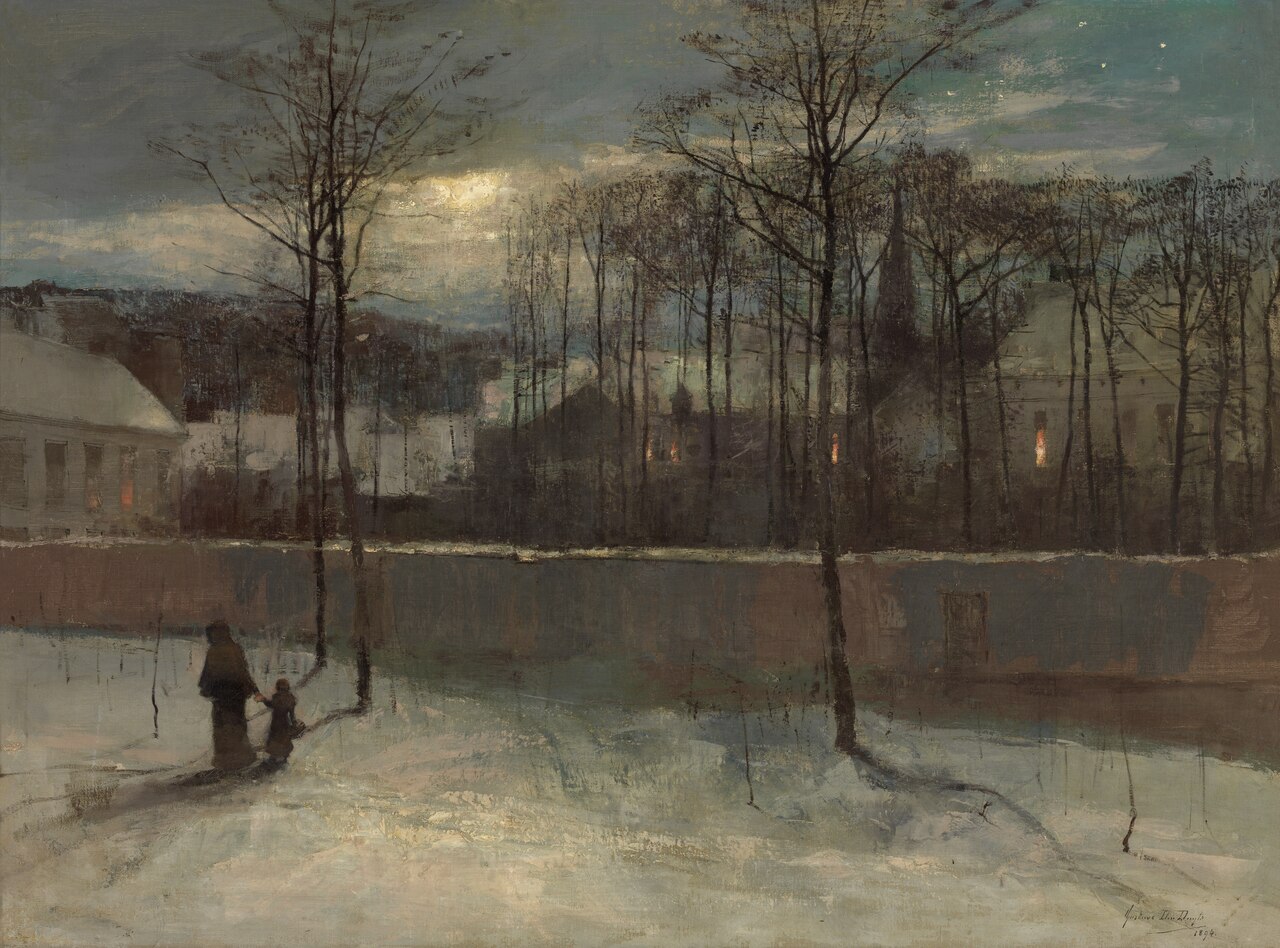
Gustave Den Duyts (1850–1897) was a Belgian painter, watercolourist, pastel artist, etcher and graphic designer known for his atmospheric landscapes, cityscapes and occasional marine subjects. He worked mainly in Ghent and Brussels, producing works such as Evening (1894) and Panoramic View of Ghent (1881).
Notable works


.jpg)
Early life Gustave Den Duyts was born in 1850 in Ghent, a city with a long tradition of artistic production and a vibrant civic culture. Little is recorded about his family background, but the artistic environment of Ghent in the mid‑19th century provided ample opportunity for a young talent to encounter the works of the Flemish masters and the emerging realist painters of the time. Den Duyts grew up during a period when Belgium was consolidating its national identity, and the visual arts were increasingly employed to express both local pride and broader European trends. By the 1860s he had begun informal studies, likely under the guidance of local masters, and demonstrated an early aptitude for drawing and colour.
Career and style Den Duyts established his professional career in the 1870s, initially working in Ghent before moving to Brussels, where he remained until his death in 1897. His oeuvre spans oil painting, watercolour, pastel, etching and graphic design, reflecting a versatile approach to medium and subject. While he is not formally linked to a specific avant‑garde movement, his work shows the influence of the Belgian realist tradition, especially in its careful observation of light and atmosphere. He also absorbed elements of the French Barbizon school, evident in his treatment of wooded scenes and the quietude of his rural landscapes.
Throughout his career Den Duyts cultivated a reputation for rendering the subtle changes of weather and season. His cityscapes, such as the Panoramic View of Ghent (1881), combine topographical accuracy with a lyrical ambience, placing the viewer within the bustle of an industrialising city while preserving a sense of timelessness. In marine subjects he favoured muted palettes and a focus on the interplay of sky and water, aligning with the broader European interest in seascapes during the late nineteenth century.
Signature techniques Den Duyts employed a range of techniques that distinguished his work from that of his contemporaries. In oil paintings he favoured a thin, layered application of colour, building atmospheric depth through glazing rather than heavy impasto. This method allowed him to capture the translucency of winter light, as seen in Landscape in the Snow (1889). His watercolours and pastels are characterised by a restrained yet expressive handling of the medium; he often used dry brush strokes to suggest foliage or snow, creating texture without sacrificing the overall softness of the scene.
Etching formed a significant part of his graphic output. Den Duyts used fine, cross‑hatching lines to delineate architectural detail in his cityscapes, while employing broader, sweeping strokes for natural elements. This duality of line work contributed to a balanced composition that could convey both structural precision and atmospheric mood. Additionally, his involvement in designing floats for historical parades demonstrates a practical application of his graphic skills, where he translated historical motifs into large‑scale, decorative formats.
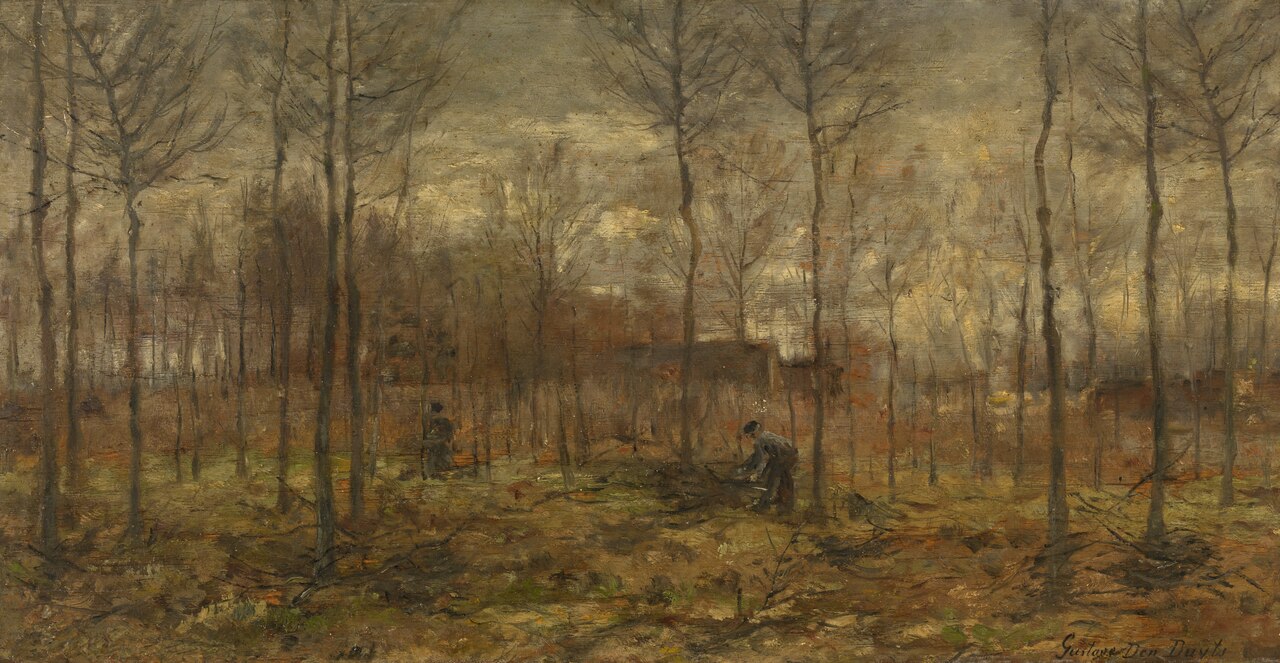
Major works - **Panoramic View of Ghent (1881)** – This oil painting offers a comprehensive vista of Den Duyts’s native city, combining accurate representation of its medieval architecture with a subtle atmospheric haze. The work reflects his ability to integrate topographical detail with a poetic sense of place. - **Woodland (1891)** – Executed in pastel, the piece captures a quiet forest scene bathed in dappled light. The delicate layering of pastel tones conveys the depth of the woodland while maintaining a sense of immediacy. - **Landscape in the Snow (1889)** – A winter landscape rendered in oil, notable for its muted palette and refined handling of snow-covered terrain. The glazing technique creates a luminous effect that suggests the low winter sun. - **Evening (1894)** – This watercolour depicts a tranquil twilight scene, where the fading light is rendered through translucent washes. The composition balances natural and built elements, highlighting Den Duyts’s skill in capturing transitional moments. - **Snow‑covered Suburb (1897)** – Completed shortly before his death, this work portrays a suburban street blanketed in snow. The piece combines precise architectural rendering with a gentle, almost impressionistic treatment of snow, underscoring his lifelong fascination with seasonal light.
Influence and legacy Although Gustave Den Duyts did not align himself with a defined artistic movement, his work contributed to the broader Belgian tradition of landscape and cityscape painting in the late nineteenth century. By blending realistic observation with a lyrical treatment of atmosphere, he helped bridge the gap between academic realism and the more emotive approaches that would emerge in the early twentieth century. His graphic designs for civic parades also illustrate the interplay between fine art and public spectacle, a theme that would later be explored by artists involved in the Art Nouveau and Symbolist movements.
Den Duyts’s paintings are held in several Belgian museum collections, where they are valued for their technical proficiency and their evocative portrayal of Belgian scenery. Contemporary scholars view his oeuvre as a testament to the diversity of artistic practice in Belgium during a period of rapid industrialisation and cultural change. While his name may not be as widely recognised as that of some of his contemporaries, his contributions to Belgian visual culture remain an important reference point for the study of 19th‑century European landscape art.
In recent years, renewed interest in regional artists has prompted a re‑examination of Den Duyts’s work, leading to exhibitions that highlight his mastery of light and his nuanced approach to both urban and rural subjects. His legacy endures through the continued appreciation of his subtle yet powerful depictions of everyday life, weather and place.
Frequently asked questions
Who was Gustave Den Duyts?
Gustave Den Duyts (1850–1897) was a Belgian painter, watercolourist, pastel artist, etcher and graphic designer noted for his atmospheric landscapes, cityscapes and occasional marine works.
What artistic style or movement is he associated with?
He is not tied to a single movement, but his work reflects the Belgian realist tradition and shows influences from the French Barbizon school, especially in his treatment of light and nature.
What are his most famous works?
Key works include Panoramic View of Ghent (1881), Woodland (1891), Landscape in the Snow (1889), Evening (1894) and Snow‑covered Suburb (1897).
Why does Gustave Den Duyts matter in art history?
Den Duyts bridges academic realism and more emotive approaches, contributing to Belgium’s 19th‑century landscape tradition and demonstrating the link between fine art and public decorative design.
How can I recognise a Gustave Den Duyts painting?
Look for subtle, layered colour, an emphasis on atmospheric light, precise yet gentle rendering of architecture or nature, and a calm, reflective mood that often depicts seasonal change.