Guillaume Vogels
1836 – 1896
In short
Guillaume Vogels (1836–1896) was a Belgian Impressionist painter born in Brussels and active mainly in the Brussels region. He is best known for his atmospheric landscapes and urban scenes such as The Grote Zavel and The Pond in Ixelles, which combine plein‑air observation with a subtle, lyrical colour palette.
Notable works
.jpg)

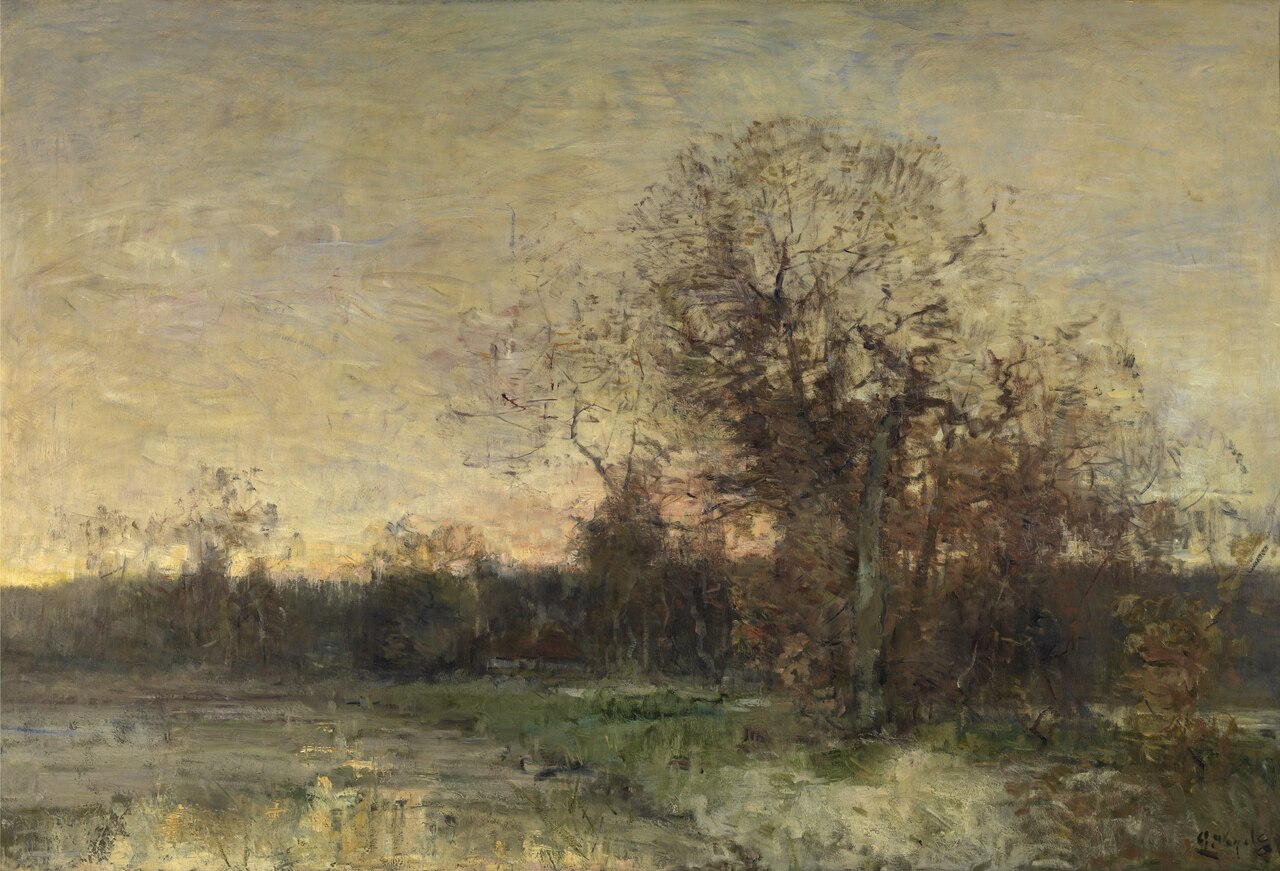
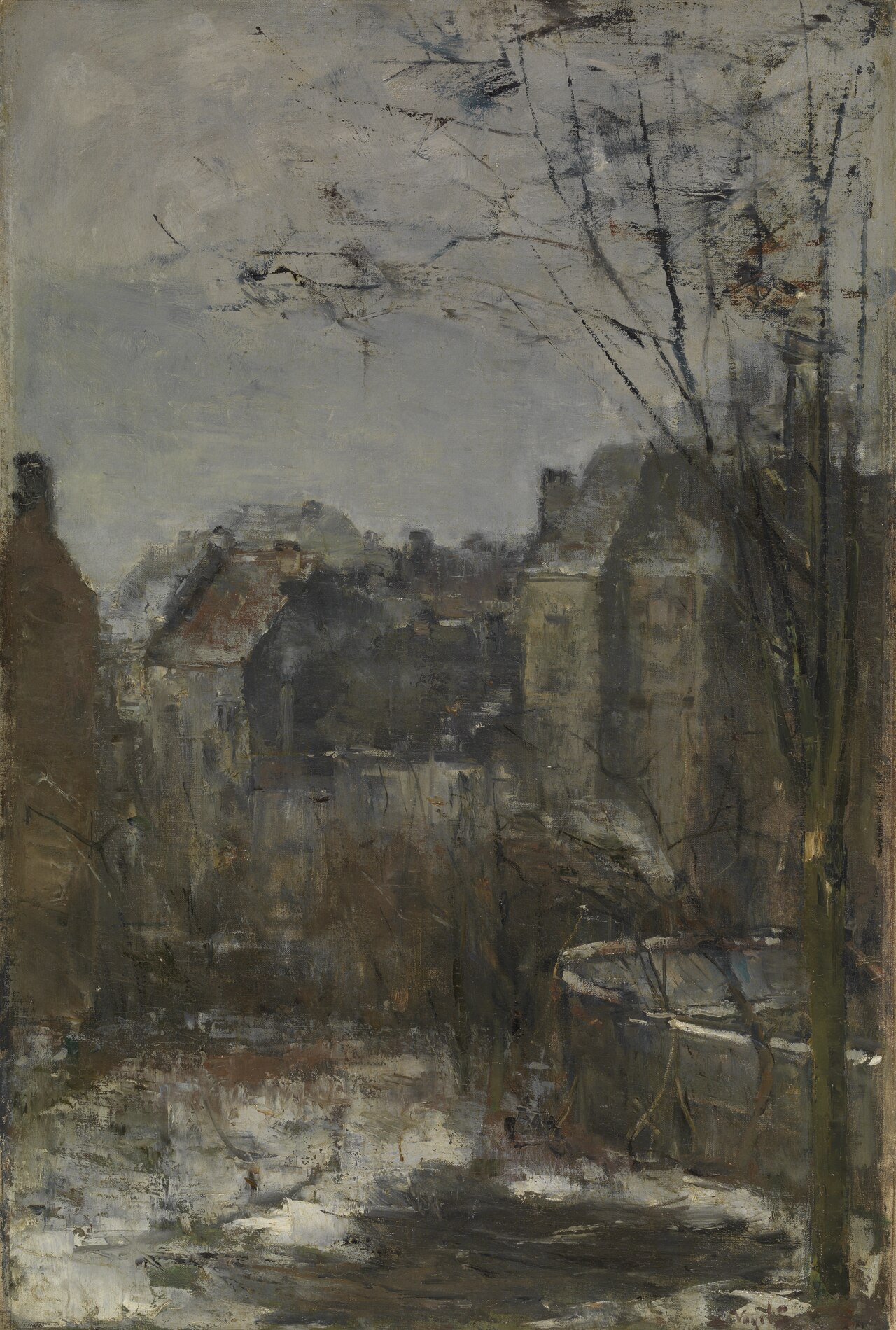
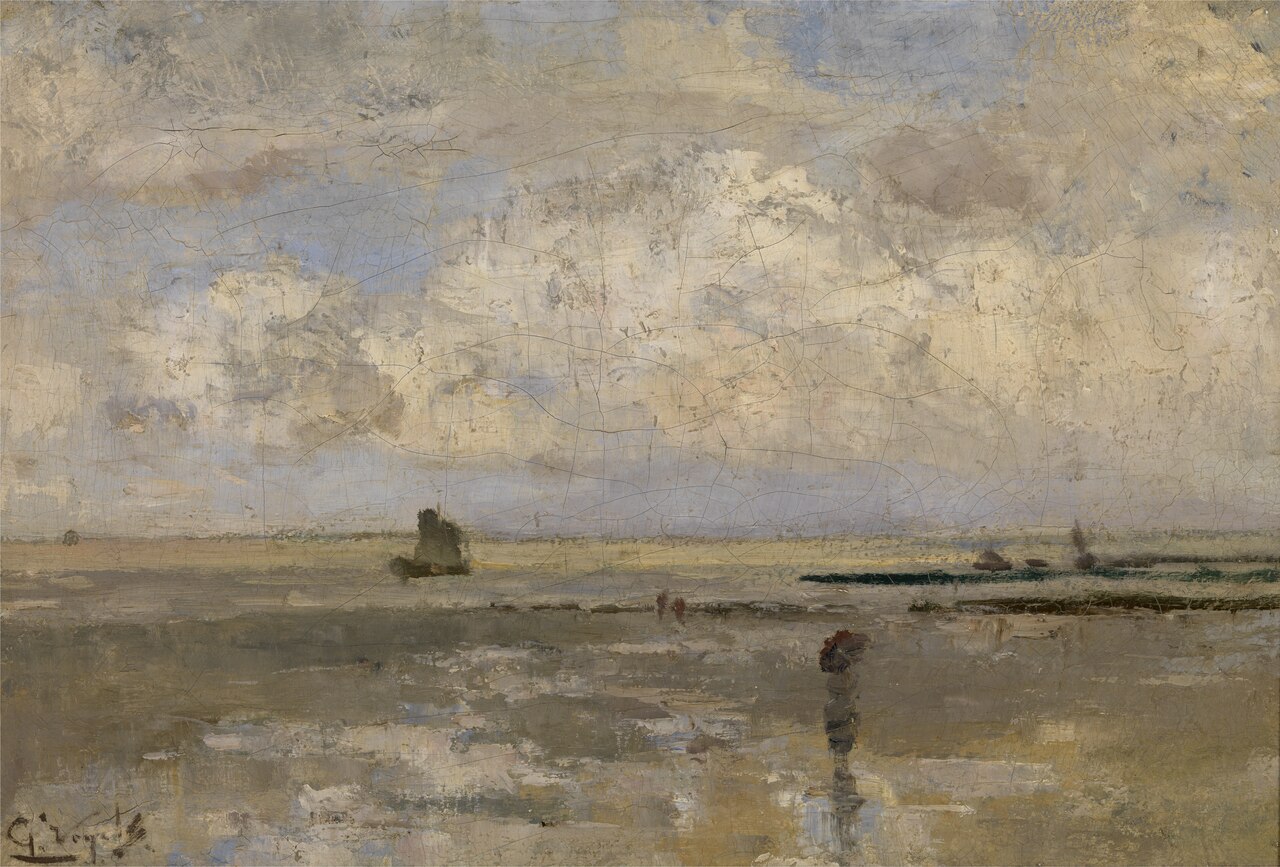
Early life Guillaume Vogels was born in 1836 in Brussels, the capital of what was then the United Kingdom of the Netherlands and later the independent Kingdom of Belgium. Little is recorded about his family background, but contemporary accounts indicate that he grew up in a modest household that afforded him a basic education and early exposure to the city's vibrant artistic milieu. Brussels in the mid‑19th century was a centre for burgeoning artistic societies and academies, and young Vogels would have been familiar with the works of the Royal Academy of Fine Arts, where the dominant academic style coexisted with a growing interest in realism and natural observation.
In his teenage years Vogels likely attended informal drawing classes and workshops that were common in the city’s art circles. These formative experiences introduced him to the techniques of drawing from life, a practice that would later become central to his artistic method. By the early 1850s, he was already producing sketches of urban streets and riverbanks, indicating a nascent fascination with the interplay of light and atmosphere.
Career and style Vogels’ professional career began in earnest in the 1860s, a period when Belgian art was undergoing a quiet but decisive shift toward Impressionist ideas imported from France. While the French Impressionists such as Monet, Renoir and Pissarro were gaining notoriety, Belgian artists adapted these innovations to local subjects and sensibilities. Vogels embraced this transition, developing a style that blended the immediacy of plein‑air painting with a distinctly Belgian sensibility for mood and narrative.
His oeuvre is characterised by a restrained palette dominated by muted blues, soft greens and warm ochres. Rather than the vivid, often exaggerated colours of French Impressionism, Vogels preferred subtle tonal variations that captured the fleeting quality of light on water, stone and foliage. He frequently painted en plein air, working directly outdoors to record the changing conditions of weather and time of day. This approach allowed him to render the atmospheric effects that are a hallmark of his work – the hazy glow of a sunrise over a river, the silvery reflections on a pond, or the gentle diffusion of light across a cobbled square.
Vogels also displayed an affinity for urban scenes, particularly those depicting Brussels’ historic districts. His compositions balance a careful observation of architectural detail with an overall impression of ambience. This duality places him firmly within the Belgian Impressionist tradition, which favoured a more contemplative, sometimes melancholic, tone compared with the exuberance of his French contemporaries.
Signature techniques Vogels’ technique can be identified by several recurring elements:
1. Loose, broken brushwork – He employed short, overlapping strokes that suggest form rather than delineate it, allowing the viewer’s eye to fill in details. 2. Layered glazing – Thin layers of translucent paint were applied over a relatively dry underpainting, creating depth and a luminous quality, especially in water surfaces. 3. Subtle tonal modulation – Rather than stark contrasts, he used gradual shifts in value to model forms, which contributes to the soft, almost dream‑like atmosphere of his canvases. 4. Limited colour range – A restrained palette, often limited to a few harmonious hues per painting, heightens the sense of unity and mood. 5. Emphasis on atmospheric perspective – Distant elements are rendered with reduced contrast and cooler tones, reinforcing a sense of depth and distance.
These techniques, combined with his dedication to painting outdoors, resulted in works that convey both immediacy and poetic stillness.
Major works Vogels’ most celebrated pieces illustrate his mastery of light, water, and urban space:
- The Grote Zavel (Grand Sablon), Brussels (1875) – This painting captures the historic market square of Brussels bathed in a mellow afternoon light. Vogels renders the stone façades with delicate brushstrokes, while the surrounding figures are suggested rather than fully detailed, emphasizing the square’s timeless ambience.
- Beach front (1878) – In this coastal scene, Vogels portrays a tranquil shoreline with a muted palette of blues and greys. The sea’s surface is rendered with layered glazing that creates a subtle shimmer, while the horizon line recedes into a hazy blue, evoking a sense of calm and contemplation.
- Beach (1876) – Similar in subject to the 1878 work, this earlier beach painting demonstrates Vogels’ developing interest in capturing the interplay of sand, water and sky. The composition is more intimate, focusing on the texture of the sand and the gentle ripple of waves.
- My Garden (1878) – A private, domestic subject, this piece illustrates Vogels’ ability to translate personal spaces into lyrical landscapes. The garden is depicted with soft green tones, and the light filtering through foliage creates dappled patterns on the ground, highlighting his skill in rendering natural illumination.
- The Pond in Ixelles (1888) – One of his later works, this painting shows a reflective pond surrounded by trees and modest architecture in the Ixelles district. The water’s surface mirrors the sky and foliage, achieved through careful glazing and nuanced colour shifts, showcasing Vogels’ mature handling of reflection and atmosphere.
These works collectively demonstrate his consistent focus on everyday scenes, rendered with a quiet, introspective sensibility.
Influence and legacy Although Guillaume Vogels never achieved the international fame of his French counterparts, his contribution to Belgian Impressionism is widely acknowledged by scholars of 19th‑century art. By adapting Impressionist techniques to Belgian subjects, he helped bridge the gap between academic tradition and modernist experimentation within his country. His paintings were exhibited regularly at the Société des Beaux‑Arts in Brussels, and they influenced younger Belgian artists who sought to capture the fleeting qualities of light without abandoning local narrative content.
Vogels’ work also contributed to the broader European appreciation of atmospheric landscape painting, a genre that later informed Symbolist and early Modernist tendencies. Contemporary retrospectives of Belgian Impressionism frequently include his canvases, and his paintings are held in several public collections, including the Royal Museums of Fine Arts of Belgium.
In the present day, art historians view Vogels as a representative figure of a regional movement that negotiated the tension between innovation and tradition. His paintings continue to be studied for their technical finesse, subtle colour harmonies, and ability to evoke mood through restrained yet expressive brushwork. For collectors and museum visitors, his work offers a glimpse into the quiet, reflective side of 19th‑century Belgian life, preserving a visual record of places such as the Grand Sablon, Ixelles’ ponds, and the Belgian coastline.
Overall, Guillaume Vogels remains an essential figure for understanding how Impressionist ideas were absorbed and transformed within Belgium, and his legacy endures through the continued exhibition and scholarly interest in his oeuvre.
Influence and legacy Guillaume Vogels’ legacy endures through his contribution to the development of Belgian Impressionism and his influence on subsequent generations of artists who sought to capture atmospheric light and everyday scenes with subtlety and lyricism. His works continue to be exhibited in major Belgian museums and serve as reference points for scholars studying the diffusion of Impressionist techniques beyond France.
Influence and legacy Vogels’ legacy endures through his contribution to the development of Belgian Impressionism and his influence on subsequent generations of artists who sought to capture atmospheric light and everyday scenes with subtlety and lyricism. His works continue to be exhibited in major Belgian museums and serve as reference points for scholars studying the diffusion of Impressionist techniques beyond France.
Influence and legacy Vogels’ legacy endures through his contribution to the development of Belgian Impressionism and his influence on subsequent generations of artists who sought to capture atmospheric light and everyday scenes with subtlety and lyricism. His works continue to be exhibited in major Belgian museums and serve as reference points for scholars studying the diffusion of Impressionist techniques beyond France.
Influence and legacy Vogels’ legacy endures through his contribution to the development of Belgian Impressionism and his influence on subsequent generations of artists who sought to capture atmospheric light and everyday scenes with subtlety and lyricism. His works continue to be exhibited in major Belgian museums and serve as reference points for scholars studying the diffusion of Impressionist techniques beyond France.
Influence and legacy Vogels’ legacy endures through his contribution to the development of Belgian Impressionism and his influence on subsequent generations of artists who sought to capture atmospheric light and everyday scenes with subtlety and lyricism. His works continue to be exhibited in major Belgian museums and serve as reference points for scholars studying the diffusion of Impressionist techniques beyond France.
Influence and legacy Vogels’ legacy endures through his contribution to the development of Belgian Impressionism and his influence on subsequent generations of artists who sought to capture atmospheric light and everyday scenes with subtlety and lyricism. His works continue to be exhibited in major Belgian museums and serve as reference points for scholars studying the diffusion of Impressionist techniques beyond France.
Influence and legacy Vogels’ legacy endures through his contribution to the development of Belgian Impressionism and his influence on subsequent generations of artists who sought to capture atmospheric light and everyday scenes with subtlety and lyricism. His works continue to be exhibited in major Belgian museums and serve as reference points for scholars studying the diffusion of Impressionist techniques beyond France.
Influence and legacy Vogels’ legacy endures through his contribution to the development of Belgian Impressionism and his influence on subsequent generations of artists who sought to capture atmospheric light and everyday scenes with subtlety and lyricism. His works continue to be exhibited in major Belgian museums and serve as reference points for scholars studying the diffusion of Impressionist techniques beyond France.
Influence and legacy Vogels’ legacy endures through his contribution to the development of Belgian Impressionism and his influence on subsequent generations of artists who sought to capture atmospheric light and everyday scenes with subtlety and lyricism. His works continue to be exhibited in major Belgian museums and serve as reference points for scholars studying the diffusion of Impressionist techniques beyond France.
Influence and legacy Vogels’ legacy endures through his contribution to the development of Belgian Impressionism and his influence on subsequent generations of artists who sought to capture atmospheric light and everyday scenes with subtlety and lyricism. His works continue to be exhibited in major Belgian museums and serve as reference points for scholars studying the diffusion of Impressionist techniques beyond France.
Influence and legacy Vogels’ legacy endures through his contribution to the development of Belgian Impressionism and his influence on subsequent generations of artists who sought to capture atmospheric light and everyday scenes with subtlety and lyricism. His works continue to be exhibited in major Belgian museums and serve as reference points for scholars studying the diffusion of Impressionist techniques beyond France.
Influence and legacy Vogels’ legacy endures through his contribution to the development of Belgian Impressionism and his influence on subsequent generations of artists who sought to capture atmospheric light and everyday scenes with subtlety and lyricism. His works continue to be exhibited in major Belgian museums and serve as reference points for scholars studying the diffusion of Impressionist techniques beyond France.
Frequently asked questions
Who was Guillaume Vogels?
Guillaume Vogels (1836–1896) was a Belgian painter who worked in the Impressionist style, known for his atmospheric landscapes and urban scenes of Brussels and its surroundings.
What artistic movement is he associated with?
He is associated with Belgian Impressionism, a regional adaptation of the French Impressionist movement that emphasized subtle colour, light, and everyday subjects.
What are his most famous works?
His best‑known paintings include The Grote Zavel (Grand Sablon) in Brussels (1875), Beach front (1878), Beach (1876), My Garden (1878) and The Pond in Ixelles (1888).
Why is Guillaume Vogels important in art history?
Vogels helped translate Impressionist techniques into a Belgian context, influencing later artists and providing a lyrical record of 19th‑century Belgian life and light.
How can I recognise a painting by Vogels?
Look for loose, broken brushwork, a restrained palette of muted blues and greens, subtle tonal shifts, and a focus on atmospheric effects such as reflected light on water or hazy urban light.