Guillaume Taraval
1701 – 1750
In short
Guillaume Taraval (1701–1750) was a French‑born painter who spent most of his professional life in Sweden, where he worked for the royal court and helped lay the foundations of Swedish academic painting. He is known for a handful of genre and religious studies, including still‑life and allegorical works that blend French Rococo sensibilities with Swedish tastes.
Notable works


Early life Guillaume Thomas Taraval was born in Paris in 1701, into a period when French art was dominated by the late Baroque and the emerging Rococo style. Little is recorded about his family background or his initial artistic training, but it is reasonable to assume that, as a Parisian of his generation, he would have been exposed to the ateliers of the Académie royale de peinture et de sculpture and to the decorative trends that characterised the salons of the early 18th century. By the 1730s he had acquired sufficient skill and reputation to attract the attention of patrons beyond France's borders.
Career and style Around the middle of the 1730s Taraval relocated to Stockholm, a city eager to import artistic expertise to support its own burgeoning court culture. In Sweden he found employment as a painter for the royal household, a role that required versatility: he produced religious commissions, decorative schemes for palatial interiors, and genre scenes that appealed to both aristocratic and bourgeois patrons. Although his work does not fit neatly into a single movement, it reflects the graceful ornamentation and delicate colour palette associated with the Rococo, tempered by a northern European attention to natural detail and narrative clarity. His style can therefore be described as a hybrid of French elegance and Swedish pragmatism, a synthesis that helped to introduce continental aesthetics to the Swedish artistic milieu.
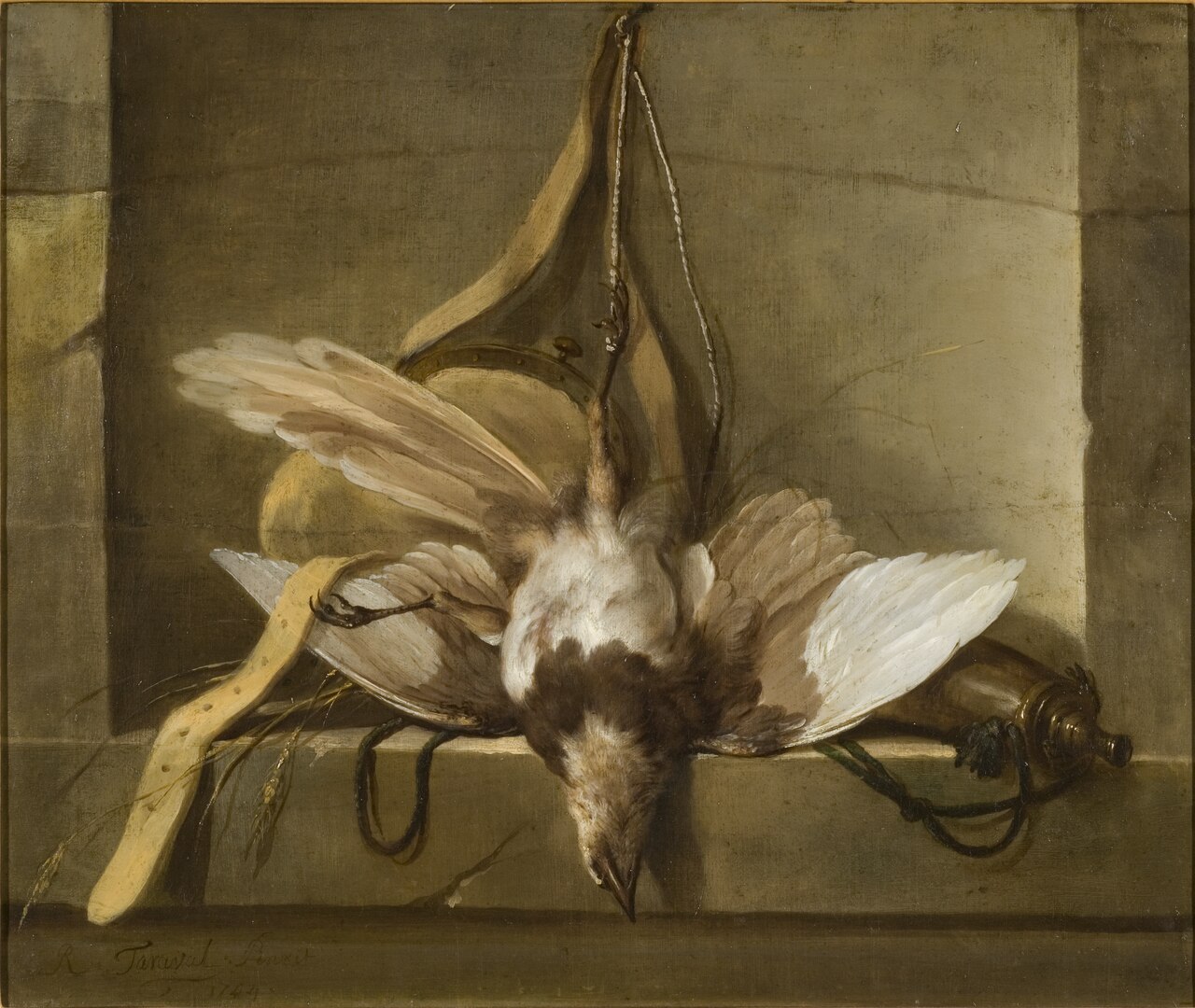
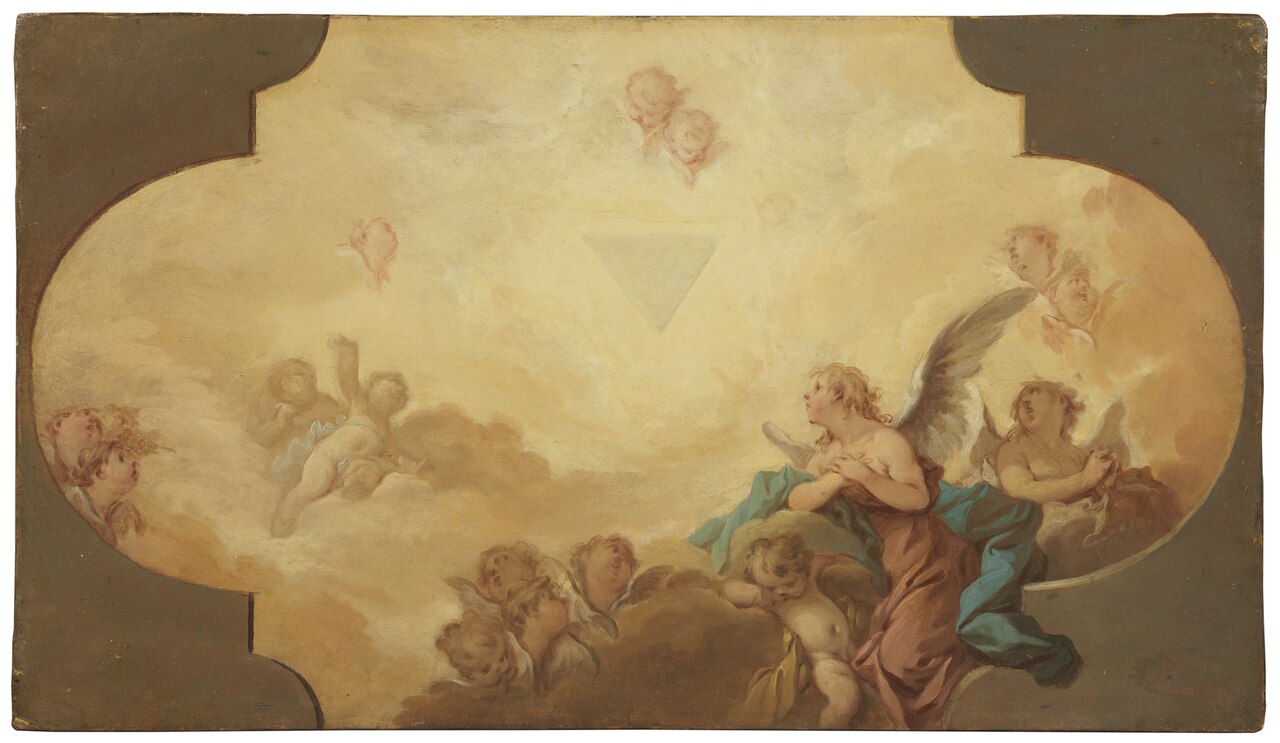
Signature techniques Taraval’s paintings reveal a consistent handling of light and texture. He favoured a soft, diffused illumination that models forms without harsh contrasts, giving his figures a gentle three‑dimensionality. In his still‑life compositions, fine brushwork renders the plumage of birds, the sheen of metal, and the tactile surfaces of hunting gear with a meticulousness that suggests close observation. His allegorical studies often employ a restrained palette of pastel blues, pinks, and ochres, punctuated by brighter accents to draw the viewer’s eye to focal points such as a birdcage or a divine eye. The artist also utilised delicate glazes to achieve depth in skin tones and fabric, a technique common among French painters of the period but less typical in Swedish circles at the time.
Major works - **Still Life with a Dead Bird and Hunting Gear (1744)** – This composition brings together a dead bird, a set of hunting implements, and assorted accessories arranged on a darkened surface. The work demonstrates Taraval’s skill in rendering tactile details: the feathered plumage is rendered with fine, almost stippled strokes, while the metallic sheen of the weapons catches the subdued light. The painting reflects a moralising tradition of still‑life, reminding viewers of the fleeting nature of life and the vanity of sport. - **Four amorins playing with a birdcage** – In this genre piece, four young lovers are depicted in a lighthearted pose surrounding a birdcage. The figures are rendered with the characteristic Rococo grace, their drapery flowing and their expressions playful. The birdcage functions as a symbolic element, hinting at themes of freedom and confinement. - **Three amorins playing with a bird's nest (1747)** – Similar in theme to the previous work, this painting shows three youths interacting with a bird’s nest. The delicate handling of the nest’s twigs and the soft modelling of the children’s faces illustrate Taraval’s ability to blend narrative content with meticulous observation of natural objects. - **Angels Carrying the Cross. Study (1744)** – This preparatory drawing for a larger religious composition displays a group of angels bearing a crucifix. The study is notable for its dynamic arrangement of figures and for the subtle chiaroscuro that gives a sense of depth while maintaining a serene, spiritual atmosphere. - **Angels Looking up at the Eye of God. Study (1744)** – Another study focusing on celestial beings, this work captures the moment of divine revelation as angels gaze upward. The composition is marked by a careful balance between the ethereal quality of the angels’ wings and the luminous suggestion of an unseen divine eye, achieved through fine hatching and light washes.
Influence and legacy Guillaume Taraval’s career in Sweden coincided with a period of artistic transition, when the Swedish court sought to align itself with broader European trends. By bringing French techniques and a Rococo sensibility to Stockholm, Taraval helped to broaden the visual vocabulary of Swedish painters and contributed to the early formation of an academic tradition that would later be institutionalised at the Royal Swedish Academy of Arts. Although his name is not as widely recognised as some of his contemporaries, his works remain valuable evidence of cross‑cultural exchange in the 18th century. The surviving paintings and studies attributed to him are held in Swedish museum collections, where they continue to be examined for their technical finesse and their role in shaping the aesthetic direction of Swedish art during a formative era.
Frequently asked questions
Who was Guillaume Taraval?
Guillaume Taraval (1701–1750) was a French‑born painter who worked mainly in Sweden, producing genre, still‑life, and religious works for the royal court.
What artistic style or movement is he associated with?
His style blends French Rococo elegance with Swedish naturalism, but he is not tied to a single, formally defined movement.
What are his most famous works?
Key works include *Still Life with a Dead Bird and Hunting Gear* (1744), *Four amorins playing with a birdcage*, *Three amorins playing with a bird's nest* (1747), and two angel studies from 1744.
Why does he matter in art history?
Taraval introduced French decorative techniques to Sweden, influencing the early development of Swedish academic painting and helping to align Swedish court art with broader European trends.
How can I recognise a painting by Taraval?
Look for soft, diffused lighting, delicate pastel palettes, meticulous rendering of natural details such as feathers or metal, and a graceful, Rococo‑inspired composition that balances narrative charm with technical precision.