Giuseppe Baldrighi
1722 – 1803
In short
Giuseppe Baldrighi (1722–1803) was an Italian painter active in the mid‑18th century, known for his portraits and decorative works that bridge the late Baroque/Rococo style and early Neoclassicism. He worked mainly in Parma, producing notable court commissions for the Bourbon‑Parma family.
Notable works
.jpg)



Early life Giuseppe Baldrighi was born in 1722 in the Lombard town of Stradella. Details of his family background and formal training are scarce, and his nationality is not explicitly recorded in contemporary sources. It is typical for artists of his generation to have begun their apprenticeship in a regional workshop, likely in nearby Milan or Parma, where the artistic climate combined the lingering grandeur of the Baroque with the emerging lightness of the Rococo.
Career and style Baldrighi established his professional reputation in Parma, a cultural centre under the patronage of the Bourbon‑Parma dukes. By the 1750s he was receiving commissions from the ducal court, a testament to his skill in portraiture and decorative painting. His style reflects the transition from the exuberant ornamentation of the late Baroque to the more intimate, pastel‑toned Rococo, while also anticipating the restrained classicism that would dominate the late 18th century. In his portraits, Baldrighi combined a keen observation of facial character with a graceful handling of fabrics and accessories, aligning his work with the tastes of aristocratic patrons who favoured elegance over dramatic intensity.
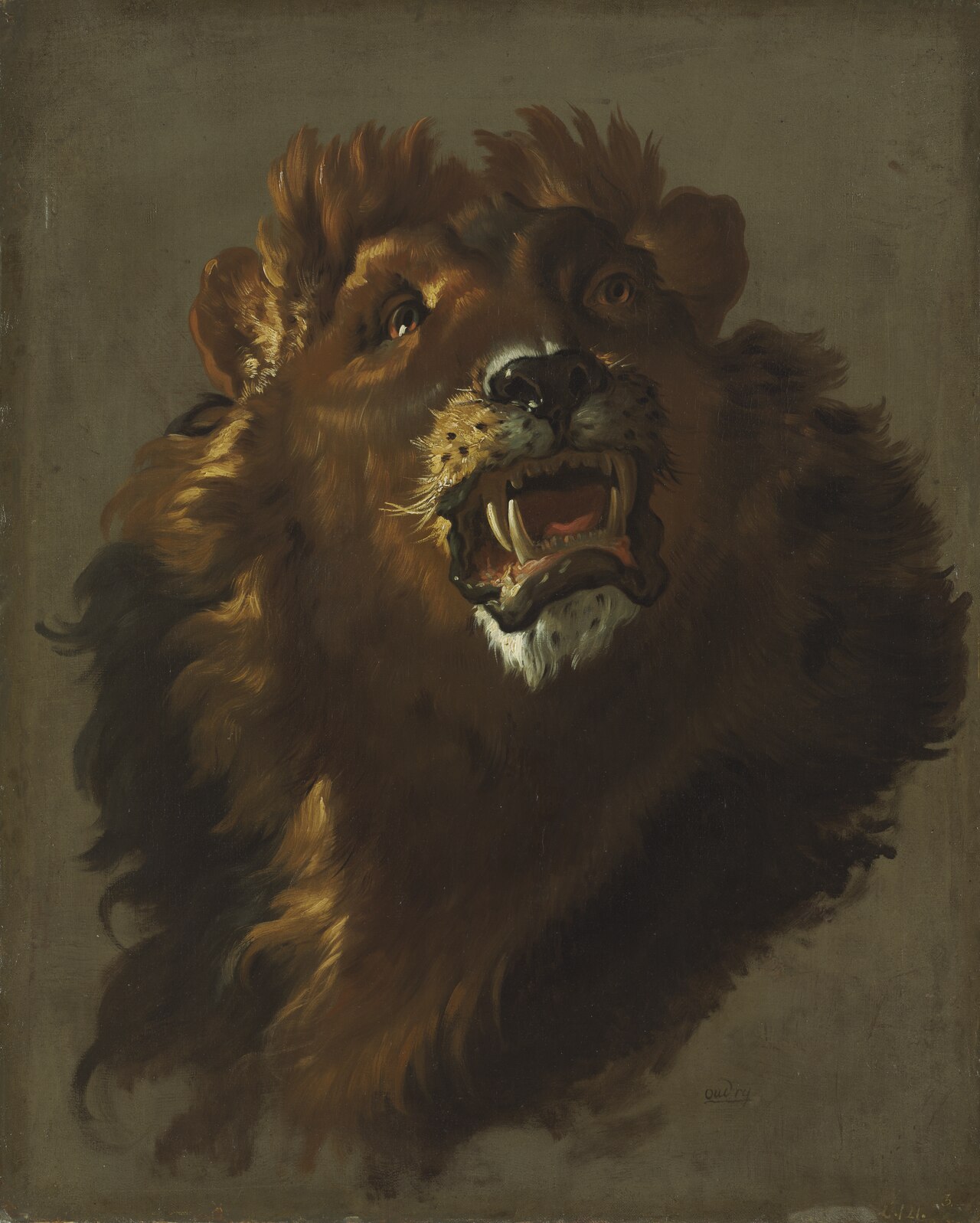
Signature techniques Baldrighi’s paintings are distinguished by several recurring technical choices. He employed a delicate, layered brushwork that allowed subtle gradations of light, creating a soft modelling of flesh and textiles. His palette often favoured muted earth tones punctuated by richer reds and blues for clothing, a hallmark of Rococo sensibility. The artist also demonstrated a precise control of chiaroscuro, using gentle shadows to suggest volume without the stark contrasts typical of earlier Baroque masters. In animal studies such as his "Lion" (1754), he captured the texture of fur through fine, almost stippled strokes, showcasing his versatility beyond portraiture.
Major works - **Family of Don Philip of Bourbon (1757)** – This group portrait presents the ducal family in a relaxed yet formal arrangement. Baldrighi balances individual likenesses with a cohesive composition, highlighting the status of each member through subtle cues in attire and posture. - **The Artist and his Wife (1757)** – A self‑portrait that pairs Baldrighi with his spouse, offering insight into his personal life. The work is notable for its intimate atmosphere, the tender interaction between the figures, and the meticulous rendering of clothing textures. - **Lion (1754)** – A study of a lion, likely intended as a decorative element for a court interior. The painting demonstrates Baldrighi’s skill in animal anatomy and his ability to convey the creature’s power through restrained brushwork and a restrained colour scheme. - **Portrait of Maria Luisa de Parma (1765)** – Depicting the duchess Maria Luisa, this portrait exemplifies Baldrighi’s mastery of regal representation. The sitter is rendered with dignified poise, the sumptuous fabrics and fine jewellery rendered with luminous detail, reflecting both the artist’s technical prowess and the court’s taste for refined elegance. - **Portrait of Isabella of Bourbon‑Parma (1750)** – One of Baldrighi’s earlier court commissions, this portrait captures the young Isabella with a softness that foreshadows his later Rococo‑inflected style. The work balances youthful freshness with the dignified bearing expected of a noblewoman.
Influence and legacy Baldrighi’s career coincided with a period of artistic transition in northern Italy. By serving the Bourbon‑Parma court, he helped to disseminate a hybrid aesthetic that merged the ornamental flair of the Rococo with an emerging classical restraint. His portraits set a standard for courtly representation in Parma, influencing younger artists who emulated his compositional clarity and subtle colour harmonies. Although he did not achieve the fame of contemporaries such as Giovanni Battista Tiepolo, Baldrighi’s works remain valuable documentation of mid‑18th‑century aristocratic culture. Modern scholarship regards his paintings as essential examples of the regional adaptation of broader European styles, and his pieces continue to be displayed in Italian museums and private collections, preserving his contribution to the artistic heritage of the period.
Frequently asked questions
Who was Giuseppe Baldrighi?
Giuseppe Baldrighi was an Italian painter (1722–1803) who worked mainly in Parma and is known for his portraits and decorative works that bridge the late Baroque/Rococo and early Neoclassical styles.
What artistic style or movement is Baldrighi associated with?
His work reflects a transition from the late Baroque through the Rococo to early Neoclassicism, combining delicate brushwork, pastel palettes, and a restrained classicism.
What are Baldrighi's most famous works?
Key works include the "Family of Don Philip of Bourbon" (1757), "The Artist and his Wife" (1757), the animal study "Lion" (1754), and portraits of Maria Luisa de Parma (1765) and Isabella of Bourbon‑Parma (1750).
Why is Baldrighi important in art history?
He played a pivotal role in shaping the visual language of the Parma court, illustrating the stylistic shift of mid‑18th‑century Italy and influencing subsequent regional portrait painters.
How can I recognise a Baldrighi painting?
Look for his characteristic soft modelling of faces, refined handling of fabrics, a muted yet rich colour palette, and subtle chiaroscuro that together create an elegant, courtly ambience.