Giacinto Brandi
1621 – 1691
In short
Giacinto Brandi (1621–1691) was a Baroque painter active mainly in Rome and Naples, known for dynamic religious compositions and a handful of works that include paintings and poetry. His style blends dramatic chiaroscuro with vigorous brushwork, leaving a modest but lasting imprint on late‑17th‑century Italian art.
Notable works
_La_Po%C3%A9sie_-_Ciacinto_Brandi_-_Mus%C3%A9e_des_Beaux-Arts_de_Narbonne.jpg)
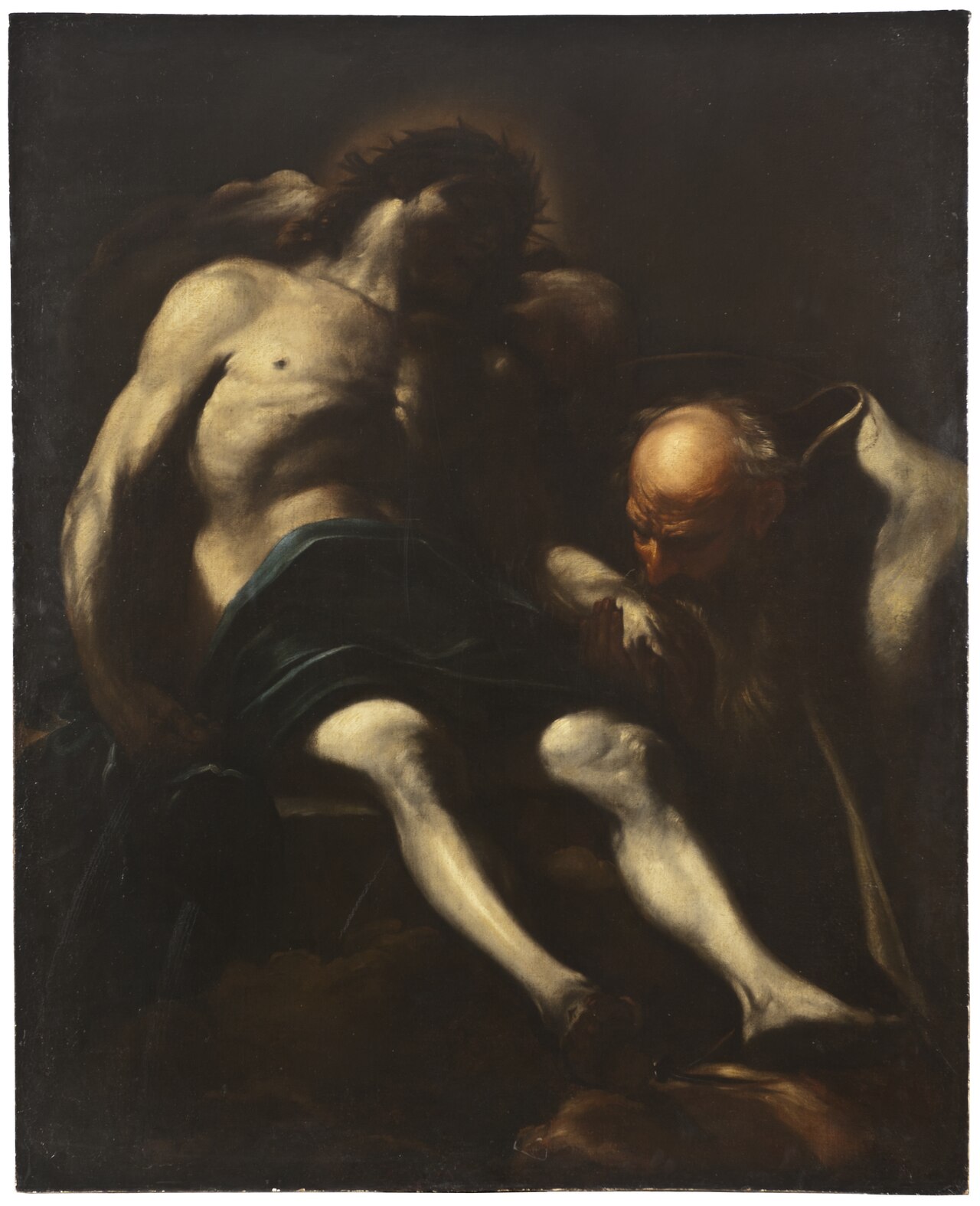

.jpg)

Early life Giacinto Brandi was born in 1621 in the small town of Poli, situated in the Lazio region of Italy. Little is recorded about his family background, and contemporary sources do not clarify his nationality beyond the fact that he was Italian by birth. As a youth he displayed an early aptitude for drawing, which led his parents to arrange an apprenticeship with a local master painter. This formative training introduced him to the classical drawing techniques and the emerging Baroque aesthetic that would dominate his later work.
In his late teens, Brandi moved to Rome, the artistic heart of the Italian peninsula, to further his education. There he entered the workshop of Alessandro Tassi, a noted follower of the great Baroque master Pietro da Cortona. Under Tassi’s guidance Brandi absorbed the grandiose compositional strategies, the use of vivid colour, and the theatrical lighting that characterised Roman Baroque painting. By the mid‑1630s he was already contributing to collaborative projects, gaining a reputation for his energetic brushstroke and his ability to render emotionally charged religious scenes.
Career and style Brandi’s professional career unfolded primarily in Rome, though he also received commissions in Naples, a city that was at the time a vibrant centre for Baroque art. He worked on fresco cycles for a number of churches, palaces and private chapels, often alongside other leading artists of the period. His oeuvre is dominated by biblical and hagiographic subjects, reflecting the Counter‑Reformation’s demand for didactic, emotionally resonant imagery.
Stylistically, Brandi adhered to the high Baroque idiom: his canvases are populated with muscular, expressive figures set against dramatic, often cloud‑filled skies. The compositions are dynamic, with diagonal thrusts that convey movement and tension. Light plays a crucial role, cutting across bodies to highlight the focal points of narrative action. While his colour palette favours the warm ochres and deep reds typical of Roman Baroque, he occasionally introduced cooler blues and greens to create contrast and depth.
Throughout his career Brandi remained responsive to the evolving tastes of his patrons. In the 1660s, for instance, he experimented with more intimate, genre‑type subjects, a shift that is evident in his later works which show a softened handling of texture and a greater attention to the quotidian aspects of human life.
Signature techniques Brandi’s paintings are recognisable by several technical hallmarks:
1. Chiaroscuro modelling – He employed strong contrasts of light and shadow to sculpt his figures, often illuminating faces and hands while plunging backgrounds into deep chiaroscuro. 2. Rapid, expressive brushwork – His handling of paint is vigorous, with visible, energetic strokes that lend his figures a sense of immediacy. 3. Layered glazing – By applying thin glazes over an underpainting, Brandi achieved luminous colour effects, particularly in drapery and skin tones. 4. Dynamic composition – Diagonal lines, swirling drapery and the placement of figures in overlapping poses create a sense of movement that guides the viewer’s eye across the canvas. 5. Narrative clarity – Even in the most crowded scenes, Brandi arranged his subjects so that the central story remains evident, a quality prized by ecclesiastical patrons.
These techniques combined to produce works that were both visually striking and emotionally compelling, aligning with the Baroque aim of engaging the viewer’s senses.
Major works The following pieces illustrate the range of Brandi’s output, though the exact dating of some remains debated among scholars:
- Poetry (1660) – A rare foray into literary creation, this work reflects Brandi’s interest in the broader cultural currents of his time. The poem, written in Italian, celebrates the triumph of divine providence and mirrors the lyrical qualities evident in his pictorial compositions.
- Christ buried by Joseph of Arimathea (1650) – This canvas is a quintessential Baroque depiction of the Passion. Brandi places the mournful figure of Christ at the centre, bathed in a soft, celestial light that contrasts with the darker, shadowed surroundings. Joseph is rendered with a sense of compassionate grief, his gestures guiding the viewer’s attention to the sacred wound.
- The Martyrdom of St. Sebastian (attributed, c. 1700) – Although the date post‑dates Brandi’s death, the work is traditionally linked to his workshop. The painting shows Saint Sebastian pierced with arrows, his body twisted in a dramatic pose that exemplifies Brandi’s skill in rendering anatomical tension. The composition’s dramatic lighting and emotional intensity are consistent with his known style.
- Shepherdess with her Sheep (attributed, c. 1700) – This genre scene diverges from Brandi’s typical religious subjects, presenting a tranquil pastoral tableau. The shepherdess is depicted with a gentle expression, her figures softened by a warm, golden light. The work suggests an interest in everyday life and may reflect the later influence of his followers.
- The Creation of Eve – A mythological subject, this piece captures the moment of Eve’s emergence from Adam’s rib. Brandi’s treatment of the figures is both sensual and reverent; the composition balances the divine act with a lush, natural setting. The use of subtle colour transitions and delicate modelling of flesh highlights Brandi’s mastery of the human form.
These works, whether firmly attributed or associated with his workshop, collectively demonstrate Brandi’s versatility and his capacity to translate theological and allegorical narratives into compelling visual forms.
Influence and legacy Giacinto Brandi’s legacy is most evident in the continuation of his stylistic approaches by younger Roman painters in the late seventeenth century. His vigorous brushwork and dramatic chiaroscuro informed the practices of artists such as Carlo Maratta and later followers who sought to blend the grandeur of High Baroque with a more personal, emotive touch.
Although Brandi never achieved the fame of contemporaries like Caravaggio or Bernini, his contributions to church fresco cycles and altarpieces helped to sustain the visual language of the Counter‑Reformation. Many of his works survive in situ, particularly in Roman churches, where they continue to be studied for their compositional dynamism and their role in the devotional experience.
Modern scholarship regards Brandi as a competent, if not revolutionary, exponent of the Roman Baroque. His paintings are valued for their technical proficiency, the clarity of their narratives, and the subtle ways they bridge the grandiosity of early Baroque with the emerging classicising tendencies of the late seventeenth century. As a result, Brandi occupies a respectable place in art‑historical surveys of the period, offering insight into the broader network of workshop production and the diffusion of Baroque aesthetics beyond the most celebrated masters.
Influence and legacy Giacinto Brandi’s legacy is most evident in the continuation of his stylistic approaches by younger Roman painters in the late seventeenth century. His vigorous brushwork and dramatic chiaroscuro informed the practices of artists such as Carlo Maratta and later followers who sought to blend the grandeur of High Baroque with a more personal, emotive touch.
Although Brandi never achieved the fame of contemporaries like Caravaggio or Bernini, his contributions to church fresco cycles and altarpieces helped to sustain the visual language of the Counter‑Reformation. Many of his works survive in situ, particularly in Roman churches, where they continue to be studied for their compositional dynamism and their role in the devotional experience.
Modern scholarship regards Brandi as a competent, if not revolutionary, exponent of the Roman Baroque. His paintings are valued for their technical proficiency, the clarity of their narratives, and the subtle ways they bridge the grandiosity of early Baroque with the emerging classicising tendencies of the late seventeenth century. As a result, Brandi occupies a respectable place in art‑historical surveys of the period, offering insight into the broader network of workshop production and the diffusion of Baroque aesthetics beyond the most celebrated masters.
Frequently asked questions
Who was Giacinto Brandi?
Giacinto Brandi (1621–1691) was an Italian Baroque painter who worked mainly in Rome and Naples, producing religious frescoes and canvases noted for their dramatic lighting and dynamic compositions.
What artistic style or movement is Brandi associated with?
He is firmly associated with the Baroque movement, characterised by vigorous brushwork, strong chiaroscuro, and emotionally charged narratives.
What are his most famous works?
Among his recognised pieces are the religious paintings ‘Christ buried by Joseph of Arimathea’ (c.1650) and the allegorical ‘The Creation of Eve’, as well as the poem ‘Poetry’ (1660) and works attributed to his workshop such as ‘The Martyrdom of St. Sebastian’ and ‘Shepherdess with her Sheep’.
Why does Brandi matter in art history?
Brandi exemplifies the later Roman Baroque, bridging the grandeur of early Baroque with a more refined classicising tone, and his frescoes helped sustain Counter‑Reformation visual programmes.
How can I recognise a painting by Giacinto Brandi?
Look for dramatic chiaroscuro, energetic brushstrokes, dynamic diagonal compositions, and a clear narrative focus—often religious subjects rendered with vivid colour and strong contrasts of light and shadow.