Georg David Matthieu
1737 – 1778
In short
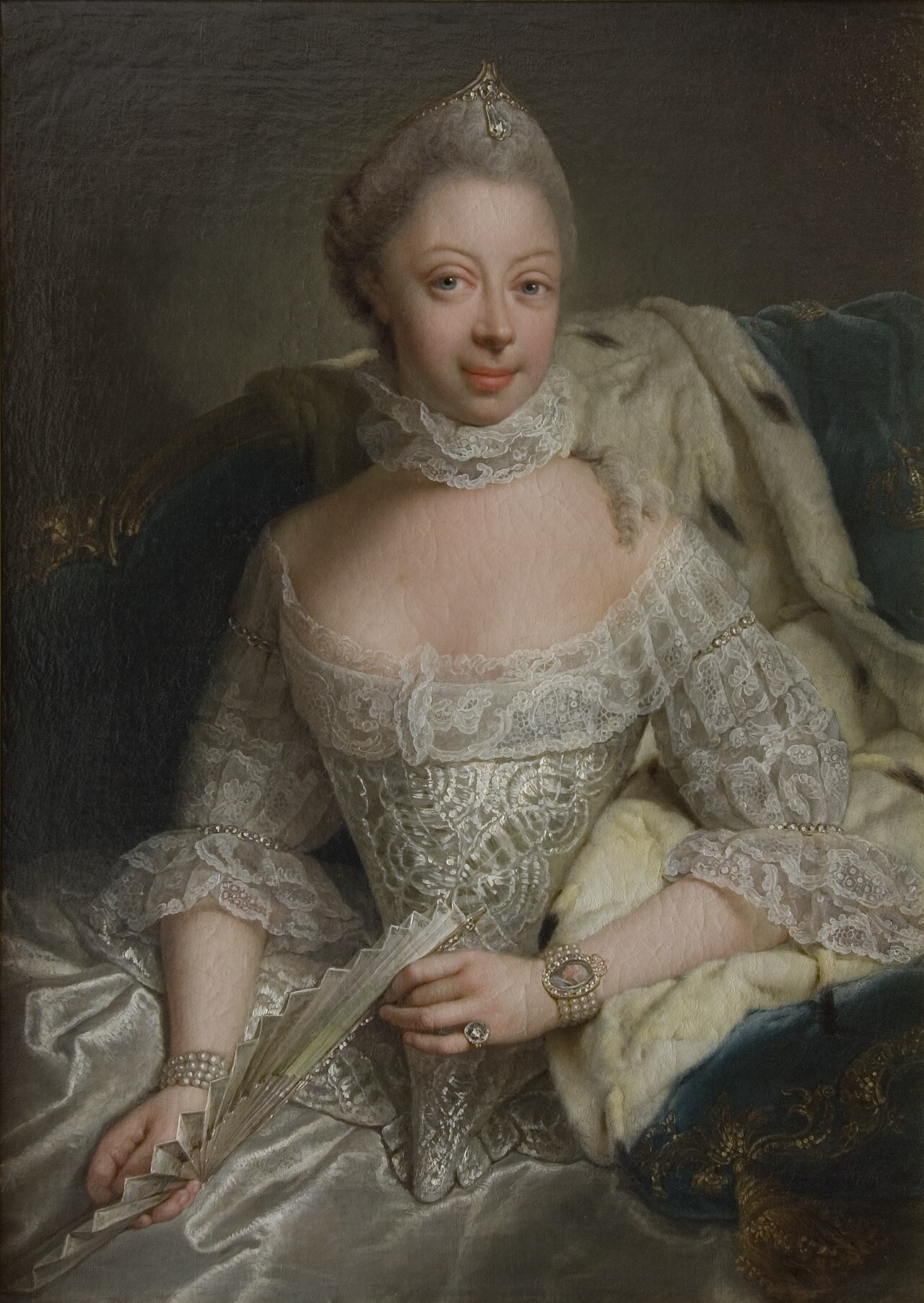
Georg David Matthieu (1737–1778) was a German portrait painter and engraver who worked in the Rococo style and served as court painter to the Duke of Mecklenburg, producing works such as the Portrait of Charlotte of Mecklenburg‑Strelitz.
Notable works

_-_Chamber_Councilor_Joachim_Ulrich_Giese_-_2042_-_Gem%C3%A4ldegalerie.jpg)
_-_Chamber_Councilor_Sophie_Elisabeth_Giese,_born_von_Schwerin_-_2043_-_Gem%C3%A4ldegalerie.jpg)

Early life Georg David Matthieu was born in 1737 in Berlin, the capital of the Kingdom of Prussia. Little is recorded about his family background, but the artistic environment of mid‑eighteenth‑century Berlin offered ample opportunities for a young talent to encounter the thriving trades of engraving and painting. Matthieu likely received his initial training in local workshops, where the decorative exuberance of the Rococo style was already influencing German court art. By the time he reached his twenties, he had begun to specialise in portraiture, a genre that demanded both technical skill and the ability to convey the status of his aristocratic patrons.
Career and style Matthieu’s professional breakthrough came with his appointment as court painter to the Duke of Mecklenburg. In this capacity he produced portraits for the ducal family and for members of the regional nobility, a role that required a blend of formal representation and the lighter, more intimate touch characteristic of Rococo portraiture. His paintings display the typical Rococo palette—soft pastels, delicate chiaroscuro, and a focus on elegance rather than dramatic narrative. Matthieu’s work reflects the broader German adaptation of Rococo, where the style was tempered by a respect for realism and the precise rendering of fabrics, jewellery, and facial features.
Signature techniques Matthieu combined his engraving background with painting, giving his portraits a finely detailed surface. He employed a layered approach to paint, building up the flesh tones with glazes that produced a luminous quality. In the rendering of textiles, he used fine brushwork to suggest the sheen of silk and brocade, often accentuating the play of light on folds. His handling of hair shows a delicate stippling technique, a carry‑over from engraving that adds texture without overwhelming the composition. The overall effect is a balanced composition where the sitter appears poised yet approachable, embodying the Rococo ideal of refined grace.
Major works Among Matthieu’s surviving pieces, several stand out for their historical and artistic significance. The **Portrait of Charlotte of Mecklenburg‑Strelitz (1762)** captures the future queen of Great Britain before her marriage to King George III. The portrait presents Charlotte in a modest yet elegant attire, with a subtle background that foregrounds her dignified expression. This work exemplifies Matthieu’s skill in conveying both the personal character and the social rank of his sitter.
The Portrait of a man in armour demonstrates Matthieu’s ability to merge the martial iconography of a court official with Rococo softness. The sitter’s armour is rendered with precise attention to metal texture, while the surrounding drapery and the sitter’s pose retain a gentle, almost lyrical quality.
In 1763 Matthieu painted two members of the Giese family: Chamber Councilor Joachim Ulrich Giese and Chamber Councilor Sophie Elisabeth Giese, born von Schwerin. Both portraits share a compositional similarity, placing the figures against a muted backdrop that highlights their dignified attire and the subtle play of light across their faces. The works serve as a visual record of the administrative elite of Mecklenburg during the mid‑eighteenth century.
Finally, Die Verführung zum Spiel (Prinz und Prinzessin von Mecklenburg) (1764) is a genre piece rather than a strict portrait. The painting depicts a young prince and princess engaged in playful activity, illustrating Matthieu’s capacity to render narrative scenes with the same attention to detail as his portraiture. The work’s light-hearted subject matter aligns with Rococo’s fascination with leisure and courtly amusement.
Influence and legacy Although Matthieu did not achieve the fame of contemporaries such as Johann Zoffany or François Boucher, his contributions to the visual culture of Mecklenburg remain valuable. His portraits provide insight into the dress, etiquette, and aesthetic preferences of German court society in the 1760s. By blending engraving techniques with painting, Matthieu helped to forge a distinctive regional style that balanced the ornamental exuberance of Rococo with a Germanic emphasis on precision.
Matthieu’s works are preserved in several German collections, where they continue to be studied for their technical execution and their role in documenting the aristocratic networks of the period. Contemporary scholars view his oeuvre as an example of how provincial courts adopted and adapted the pan‑European Rococo language, thereby enriching the broader narrative of eighteenth‑century art history. His death in 1778 in Ludwigslust, the ducal capital, marked the end of a career that, while modest in scale, left a clear imprint on the visual identity of Mecklenburg’s elite.
Overall, Georg David Matthieu stands as a representative figure of the German Rococo court painter, whose meticulous portraits and occasional genre scenes capture the elegance and subtlety of his time.
Frequently asked questions
Who was Georg David Matthieu?
Georg David Matthieu (1737–1778) was a German portrait painter and engraver who worked in the Rococo style and served as court painter to the Duke of Mecklenburg.
What artistic style or movement is he associated with?
He is associated with the Rococo movement, characterised by light colours, elegant composition and refined detail.
What are his most famous works?
His most noted works include the Portrait of Charlotte of Mecklenburg‑Strelitz (1762), portraits of Chamber Councilors Joachim and Sophie Elisabeth Giese (1763), a Portrait of a man in armour, and the genre painting Die Verführung zum Spiel (1764).
Why is Georg David Matthieu important in art history?
Matthieu’s portraits document the attire and status of the Mecklenburg court, and his blend of engraving technique with painting exemplifies the regional adaptation of Rococo in Germany.
How can I recognise a painting by Matthieu?
Look for finely detailed textures, especially in fabrics and hair, a subtle pastel palette, and a balanced composition that combines realistic likeness with the graceful softness typical of Rococo portraiture.