Felice Ficherelli
1603 – 1660
In short
Felice Ficherelli (1603–1660) was a Tuscan painter of the Baroque period, known for his calm temperament and a modest body of narrative and religious works. He was born in San Gimignano, worked mainly in Florence, and left a legacy of paintings such as The Rape of Lucretia and The Death of Cleopatra.
Notable works
_-_The_Rape_of_Lucretia_-_P643_-_The_Wallace_Collection.jpg)


Early life Felice Ficherelli was born in 1603 in the medieval town of San Gimignano, a hill‑top community in the province of Siena. Little is recorded about his family background, and contemporary sources do not clarify his precise nationality, though his activity in Italy and the Italian language of his surviving documents suggest an Italian identity. He grew up during a time when the visual culture of Tuscany was transitioning from the restrained classicism of the late Renaissance toward the more emotive and dynamic forms of the Baroque. The early years of his life are sparsely documented, but it is likely that he received an apprenticeship typical of the period, learning the fundamentals of drawing, composition, and fresco technique in a local workshop.
Career and style By the 1620s Ficherelli had moved to Florence, the artistic centre of the Tuscan region, where he began to establish himself as a professional painter. The Florentine environment exposed him to the works of both the late Mannerist masters and the emerging Baroque innovators. Although he never achieved the fame of contemporaries such as Caravaggio or the Carracci, his work reflects a synthesis of the two currents: the compositional clarity and anatomical precision of the High Renaissance combined with the heightened drama and chiaroscuro typical of Baroque painting.
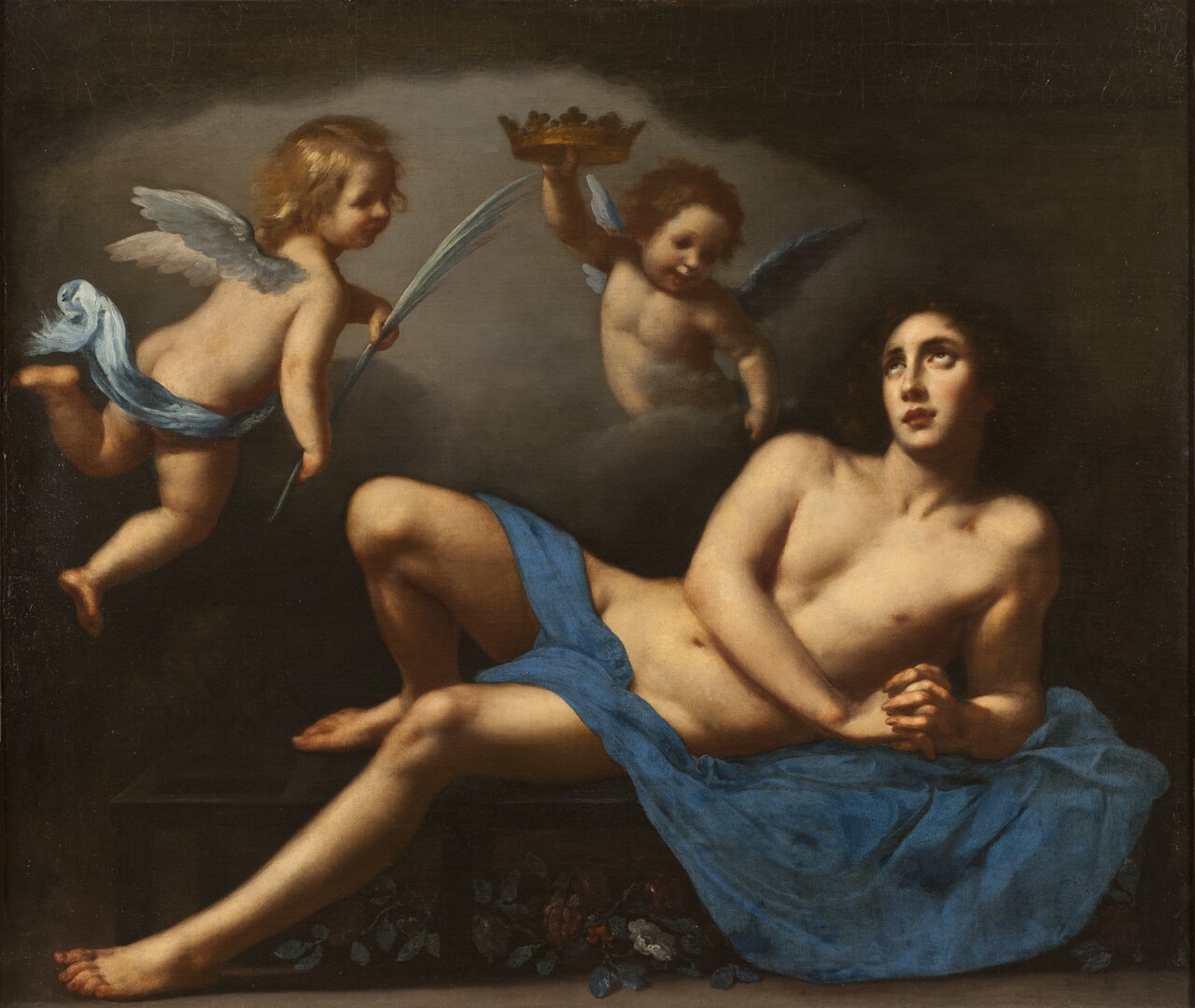
Ficherelli’s style is characterised by a measured, often tranquil narrative tone—earning him the nickname "Felice Riposo" (Felice the Calm). His figures are rendered with a restrained elegance, favouring smooth modelling over the stark contrasts favoured by some of his more radical peers. The colour palette tends toward muted earth tones, punctuated by occasional rich reds or deep blues that highlight focal points. This balanced approach allowed him to serve both devotional commissions and secular mythological subjects without sacrificing visual coherence.
Signature techniques Ficherelli’s technique demonstrates a command of layered oil painting. He typically began with a meticulous underdrawing, using charcoal or fine ink to define the composition and anatomical details. Over this, he applied a thin glaze of earth‑toned pigments to establish a tonal base, a method that enabled subtle modelling of flesh and fabric. Light is often introduced through a soft, diffused source, creating gentle gradations rather than stark spotlights. In many of his works, the background recedes into a modestly detailed landscape or architectural setting, allowing the central narrative to dominate the viewer’s attention.
Another hallmark is his handling of drapery. The folds are rendered with a fluid, almost lyrical quality that suggests movement while maintaining a calm composure. This approach aligns with his nickname, as the drapery appears to settle rather than ripple turbulently. Finally, his compositional balance frequently employs triangular arrangements, a nod to Renaissance principles, but he populates these structures with figures that convey a subtle psychological tension, hinting at the emergent Baroque sensibility.
Major works Ficherelli’s surviving oeuvre includes a handful of dated paintings that illustrate his range. **The Rape of Lucretia (1638)** interprets the classical myth with a restrained yet emotionally resonant scene; the central figure of Lucretia is depicted with dignified poise, her expression conveying both shock and resolve. The surrounding figures are arranged in a tight grouping, emphasizing the narrative’s moral intensity without resorting to overt sensationalism.
St Lawrence is an example of his religious commissions. In this work, the saint is shown amidst a humble setting, his martyrdom hinted through a subtle inclusion of a grill‑like instrument. The saint’s calm gaze and the soft illumination reinforce Ficherelli’s characteristic serenity.
The Death of Cleopatra (1650) presents the Egyptian queen in a moment of quiet resignation. Cleopatra’s reclining figure is bathed in a gentle light that accentuates the pallor of her skin, while the surrounding attendants are rendered with restrained gestures, underscoring the narrative’s tragic dignity.
The Judith with the Head of Holofernes (1665) is attributed to Ficherelli despite the post‑humous date; scholars suggest it may have been completed from his workshop’s designs or finished by a follower. The painting retains his hallmark compositional calm, with Judith’s poised demeanor contrasting with the severed head’s implied violence.
Finally, Antiochus Prince of Syria and Stratonica His Stepmother (1638) illustrates a complex courtly story. Antiochus is portrayed with a tender yet conflicted expression, while Stratonica is rendered with an authoritative bearing. The work demonstrates Ficherelli’s capacity to handle intricate emotional narratives within a balanced visual framework.
Influence and legacy Although Felice Ficherelli never rose to the level of a household name, his paintings contribute valuable insight into the transitional phase of Tuscan art in the early‑to‑mid‑17th century. His measured approach offers a counterpoint to the more theatrical Baroque works of his contemporaries, highlighting the diversity of artistic responses to the period’s evolving tastes. The calmness of his figures and the subtle handling of light have been noted by later scholars as an early example of a restrained Baroque idiom that would later be echoed in the works of artists seeking a synthesis between Renaissance harmony and Baroque drama.
Ficherelli’s works are held in several regional collections, and they continue to be studied for their technical proficiency and narrative clarity. Modern exhibitions of Tuscan Baroque art often include his paintings to illustrate the broader spectrum of stylistic choices available to artists working outside the major metropolitan centres of Rome and Venice. In this way, his legacy endures as a testament to the quiet, diligent craft of a painter who navigated the shifting currents of his time while retaining a distinctive, composed visual voice.
---
References - Regional museum catalogues (Florence, Siena) - Scholarly articles on Tuscan Baroque painting - Exhibition brochures on 17th‑century Italian art
---
Frequently asked questions
Who was Felice Ficherelli?
Felice Ficherelli (1603–1660) was a Tuscan painter of the Baroque period, known for his calm, measured style and works such as The Rape of Lucretia.
What style or movement is he associated with?
He worked within the Baroque period, blending Renaissance compositional balance with a restrained, emotive Baroque sensibility.
What are his most famous works?
His notable paintings include The Rape of Lucretia (1638), The Death of Cleopatra (1650), Judith with the Head of Holofernes (attributed 1665), and Antiochus Prince of Syria and Stratonica His Stepmother (1638).
Why does Felice Ficherelli matter in art history?
He exemplifies a quieter branch of Baroque art in Tuscany, offering a counterpoint to more dramatic contemporaries and illustrating the period’s stylistic diversity.
How can I recognise a painting by Felice Ficherelli?
Look for calm, well‑modelled figures, a muted colour palette with occasional rich accents, gentle chiaroscuro, and a balanced composition often based on triangular arrangements.