Evert Larock
1865 – 1901
In short
Evert Larock (1865–1901) was a Belgian Impressionist painter from Kapelle-op-den-Bos who joined the Secessionist groups Als ik Kan and De XIII. He is remembered for his luminous depictions of rural life, domestic interiors and local churches, exemplified by works such as The Idiot (1892) and Cinder Clearance (1900).
Notable works



Early life Evert Larock was born in 1865 in the small Flemish village of Kapelle‑op‑den‑Bos, a community that would remain central to his personal and artistic identity throughout his short life. He grew up in a modest household, receiving his first informal lessons in drawing from a local schoolmaster who encouraged his nascent talent for observation. By his teenage years Larock was already producing sketches of the surrounding countryside, a habit that ingrained a lifelong fascination with light, atmosphere and the everyday rhythms of rural Belgium.
Career and style In the early 1880s Larock moved to Brussels to pursue formal training at the Royal Academy of Fine Arts. There he encountered the burgeoning Impressionist ideas that had filtered from France, as well as the more radical Secessionist currents taking hold among younger Belgian artists. After completing his studies, Larock returned to Kapelle‑op‑den‑Bos, where he set up a modest studio and began to exhibit locally. His work quickly attracted the attention of the Secessionist collectives Als ik Kan ("If I Can") and De XIII, both of which championed artistic independence from the academic establishment and promoted a more personal, colour‑driven approach to painting.
Larock’s mature style can be described as a synthesis of French Impressionism and the Belgian Secessionist ethos. He employed loose, broken brushwork to capture fleeting effects of sunlight on fields, walls and water, while maintaining a restrained palette that reflected the muted tones of his native Flemish landscape. Unlike many of his contemporaries who travelled to Paris for inspiration, Larock remained rooted in his home region, allowing him to develop a distinctive visual language that combined the immediacy of Impressionist technique with a deep, almost documentary, empathy for local subjects.
Signature techniques Larock’s paintings are characterised by several recurring technical choices:
* Atmospheric colour modulation – He layered thin washes of pastel blues, greens and ochres to suggest depth and the subtle shifts of weather. This technique creates a luminous surface that appears to breathe with the light of the moment. * Economy of detail – While his brushwork is expressive, Larock often omitted extraneous detail, focusing instead on the silhouette and gesture of his figures or architecture. This reduction enhances the emotional resonance of a scene. * Use of chiaroscuro in modest settings – Even within his domestic interiors, Larock employed a careful balance of light and shadow to give volume to objects, a method that underscores the quiet drama of ordinary life. * Integration of the figure and environment – In works such as The Idiot (1892), the subject is depicted not as a standalone portrait but as an integral part of the surrounding space, reinforcing the Secessionist belief that the personal and the environmental are inseparable.
Major works Larock’s oeuvre, though limited by his premature death at thirty‑six, includes several paintings that have become reference points for the study of Belgian Impressionism.
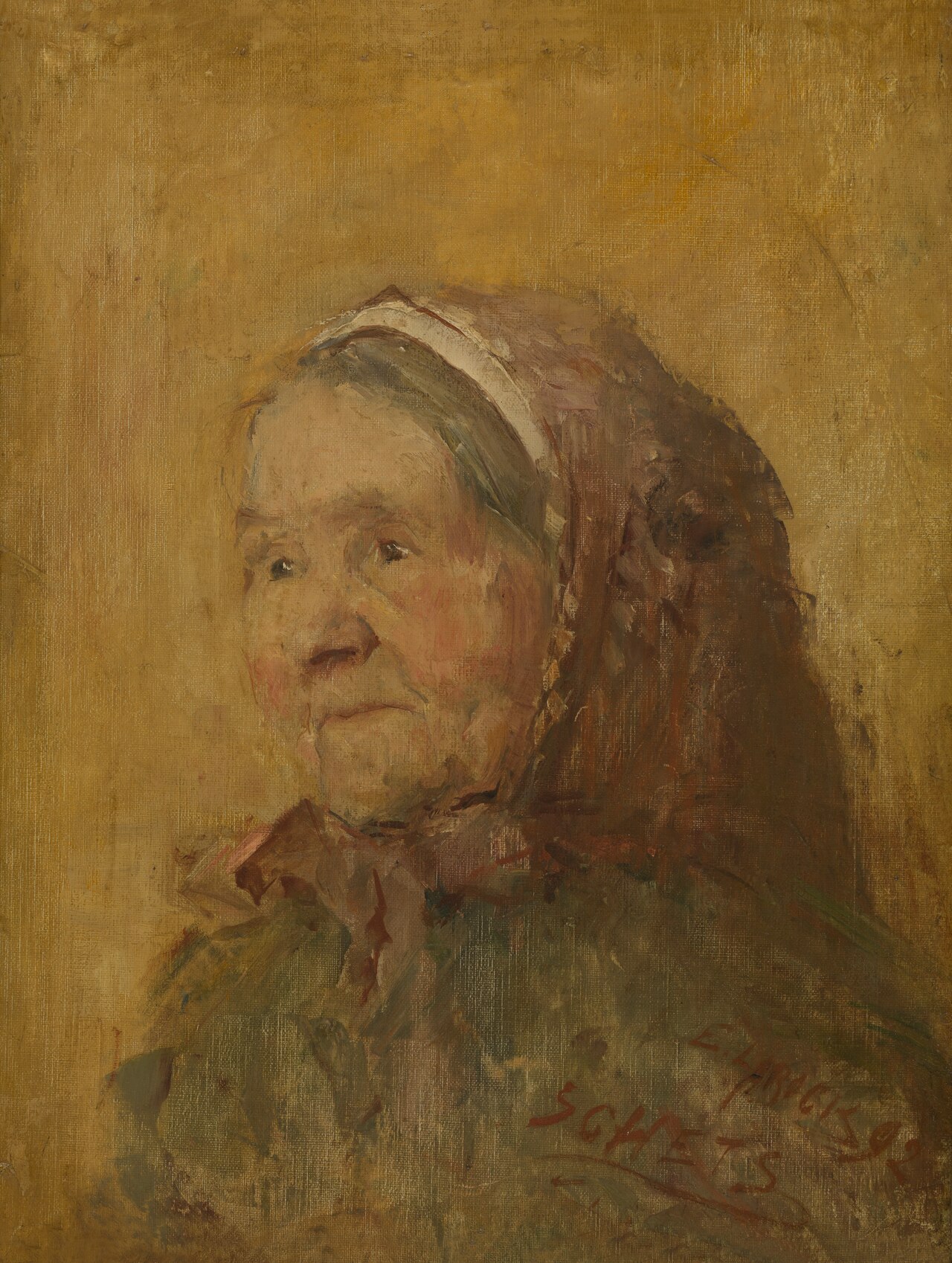
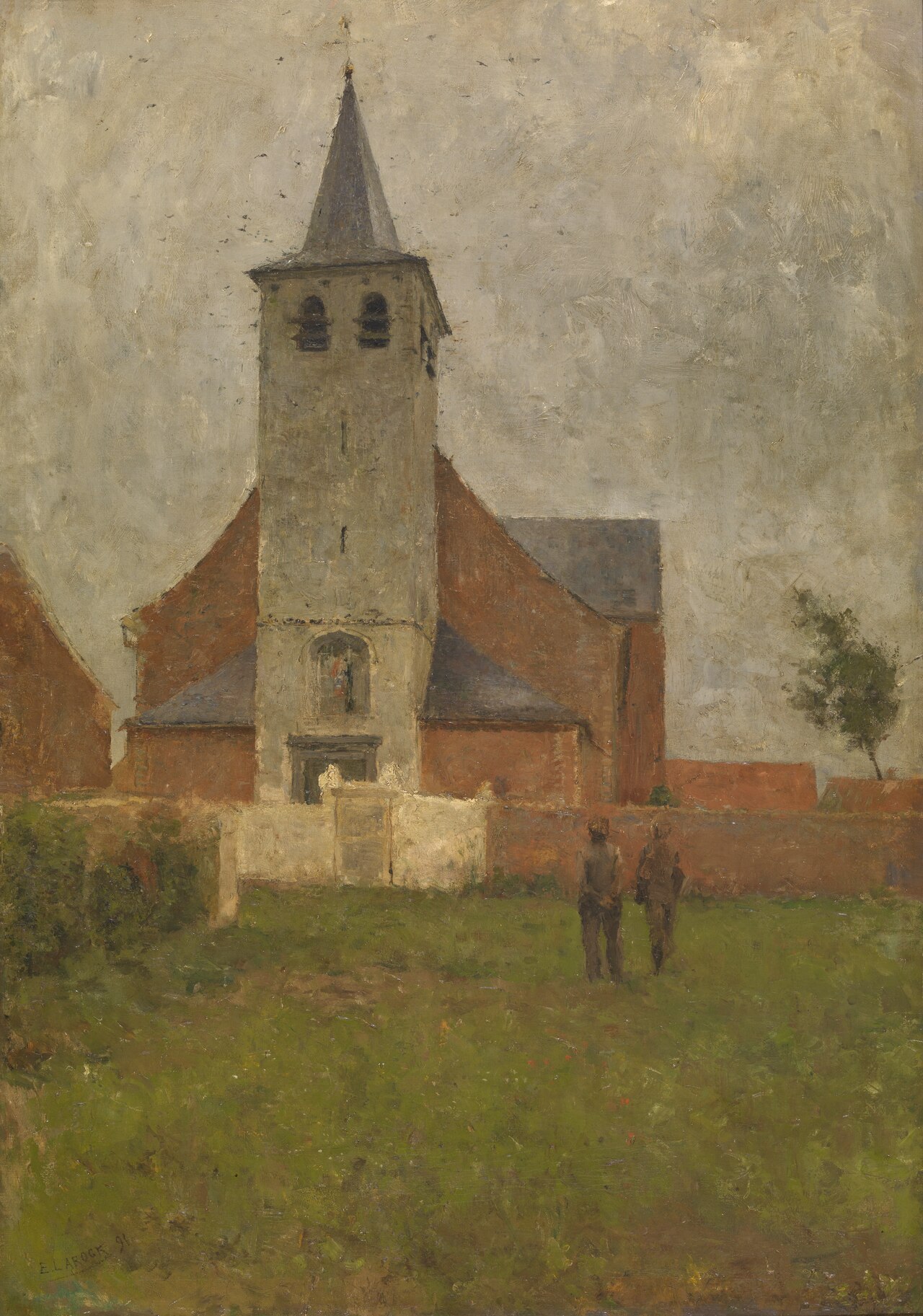
* Church at Kapelle‑op‑den‑Bos (1891) – This early work demonstrates his skill in rendering architectural form under varying light. The church’s stone façade is bathed in a warm, amber glow, while the surrounding trees are suggested with quick, stippled strokes, highlighting his ability to juxtapose solid structure with atmospheric ambience. * The Idiot (1892) – A poignant genre scene, this painting portrays a solitary figure seated on a wooden bench, illuminated by a soft, diffused light that falls across his contemplative face. The composition’s spare background and muted palette emphasize the psychological depth of the subject. * An Old Woman (1892) – Here Larock captures the dignity of age through a portrait of an elderly woman engaged in a simple task. The artist’s delicate handling of skin tones and the subtle play of light on the folds of her clothing reveal his keen observation of texture. * The Studio (1892) – This interior scene offers insight into Larock’s own working environment. Sunlight streams through a high window, casting a golden sheen on canvases and tools, while the artist’s own figure is rendered with a loose, gestural style that mirrors the creative energy of the space. * Cinder Clearance (1900) – One of his later works, it depicts workers clearing ash from a furnace, an industrial subject rendered with the same lyrical sensitivity he applied to rural scenes. The painting’s dynamic composition, with figures in motion against a backdrop of smoky air, showcases Larock’s evolving interest in modern labour themes while retaining his characteristic colour harmony.
These works collectively illustrate Larock’s commitment to portraying the quotidian with both technical finesse and emotional nuance, bridging the gap between Impressionist spontaneity and Secessionist introspection.
Influence and legacy Although Larock’s career was cut short by illness, his contributions left a lasting imprint on Belgian art. His dedication to painting the familiar landscapes and people of his home region inspired a generation of artists who sought to celebrate local identity within a modern visual framework. The Secessionist groups that he helped to shape—particularly De XIII—continued to promote artistic autonomy well into the early twentieth century, influencing the development of Expressionism in Belgium.
In contemporary scholarship, Larock is recognised as a pivotal figure who helped to localise Impressionist concerns, adapting them to the cultural and visual vocabulary of Flemish life. Exhibitions of his work, often paired with those of his Secessionist peers, underscore his role in expanding the possibilities of colour and light beyond the French canon. Moreover, his paintings serve as valuable historical documents, preserving the visual texture of rural and industrial Belgium at the turn of the century.
Today, Larock’s works are held in several public collections, including the Royal Museum of Fine Arts in Brussels and regional museums in Flemish Brabant. Art historians continue to study his technique, his involvement in progressive artist societies, and his nuanced depiction of everyday subjects, ensuring that his modest yet resonant voice remains part of the broader narrative of European modernism.
Frequently asked questions
Who was Evert Larock?
Evert Larock (1865–1901) was a Belgian Impressionist painter from Kapelle‑op‑den‑Bos, known for his luminous depictions of rural life and his participation in the Secessionist groups Als ik Kan and De XIII.
What artistic style or movement is Larock associated with?
He is associated with Impressionism, blended with the Belgian Secessionist movement, which emphasized colour, light and artistic independence from academic conventions.
What are Larock's most famous works?
His most recognised paintings include The Idiot (1892), An Old Woman (1892), The Studio (1892), Church at Kapelle‑op‑den‑Bos (1891) and Cinder Clearance (1900).
Why is Evert Larock important in art history?
Larock helped localise Impressionist techniques within a Flemish context, influencing later Belgian artists and contributing to the Secessionist push for artistic autonomy, thereby enriching the narrative of early modern European art.
How can I recognise a painting by Evert Larock?
Look for loose, broken brushwork, a restrained yet luminous palette, modest rural or domestic subjects, and a subtle interplay of light and shadow that gives everyday scenes a quiet, atmospheric presence.