Edmond de Schampheleer
1824 – 1899
In short
Edmond de Schampheleer (1824–1899) was a Belgian landscape painter and engraver from Brussels, known for his atmospheric depictions of Dutch waterways and rural scenes, including works such as Souvenir of Gouda (1878) and River Scene with a Steam Boat (1875).
Notable works
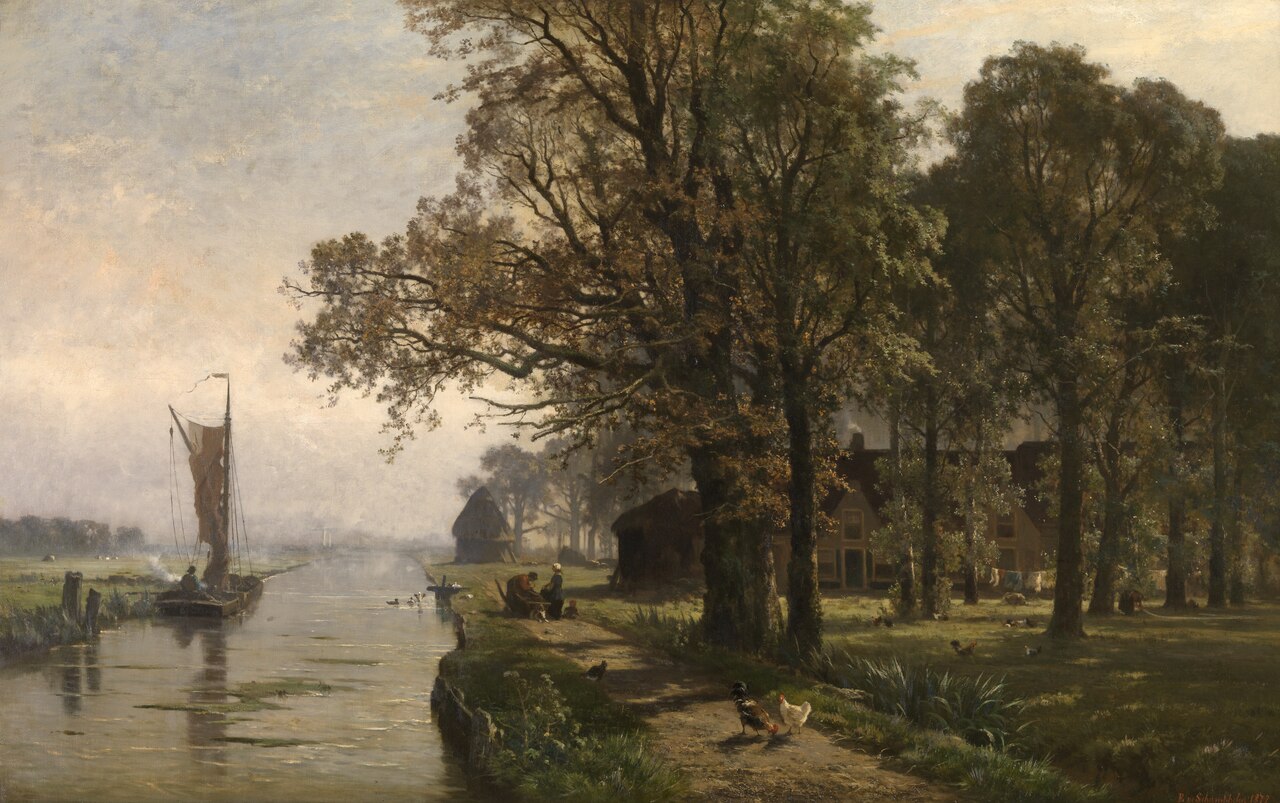
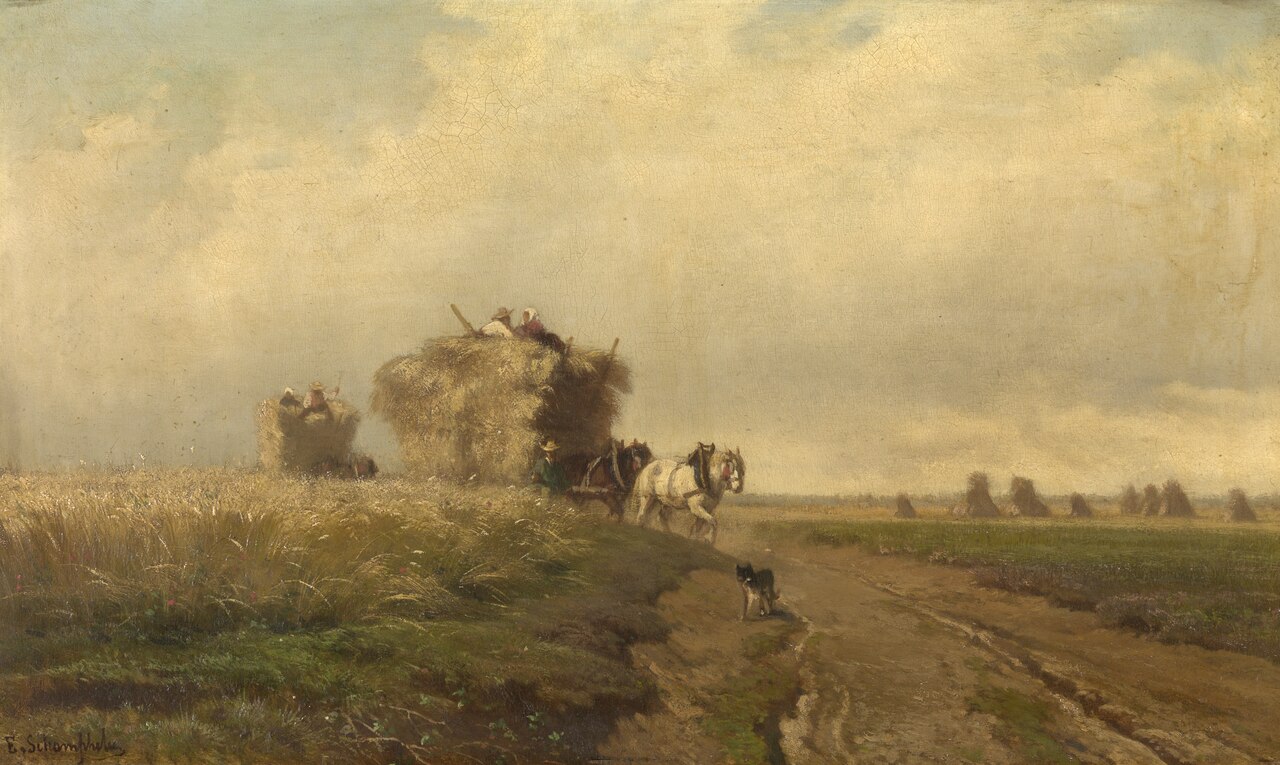
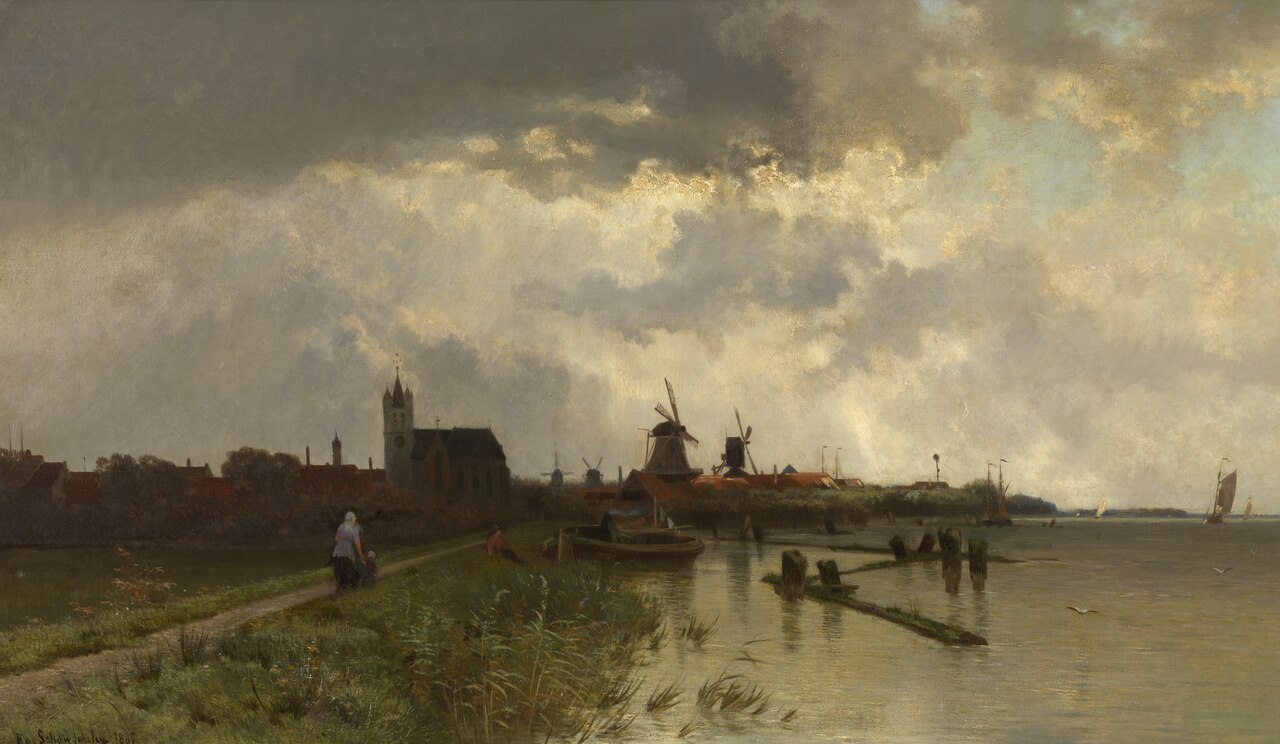
_-_Dordrecht,_with_Shipping_on_the_Meuse_-_1056-1886_-_Victoria_and_Albert_Museum.jpg)
_-_River_Scene_with_a_Steam_Boat_-_VIS.1463_-_Sheffield_Galleries_and_Museums_Trust.jpg)
Early life Edmond de Schampheleer was born in Brussels in 1824, a period when Belgium was establishing its own artistic identity following independence in 1830. Little is recorded about his family background, but the city’s vibrant artistic milieu offered ample opportunity for a young man with an eye for nature. He likely received his initial training in the ateliers that dotted Brussels, where drawing from nature and the study of light were core components of the curriculum. By the time he reached his twenties, de Schampheleer had begun to specialise in landscape drawing, a genre that was gaining popularity across the Low Countries as artists sought to capture the changing industrial and rural environments.
Career and style De Schampheleer’s professional career unfolded during a period of rapid transformation in Europe’s visual arts. While the dominant movements in Belgium at the time included Romanticism and the early stirrings of Realism, his work does not fit neatly into any single school. Instead, his paintings and engravings display a pragmatic realism tempered by a lyrical sensitivity to atmosphere. He travelled frequently to the Netherlands, a practice common among Belgian artists who found inspiration in the Dutch lowlands’ flat horizons, expansive skies, and bustling waterways. These trips informed his choice of subjects: river scenes, ports, and rural harvests rendered with careful observation of light and weather.
The artist’s palette is characterised by muted earth tones punctuated by the occasional bright hue of a sail or a sunrise. His compositions often balance human activity—such as ships, fishermen, or harvest labourers—with the broader landscape, suggesting a harmonious coexistence between people and nature. Although not formally aligned with the Société des Beaux‑Arts or any avant‑garde group, de Schampheleer exhibited regularly at the Brussels Salon, where his works were praised for their technical skill and evocative mood.
Signature techniques De Schampheleer worked in both oil and watercolor, but he is perhaps most renowned for his engravings, which allowed him to disseminate his images more widely. His prints reveal a meticulous line work that captures the texture of water, the grain of wooden hulls, and the delicate foliage of marshland reeds. He employed cross‑hatching to suggest atmospheric depth, a technique that conveys the diffusion of light across mist‑laden scenes. In his paintings, he often used a limited underpainting to establish tonal values before building up colour in thin, translucent layers—a method that enhances the sense of luminosity.
Another hallmark of his practice is the careful rendering of reflective surfaces. Whether depicting the gleam of a steam boat’s metal hull or the shimmering surface of a canal, de Schampheleer used subtle variations in tone to suggest movement and the passage of time. This attention to reflective detail gives his works a dynamic quality, despite their often static subject matter.
Major works Among de Schampheleer’s most celebrated pieces are several that directly reference Dutch locales. **Souvenir of Gouda (1878)** portrays the historic town’s market square seen from a gentle rise, with its iconic town hall and bustling stalls bathed in the soft light of early evening. The composition balances architectural detail with the surrounding countryside, illustrating the artist’s ability to integrate human habitations within a broader landscape.
Harvest captures a typical Flemish field at the height of grain collection. The canvas is filled with laborers bent over golden stalks, while a distant line of trees hints at the horizon. The work’s muted palette underscores the rhythm of agricultural life, and the careful placement of figures creates a narrative of communal effort.
Souvenir of the Zuiderzee (1867) shows the expansive Dutch inland sea before its reclamation, with a fleet of sailing vessels navigating a calm waterway. The sky dominates the scene, its cloud formations rendered with soft, layered brushstrokes that convey both the vastness of the sea and the intimate scale of the boats.
In Dordrecht, with Shipping on the Meuse (1873), de Schampheleer focuses on the bustling river traffic of the historic city of Dordrecht. The composition juxtaposes the industrious activity of cargo barges with the serene flow of the Meuse, illustrating the symbiotic relationship between commerce and environment.
Finally, River Scene with a Steam Boat (1875) marks an early acknowledgment of industrial progress. Here a steam-powered vessel cuts through a mist‑filled river, its smokestack a slender contrast against the sky. The painting reflects the tension between traditional waterborne transport and the emerging steam age, a theme that resonated with contemporary audiences.
These works, while diverse in subject, share a consistent approach: a focus on light, atmosphere, and the interplay between human endeavour and natural setting.
Influence and legacy Edmond de Schampheleer died in Molenbeek-Saint‑Jean in 1899, leaving behind a modest but respected body of work. Though he never achieved the fame of some of his Belgian contemporaries, his paintings and engravings contributed to a broader appreciation of the Low Countries’ waterways during a time of rapid industrialisation. His careful observation of light and his balanced compositions influenced younger Belgian landscape painters who sought to document the changing countryside without resorting to overt romanticisation.
In modern scholarship, de Schampheleer is frequently cited as an example of a transnational artist who bridged Belgian and Dutch visual cultures. His works appear in several museum collections, primarily in Belgium and the Netherlands, and are occasionally featured in exhibitions exploring 19th‑century landscape art. The enduring appeal of his river scenes lies in their ability to evoke a sense of place that feels both historically specific and universally resonant.
Today, collectors and historians value de Schampheleer’s engravings for their technical precision and for the way they document a vanishing landscape—particularly the pre‑reclamation Zuiderzee and early steam navigation. His paintings continue to be studied for their subtle handling of atmospheric effects, offering insight into how 19th‑century artists negotiated the tension between tradition and modernity.
Overall, Edmond de Schampheleer remains a noteworthy figure in the canon of Belgian landscape painting, representing a quiet yet persistent dedication to capturing the quiet drama of everyday scenery.
Frequently asked questions
Who was Edmond de Schampheleer?
Edmond de Schampheleer (1824–1899) was a Belgian landscape painter and engraver from Brussels, known for his atmospheric depictions of Dutch waterways and rural scenes.
What style or movement is he associated with?
He is not tied to a single movement; his work blends realistic observation with lyrical atmosphere, reflecting the Belgian landscape tradition of the mid‑19th century.
What are his most famous works?
Key works include Souvenir of Gouda (1878), Souvenir of the Zuiderzee (1867), Dordrecht, with Shipping on the Meuse (1873), River Scene with a Steam Boat (1875), and the painting Harvest.
Why does his work matter in art history?
His paintings and engravings document the changing Dutch and Belgian landscapes during industrialisation, influencing later landscape artists and providing valuable visual records of 19th‑century waterways.
How can I recognise an Edmond de Schampheleer painting?
Look for calm river or coastal scenes with muted earth tones, careful rendering of water reflections, subtle atmospheric light, and a balanced composition that places human activity within a broader natural setting.