Dominic Serres
1722 – 1793
In short
Dominic Serres (1722–1793) was a French‑born painter who settled in Britain and became a leading marine artist of the eighteenth century. He co‑founded the Royal Academy in 1768 and served as its librarian until his death, leaving a legacy of detailed naval battle scenes and harbour views.
Notable works


Early life Dominic Serres was born in 1722 in the town of Auch, located in the historic province of Gascony, France. Little is recorded about his family background, but the region’s proximity to the Garonne River and the Atlantic coast likely exposed him early to maritime activity. In his youth, Serres received a basic artistic training that would have included drawing from life and copying classical models, a common practice for aspiring painters of the period. By his early twenties, he had moved to London, a city that offered a burgeoning market for marine subjects and a vibrant community of foreign artists.
Career and style In London, Serres quickly established himself as a specialist in marine painting, a genre that combined topographical accuracy with the drama of naval warfare. He worked for a range of patrons, from private collectors interested in exotic harbour scenes to senior naval officers who commissioned depictions of recent engagements. His style reflects the late‑Baroque sensibility of the mid‑eighteenth century, with a strong emphasis on atmospheric perspective, meticulous rendering of ships, and a balanced composition that guides the viewer’s eye across the canvas.
The painter’s career was closely tied to the institutional development of the British art world. In 1768 he was among the founding members of the Royal Academy of Arts, an organization that sought to elevate the status of artists and standardise artistic training. Serres remained active within the Academy, contributing works to its annual exhibitions and eventually taking on the role of librarian in 1792, a position he held until his death the following year. His involvement with the Academy underscores his commitment to both artistic practice and the broader cultural infrastructure of his adopted country.
Signature techniques Serres developed a recognizable visual vocabulary that set his marine works apart from those of his contemporaries. Key techniques include:
* Precise ship anatomy – Serres studied naval architecture closely, allowing him to depict hulls, rigging, and gun decks with a level of detail that satisfied both artists and naval officers. * Atmospheric lighting – He often employed a diffused, early‑morning or twilight light to illuminate the sea, creating a subtle contrast between the bright highlights on the water and the darker silhouettes of distant vessels. * Dynamic cloud formations – The sky in his paintings frequently features dramatic, swirling clouds that convey the mood of impending conflict or the aftermath of battle. * Topographical accuracy – For harbour scenes, Serres rendered coastlines, fortifications, and cityscapes with a cartographic precision that makes his works valuable historical records.
These elements combine to produce paintings that are both aesthetically compelling and documentary in nature.
Major works Serres’s oeuvre includes several works that have become reference points for eighteenth‑century naval art.
* The Piazza at Havana (1762) – This canvas captures the bustling central square of Havana shortly after the city’s capture by British forces. Serres blends architectural detail with a lively crowd, foregrounding the Spanish colonial architecture while hinting at the strategic importance of the harbour.
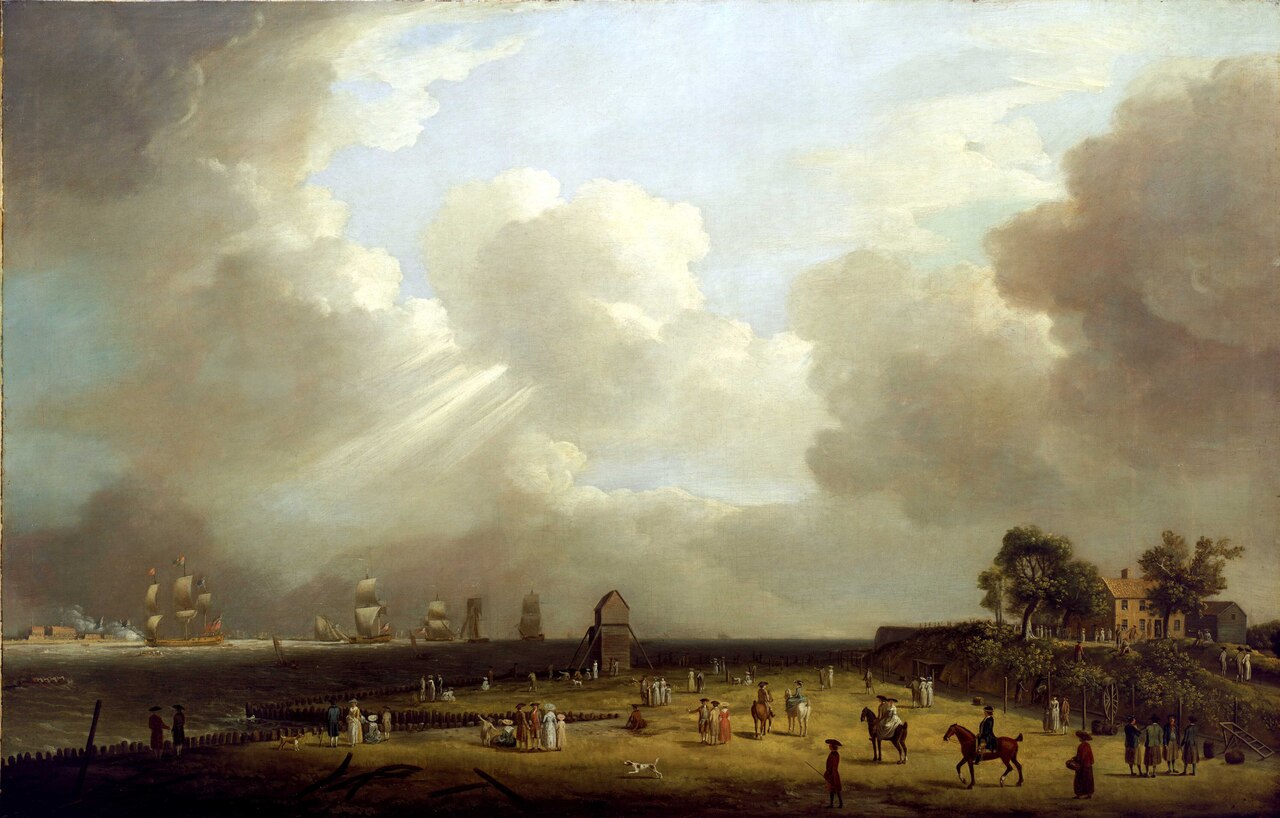
* Princess Charlotte Arriving at Harwich, September 1761 (1763) – In this piece, the future queen is shown disembarking at the English port of Harwich. Serres emphasizes the ceremonial aspect of the event, with a clear sky and a calm sea that frame the royal barge, underscoring the dignity of the occasion.
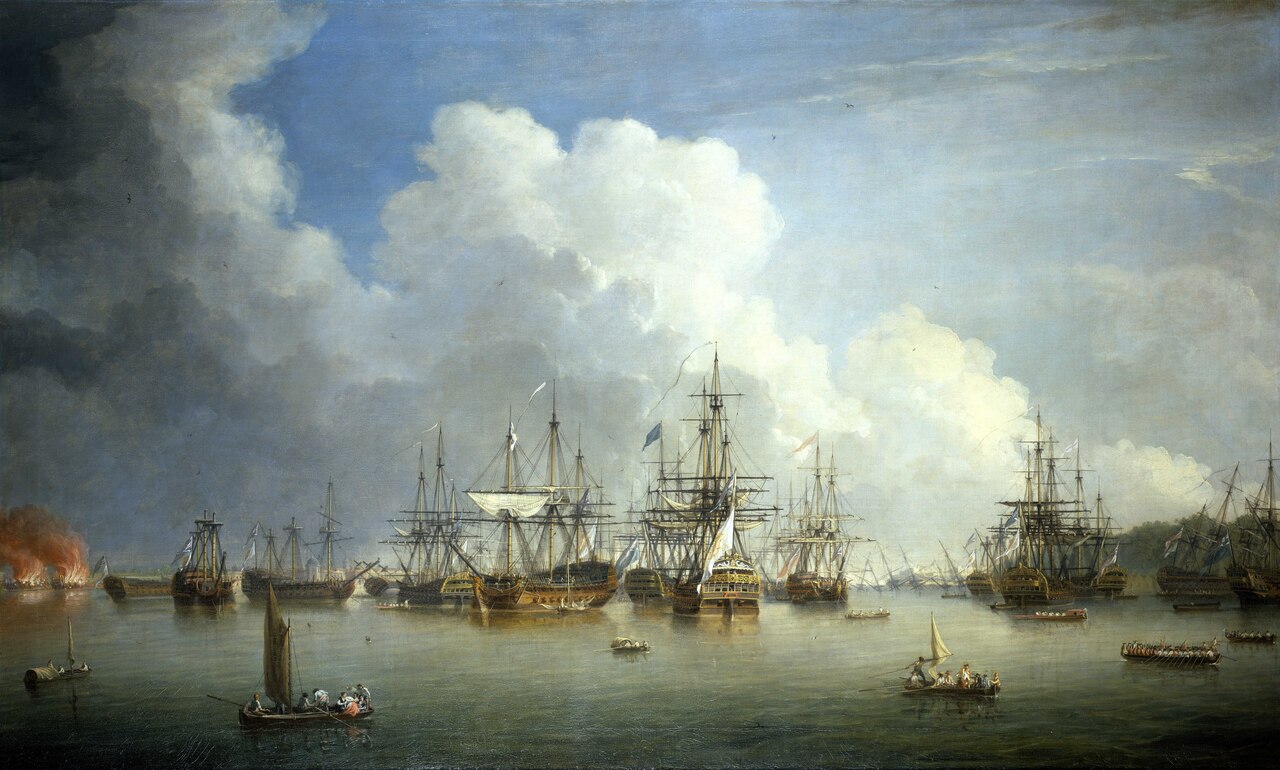
* The Captured Spanish Fleet at Havana, August‑September 1762 (1768) – This dramatic battle scene depicts the aftermath of the British assault on the Spanish fleet. The composition is divided between the wrecked ships in the foreground and the smoke‑filled horizon, illustrating both the triumph and the devastation of naval warfare.
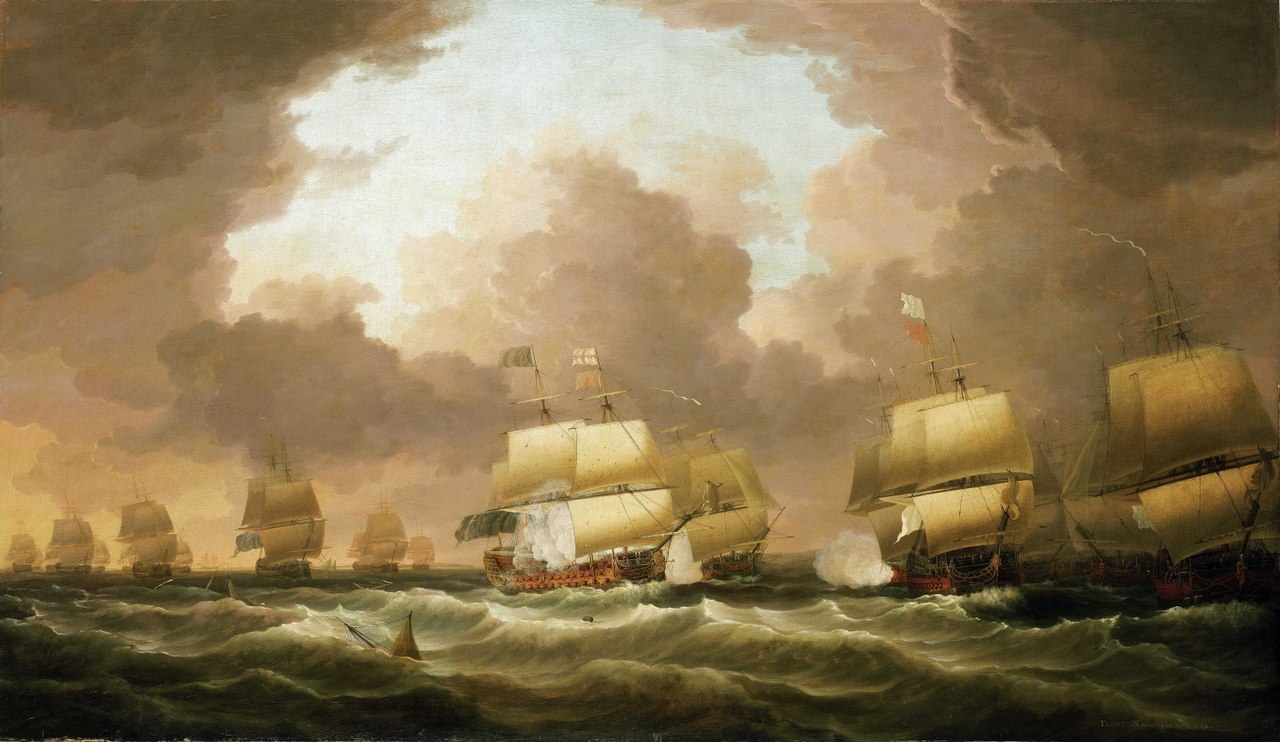
* The Battle of Quiberon Bay, 20 November 1759 (1779) – One of Serres’s most celebrated battle paintings, it portrays the decisive British victory over the French fleet. The chaotic clash of sails and cannon fire is rendered with meticulous attention to the positioning of each vessel, offering a vivid narrative of the encounter.
* Destruction of the American Fleet at Penobscot Bay, 14 August 1779 (1779) – This work records a lesser‑known engagement of the American Revolutionary War, where British forces destroyed a rebel fleet. Serres captures the smoky aftermath against a stark shoreline, highlighting the strategic impact of the operation.
Each of these paintings not only showcases Serres’s technical skill but also serves as a visual chronicle of pivotal maritime events that shaped the geopolitics of the Atlantic world.
Influence and legacy Dominic Serres’s contribution to British marine painting extended beyond his own canvases. By co‑founding the Royal Academy, he helped establish a platform for the formal study of art, influencing generations of artists who would follow. His meticulous approach to ship depiction set a benchmark for accuracy that was later adopted by marine painters such as Nicholas Pocock and William Anderson.
Moreover, Serres’s works function as historical documents. Historians of naval warfare and colonial expansion frequently cite his paintings as visual evidence of ship design, harbour layouts, and the visual culture surrounding 18th‑century battles. The preservation of his canvases in major museum collections, including the National Maritime Museum in Greenwich, ensures that his perspective on the era’s maritime affairs remains accessible to scholars and the public alike.
In the broader narrative of art history, Serres exemplifies the transnational flow of artistic talent: a French‑born artist who embraced British patronage, contributed to the institutional foundations of British art, and left an indelible mark on the visual representation of naval power. His legacy endures in the continued appreciation of marine art as a genre that intertwines aesthetic achievement with documentary significance.
Frequently asked questions
Who was Dominic Serres?
Dominic Serres (1722–1793) was a French‑born painter who became a leading British marine artist and co‑founder of the Royal Academy.
What artistic style or movement is he associated with?
He worked within the late‑Baroque tradition of marine painting, focusing on detailed ship anatomy, atmospheric lighting, and topographical accuracy.
What are his most famous works?
His most celebrated paintings include The Piazza at Havana (1762), Princess Charlotte Arriving at Harwich (1763), The Captured Spanish Fleet at Havana (1768), The Battle of Quiberon Bay (1779), and Destruction of the American Fleet at Penobscot Bay (1779).
Why is Dominic Serres important in art history?
He helped establish British marine painting as a respected genre, co‑founded the Royal Academy, and provided detailed visual records of key 18th‑century naval events.
How can I recognise a painting by Dominic Serres?
Look for precise ship detailing, a muted yet dramatic sky, careful rendering of harbour architecture, and a balanced composition that foregrounds both sea and vessels.