David Col
1822 – 1900
In short
David Col (1822–1900) was a Belgian painter from Antwerp who specialised in anecdotal genre scenes, producing works such as Scene from an Inn, Shaving Day (1873) and The Polician (1853). His paintings capture everyday life with a modest realist approach and remain valued examples of 19th‑century Belgian genre painting.
Notable works

Early life David Col was born in 1822 in Antwerp, a city that was, in the early nineteenth century, a bustling centre of commercial activity and artistic production. Little is recorded about his family background, but the artistic climate of Antwerp—home to the Royal Academy of Fine Arts and a thriving guild of painters—provided a fertile environment for a young aspiring artist. Col likely received his initial training in the city’s drawing schools, where the emphasis was on drawing from life, mastering anatomy, and studying the works of the Flemish masters. These foundations would shape his later focus on narrative, everyday subjects.
Career and style By the 1840s Col had begun to exhibit his work in local salons, joining a generation of Belgian painters who turned away from grand historical or religious subjects in favour of scenes drawn from daily life. Although no formal movement claims him as a member, his oeuvre aligns with the broader European trend of genre painting that flourished in the mid‑nineteenth century. His style can be described as modestly realistic, favouring clear outlines, balanced compositions, and a restrained colour palette that emphasises the narrative over dramatic chiaroscuro. The paintings often contain a touch of humour or moral observation, reflecting the anecdotal tradition of Flemish genre art dating back to the 17th century.
Col’s work was regularly shown at the Antwerp Salon and occasionally at the Brussels Salon, where critics noted his ability to capture fleeting moments with a sense of empathy. He earned a modest reputation among collectors who appreciated his depictions of ordinary people engaged in familiar activities. Throughout his career, Col remained based in Antwerp, maintaining close ties with local artistic societies and teaching younger artists in informal workshops.
Signature techniques While Col did not pioneer radical techniques, several recurring methods give his paintings a recognisable character:
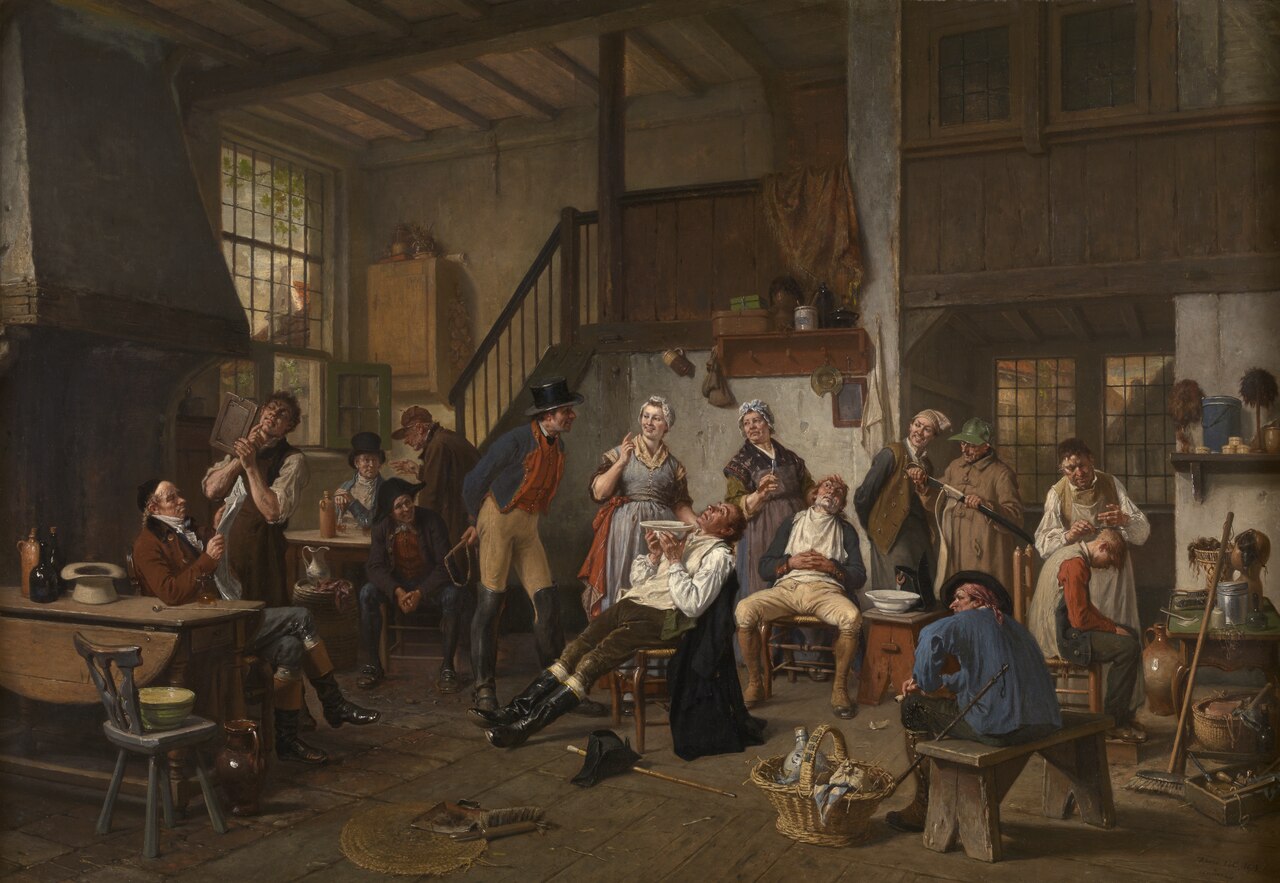
* Narrative focus – Each canvas centres on a small, self‑contained story; the composition is arranged to guide the viewer’s eye to the decisive action or gesture. * Economy of detail – Rather than lavish ornamentation, Col employs selective detailing, rendering essential objects (such as a shaving kit or a newspaper) with crisp brushwork while allowing background elements to recede. * Subtle colour modulation – His palette leans toward earth tones—muted ochres, soft browns, and gentle greys—punctuated by occasional bursts of colour (e.g., a red shawl or a blue apron) to draw attention to focal points. * Flat lighting – Light is often evenly distributed across the scene, avoiding strong contrasts; this approach reinforces the sense of an unobtrusive, everyday moment. * Humorous expression – Figures are frequently given slight smiles, raised eyebrows, or other gestures that hint at a quiet joke, inviting viewers to share in the scene’s amusement.
These techniques combine to produce works that feel both observational and approachable, allowing audiences to recognise the depicted activities instantly.
Major works David Col’s most frequently cited paintings illustrate his commitment to genre subjects:
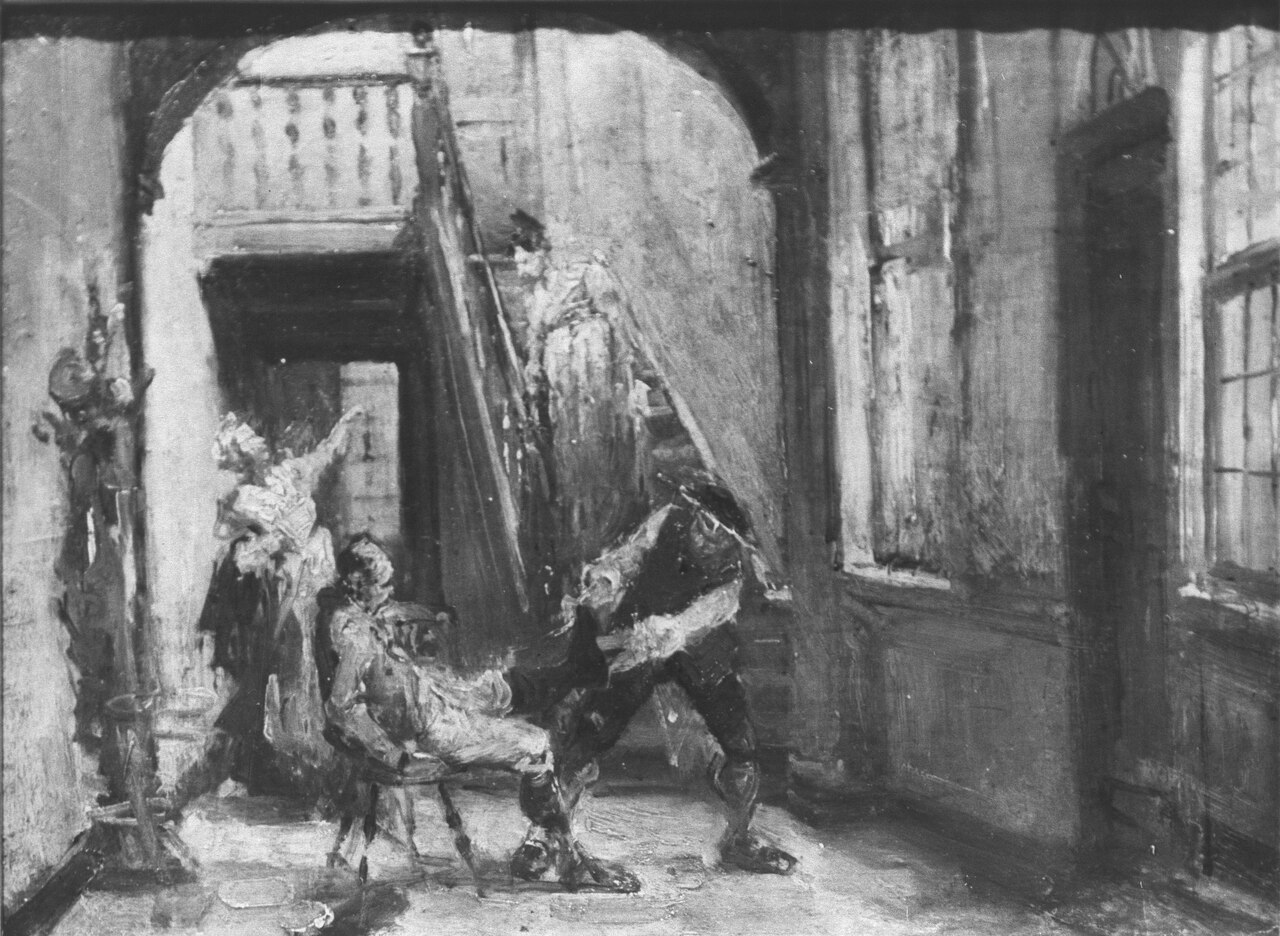
* Scene from an Inn – Though undated, this work portrays a modest tavern interior where patrons converse over mugs of ale. The composition is anchored by a central table, around which a variety of characters—travellers, a barmaid, and a fiddler—interact. The painting’s balanced arrangement and warm tonal range exemplify Col’s skill at depicting communal spaces. * Shaving Day (1873) – This canvas captures a moment of male grooming in a domestic setting. A young man, seated before a mirror, is attended by a barber who holds a razor with practiced confidence. The subtle play of light on the polished surface of the mirror and the careful rendering of the shaving implements demonstrate Col’s attention to material detail. * The Polician (1853) – Despite the unusual title, the painting is a satire on political life, showing a well‑dressed figure delivering a speech to a small, indifferent audience. The work’s composition, with the speaker elevated on a modest podium and surrounded by a muted crowd, underscores Col’s ability to blend social commentary with genre realism.
Each of these pieces showcases Col’s aptitude for embedding narrative nuance within ordinary settings, and they remain the primary reference points for scholars assessing his contribution to Belgian art.
Influence and legacy David Col did not achieve the international fame of some of his Belgian contemporaries, such as the Realist painter Charles de Groux, yet his paintings provide valuable insight into the everyday visual culture of nineteenth‑century Belgium. By preserving scenes of domestic life, inns, and modest civic events, his work complements the more grandiose history paintings of the era, offering a counter‑balance that enriches the period’s artistic record.
Col’s legacy persists primarily through museum collections in Antwerp and Brussels, where his works are displayed alongside those of his peers to illustrate the diversity of Belgian genre painting. Art historians cite his paintings as examples of the anecdotal tradition that persisted in the Low Countries long after the Baroque period, highlighting the continuity of narrative art in the region.
Although he did not found a school or movement, Col’s modest approach and dedication to portraying ordinary people influenced a small circle of younger artists who valued sincerity over spectacle. In recent decades, his paintings have attracted renewed interest from collectors and scholars focusing on the social history of art, as they provide visual documentation of 19th‑century Belgian customs, attire, and interior design.
Overall, David Col remains an emblematic figure of a quieter strand of 19th‑century European painting—one that celebrates the poetry of everyday life through careful observation and understated technique.
Frequently asked questions
Who was David Col?
David Col (1822–1900) was a Belgian painter from Antwerp, best known for his anecdotal genre scenes that depict everyday life.
What style or movement is David Col associated with?
He is generally linked to the mid‑nineteenth‑century genre painting tradition, working in a modestly realist style without belonging to a specific formal movement.
What are David Col’s most famous works?
His most frequently cited paintings are Scene from an Inn, Shaving Day (1873) and The Polician (1853), all of which illustrate his focus on narrative, everyday subjects.
Why does David Col matter in art history?
Col provides a valuable record of Belgian daily life in the 1800s, complementing more grand historical works and helping scholars understand the social and visual culture of the period.
How can I recognise a painting by David Col?
Look for modest realist compositions featuring ordinary scenes, a restrained earth‑tone palette, evenly distributed lighting, and subtle humorous gestures that give the work a narrative focus.