Cornelis van der Meulen
1642 – 1692
In short
Cornelis van der Meulen (1642–1692) was a Dutch painter from Dordrecht who spent most of his professional life in Sweden, where he served as a court artist. He specialised in trompe‑l'œil, vanitas still lifes, topographical scenes and portraiture, producing works such as the portraits of Princes Gustav and Ulrik and the still life A Dead Malformed Hare.
Notable works
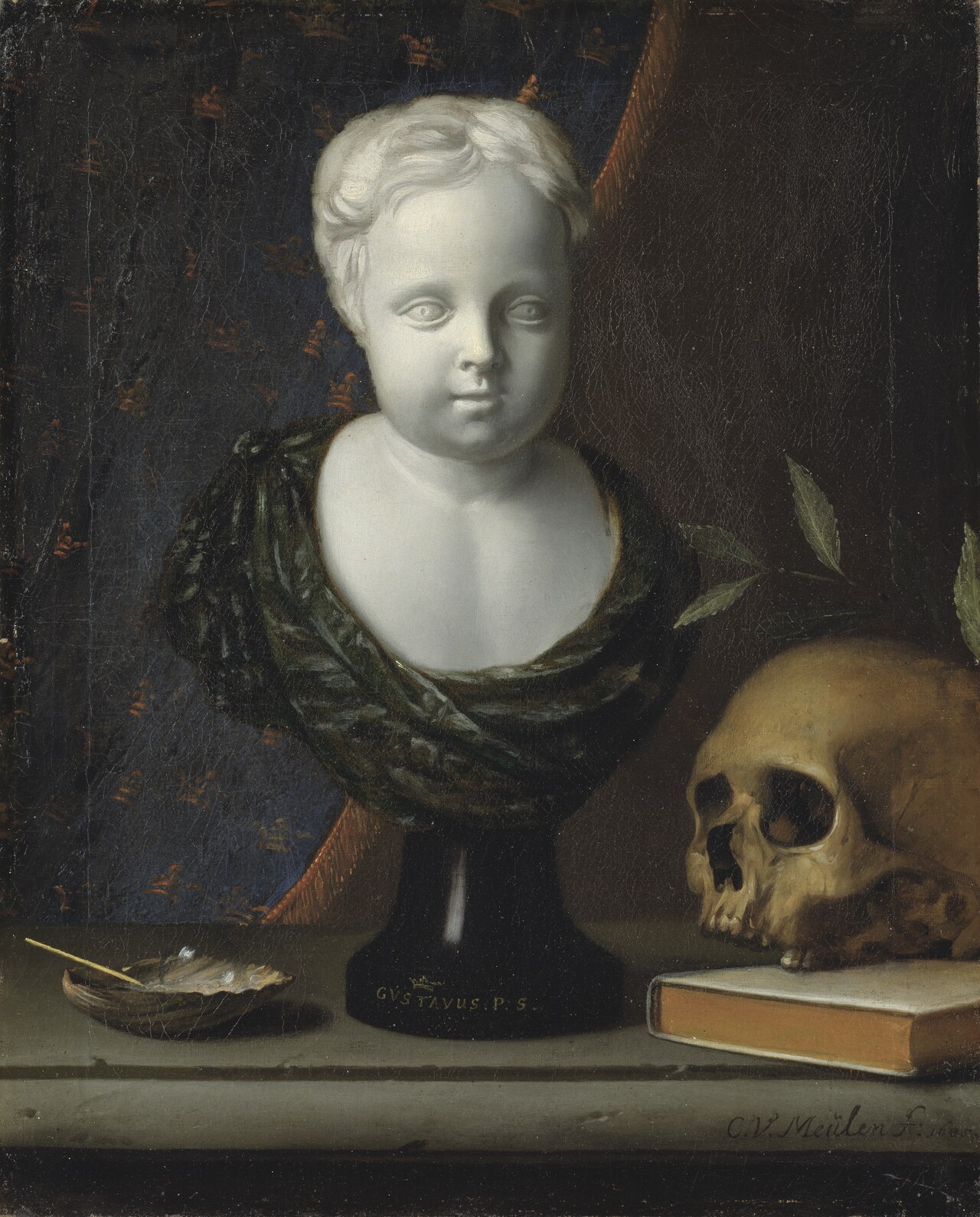

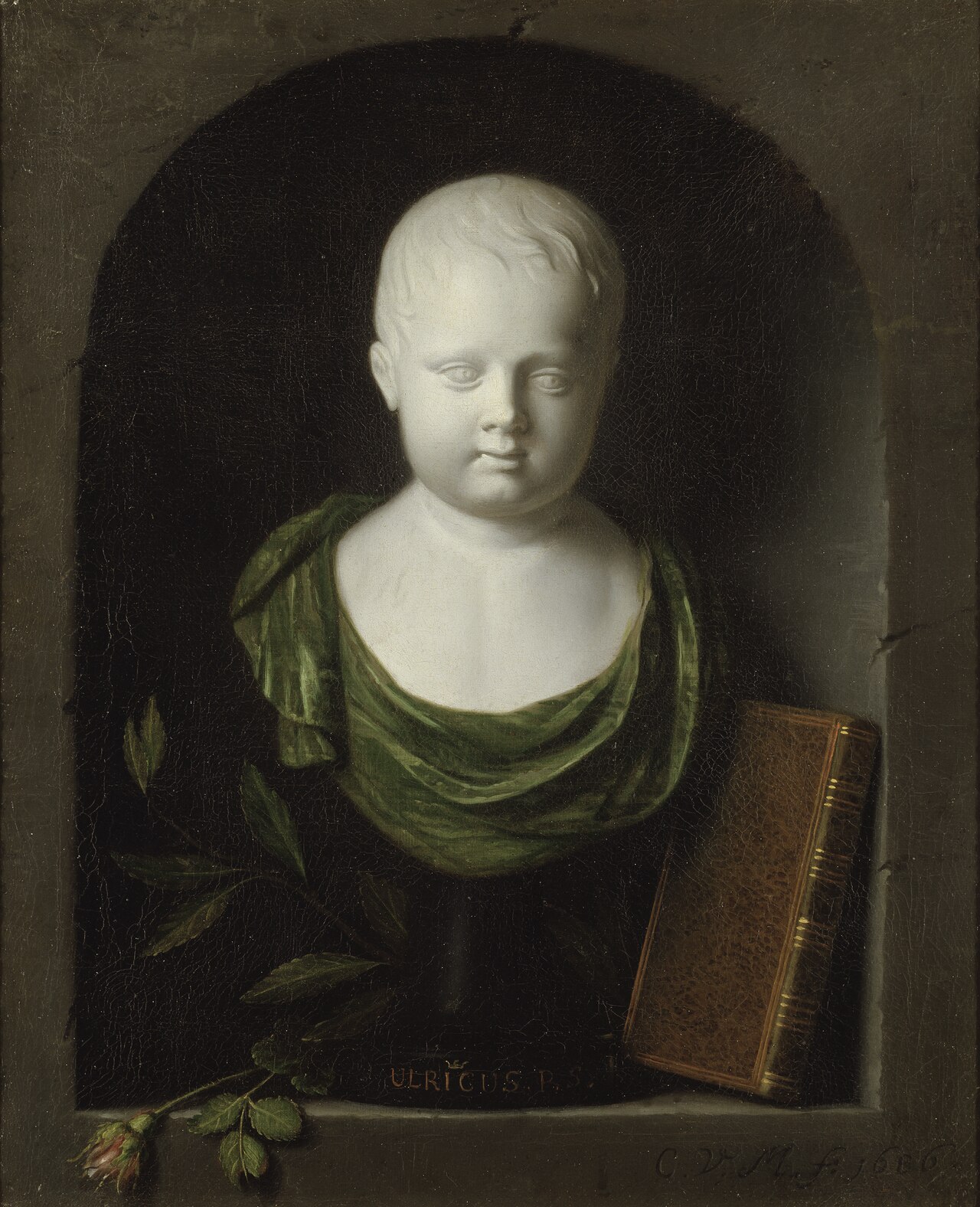


Early life Cornelis van der Meulen was born in 1642 in the bustling trading town of Dordrecht, in the Dutch Republic. Dordrecht, a centre of artistic activity in the 17th century, provided a fertile environment for a young aspiring painter. Records of his family background are scarce, but the city’s guild structures suggest that he would have entered an apprenticeship in his early teens, most likely under a master who practised the still‑life tradition that was flourishing in the Dutch Golden Age. This formative period would have familiarised him with the meticulous handling of texture, light and composition that later defined his work.
Career and style Around the middle of the 1660s van der Meulen left the Netherlands for Sweden, a move that coincided with the increasing demand for foreign artists at the Swedish court. He secured a position as a court painter to King Karl XI, a role that required both portraiture and decorative commissions. In Sweden his style evolved to accommodate local tastes while retaining the Dutch emphasis on realism. He produced a range of works, from intimate vanitas still lifes—laden with symbolic objects such as wilted flowers, decaying fruit and skulls—to elaborate trompe‑l’œil pieces that played with perception and illusion. His topographical paintings, especially those depicting winter scenes, reveal a keen eye for atmospheric effects and a sophisticated handling of perspective.
Signature techniques Van der Meulen’s paintings are distinguished by several technical hallmarks. He employed a layered glazing technique, building up luminous colour through thin, translucent oil layers that capture subtle shifts in light. In his trompe‑l’œil works, he rendered shadows with meticulous accuracy, often using a single light source to heighten the illusion of three‑dimensionality. His still lifes display a precise rendering of texture—feathers, fur and the delicate translucency of glass are depicted with a tactile quality that invites the viewer’s eye to linger. Van der Meulen also incorporated symbolic motifs typical of vanitas genre, using objects such as extinguished candles or a wilted bouquet to comment on the transience of life.
Major works Among van der Meulen’s most documented pieces are the portraits of the Swedish princes. *Gustav* (1683‑85) and *Ulrik* (1684‑85) portray the young sons of King Karl XI; both paintings combine regal poise with a tender naturalism, highlighting the artist’s ability to balance courtly formality with psychological depth. The *A Dead Malformed Hare* (1685) exemplifies his skill in animal still lifes, presenting the creature with a stark realism that invites contemplation of mortality—a common vanitas theme. The *Ice Scene at Dordrecht* (attributed 1780) is a later copy or reinterpretation of an earlier view; its inclusion in the catalogue of van der Meulen’s work points to his lasting reputation for winter landscapes, though the date suggests it may have been produced posthumously by a follower. Finally, the *Optical Illusion* (1673) demonstrates his early experimentation with perspective, employing a cleverly arranged composition that deceives the eye and underscores his interest in visual trickery.
Influence and legacy Cornelis van der Meulen occupies a modest but distinct niche in the art history of the Dutch‑Swedish cultural exchange. His career illustrates how Dutch artistic practices were transplanted and adapted in the Baltic courts, influencing local painters who adopted his trompe‑l’œil methods and vanitas symbolism. While he never achieved the fame of contemporaries such as Rembrandt or Vermeer, his works are valued for their technical proficiency and for bridging Northern European artistic sensibilities. Modern scholarship recognises his contributions to the development of Swedish court portraiture and to the diffusion of Dutch still‑life conventions beyond the Netherlands. His paintings continue to be exhibited in both Dutch and Swedish museum collections, where they serve as exemplars of cross‑cultural artistic dialogue in the late 17th century.
Frequently asked questions
Who was Cornelis van der Meulen?
Cornelis van der Meulen was a Dutch painter (1642–1692) who worked mainly in Sweden as a court artist, known for portraits, trompe‑l'œil, vanitas still lifes and topographical scenes.
What artistic style or movement is he associated with?
He is linked to the Dutch Golden Age tradition of realistic still lifes and trompe‑l'œil, while his work in Sweden reflects the courtly portraiture and vanitas symbolism of the period.
What are his most famous works?
His best‑known pieces include the portraits *Gustav* (1683‑85) and *Ulrik* (1684‑85), the still life *A Dead Malformed Hare* (1685), the *Optical Illusion* (1673), and the winter landscape *Ice Scene at Dordrecht* (attributed).
Why is Cornelis van der Meulen important in art history?
He exemplifies the transfer of Dutch artistic techniques to the Swedish court, influencing local portraiture and still‑life practice and illustrating the cultural exchange between the Netherlands and Scandinavia in the 17th century.
How can I recognise a painting by Cornelis van der Meulen?
Look for meticulous texture, a subtle glazing of colour, precise rendering of shadows, and symbolic vanitas elements; his trompe‑l'œil works often feature a single light source that creates an illusion of three‑dimensional objects.