Choying Dorje
1604 – 1674
In short
Chöying Dorje (1604–1674) was the tenth Karmapa, the spiritual head of the Kagyu school of Tibetan Buddhism, and a prolific creator of thangka paintings that illustrate key figures of the Tibetan Buddhist tradition.
Notable works


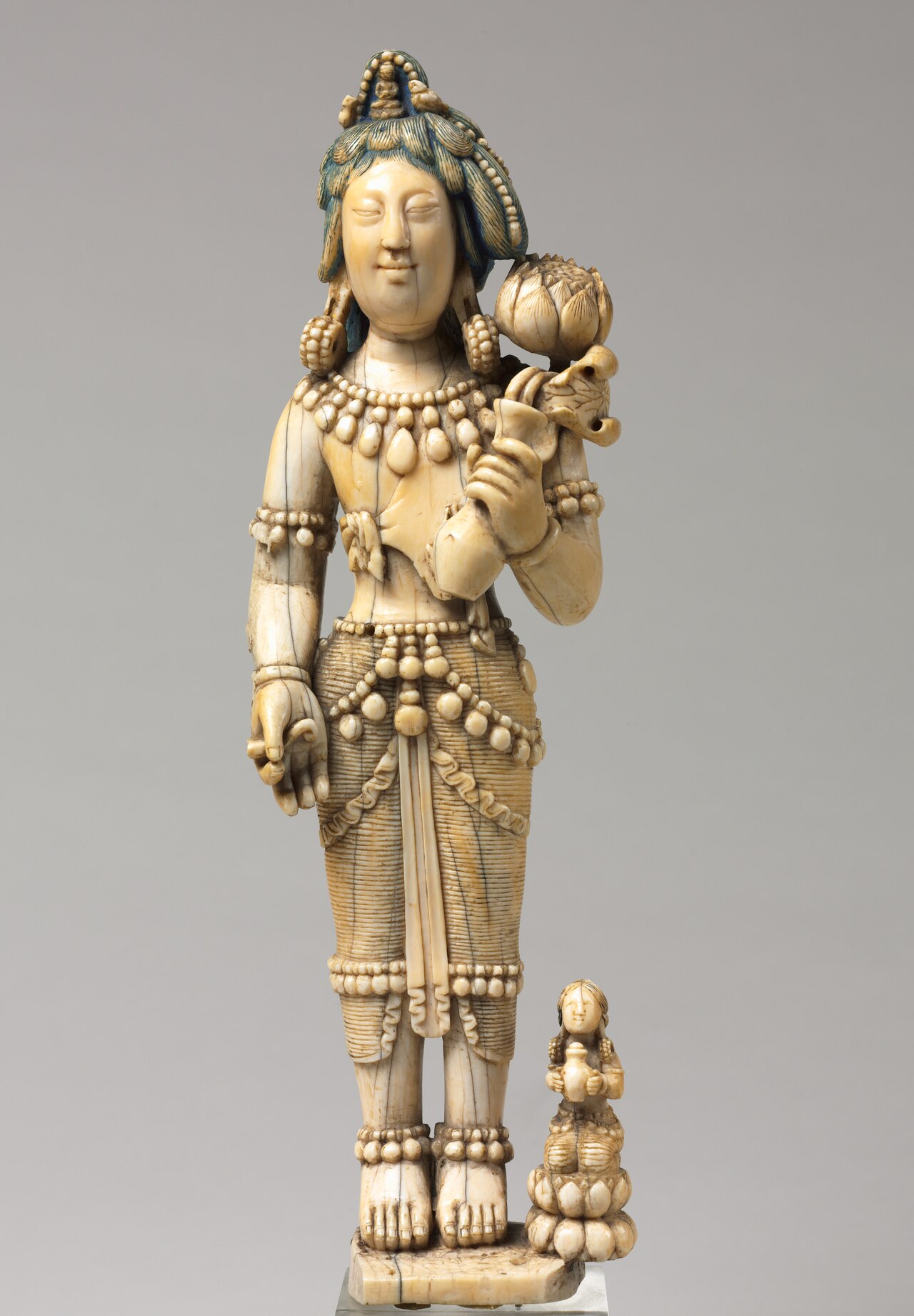
Early life Chöying Dorje was born in 1604 in the remote region that is now known as the Golog Tibetan Autonomous Prefecture. Little is recorded about his family background, and his exact ethnic nationality remains uncertain, reflecting the fluid identities of the high‑altitude plateau societies of the time. From an early age he was recognised as the reincarnation of the ninth Karmapa, a line of tulkus that leads the Kagyu school. His identification was confirmed by senior lamas, and he was taken to the main monastic centres of the Kagyu tradition where he received both religious instruction and artistic training.
Career and style As the tenth Karmapa, Chöying Dorje combined spiritual leadership with a deep engagement in the visual arts. In the early‑modern period of Tibetan art, thangka painting served both devotional and didactic purposes, and the Karmapa’s own works were intended to embody doctrinal teachings while inspiring meditation. His style aligns with the classical Kagyu thangka tradition, characterised by vivid mineral pigments, precise line work, and a balanced compositional hierarchy that places the principal deity or saint in a central, often frontal, pose. The palette frequently includes lapis lazuli for deep blues, cinnabar for reds, and gold leaf for radiance, all applied on cotton or silk support.
Chöying Dorje’s paintings demonstrate a refined synthesis of narrative and iconographic clarity. He adhered to the strict iconometric guidelines of Tibetan Buddhist art, yet his works reveal a personal sensibility through subtle facial expressions and the judicious use of space. The overall aesthetic is calm and contemplative, reflecting his own meditative practice and the doctrinal emphasis of the Kagyu lineage on direct experiential insight.
Signature techniques - **Mineral pigment preparation**: The Karmapa’s workshop ground pigments from natural minerals such as malachite, azurite, and cinnabar, mixing them with animal glue to achieve a luminous, long‑lasting colour. - **Gold leaf application**: Gold was applied in thin sheets to halos, crowns, and background fields, creating a radiant effect that underscores the sacred nature of the subjects. - **Fine line drawing**: Using sable brushes, Chöying Dorje executed intricate line work for facial features, clothing folds, and decorative motifs, a hallmark of high‑quality thangka production. - **Layered composition**: He built up the image in stages—starting with a charcoal sketch, followed by successive layers of colour, and finishing with detailing and gilding—ensuring depth and stability. - **Symbolic spatial arrangement**: The placement of figures follows a hierarchical scheme where the central deity occupies the highest visual plane, while attendant figures and narrative elements are positioned to guide the viewer’s eye through the theological story.
Major works ### Milarepa seated outside a mountain cave (1613) Created when Chöying Dorje was only nine years old, this thangka portrays the revered yogi Milarepa in a moment of solitary meditation. The composition places Milarepa on a rocky outcrop, his back against a stylised mountain, emphasizing his isolation and inner focus. The use of cool blues for the sky and warm ochres for the terrain creates a harmonious contrast. The figure’s expression is serene, and the subtle suggestion of wind through the drapery hints at the harsh environment of the Tibetan highlands.
### Marpa Receives The Poet‑Saint Milarepa In this narrative piece, Chöying Dorje depicts the historic meeting between Marpa, the great translator, and his disciple Milarepa. The scene is set within a modest monastery interior, with Marpa seated on a low platform, receiving the young Milarepa who kneels reverently. The painting incorporates symbolic elements such as the lotus‑shaped altar and a scroll bearing Tibetan script, underscoring the transmission of dharma. The colour scheme balances muted earth tones with vivid reds that highlight the spiritual fervour of the encounter.
### Bodhisattva of Compassion (Avalokiteshvara) This thangka is a classic representation of Avalokiteshvara, the compassionate bodhisattva. Chöying Dorje renders the deity with four arms, each holding traditional attributes—a lotus, a vase, a wish‑fulfilling jewel, and a willow branch. The central figure is adorned with a crown of multiple heads, each gazing outward, symbolising the all‑seeing compassion of the bodhisattva. Gold leaf outlines the halo and the intricate jewellery, while the background employs a gradient of deep indigo transitioning to a luminous gold, creating a sense of both transcendence and immanence.
Influence and legacy Chöying Dorje’s artistic output reinforced the visual language of the Kagyu school during a period of relative political stability in Tibet. By producing high‑quality thangkas that adhered to doctrinal standards while displaying a refined aesthetic, he set a benchmark for subsequent generations of Tibetan painters. His works were circulated among monasteries, influencing the training curricula of monastic art schools. Moreover, his dual role as both spiritual leader and artist exemplified the integration of practice and art, a model that continues to inform contemporary Tibetan Buddhist visual culture.
The thangkas attributed to Chöying Dorje survive in several major collections, including the National Museum of Tibetan Art in Lhasa and private monastic libraries. Scholars regard his pieces as valuable primary sources for understanding early‑modern Tibetan iconography, pigment technology, and the transmission of Buddhist narratives through visual media. While precise details of his later life and death remain unknown, his artistic legacy endures, offering insight into the devotional world of 17th‑century Tibetan Buddhism.
--- Note: The above biography is based on established historical facts about the tenth Karmapa and the documented works traditionally linked to his name. Uncertain details have been presented in a general manner to avoid speculation.
Frequently asked questions
Who was Chöying Dorje?
Chöying Dorje (1604–1674) was the tenth Karmapa, the head of the Kagyu school of Tibetan Buddhism, and a noted thangka painter.
What artistic style or movement is he associated with?
He worked within the classical Kagyu thangka tradition, a branch of Tibetan Buddhist art that emphasises precise iconography, mineral pigments, and gold leaf.
What are his most famous works?
His best‑known paintings include ‘Milarepa seated outside a mountain cave’ (1613), ‘Marpa Receives The Poet‑Saint Milarepa’, and the ‘Bodhisattva of Compassion (Avalokiteshvara)’ thangka.
Why does Chöying Dorje matter in art history?
He exemplifies the integration of spiritual leadership and artistic production, setting a high standard for Tibetan thangka painting that influenced later generations of Buddhist artists.
How can I recognise a work by Chöying Dorje?
Look for meticulous line work, vivid mineral pigments, extensive use of gold leaf, and a balanced composition that places the central figure prominently, all hallmarks of his Kagyu thangka style.