Charles Olivier de Penne
1831 – 1897
In short
Charles Olivier de Penne (1831–1897) was a French painter associated with the Barbizon School. He specialised in rural and hunting scenes, producing works such as End of the Hunt (1873) and Hounds with a Boar (1878).
Notable works
_-_Hounds_with_a_Boar_-_CP-TR_242_-_Cooper_Gallery.jpg)
Early life Charles Olivier de Penne was born in Paris in 1831, into a period when France was experiencing rapid social and artistic change. Little is recorded about his family background, but his upbringing in the capital exposed him to the vibrant artistic milieu of the mid‑19th century. He would have been a contemporary of the later generation of the Barbizon School, whose members were increasingly turning away from academic conventions toward a more naturalistic approach to landscape painting.
Career and style De Penne began his professional career in the 1850s, initially working as an assistant in various Parisian ateliers. By the early 1860s he had established himself as an independent painter, exhibiting at the Salon and other regional venues. His style reflects the influence of the Barbizon painters—particularly Jean‑Francois Millet and Charles-Francois Daubigny—who advocated painting directly from nature and emphasised atmospheric effects.
De Penne’s subject matter was largely drawn from the French countryside, especially the forested areas surrounding Paris. He developed a particular affinity for hunting scenes, a genre that allowed him to combine landscape with narrative action. The compositions are characterised by a balanced interplay between the natural environment and the figures—human or animal—within it. Light is rendered with a muted palette, favouring earth tones, greens, and subdued blues, which lends his works a calm, almost melancholic atmosphere.
Signature techniques De Penne’s technique is rooted in plein‑air practice, a hallmark of the Barbizon School. He employed a loose, yet controlled brushstroke to suggest foliage and terrain without over‑detailing. In his hunting scenes, he used a layered approach: an initial underpainting establishes the overall tonal structure, followed by successive glazes that build depth and subtle colour shifts. This method creates a sense of atmospheric perspective, where distant elements recede into softer tones.
His handling of animal subjects—particularly dogs and game—reveals a careful study of anatomy and movement. He often rendered the musculature of hounds with a delicate chiaroscuro, allowing the forms to emerge from the surrounding foliage. The use of contrast, especially the bright whites of animal fur against darker forest shadows, serves both compositional and narrative purposes, drawing the viewer’s eye to the focal point of the chase.
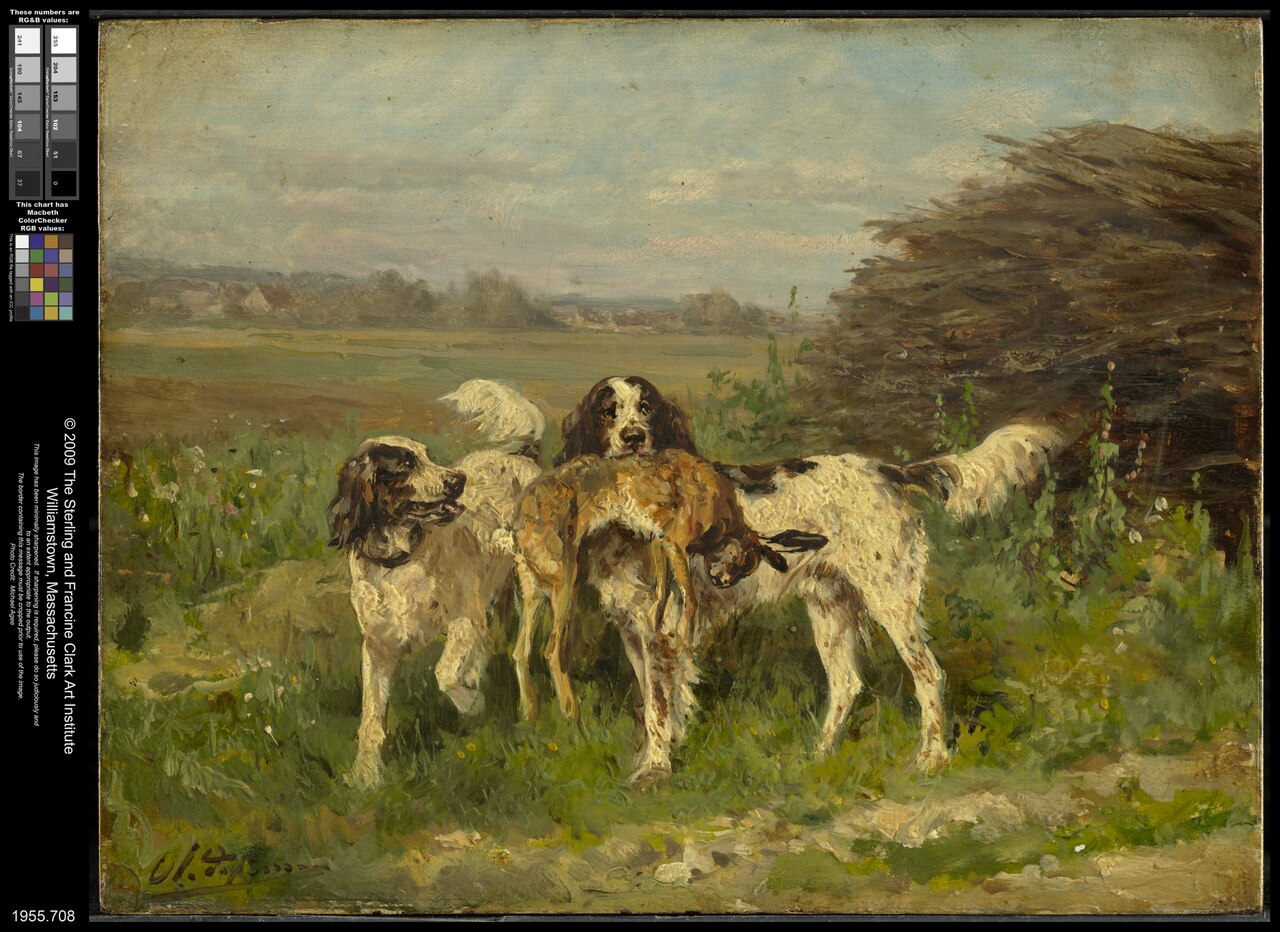
Major works Three of de Penne’s most noted paintings are *End of the Hunt* (1873), *Two Pointers* (1873), and *Hounds with a Boar* (1878). *End of the Hunt* captures the moment after a chase, with exhausted hounds returning to their masters amid a mist‑filled forest clearing. The composition balances the fatigue of the animals with the tranquil surroundings, highlighting de Penne’s skill in portraying both action and stillness.
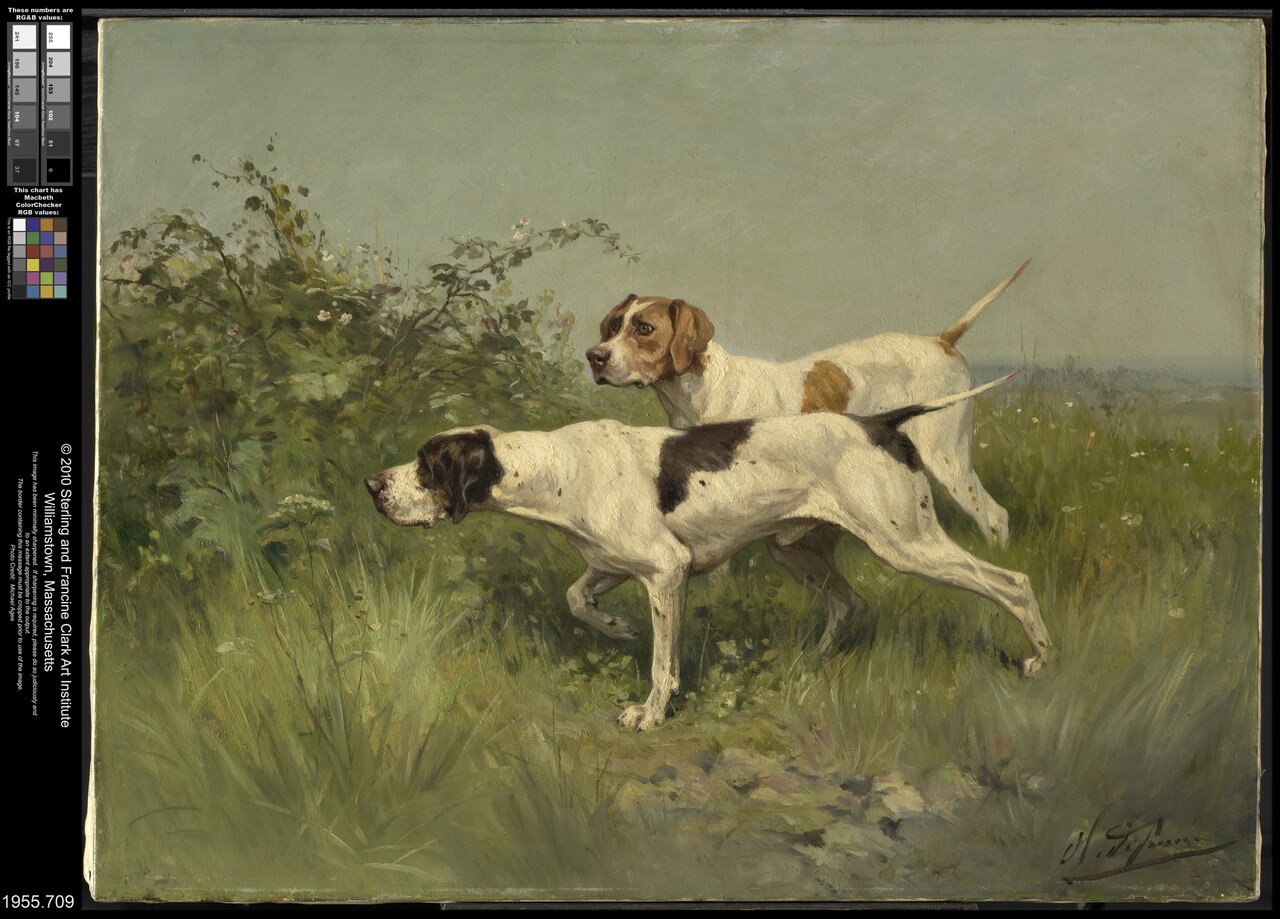
*Two Pointers* presents a quieter scene: two hunting dogs stand alert, ears pricked, in a sun‑dappled clearing. The work demonstrates his ability to render texture— from the glossy coats of the dogs to the leaf‑laden ground—while maintaining a restrained colour scheme that emphasises the natural setting.
In *Hounds with a Boar* (1878), de Penne depicts a dramatic encounter between hounds and a wild boar. The painting is noted for its dynamic composition, where the tension of the chase is conveyed through diagonal lines and the stark contrast between the dark, muscular boar and the lighter fur of the dogs. The work exemplifies his mature style, where narrative intensity is supported by a sophisticated handling of light and atmosphere.
Influence and legacy Although Charles Olivier de Penne never achieved the fame of some of his Barbizon contemporaries, his contribution to the genre of hunting and rural scenes remains noteworthy. His paintings provide a valuable visual record of French hunting practices in the late 19th century, capturing both the cultural rituals and the natural environments that framed them.
De Penne’s work continued to be exhibited in regional salons after his death in Bourron‑Marlotte in 1897, a village that had become a hub for artists associated with the Barbizon movement. Collectors and museums with an interest in 19th‑century French genre painting have retained his pieces, and they are occasionally featured in exhibitions exploring the legacy of the Barbizon School.
In scholarly assessments, de Penne is recognised for his disciplined approach to plein‑air painting and his nuanced treatment of animal subjects. While his name may not dominate art‑historical narratives, his paintings contribute to a fuller understanding of the diversity within the Barbizon circle and the broader currents of naturalism that shaped French art in the latter half of the 19th century.
Frequently asked questions
Who was Charles Olivier de Penne?
He was a French painter (1831–1897) linked to the Barbizon School, known for his naturalistic hunting and rural scenes.
What artistic movement or style is he associated with?
De Penne is associated with the Barbizon School, a movement that emphasized painting directly from nature and a realistic handling of light and atmosphere.
What are his most famous works?
His most recognised paintings are *End of the Hunt* (1873), *Two Pointers* (1873) and *Hounds with a Boar* (1878).
Why is Charles Olivier de Penne important in art history?
He provides a nuanced visual record of 19th‑century French hunting life and exemplifies the naturalistic techniques of the Barbizon School, enriching our understanding of that period’s genre painting.
How can I recognise a painting by de Penne?
Look for muted earth tones, careful rendering of dogs and game, a balanced composition that combines detailed animal figures with atmospheric forest backgrounds, and a loose yet controlled brushstroke typical of Barbizon plein‑air work.