Charles-Louis Verboeckhoven
1802 – 1889
In short
Charles-Louis Verboeckhoven (1802–1889) was a Belgian marine painter working in the Romantic style. Born in Warneton and dying in Schaerbeek, he is noted for dramatic seascapes such as Turbulent Sea and The Rising Tide.
Notable works
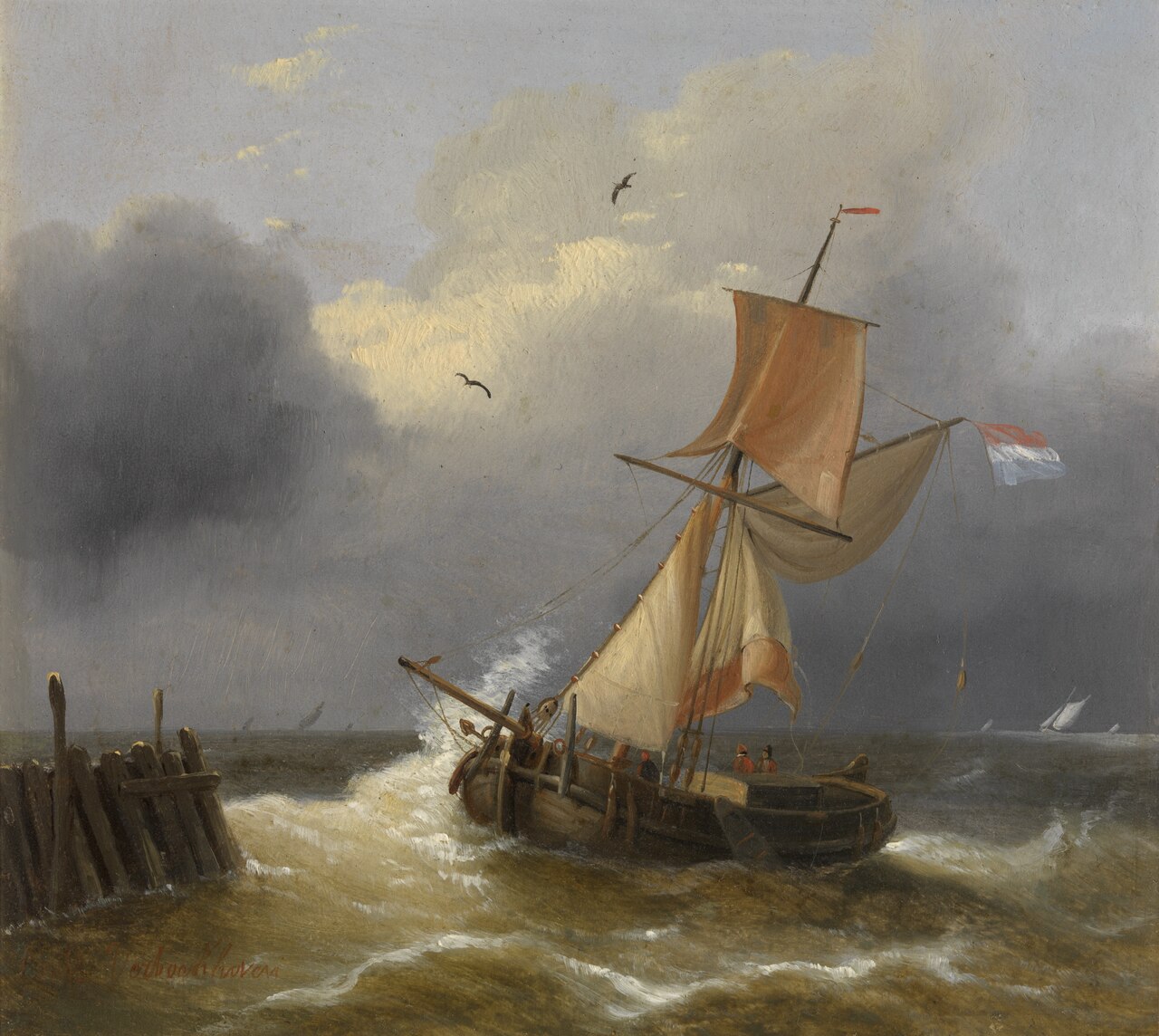
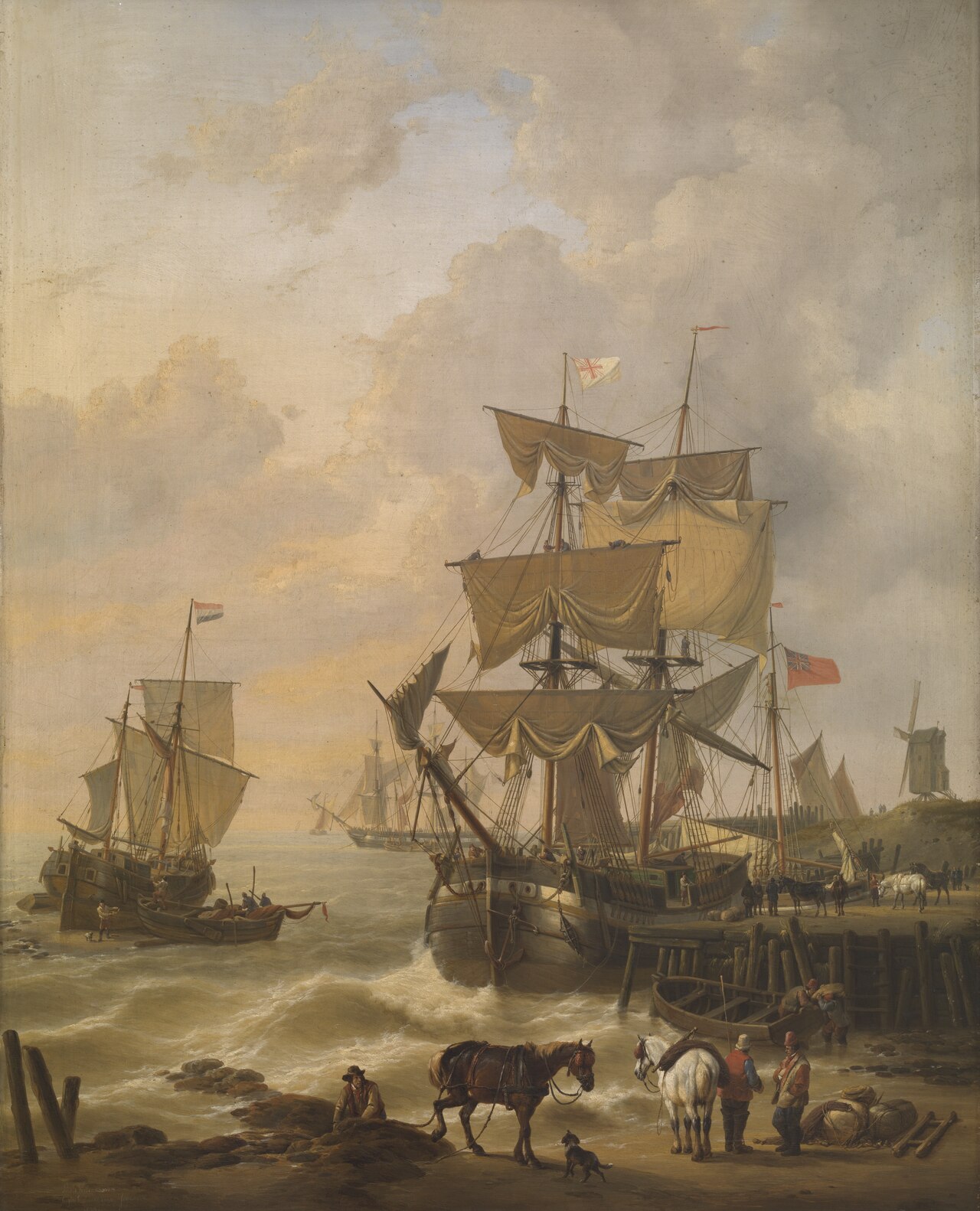
_-_Coast_Scene_-_PRSMG_,_P1667_-_Harris_Museum.jpg)
_-_The_Rising_Tide_-_TWCMS_,_B9422_-_Sunderland_Museum_and_Winter_Gardens.jpg)
_-_Seascape_-_LCNUG_1927.910_-_Usher_Gallery.jpg)
Early life Charles-Louis Verboeckhoven was born in 1802 in the small Flemish town of Warneton, near the French border. His family was modest, and his early exposure to art came through the regional tradition of religious and genre painting that characterised much of early 19th‑century Belgium. He received his first formal instruction at a local drawing school, where he demonstrated a strong aptitude for drawing the human figure and for rendering light and atmosphere. By his teenage years he was already copying prints of Dutch marine masters, a practice that would shape his lifelong fascination with the sea.
In the years following the Belgian Revolution of 1830, a number of young artists travelled to the newly established Royal Academy of Fine Arts in Brussels. Verboeckhoven was among those who enrolled, and there he encountered the academic curriculum that stressed drawing from life, anatomy, and the study of classical composition. Although the academy’s official focus was on history painting, Verboeckhoven gravitated toward the marine genre, a niche that was gaining popularity among the burgeoning bourgeois class who prized maritime subjects as symbols of national pride and commercial prosperity.
Career and style After completing his studies, Verboeckhoven established a studio in Brussels and began to exhibit at the annual Salon of the Royal Academy. His early works were modest in size and often depicted tranquil harbour scenes, but critics quickly noted his capacity to convey the volatile moods of the sea. By the 1830s he had aligned himself with the Romantic movement, which prized emotional intensity, dramatic contrast, and a focus on the sublime power of nature.
Romanticism in Belgium was characterised by a synthesis of the French tradition of landscape painting and a distinctly local interest in the country’s own coastlines and waterways. Verboeckhoven’s paintings embody this synthesis: they combine a meticulous observation of wave form and sky colour with a theatrical use of light that heightens the sense of awe. His canvases frequently employ a limited palette of deep blues, muted greys and occasional bursts of amber or scarlet, echoing the atmospheric conditions of the North Sea.
Throughout his career Verboeckhoven remained a freelance artist, catering to private collectors as well as to the emerging market for prints. Several of his paintings were reproduced as engravings, which broadened his reputation beyond the borders of Belgium. He continued to work productively into his later years, adapting his approach to the evolving tastes of the mid‑19th‑century art market while retaining the core Romantic sensibility that defined his oeuvre.
Signature techniques Verboeckhoven’s technique rests on three interlocking pillars: compositional dynamism, atmospheric rendering, and a precise handling of surface texture.
1. Compositional dynamism – He often positioned the horizon low in the picture plane, allowing the sky to dominate and the sea to surge upward. This creates a sense of vertical thrust that amplifies the drama of the scene. In many works, a single, sharply rendered wave or a break in the clouds serves as a focal point that guides the viewer’s eye across the canvas.
2. Atmospheric rendering – Verboeckhoven achieved his luminous effects through layered glazes of oil, allowing thin washes of colour to build up subtle tonal shifts. The resulting depth gives his seas a palpable thickness, while the interplay of light and shadow conveys the time of day and weather conditions with immediacy.
3. Surface texture – Using a combination of fine brushes for the delicate foam of breaking waves and a broader, almost palette‑knife approach for the broader swathes of water, he created a tactile surface that invites the eye to linger. The texture of the sky is often smoother, contrasting with the more impasto treatment of the sea, thereby reinforcing the tension between calm and turbulence that is central to Romantic marine painting.
These techniques, while rooted in the academic tradition, were employed with a personal flair that set Verboeckhoven apart from his contemporaries.
Major works Verboeckhoven’s catalogue includes several paintings that have become reference points for the Romantic marine genre.
- Turbulent Sea – This canvas captures a storm‑laden horizon where towering waves crash against a dark, brooding sky. The composition is dominated by a sweeping diagonal of water, emphasizing the chaos of the sea. The work is often cited for its masterful use of chiaroscuro, where the interplay of light on the foam creates a dramatic focal point.
- Rising Tide (1839) – Executed early in his mature period, this painting depicts a coastline at dawn, with the tide slowly advancing over a sandy beach. The subtle colour shift from deep indigo to pale turquoise illustrates Verboeckhoven’s skill in rendering the transition from night to day. The work was well received at the 1839 Salon and helped cement his reputation as a leading marine painter.
- Coast Scene – A more intimate work, Coast Scene presents a quiet harbour with fishing vessels bobbing gently in the water. The calm atmosphere contrasts with his more tempestuous pieces, demonstrating his versatility in portraying both serenity and drama.
- The Rising Tide (1850) – A later reinterpretation of the 1839 subject, this version intensifies the atmospheric effects, employing richer, more saturated colours and a heightened sense of movement. The tide’s edge is rendered with sharper detail, reflecting Verboeckhoven’s evolving technique in the 1850s.
- Seascape – An untitled but frequently exhibited piece, Seascape showcases a broad expanse of water under a cloud‑filled sky. The painting’s balanced composition and delicate handling of light make it an exemplary study of Verboeckhoven’s mature style.
Each of these works illustrates his preoccupation with the sea as a metaphor for nature’s power and humanity’s vulnerability, a theme central to Romantic art.
Influence and legacy Charles-Louis Verboeckhoven occupies a distinct niche in Belgian art history as one of the few artists who devoted his entire career to marine subjects. While his name is less widely known than that of his contemporaries in portraiture or history painting, his influence on later generations of Belgian and Dutch marine painters is evident.
His emphasis on atmospheric depth and dramatic composition resonated with younger artists who sought to move beyond the more literal depictions of the early 19th century. Moreover, his works were reproduced in popular art journals of the period, ensuring that his visual vocabulary reached a broad audience beyond the confines of galleries.
In the context of Romanticism, Verboeckhoven’s paintings exemplify the movement’s fascination with the sublime, yet they also presage the later Realist focus on everyday coastal life. By balancing theatrical grandeur with meticulous observation, he bridged the gap between idealised Romantic vision and the emerging interest in naturalistic detail.
Today, his paintings are held in several public collections, including the Royal Museums of Fine Arts of Belgium, and they continue to be referenced in scholarly discussions of 19th‑century marine art. His legacy endures in the way contemporary marine painters still look to his handling of light, atmosphere, and the dynamic tension between sea and sky.
--- In sum, Charles-Louis Verboeckhoven’s body of work offers a compelling portrait of the Romantic fascination with the sea, and his technical innovations have left a lasting imprint on the trajectory of marine painting in Belgium and beyond.
Frequently asked questions
Who was Charles-Louis Verboeckhoven?
He was a Belgian marine painter (1802–1889) known for his Romantic‑style seascapes, born in Warneton and dying in Schaerbeek.
Which artistic movement or style is he associated with?
Verboeckhoven worked within the Romantic movement, emphasizing dramatic light, atmosphere and the sublime power of the sea.
What are his most famous works?
His best‑known paintings include Turbulent Sea, Rising Tide (1839), Coast Scene, The Rising Tide (1850) and Seascape.
Why is Verboeckhoven important in art history?
He helped define the Romantic marine genre in Belgium, influencing later marine painters with his atmospheric techniques and dramatic compositions.
How can I recognise a Verboeckhoven painting?
Look for low horizons, turbulent waves rendered with layered glazes, a limited yet vibrant palette of blues and greys, and a focus on light‑filled skies that convey the sea’s power.