Charles Bargue
1825 – 1883
In short
Charles Bargue (1825–1883) was a French academic painter and lithographer, renowned for creating a systematic drawing course that shaped art education, and for genre paintings such as The Chess Game (1880).
Notable works



Early life Charles Bargue was born in 1825 in the former 1st arrondissement of Paris, a district that at the time was a bustling centre of artistic activity. Little is recorded about his family background, but the proximity to Parisian academies and ateliers suggests an early exposure to the city's vibrant artistic milieu. He received formal training in the academic tradition, which emphasized precise drawing, anatomical study, and the careful observation of light and form. This grounding in the rigorous standards of the École des Beaux‑Arts would inform his later work both as a painter and as an educator.
Career and style Bargue established himself as a painter and lithographer within the French academic tradition. His career unfolded during a period when academic art dominated the official salons, and his adherence to the movement’s ideals—clarity of line, balanced composition, and a polished finish—earned him acceptance among the Parisian art establishment. While he did not achieve the fame of some of his contemporaries, his dedication to meticulous draftsmanship earned him a reputation as a reliable practitioner of the academic style. His oeuvre includes both oil paintings and lithographic works, often depicting everyday scenes rendered with a careful eye for detail.
Signature techniques Bargue’s most enduring contribution to art lies in his systematic approach to drawing. He devised a step‑by‑step drawing course that paired a series of lithographic plates with a progressive set of exercises. The method begins with the study of simple geometric forms, moves through the rendering of individual facial features, and culminates in full‑size figure studies. By emphasizing repeated copying of master drawings, the course cultivates muscle memory for line quality and proportion. This pedagogical tool became a staple in art schools across Europe and later influenced the curriculum of the renowned Atelier of the American painter and teacher, James Jules White.
Major works Among Bargain’s catalogued works are several genre paintings that illustrate his interest in everyday life and his capacity to capture narrative moments:
- The Chess Game (1880) – This oil painting depicts a group of men gathered around a chessboard, their expressions absorbed in the strategic tension of the game. The composition balances chiaroscuro with a muted colour palette, highlighting the concentration of the participants while the surrounding interior recedes into softer tones.
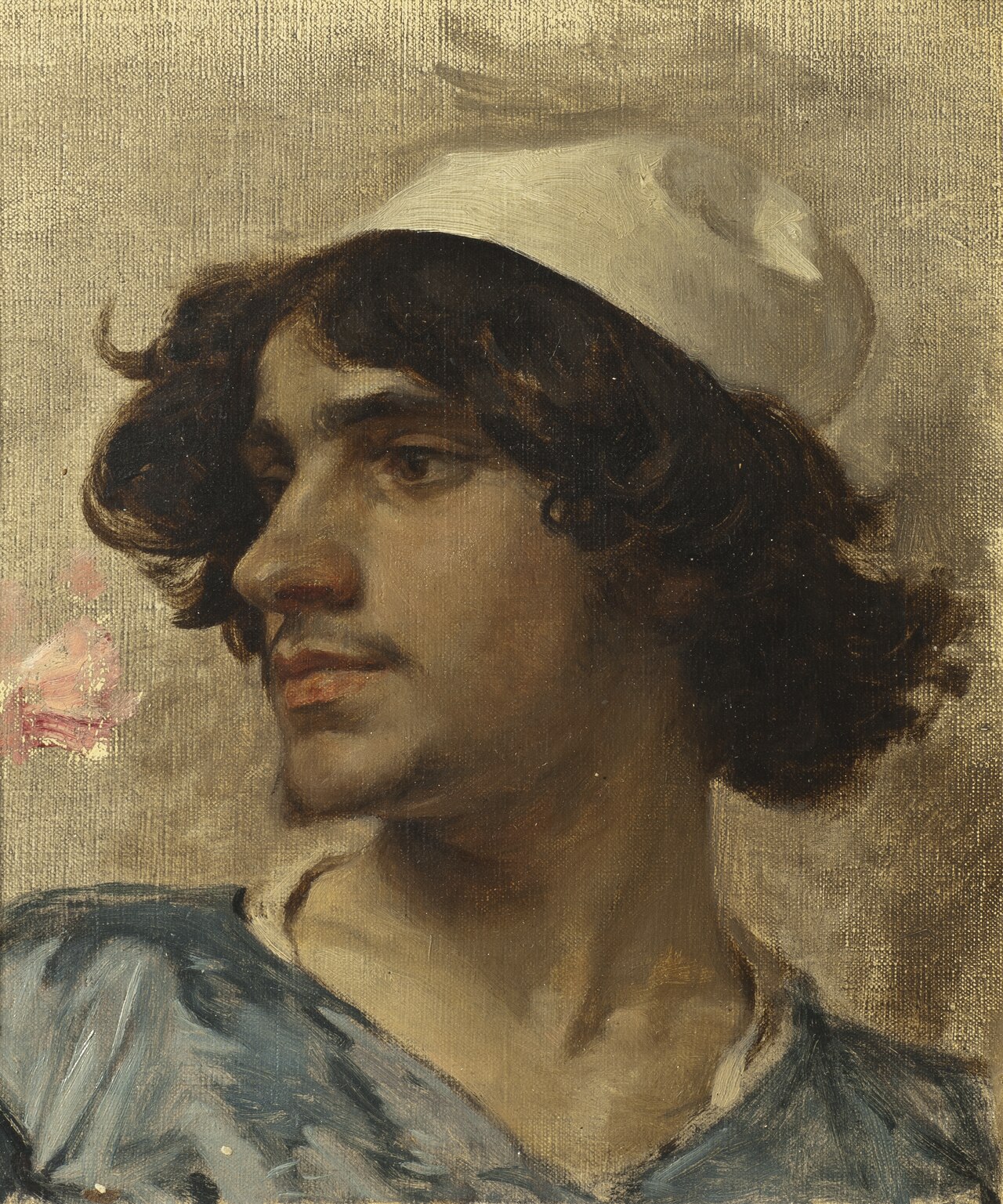
- Head of Young Man. Study – A portrait study that showcases Bargue’s skill in rendering the human head with anatomical accuracy. The work focuses on the subtle modelling of the facial planes, the play of light across the cheekbones, and a restrained background that keeps attention on the subject’s features.
- A Bashi‑Bazouk (1875) – This work reflects the 19th‑century fascination with Orientalist subjects. The painting portrays a Turkish soldier in flamboyant costume, rendered with meticulous attention to the texture of fabric and the intricacies of the decorative accessories. The figure is set against a neutral backdrop, allowing the vibrant attire to dominate the visual impact.
- A Footman Sleeping (1871) – A quiet domestic scene showing a footman collapsed in a moment of rest. The artist’s handling of the figure’s drapery and the subtle play of light across the body convey a sense of fatigue and intimacy, while the composition maintains the academic balance of foreground and background.
- Turkish Sentinel (1877) – Another Orientalist piece, this painting features a lone guard in traditional Ottoman garb. The sentinel’s posture and the careful rendering of his uniform illustrate Bargue’s ability to combine narrative suggestion with academic precision.
These works, while not as widely reproduced as those of his more famous peers, demonstrate Bargue’s consistent application of academic principles to a variety of subjects, from intimate portraiture to exotic genre scenes.
Influence and legacy Charles Bargue’s lasting impact on the art world rests primarily on his drawing course, which has been described as a bridge between the classical academies of the 19th century and modern art education. The systematic copying of master drawings that his method encourages proved especially valuable to artists seeking a solid foundation before moving into more experimental practices. The course was translated into several languages and adopted by institutions ranging from the Parisian Académie Julian to American art schools in the early 20th century.
Beyond pedagogy, Bargue’s paintings provide a window into the everyday visual culture of his time. His genre scenes, while adhering to academic standards, capture moments of leisure, labor, and cross‑cultural encounter that enrich our understanding of 19th‑century French society. Although his name may not dominate art‑historical narratives, scholars recognize his dual role as a practitioner of academic art and a catalyst for the disciplined study of drawing that shaped generations of artists.
In contemporary discussions of art education, the Bargue method remains a reference point for teachers who value the development of line, proportion, and observational accuracy. Artists who have trained with the method often cite its rigorous discipline as a foundation for their later stylistic explorations. As such, Charles Bargue occupies a niche but respected place in the history of art instruction, bridging the gap between the classical atelier system and the more varied curricula of modern art schools.
Frequently asked questions
Who was Charles Bargue?
Charles Bargue (1825–1883) was a French academic painter and lithographer best known for creating a systematic drawing course that became a staple of art education.
What artistic movement did he belong to?
He worked within the academic art tradition, adhering to its emphasis on precise draftsmanship, balanced composition, and polished finish.
What are his most famous works?
Among his notable paintings are The Chess Game (1880), A Bashi‑Bazouk (1875), A Footman Sleeping (1871), Turkish Sentinel (1877), and the portrait study Head of Young Man.
Why is Charles Bargue important in art history?
His drawing course provided a rigorous, step‑by‑step method for mastering drawing, influencing art academies across Europe and America and shaping generations of artists.
How can I recognise a work by Charles Bargue?
Look for the hallmark academic precision: clear, controlled lines, careful modelling of light and shadow, and subjects rendered with balanced composition, often featuring genre scenes or detailed portrait studies.