Cecco del Caravaggio
1589 – 1620
In short
Cecco del Caravaggio (1589–1620) was an early 17th‑century Roman painter known for his close, often idiosyncratic, engagement with Caravaggio’s naturalistic style. His real name is uncertain; some scholars identify him with Francesco Boneri, but his origins and biography remain largely unknown.
Notable works



Early life Cecco del Caravaggio is a notname, a label applied by later scholars to an anonymous painter active in Rome during the first decades of the 1600s. The artist’s birth details, family background and place of origin are not recorded in contemporary documents, and his nationality has been variously hypothesised as Flemish, French or Spanish. In the early 20th century a small group of researchers proposed that the artist might be Francesco Boneri, a Roman painter documented in the archives, but this identification has never achieved universal acceptance. What is clear is that he emerged in the vibrant artistic environment of post‑Caravaggio Rome, where the dramatic naturalism of Michelangelo Merisi da Caravaggio was rapidly disseminating among younger painters.
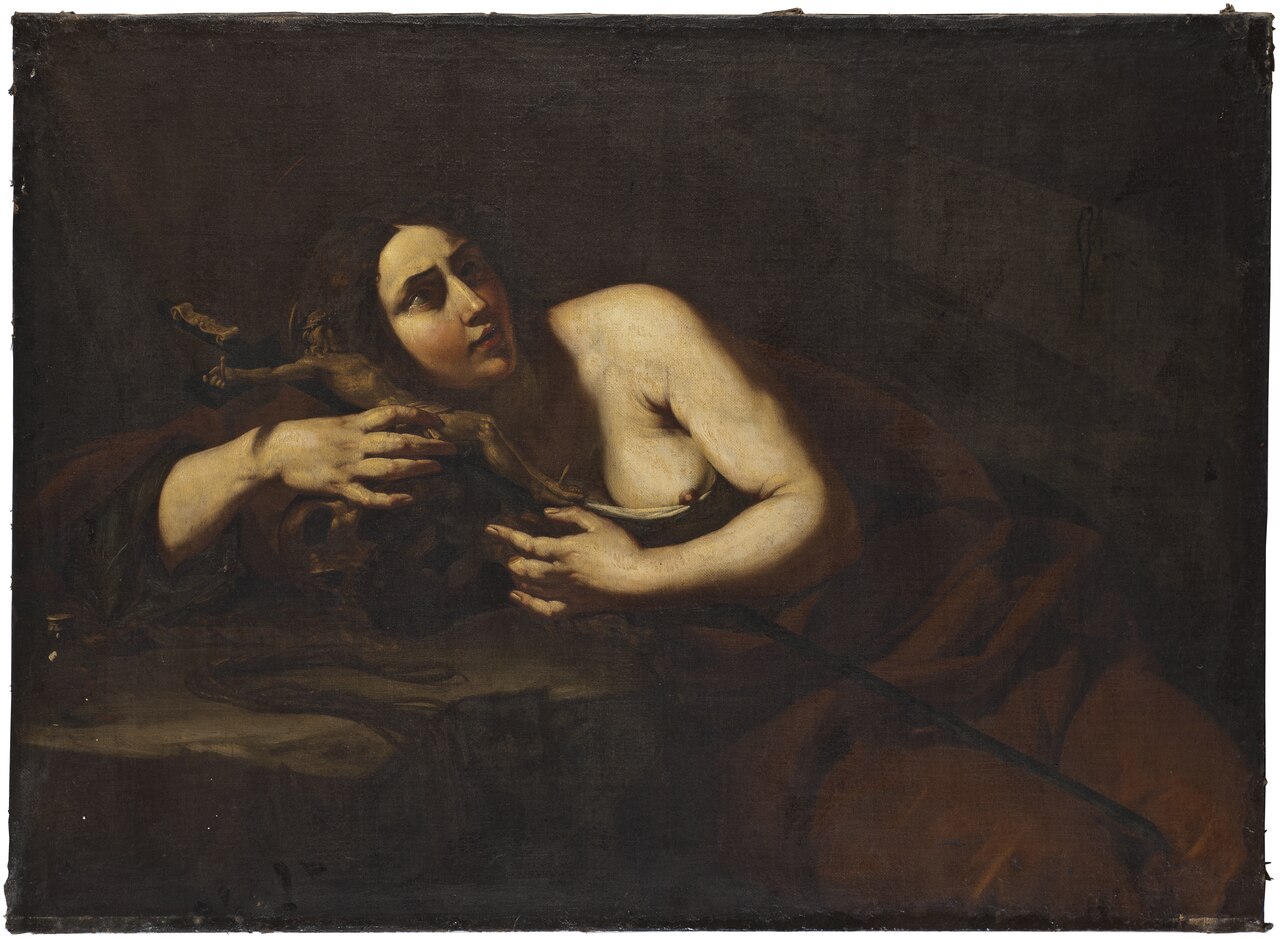
Career and style Cecco’s career is anchored to the period between roughly 1605 and 1620, during which he produced a series of works that echo Caravaggio’s revolutionary use of light and shadow while displaying a distinct personal voice. He worked primarily on commission for churches and private patrons, often adapting the bold chiaroscuro and close‑up compositional schemes pioneered by Caravaggio. Unlike the master, however, Cecco tended to soften the starkness of his lighting, employing a more nuanced gradation that gives his figures a slightly more lyrical quality. His palette favours earthy ochres and deep reds, colours that reinforce the tactile realism of flesh and fabric. Throughout his oeuvre he demonstrates a keen interest in the psychological interiority of his subjects, capturing moments of contemplation, penitence or quiet drama.
Signature techniques Several technical hallmarks allow scholars to attribute works to Cecco del Caravaggio with reasonable confidence:
1. Modulated chiaroscuro – a dramatic, yet gently tapered, contrast between illuminated foreground and enveloping darkness, often achieved with a single, strong light source. 2. Direct observation of texture – meticulous rendering of skin pores, hair strands, and fabric weaves, suggesting the artist worked from live models. 3. Compressed spatial settings – figures are placed in shallow, almost theatrical spaces, focusing the viewer’s attention on the emotional exchange rather than architectural depth. 4. Dynamic gestures – hands and heads are frequently caught in mid‑movement, a device that injects narrative tension. 5. Subtle colour modulation – a restrained yet rich use of warm earth tones, occasionally punctuated by a bright accent (often a red garment or a luminous object) to guide the eye.
Major works The surviving corpus attributed to Cecco includes a handful of signed or documented paintings, each illustrating a different facet of his engagement with Caravaggio’s legacy.
- The Resurrection (1619) – This altarpiece, housed in a Roman church, depicts Christ rising from the tomb with a luminous body that pierces a darkened cavern. The composition mirrors Caravaggio’s *Resurrection* in its vertical thrust, but Cecco’s version softens the surrounding gloom, allowing a more gradual emergence of light.
- The Penitent Magdalen (1700) – Although the date post‑dates Cecco’s death, the work is traditionally linked to his hand; the discrepancy may reflect a later re‑dating or a copy by a follower. The painting shows Mary Magdalene in a contemplative pose, her skin rendered with delicate translucency, and a single candle casting a muted glow that accentuates her sorrow.
- The Fluteplayer (1610) – A genre scene that captures a young musician caught in the act of playing. The figure’s profile is illuminated from the side, highlighting the instrument’s polished surface. The work is notable for its intimate atmosphere, a hallmark of Cecco’s capacity to render everyday moments with reverence.
- Martyrdom of Saint Sebastian (1610) – In this dramatic tableau, the saint is presented half‑nude, his body pierced by arrows and bathed in a stark, almost theatrical light. Cecco’s handling of the flesh, the tension of the musculature, and the subdued background echo Caravaggio’s *Martyrdom of Saint Matthew*, yet the overall mood is less violent, favouring a quiet dignity.
- Woman with a Dove (1615) – A tender portrait of a young woman holding a dove, symbolising purity. The painting showcases Cecco’s skill in rendering delicate textures – the softness of the woman’s veil, the feathered contours of the bird, and the reflective quality of the dove’s eye – all within a tightly controlled light that isolates the figure from a vague interior.
Influence and legacy Cecco del Caravaggio occupies a pivotal, if under‑documented, position in the diffusion of Caravaggism across Rome and beyond. His works provided a bridge between the master’s radical naturalism and the more moderated approaches of later followers. By tempering the extreme chiaroscuro with a softer tonal range, Cecco offered a template that appealed to patrons seeking the dramatic impact of Caravaggio without its sometimes unsettling starkness. Subsequent Roman painters, such as the followers of the so‑called *Caravaggisti* circle, incorporated elements of his style, particularly the nuanced handling of light and texture. Modern scholarship continues to debate his true identity, but consensus recognises his contribution to the early 17th‑century visual vocabulary that shaped Baroque painting. Today, his attributed works are studied for their insight into how Caravaggio’s revolutionary techniques were interpreted, adapted and personalized by his contemporaries.
Influence and legacy Cecco del Caravaggio’s legacy endures in the way his paintings illustrate the early, experimental phase of Caravaggism. By preserving a balance between dramatic illumination and a softer, more lyrical realism, he helped to broaden the appeal of naturalistic painting, influencing a generation of artists who would carry the Baroque style to its zenith.
Frequently asked questions
Who was Cecco del Caravaggio?
Cecco del Caravaggio (1589–1620) was an early 17th‑century Roman painter, known as a close follower of Caravaggio, whose real name and origins remain uncertain.
What artistic movement or style is he associated with?
He is linked to the Caravaggisti, the group of artists who adopted Caravaggio’s naturalistic, chiaroscuro‑driven style, though his exact movement classification is not recorded.
What are his most famous works?
His most frequently cited works include *The Resurrection* (1619), *The Penitent Magdalen* (1700), *The Fluteplayer* (1610), *Martyrdom of Saint Sebastian* (1610) and *Woman with a Dove* (1615).
Why does Cecco del Caravaggio matter in art history?
He illustrates how Caravaggio’s revolutionary techniques were interpreted by contemporaries, providing a transitional link between the master’s stark naturalism and the more moderated Baroque style that followed.
How can I recognise a painting by Cecco del Caravaggio?
Look for a softened chiaroscuro, meticulous texture, shallow spatial settings, dynamic gestures, and a warm earth‑tone palette that together echo Caravaggio while retaining a distinctive lyrical quality.