Carl Marcus Tuscher
1705 – 1751
In short
Carl Marcus Tuscher (1705–1751) was a German‑born Danish polymath who worked as a portrait painter, printmaker, architect and decorator in the Baroque era, active in Nuremberg and Copenhagen.
Notable works


Early life Carl Marcus Tuscher was born in 1705 in Nuremberg, a city renowned for its artistic workshops and vibrant print culture. Little is recorded about his family background, but the city's guild environment would have offered him early exposure to drawing, engraving and architectural drafting. By his teenage years Tuscher was already engaging with the visual arts, a foundation that would later support his multidisciplinary career.
Career and style In the early 1730s Tuscher moved to Copenhagen, where he entered a courtly circle that valued both fine art and decorative projects. He established himself primarily as a portrait painter, producing works that combined the meticulous observation of the Northern European tradition with the dramatic chiaroscuro typical of Baroque painting. His style is characterised by a careful rendering of fabrics and a subtle use of light to accentuate facial expression, while his compositional choices often echo the grandeur of court portraiture.
Beyond painting, Tuscher pursued printmaking, producing both etchings and caricature portraits that displayed a keen eye for detail and a satirical edge. His architectural training, though less documented, manifested in the design of interior decorative schemes and occasional involvement in building projects, reflecting the Baroque ideal of the artist‑designer who could bridge the visual and structural arts.
Signature techniques Tuscher’s paintings reveal a layered approach to modelling form. He began with a precise underdrawing, often executed in charcoal or ink, to lock in the anatomical structure. Over this he applied thin glazes of oil, building depth through successive layers of translucent pigment. This method allowed him to achieve a luminous skin tone and the soft gradations that typify Baroque portraiture. In his prints, Tuscher employed fine cross‑hatching to suggest texture, and his caricatures are notable for exaggerated yet recognisable facial features, achieved through swift, confident line work.
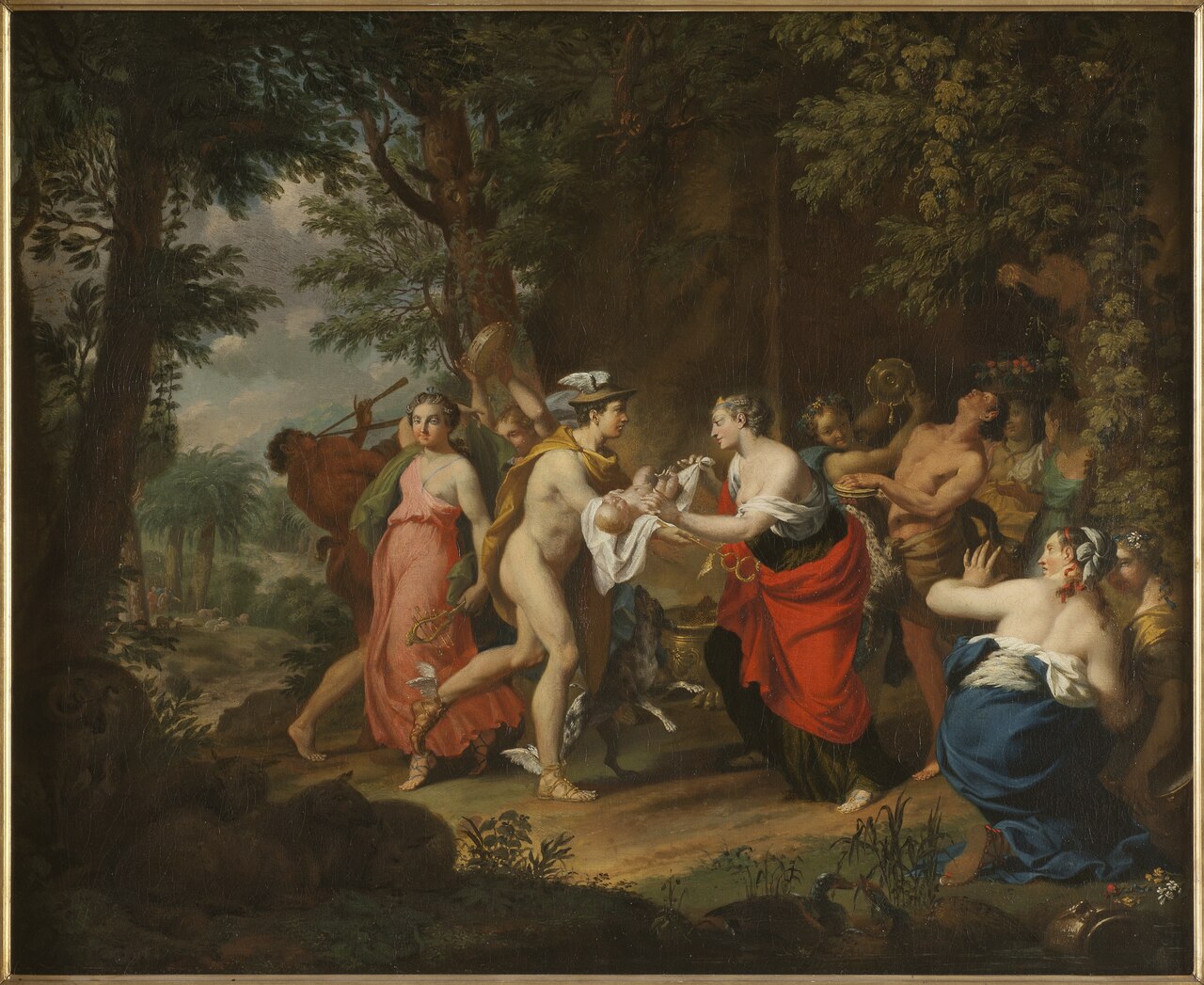
Major works - **Mercury Confiding the Child Bacchus to the Nymphs on Nysa (1750)** – This mythological composition showcases Tuscher’s capacity for narrative painting. The work depicts Mercury handing the infant Bacchus to a group of nymphs, set against a lush, idealised landscape. The figures are rendered with delicate flesh tones, while the surrounding foliage demonstrates his skill in creating atmospheric depth. - **Portrait of John Lambert (1735)** – One of Tuscher’s earliest known portraits, it captures the English merchant Lambert with a restrained elegance. The sitter’s attire is rendered with meticulous attention to texture, and the subtle play of light across the face conveys a sense of personal dignity. - **A Family Group on a Terrace in the Grounds of a Villa (1737)** – Possibly portraying the English businessman George Jackson and his family, this piece places the figures on a terrace overlooking a cultivated garden. The composition balances the intimacy of family interaction with the grandeur of the architectural setting, illustrating Tuscher’s ability to integrate portraiture within broader spatial contexts. - **Sappho and Cupid (1748)** – In this allegorical work, Tuscher interprets the ancient poet Sappho being approached by Cupid. The painting combines sensuality with scholarly reference, employing a warm palette and soft lighting to highlight the emotional tension between the characters. - **Caricature portrait** – Tuscher’s caricatures, though less numerous, reveal his facility with satire. Executed in ink, they exaggerate distinctive facial traits while retaining enough likeness to be instantly recognisable, demonstrating his versatility across artistic genres.
Influence and legacy Although Tuscher never founded a distinct school, his multidisciplinary practice exemplifies the Baroque ideal of the artist as a universal creator. His portraits contributed to the visual documentation of the mercantile and diplomatic elite of early‑18th‑century Denmark, while his decorative designs influenced contemporary interior schemes in Copenhagen’s aristocratic circles. Modern scholars regard his work as a bridge between Germanic artistic training and the emerging Danish aesthetic, noting how his cross‑cultural experience enriched the visual vocabulary of both regions. Today, Tuscher’s surviving paintings and prints are valued for their technical proficiency and for offering insight into the transnational networks of artists operating in the Baroque era.
Frequently asked questions
Who was Carl Marcus Tuscher?
Carl Marcus Tuscher (1705–1751) was a German‑born Danish polymath who worked as a portrait painter, printmaker, architect and decorator during the Baroque period.
What artistic style or movement is he associated with?
Tuscher’s work aligns with the Baroque style, characterised by dramatic lighting, rich colour, and a blend of fine portraiture with decorative grandeur.
What are his most famous works?
His most noted paintings include *Mercury Confiding the Child Bacchus to the Nymphs on Nysa* (1750), *Portrait of John Lambert* (1735), *A Family Group on a Terrace in the Grounds of a Villa* (1737), and *Sappho and Cupid* (1748).
Why is he important in art history?
Tuscher exemplifies the Baroque polymath, bridging German and Danish artistic traditions, and his portraits provide valuable visual records of 18th‑century European elite.
How can I recognise a Tuscher painting?
Look for finely rendered fabrics, a soft chiaroscuro that models faces, and a compositional balance that often places figures within elaborate interior or garden settings.