Bernardino Mei
1612 – 1676
In short
Bernardino Mei (1612–1676) was an Italian Baroque painter and engraver from Siena who worked in both his native city and Rome, receiving patronage especially from the Chigi family. He is noted for works such as The Charlatan, Christ Cleansing the Temple and Allegory of Justice.
Notable works

_-_Christ_Cleansing_the_Temple_-_Google_Art_Project.jpg)


Early life Bernardino Mei was born in 1612 in Siena, a city with a long tradition of artistic production dating back to the medieval and Renaissance periods. Little is recorded about his family background, and his nationality is listed as unknown in some sources, though his life and training were firmly rooted in the Italian artistic milieu. He likely received his initial artistic instruction within Siena’s local workshops, where exposure to the lingering influences of the Sienese School would have provided a foundation in composition and colour. By his early twenties, Mei had begun to develop a personal visual language that blended the delicate elegance of his hometown with the emerging dynam‑baroque dynamism that characterised the broader Italian scene.
Career and style Mei’s career unfolded across two principal centres: Siena and Rome. In Siena he produced works for local churches and private patrons, but it was his relocation to Rome that marked a decisive turn in his professional trajectory. The capital offered a wealth of commissions from aristocratic families, most notably the Chigi, whose patronage afforded him a platform to experiment with larger‑scale religious and mythological subjects. Throughout his oeuvre, Mei adhered to a Baroque sensibility, characterised by dramatic chiaroscuro, vigorous movement and an emotional intensity that sought to engage viewers directly. While his exact affiliation with a formal art movement remains unclear, his paintings display a synthesis of the Roman Baroque’s theatricality and the lingering lyrical qualities of the Sienese tradition.
Signature techniques Mei’s technical repertoire was marked by a deft handling of light and shadow, often employing strong contrasts to model three‑dimensional forms on a relatively flat pictorial plane. He favoured a warm, earthy palette punctuated by occasional bursts of saturated reds and blues, a colour scheme that enhanced the narrative drama of his compositions. In his engravings, Mei demonstrated a meticulous line work that conveyed texture and depth without reliance on heavy hatching, suggesting a confidence in drawing that paralleled his painted works. His figures are frequently rendered with elongated limbs and expressive gestures, a stylistic choice that amplifies the sense of movement and emotional urgency inherent in Baroque art.
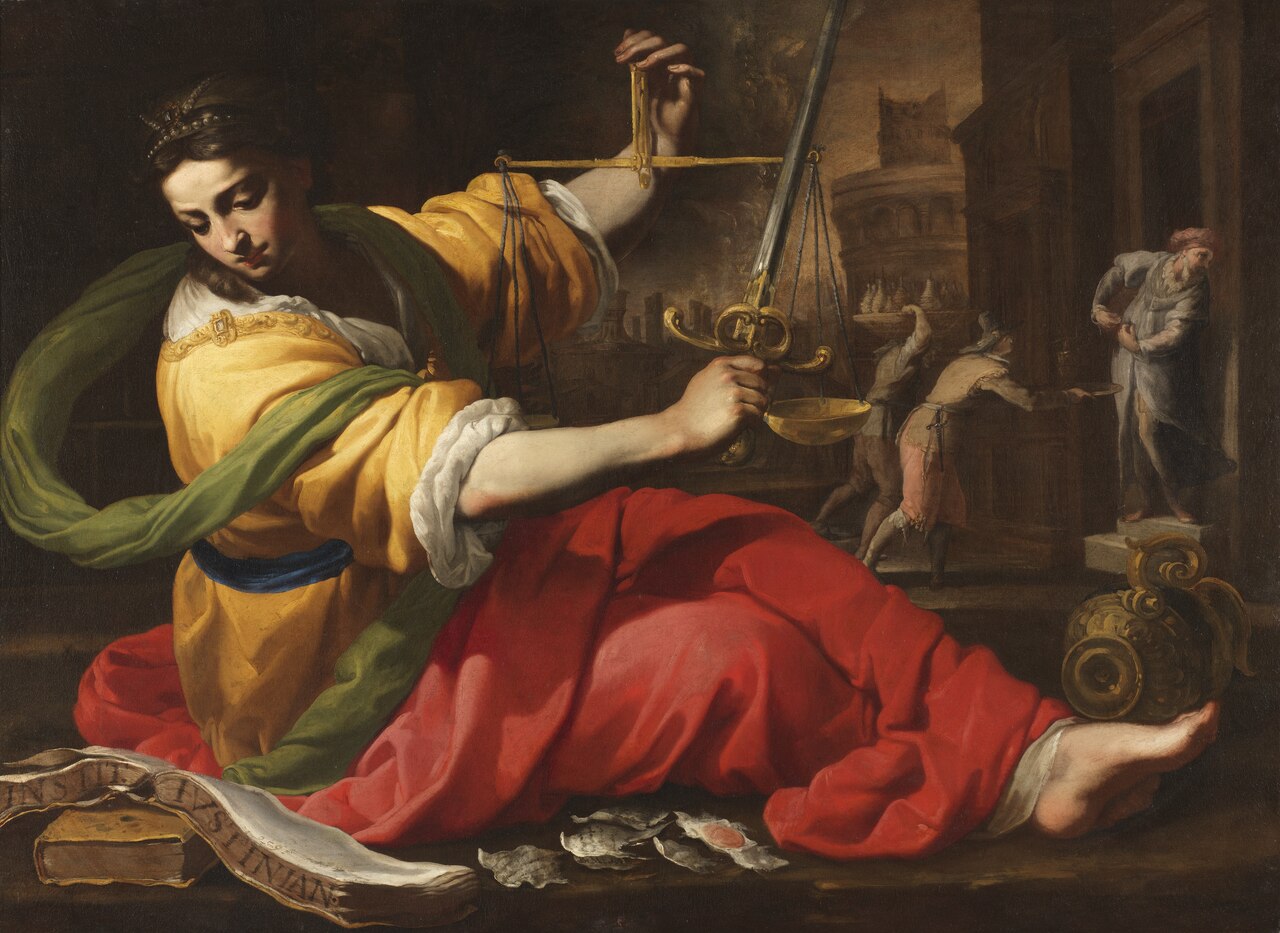
Major works Among Mei’s most celebrated paintings is **The Charlatan** (1656), a genre piece that captures a street performer surrounded by onlookers, the work’s theatrical lighting and exaggerated gestures exemplifying his interest in everyday spectacle. **Christ Cleansing the Temple** (1655) presents a biblical episode with a crowded composition, where Mei’s use of chiaroscuro highlights the central figure of Christ while the surrounding crowd recedes into shadow, underscoring moral tension. **Alexander the Great and the Fates** (1667) reflects his engagement with classical mythology; here, Mei balances heroic grandeur with a subtle psychological undertone, portraying Alexander confronting the inevitable forces of destiny. The **Crucifix with the Virgin and Saints Francis and Agatha** demonstrates his capacity for devotional imagery, employing a restrained yet poignant palette to convey solemnity. Finally, **Allegory of Justice** (1656) showcases his skill in allegorical representation, using symbolic attributes and a balanced composition to evoke the abstract concept of fairness, while the dramatic lighting reinforces the moral gravitas of the subject.
Influence and legacy Bernardino Mei’s legacy rests on his ability to bridge regional artistic traditions with the dominant Roman Baroque aesthetic. Though not as widely recognised as some of his contemporaries, his work contributed to the diffusion of Baroque visual rhetoric beyond the capital, influencing younger Sienese artists who sought to emulate his synthesis of dramatic narrative and refined technique. The patronage of the Chigi family ensured that several of his major compositions remained in prominent public and private collections, allowing later scholars to trace the evolution of mid‑seventeenth‑century Italian painting. Contemporary art historians regard Mei as a valuable case study in the fluidity of artistic identity during a period when national and stylistic boundaries were often porous. His paintings continue to be cited in discussions of Baroque iconography, particularly in relation to the interplay of religious, mythological and genre subjects within a single artistic practice.
Frequently asked questions
Who was Bernardino Mei?
Bernardino Mei (1612–1676) was an Italian Baroque painter and engraver born in Siena who worked in both Siena and Rome, receiving notable patronage from the Chigi family.
What style or movement is Bernardino Mei associated with?
Mei is generally linked to the Baroque style, combining dramatic lighting, dynamic composition and emotional intensity while retaining some Sienese lyrical qualities.
What are Bernardino Mei's most famous works?
His best‑known paintings include The Charlatan (1656), Christ Cleansing the Temple (1655), Alexander the Great and the Fates (1667), the Crucifix with the Virgin and Saints Francis and Agatha, and Allegory of Justice (1656).
Why does Bernardino Mei matter in art history?
Mei illustrates how regional artists adapted the Roman Baroque idiom, influencing later Sienese painters and contributing to the spread of Baroque visual language across Italy.
How can I recognise a Bernardino Mei painting?
Look for strong chiaroscuro, warm earthy tones punctuated by vivid accents, elongated figures with expressive gestures, and a blend of dramatic narrative with a subtle, refined compositional balance.