Bernard Palissy
1510 – 1589
In short
Bernard Palissy (1510–1589) was a French Huguenot potter and hydraulic engineer renowned for his rusticware—large oval ceramic platters richly decorated with relief animals and foliage—and for his decades‑long attempt to reproduce Chinese porcelain.
Notable works
Early life Bernard Palissy was born in 1510 in the modest village of Lacapelle‑Biron, in the province of Gascony, France. Little is recorded about his family background, but contemporary accounts suggest he was raised in a modest, devout Protestant household. His early education was practical rather than scholarly, focusing on the trades of pottery and metalwork that were common in the rural economy of southwestern France. By his teenage years Palissy had already demonstrated a keen curiosity for the natural world, collecting shells, rocks and animal specimens—a habit that would later inform the distinctive decorative programme of his ceramics.
Career and style In the 1530s Palissy moved to the larger towns of the region, where he began to work as a potter and, increasingly, as a hydraulic engineer. He quickly gained a reputation for designing and constructing fountains, water-works and irrigation systems, a skill set that earned him commissions from both private patrons and municipal authorities. Around the mid‑1540s he turned his attention to the challenge that preoccupied many European craftsmen of the period: the imitation of Chinese porcelain. For roughly sixteen years Palissy experimented with glazes, kiln temperatures and clay bodies, seeking a material that could match the translucency and hardness of the Asian wares.
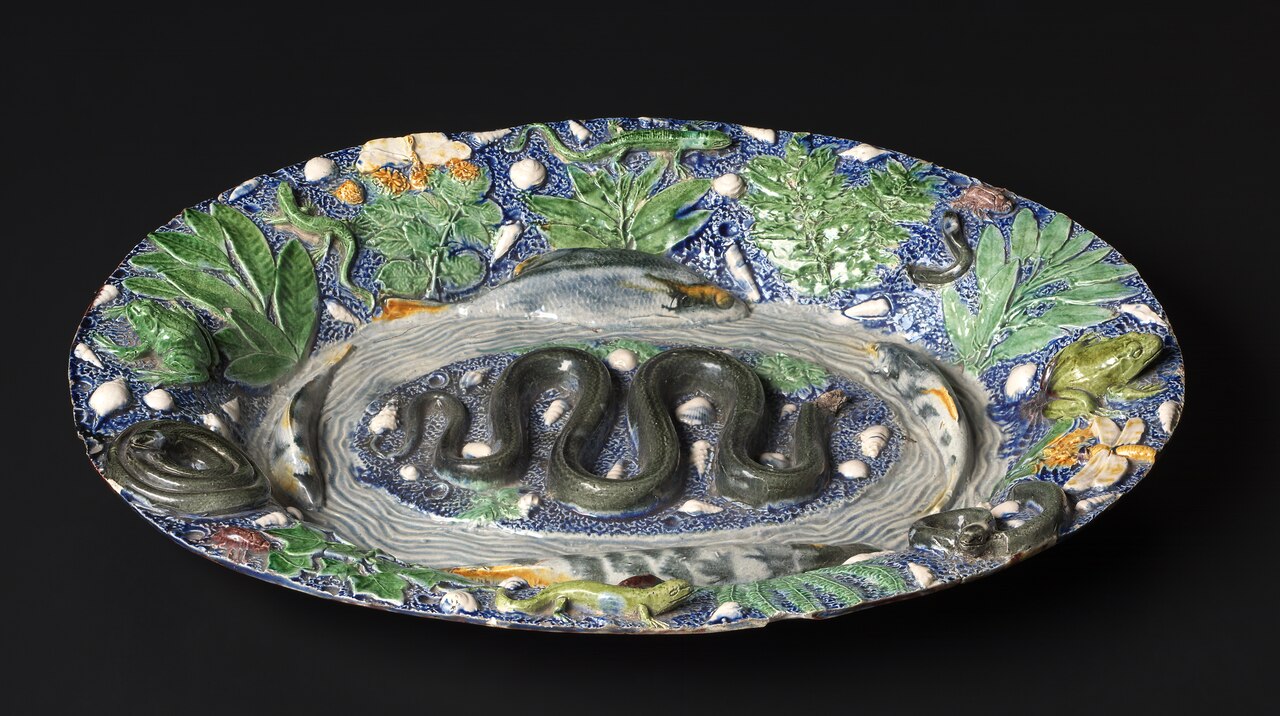
His breakthrough came not in porcelain but in a new decorative idiom that combined utilitarian function with exuberant naturalism. Palissy developed a style later termed "rusticware", characterised by large oval platters and dishes on which tiny animals—often rendered in low relief from moulds taken of real specimens—are set amidst a profusion of leaves, vines and shells. The surfaces are typically covered with a complex network of painted and incised motifs, giving the impression of a miniature forest or garden captured in ceramic. While the exact boundaries of Palissy’s own workshop are difficult to delineate, his name quickly became synonymous with this richly ornamented, nature‑themed ceramic vocabulary.
Signature techniques Palissy’s technical innovations rested on a meticulous approach to both material and form. He employed a high‑fire stoneware body that could withstand the intense temperatures required for his thick, multi‑layered glazes. The glaze palette was dominated by earthy ochres, deep greens and muted blues, often applied in successive layers to achieve depth and subtle colour variation. For the relief animals, Palissy is thought to have taken direct casts from dead or preserved specimens, a practice that gave his figures a striking anatomical accuracy. These casts were then applied to the still‑wet clay, allowing the relief to bond seamlessly with the vessel wall.
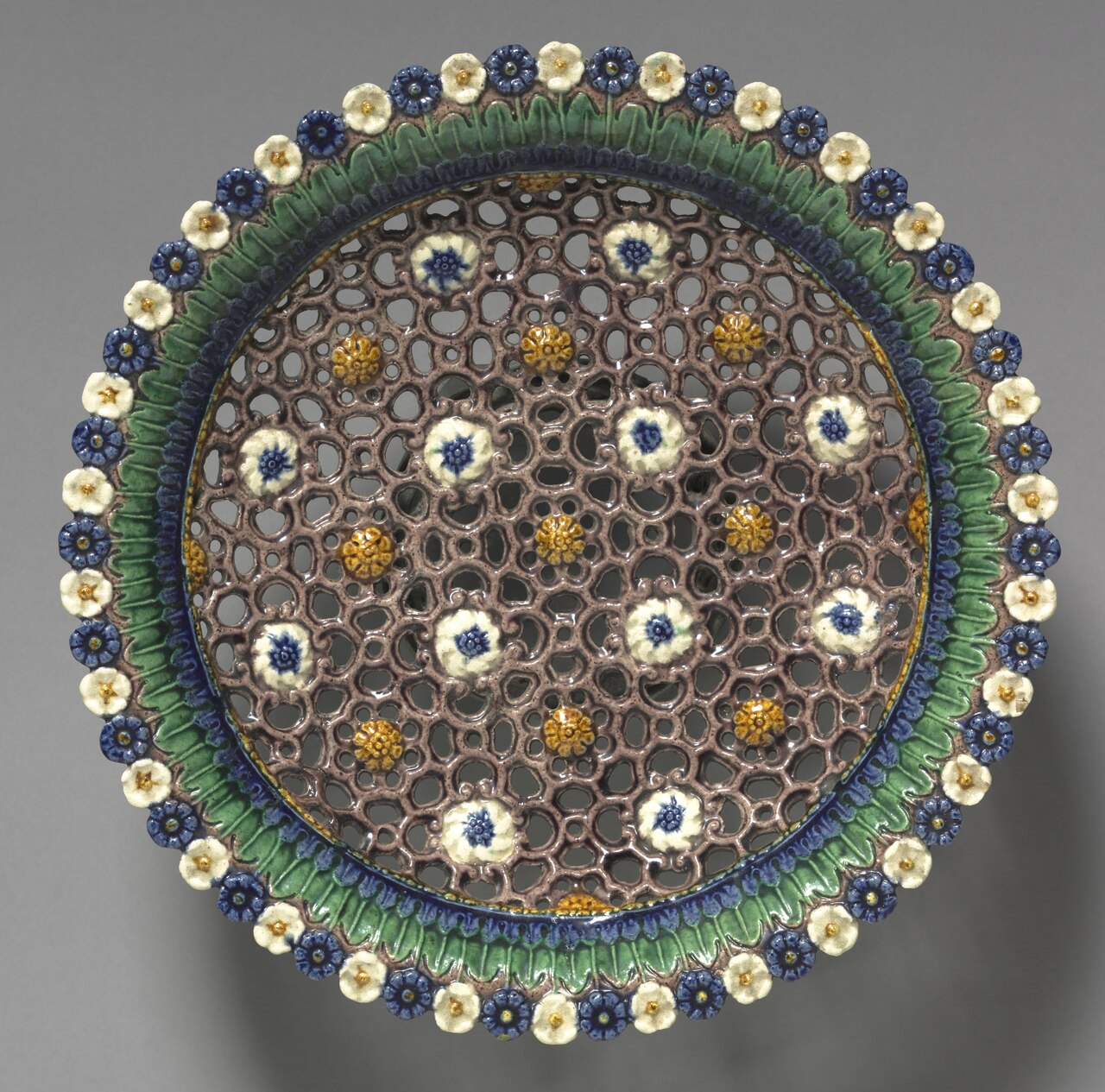
Equally important was his use of open work—delicate, pierced sections of the ceramic surface that created a lace‑like effect. This technique required precise control of the kiln atmosphere to prevent collapse of the fragile sections. Palissy also experimented with hydraulic principles in his pottery, occasionally incorporating functional water channels into his larger dishes, a nod to his engineering background.
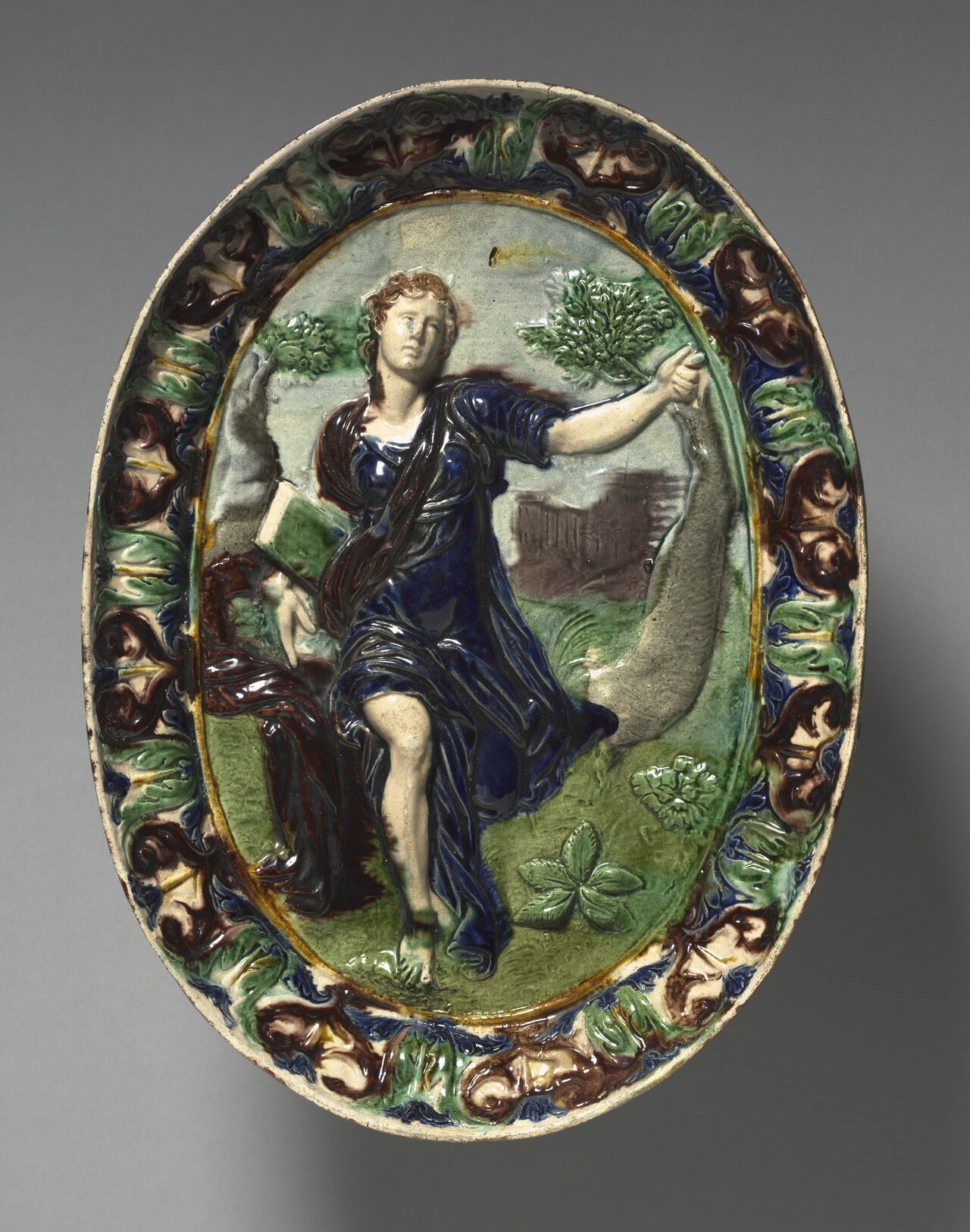
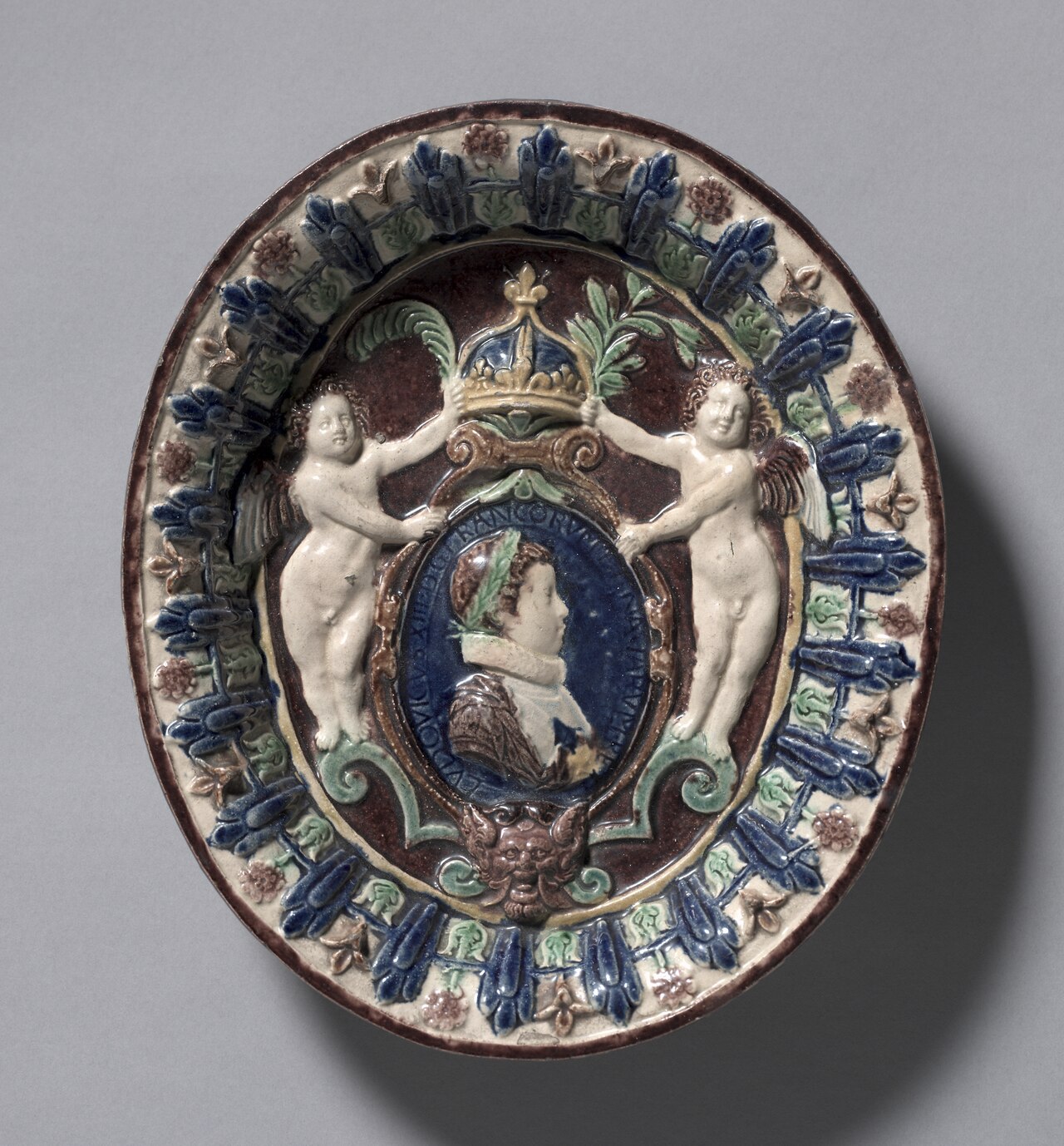
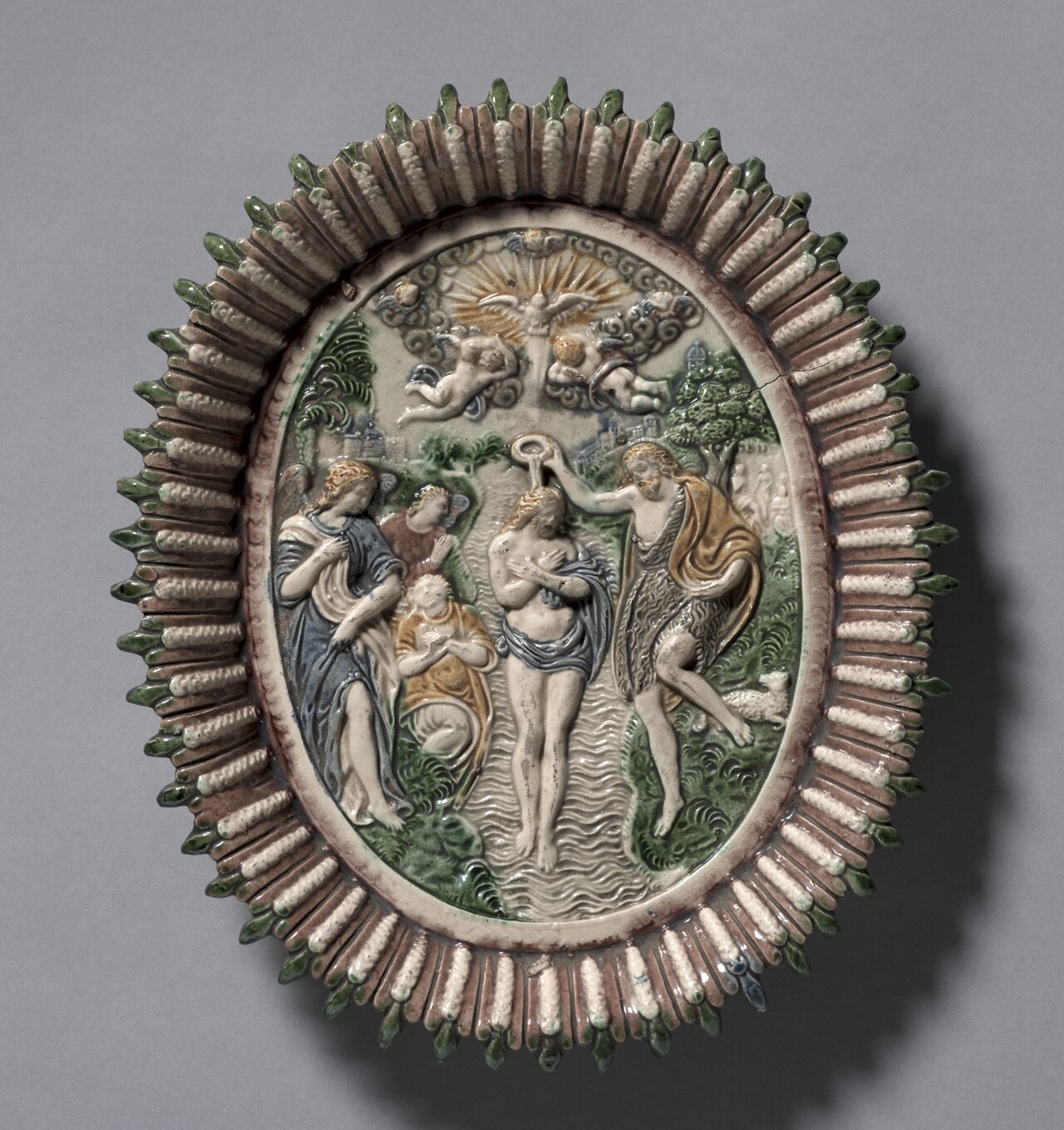
Major works Among Palissy’s most celebrated pieces are the **Rustic Platter**, a large oval dish that displays a bustling tableau of birds, fish and amphibians set within a tangled thicket of foliage. The **Oval Dish Depicting Cumaean Sibyl** combines mythological subject matter with Palissy’s naturalistic style, featuring a seated sibyl surrounded by a cornucopia of shells and small creatures. The **Dish with Open Work** exemplifies his daring use of pierced ornamentation, allowing light to filter through the lattice‑like patterns and highlighting the three‑dimensional reliefs. The **Oval Dish Commemorating the Ascent of the Young Louis XIII to the Throne of France** reflects a rare historical commission, integrating regal symbolism with Palissy’s signature natural motifs. Finally, the **Plate Depicting the Baptism of Christ** demonstrates his ability to blend religious narrative with his rustic aesthetic, presenting the biblical scene amidst a richly detailed natural setting.
Influence and legacy Palissy’s rusticware set a precedent for French decorative ceramics that endured well into the eighteenth century. Although his attempts to replicate Chinese porcelain never achieved the desired result, his devotion to experimental glazing and his integration of naturalistic reliefs inspired subsequent generations of potters. The style was widely imitated by contemporaries and later followers, leading to a flourishing market for "Palissy‑type" wares throughout France. In the nineteenth century, a revival of interest in historic craftsmanship saw renewed production of rusticware, often marketed as authentic Palissy pieces.
Beyond ceramics, Palissy’s contributions to hydraulic engineering were recognized by his contemporaries, and his writings on the subject influenced early modern water‑management practices. Today, his surviving works are prized by museums and collectors for their technical virtuosity and their vivid portrayal of the natural world, and they remain a testament to the inventive spirit of a sixteenth‑century artisan who bridged art, science and craft.
Frequently asked questions
Who was Bernard Palissy?
Bernard Palissy (1510–1589) was a French Huguenot potter and hydraulic engineer best known for his rusticware—large, richly decorated ceramic platters featuring relief animals and foliage.
What artistic style or movement is Palissy associated with?
Palissy is linked to the rusticware style, a distinctive French decorative ceramic tradition that blends naturalistic reliefs with elaborate painted and incised ornamentation.
What are his most famous works?
His most celebrated pieces include the Rustic Platter, the Oval Dish Depicting Cumaean Sibyl, the Dish with Open Work, the Oval Dish Commemorating the Ascent of the Young Louis XIII, and the Plate Depicting the Baptism of Christ.
Why is Bernard Palissy important in art history?
Palissy’s innovative techniques in glazing, relief modelling, and open‑work decoration set a new standard for French ceramics and influenced both contemporaneous and later decorative arts, while his engineering work contributed to early modern hydraulic design.
How can I recognise an authentic Palissy piece?
Authentic Palissy works typically feature large oval forms, finely modelled animal reliefs taken from real specimens, dense foliage motifs, multi‑layered earthy glazes, and often subtle open‑work sections; provenance and expert attribution are essential due to many later imitations.