Benjamin Block
1631 – 1689
In short
Benjamin Block (1631–1689) was a German-born Baroque portrait painter who worked in Central Europe, especially in Hungary and the Holy Roman Empire. He is remembered for his refined court portraits, including depictions of aristocratic families and imperial figures.
Notable works


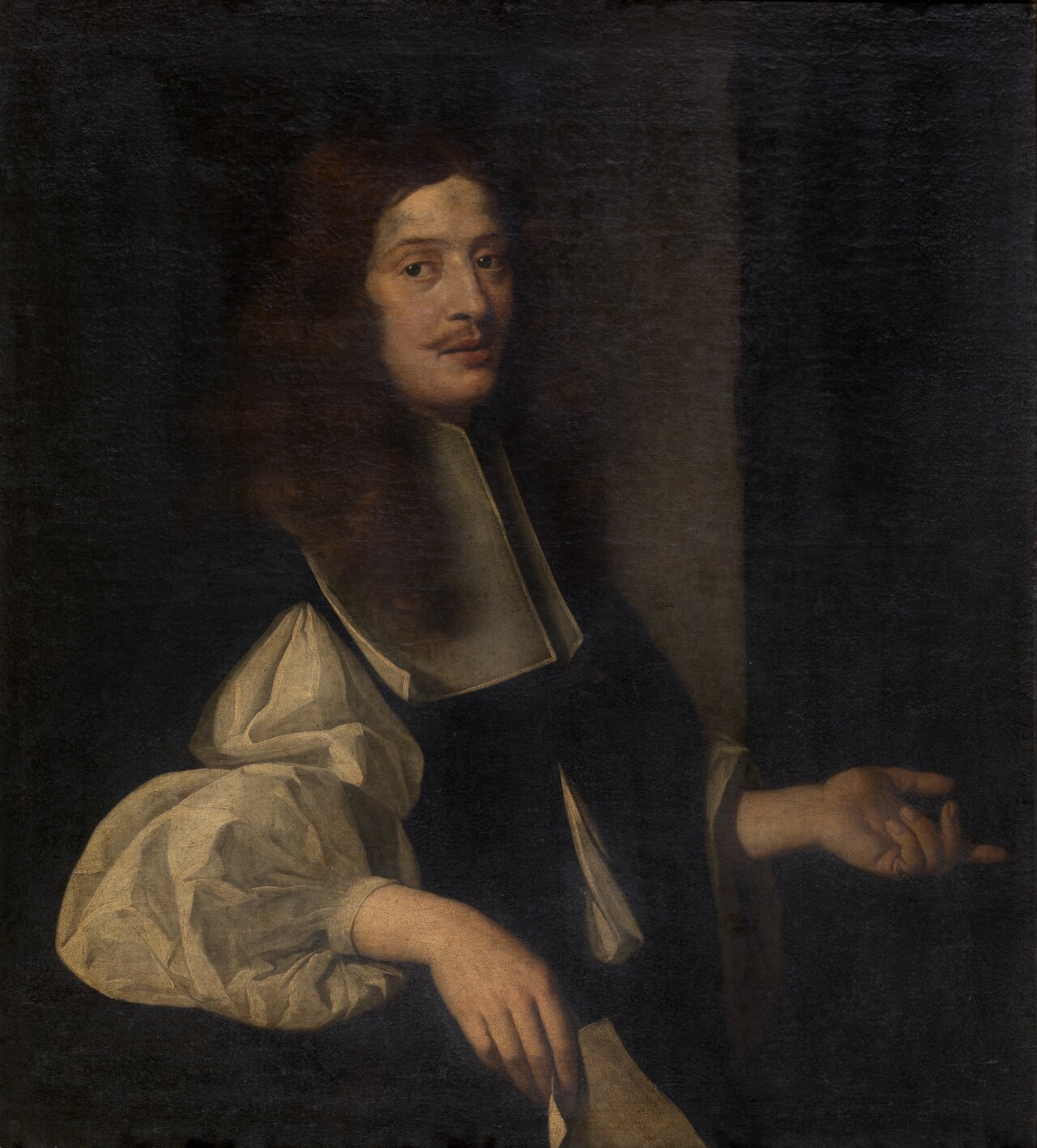


Early life Benjamin Block was born in 1631 in the Hanseatic city of Lübeck, in northern Germany. Little is known about his family background, but the city’s thriving commercial environment exposed him early to a variety of artistic influences, ranging from Dutch portraiture to the emerging Baroque sensibilities of southern Europe. Block likely received his initial training in Lübeck or nearby Hamburg, where a modest but active guild of painters provided apprenticeships for young artists. By his early twenties, he had begun to travel, a common practice for painters seeking patronage beyond their hometowns.
Around the mid‑1650s Block settled for a period in the Kingdom of Hungary, then part of the Habsburg‑ruled Holy Roman Empire. It was here that he met and married Anna Katharina Block, herself a noted flower painter. Their partnership was both personal and professional, with Anna Katharina contributing to the decorative elements of some of his works. The couple’s move to Hungary placed Benjamin Block at the heart of a vibrant court culture that prized portraiture as a means of displaying lineage, power, and wealth.
Career and style Block’s career flourished in the latter half of the 17th century, a time when Baroque aesthetics dominated European art. While he is not formally attached to any single school, his work reflects the broader Baroque emphasis on dramatic lighting, rich colour palettes, and a keen psychological insight into his sitters. He primarily served aristocratic patrons, producing formal portraits for noble families in Hungary, Bohemia, and the German principalities. His clientele included members of the Nádasdy family, the Eszterházy dynasty, and the imperial court of the Holy Roman Empire.
The stylistic hallmarks of Block’s portraits are their compositional balance and the subtle rendering of textures—whether the sheen of silk, the glint of metal armor, or the delicate translucence of skin. He incorporated a restrained yet expressive use of chiaroscuro, borrowing from the techniques of Dutch masters such as Rembrandt, while also integrating the grandeur typical of Southern European Baroque portraitists. This synthesis gave his paintings a dignified realism that appealed to both local and imperial patrons.
Signature techniques Block’s technical repertoire can be summarised in three recurring approaches:
1. Layered glazing – He built colour and depth through successive thin layers of oil paint, allowing underlying tones to shine through and creating a luminous effect, especially in flesh tones and fabric. 2. Fine brushwork for details – The artist employed a fine, almost filigree brush for rendering jewelry, insignia, and ornamental textiles, ensuring that each element contributed to the overall narrative of status. 3. Controlled lighting – Block often placed a single, soft light source to illuminate the face while allowing the background to recede into muted shadows. This technique highlighted the sitter’s expression and reinforced the three‑dimensionality of the portrait.
These methods, combined with a disciplined compositional structure, allowed Block to produce works that were both visually impressive and emotionally resonant.
Major works Block’s surviving oeuvre is limited, but several key portraits illustrate his artistic range:
- The Count Ferenc Nádasdy (1656) – This portrait captures the Hungarian magnate in full regalia, emphasizing his military authority through the inclusion of a sword and richly embroidered coat. The careful rendering of the count’s facial features conveys both confidence and a subtle introspection.
- Portrait of Princess Anna Julianna Eszterházy, Wife of Count Ferenc Nádasdy (1656) – Executed in the same year as the count’s portrait, this work showcases Block’s ability to convey feminine grace. The princess is depicted with a delicate veil and a modest yet elegant jewellery set, the background softened to keep focus on her serene expression.
- Portrait of a Man – Though the sitter’s identity remains unknown, the painting is notable for its psychological depth. Block employs a muted background and a direct gaze, allowing the viewer to sense the subject’s inner life.
- Portrait of Leopold I, Holy Roman Emperor (1672) – This work demonstrates Block’s entry into imperial circles. The emperor is presented in full ceremonial dress, with a gold‑embroidered cloak and the imperial regalia. The portrait balances the grandeur of the imperial office with a personal, almost intimate portrayal of the monarch’s countenance.
- Portrait of Kaiser Joseph I at the age of six (1684) – A rare example of a child portrait, this painting captures the young heir in a miniature court costume. Block’s handling of the boy’s delicate skin and the soft lighting conveys both innocence and the weight of future responsibility.
These works, together with a handful of lesser‑known commissions, underline Block’s capacity to adapt his style to the expectations of different patrons while maintaining a consistent visual language.
Influence and legacy Benjamin Block occupies a niche within the broader narrative of Central European Baroque portraiture. Though not as widely recognised as contemporaries such as Peter Paul Rubens or David Teniers the Younger, his portraits contributed to the visual culture of the Habsburg courts and the Hungarian aristocracy. By blending Northern European realism with Baroque opulence, Block helped shape a regional style that persisted into the early 18th century.
His marriage to Anna Katharina Block also reflects the collaborative nature of artistic production in the period; while she specialised in floral motifs, their combined workshops likely supplied a range of decorative and portrait commissions. Block’s descendants and apprentices continued to work in the portrait genre, spreading his techniques across the Danube basin.
Modern scholarship regards Block’s surviving paintings as valuable documents of 17th‑century court life, offering insights into fashion, insignia, and the social hierarchies of the time. His works are held in several European collections, including the Hungarian National Gallery and the Regensburg Museum of History, where they remain subjects of conservation and exhibition.
In summary, Benjamin Block’s career exemplifies the itinerant nature of Baroque artists, whose mobility allowed them to serve a pan‑European elite. His portraits, characterised by refined technique and a dignified realism, continue to inform our understanding of the visual representation of power in early modern Central Europe.
Frequently asked questions
Who was Benjamin Block?
Benjamin Block (1631–1689) was a German-born Baroque portrait painter who worked mainly in Hungary and the Holy Roman Empire, known for his refined court portraits.
What artistic style or movement is he associated with?
Block is linked to the Baroque style, particularly the portrait tradition that combined Northern European realism with the dramatic opulence of Southern Baroque.
What are his most famous works?
His most notable paintings include the portraits of Count Ferenc Nádasdy (1656), Princess Anna Julianna Eszterházy (1656), Leopold I, Holy Roman Emperor (1672), and a six‑year‑old Kaiser Joseph I (1684).
Why is Benjamin Block important in art history?
He helped shape Central European Baroque portraiture, providing a visual record of aristocratic and imperial identity while influencing later portrait painters in the region.
How can I recognise a Benjamin Block painting?
Look for meticulous glazing, fine brushwork on jewellery and textiles, a restrained chiaroscuro that highlights the sitter’s face, and a balanced, dignified composition typical of 17th‑century court portraiture.