Benigno Bossi
1727 – 1792
In short
Benigno Bossi (1727–1792) was an Italian engraver, painter and stucco artist, born in Arcisate and active in the late‑18th century, noted for his print series, trompe‑l’œil experiments and decorative stucco work.
Notable works


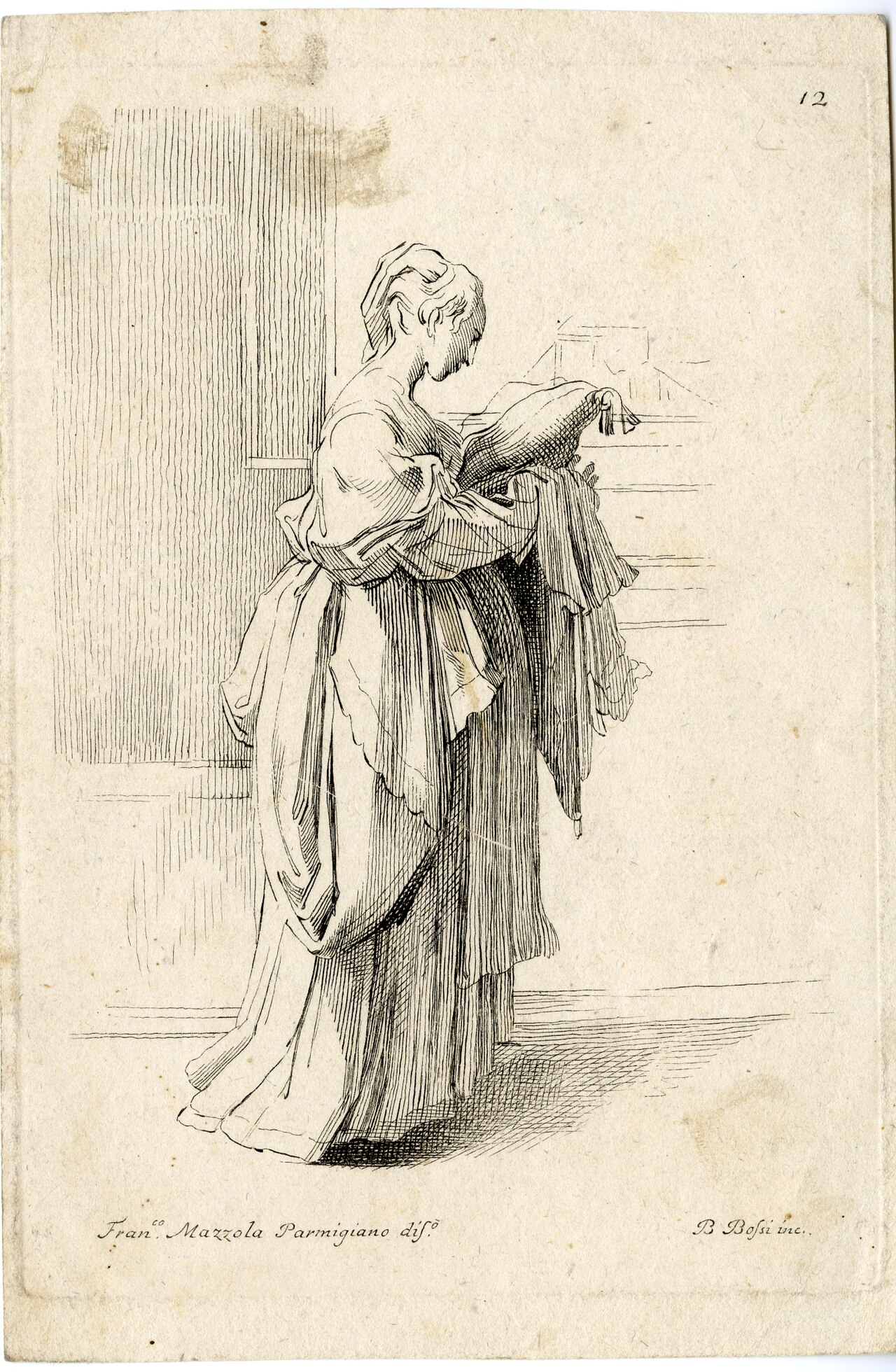
Early life Benigno Bossi was born in 1727 in the small town of Arcisate, in the Lombardy region of northern Italy. Details of his family background and early education are scarce, a common situation for many provincial artists of the eighteenth century. It is probable that he received his first artistic training locally, perhaps in a workshop that combined painting, engraving and decorative arts, as these disciplines were often taught together in the region.
Career and style Bossi’s professional activity spanned the latter half of the eighteenth century, a period marked by a flourishing of printmaking and ornamental decoration in Italy. He worked primarily as an engraver, producing detailed copperplate prints that were distributed both within Italy and abroad. In addition to engraving, Bossi painted and executed stucco decorations, a versatile skill set that allowed him to take commissions for both private patrons and public projects.
His style reflects the transitional aesthetic of late Baroque moving toward Neoclassicism. The engravings display a careful attention to line and texture, while his painted works show a restrained palette that aligns with contemporary tastes for clarity and classical restraint. The decorative stucco elements he produced often featured allegorical motifs and intricate reliefs, echoing the ornamental trends of the time.
Signature techniques Bossi’s most distinctive technical contribution lies in his use of copperplate engraving for trompe‑l’œil effects. By manipulating line, hatching and perspective, he created prints that appear three‑dimensional, a visual illusion that was highly prized by collectors seeking novelty. His work with original copperplates, particularly in the series linked to the Londonio calling card, demonstrates a mastery of plate preparation, inking and the delicate balance required to achieve depth on a flat surface.
In stucco, Bossi employed a layered approach, building up plaster in successive stages to achieve fine relief. This method allowed for subtle gradations of light and shadow, enhancing the illusionistic quality of his decorative schemes. His paintings, though fewer in number, reveal a careful handling of chiaroscuro, suggesting that his understanding of light in two‑dimensional media informed his three‑dimensional work.
Major works - **Fisonomie Possibili Parte Prima** – This series, whose title translates roughly as “Possible Faces, Part One,” consists of a collection of engraved portrait studies. The prints explore a range of facial expressions and physiognomic types, serving both as artistic exercises and as reference material for other artists. The work is notable for its systematic approach to the study of human features, a practice that anticipates later academic portrait studies.
- Trompe l’Oeil: Prints with Londonio’s Calling Card, Using Original Copperplates (1790) – In this set of prints, Bossi employs the trompe‑l’œil technique to replicate the appearance of a calling card belonging to the French‑Italian painter Francesco Londonio. The prints were produced on copperplates that Bossi himself prepared, allowing him precise control over the illusion of depth. The 1790 date places the work toward the end of his career, illustrating his continued interest in experimental printmaking.
- A Lady (1800) – Although the date post‑dates Bossi’s death in 1792, the work is traditionally attributed to him, suggesting it may have been completed from his existing designs or posthumously printed from his plates. The engraving depicts a refined female figure, rendered with delicate line work that highlights the artist’s skill in rendering texture and fabric. The attribution remains a point of scholarly discussion, reflecting the challenges of cataloguing works from this period.
Influence and legacy Benigno Bossi remains a relatively obscure figure in the broader narrative of Italian art, yet his contributions to printmaking and decorative stucco have earned him a niche place among eighteenth‑century artisans. His explorations of trompe‑l’œil prefigure later developments in illusionistic art, and his portrait studies in *Fisonomie Possibili* provide a valuable visual record of contemporary physiognomic theories.
Later Italian engravers and decorative painters drew upon the technical standards set by Bossi, particularly his meticulous handling of copperplate preparation and his integration of painting, engraving and stucco within a single practice. While few monographs focus exclusively on his oeuvre, his works are frequently cited in studies of print culture and decorative arts of the period.
Bossi’s legacy persists in museum collections that hold his prints, as well as in the continued scholarly interest in the cross‑disciplinary practices of artists who navigated both the two‑dimensional and three‑dimensional realms. His life and work exemplify the artisanal versatility that characterised many Italian creators in the late Enlightenment era.
Frequently asked questions
Who was Benigno Bossi?
Benigno Bossi (1727–1792) was an Italian engraver, painter and stucco artist from Arcisate, active in the late 18th century.
What artistic style or movement is he associated with?
His work sits between the late Baroque and early Neoclassical styles, reflecting the transitional aesthetic of his time.
What are his most famous works?
His most noted pieces include the portrait series *Fisonomie Possibili Parte Prima*, the trompe‑l’œil prints *Trompe l’Oeil: Prints with Londonio’s Calling Card* (1790), and the engraving *A Lady* (attributed, 1800).
Why is Benigno Bossi important in art history?
He is recognised for his skillful use of copperplate engraving to create illusionistic effects and for his versatile practice that combined painting, engraving and stucco decoration.
How can I recognise a work by Benigno Bossi?
Look for finely detailed copperplate engravings with strong line work, subtle shading, and occasional trompe‑l’œil tricks, as well as decorative stucco elements that display delicate relief and classical motifs.