Bartholomeus Molenaer
1618 – 1650
In short
Bartholomeus Molenaer (1618–1650) was a Dutch Golden‑Age painter from Haarlem who specialised in genre scenes of tavern life and peasants. His work is characterised by lively narrative, strong contrasts of light and dark, and a focus on everyday social interaction.
Notable works
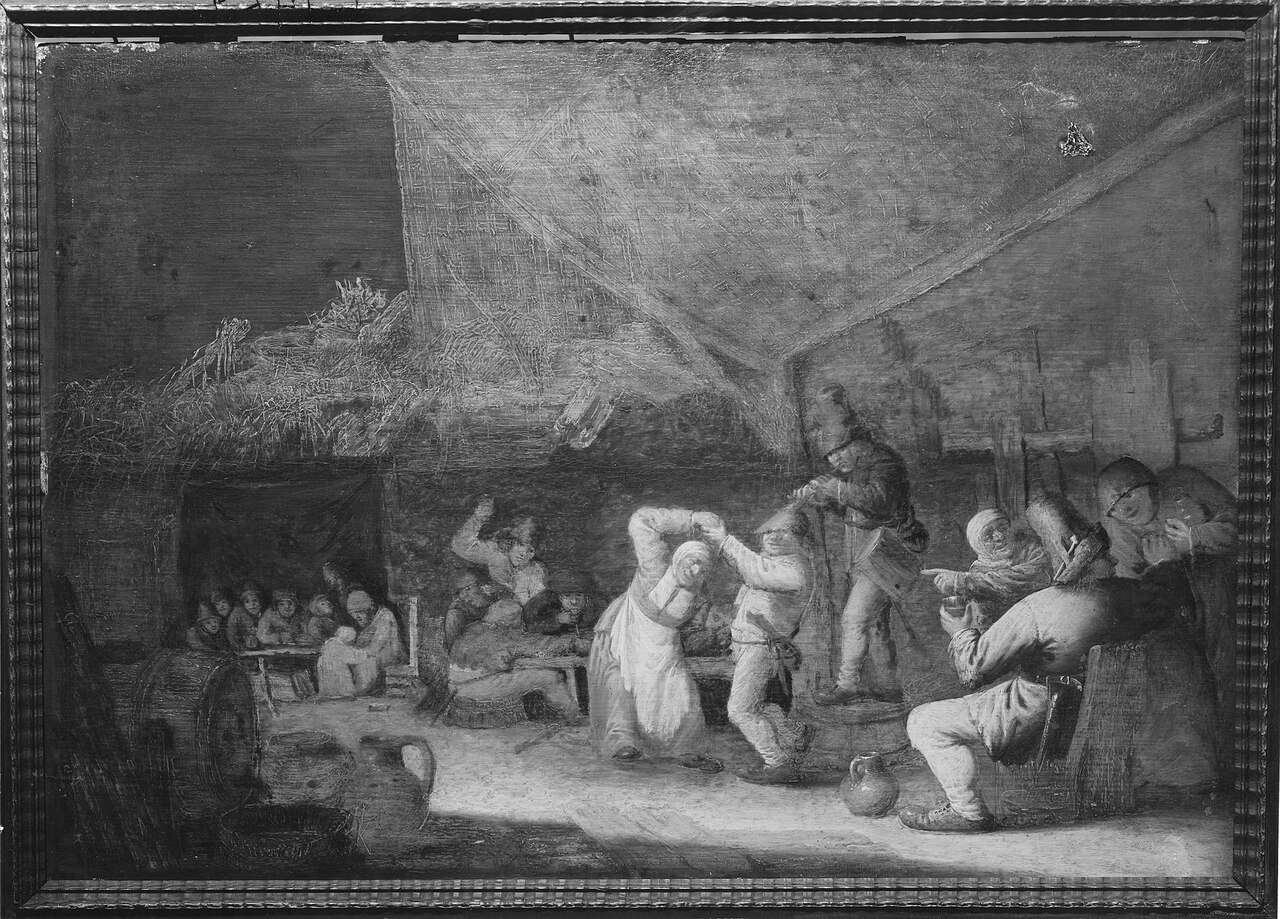
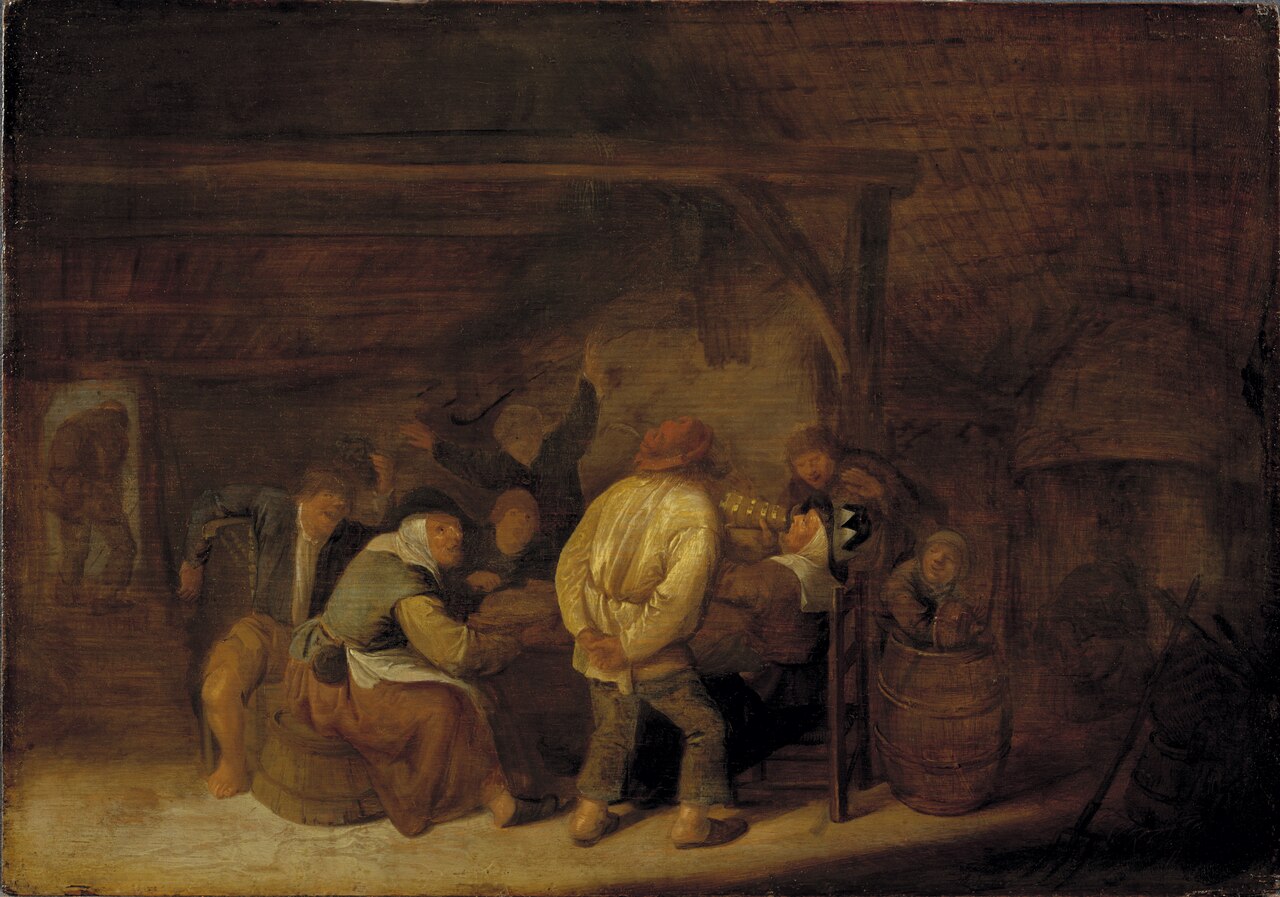

_-_MNK_XII-A-68_-_National_Museum_Krak%C3%B3w.jpg)

Early life Bartholomeus Molenaer was born in 1618 in the artistic centre of Haarlem, a city that was a hub for genre painting in the Dutch Republic. He grew up in a family with strong artistic connections; his older brother, Jan Miense Molenaer, was already an established genre painter. This familial environment provided Bartholomeus with early exposure to the techniques and subjects that would dominate his career. Little is recorded about his formal apprenticeship, but it is reasonable to assume that he trained under the guidance of his brother or within the workshop networks that flourished in Haarlem during the early‑17th century.
Career and style Molenaer’s active period falls between the early 1640s and his premature death in 1650. He worked primarily in Haarlem, producing works for the local market as well as for collectors in the wider Dutch Republic. His paintings belong to the broader Dutch Golden Age genre tradition, which celebrated scenes of everyday life rather than grand historical or religious narratives. Molenaer favoured tavern interiors and rural gatherings, portraying peasants in moments of conviviality, conflict, and play. The compositions typically feature a modest, earthy colour palette—rich browns, muted reds, and warm ochres—combined with bright highlights that illuminate the central action.
The artist’s style reflects the influence of contemporaries such as Adriaen van Deventer and the Utrecht Caravaggisti, particularly in his handling of chiaroscuro. However, Molenaer maintained a distinct approach to narrative, often embedding subtle moral commentary within the bustling activity of his scenes. His figures are rendered with a naturalistic attention to facial expression and gesture, allowing viewers to infer the emotional tenor of the depicted moment.
Signature techniques Molenaer’s paintings are recognisable through several recurring technical traits:
1. Contrast of light and shadow – He frequently employed a strong light source, often entering the room from a window or door, to create dramatic illumination on the principal figures while leaving peripheral elements in softer shadow. 2. Dynamic grouping – Figures are arranged in tight, overlapping clusters that generate a sense of movement and immediacy. This compositional density draws the eye across the canvas and sustains narrative tension. 3. Textural detail – Molenaer rendered objects such as wooden tables, ceramic mugs, and coarse fabrics with meticulous texture, reinforcing the tactile realism of his interiors. 4. Subtle colour modulation – While his palette is dominated by warm, muted tones, he introduced occasional splashes of vivid colour—often in a drink, a piece of clothing, or a candle flame—to accentuate focal points. 5. Narrative motifs – Common motifs include drinking, music, and games, each serving as a visual shorthand for communal interaction and, occasionally, moralizing themes.
Major works ### Tavern Scene (1641) One of Molenaer’s earliest dated works, *Tavern Scene* captures a lively gathering of men and women around a long wooden table. A soft light from an unseen window highlights a central figure raising a mug, while the surrounding patrons engage in conversation and laughter. The painting exemplifies Molenaer’s skill in balancing individual characterisation with a cohesive group dynamic.
### Drinking Peasants In *Drinking Peasants*, the artist focuses on a rustic group of laborers sharing a bottle of wine. The work is notable for its earthy palette and the way the light catches the sheen of the liquid, creating a visual focal point. The peasants’ relaxed postures and expressive faces convey a moment of respite from daily toil.
### A Tavern Brawl (1646) *A Tavern Brawl* presents a more turbulent scene, where a dispute erupts into physical confrontation. Molenaer uses chiaroscuro to heighten the drama: the clash is illuminated by a flickering lantern, casting stark shadows that accentuate the tension. The composition’s diagonal thrust conveys immediacy, and the surrounding onlookers’ varied reactions add narrative depth.
### Peasants in the Tavern (In the Tavern) Also known as *In the Tavern*, this painting shows a quieter, more intimate moment. A couple sits close together, sharing a drink, while a musician plays in the background. Molenaer’s attention to the interplay of light on the couple’s faces creates a sense of intimacy, and the subtle inclusion of a painted sign in the background hints at the establishment’s identity.
### Peasants Playing Blind Man’s Buff (1646) In *Peasants Playing Blind Man’s Buff*, the artist captures a playful outdoor game. The composition is balanced between the active participants and the surrounding landscape, with the bright daylight contrasting against the darker interior of a nearby tavern. The work demonstrates Molenaer’s ability to render movement and the joy of communal recreation.
These works collectively illustrate Molenaer’s preoccupation with social interaction, his mastery of light, and his contribution to the visual vocabulary of Dutch genre painting.
Influence and legacy Although Bartholomeus Molenaer’s career was brief, his paintings contribute to the rich tapestry of mid‑17th‑century Dutch genre art. By focusing on tavern scenes and peasant gatherings, he reinforced the market demand for relatable, domestic subjects that appealed to a burgeoning middle‑class audience. His treatment of light and narrative composition influenced younger Haarlem painters who continued to explore everyday life with comparable vigor.
Molenaer’s works are held in several European collections, where they are valued both for their aesthetic qualities and for the insight they provide into Dutch social customs of the period. Modern scholarship regards him as a competent, if not revolutionary, figure within the genre tradition—a painter whose meticulous observation and lively storytelling preserve a vivid record of 17th‑century communal life.
--- Overall, Bartholomeus Molenaer remains an exemplar of the Dutch Golden Age’s genre painting, bridging the gap between the moralising intent of early Dutch art and the more secular, pleasure‑focused scenes that would dominate later in the century.
Frequently asked questions
Who was Bartholomeus Molenaer?
Bartholomeus Molenaer (1618–1650) was a Dutch Golden Age painter from Haarlem who specialised in genre scenes of tavern life and peasants.
What artistic style or movement is he associated with?
He worked within the Dutch Golden Age genre tradition, producing realistic, narrative‑driven paintings of everyday social interaction.
What are his most famous works?
His most recognised paintings include *Tavern Scene* (1641), *A Tavern Brawl* (1646), *Peasants Playing Blind Man’s Buff* (1646), *Peasants in the Tavern* (also titled *In the Tavern*), and *Drinking Peasants*.
Why is Bartholomeus Molenaer important in art history?
Molenaer’s vivid depictions of tavern gatherings enrich our understanding of Dutch social life in the 17th century and exemplify the genre painting that was central to the Dutch Golden Age market.
How can I recognise a Bartholomeus Molenaer painting?
Look for dense groupings of figures in tavern interiors, strong contrasts of light and shadow, warm earthy colours, and meticulous detail on objects like mugs, tables and fabrics.