Balthasar-Paul Ommeganck
1755 – 1826
In short
Balthasar‑Paul Ommeganck (1755–1826) was a Flemish painter from Antwerp renowned for his pastoral landscapes populated with livestock, especially sheep. He played a key role in reviving landscape painting in the Low Countries through his works, teaching, and involvement in founding artistic societies.
Notable works


Early life Balthasar‑Paul Ommeganck was born in 1755 in the bustling port city of Antwerp, a centre of artistic activity in the Austrian Netherlands. Little is recorded about his family background, but archival sources indicate that he received his first artistic instruction locally, likely within the traditional guild system that dominated Flemish art education. Growing up amid the Flemish countryside, Ommeganck developed an early fascination with rural scenes and the animals that inhabited them, a preoccupation that would shape his entire career.
Career and style In the late 1770s Ommeganck began to establish himself as a professional painter in Antwerp. He joined the Guild of Saint Luke, the city’s principal artists’ association, and quickly attracted patronage from local merchants and aristocrats who desired depictions of idyllic farm life. Ommeganck’s style blended the meticulous observation of Dutch Golden‑Age animal painters with a softer, more atmospheric treatment of light that anticipated the Romantic sensibility. His compositions often feature gently rolling hills, tranquil skies and a careful balance between the human‑made and the natural. While he never aligned himself with a formal avant‑garde movement, his work reflects the broader European shift toward naturalism and a renewed appreciation for the pastoral genre.
Ommeganck also served as an educator, taking on apprentices who would later become notable landscape painters in their own right. His teaching emphasized drawing from life, especially the anatomy and behaviour of domesticated animals, and encouraged a measured approach to composition that favoured harmony over theatricality. Through his mentorship and his involvement in the establishment of art societies—most notably the Antwerp Academy of Fine Arts—he helped to reinvigorate the region’s landscape tradition at a time when history painting dominated academic curricula.
Signature techniques Ommeganck’s paintings are distinguished by several recurring technical choices. First, he employed a restrained palette dominated by earthy ochres, muted greens and warm browns, which allowed the subjects—particularly the woolly coats of sheep—to stand out without overwhelming the overall tone. Second, his handling of light is subtle; he often painted the early morning or late‑afternoon sun, creating a gentle chiaroscuro that gives depth to the terrain while preserving a calm ambience. Third, his brushwork varies between fine, almost stippled strokes for the fur of animals and broader, smoother passages for the sky and distant foliage, a contrast that enhances the tactile quality of each element. Finally, Ommeganck paid meticulous attention to the anatomy of his livestock, rendering muscles, hooves and expressions with a level of realism that appealed to both connoisseurs and everyday viewers.
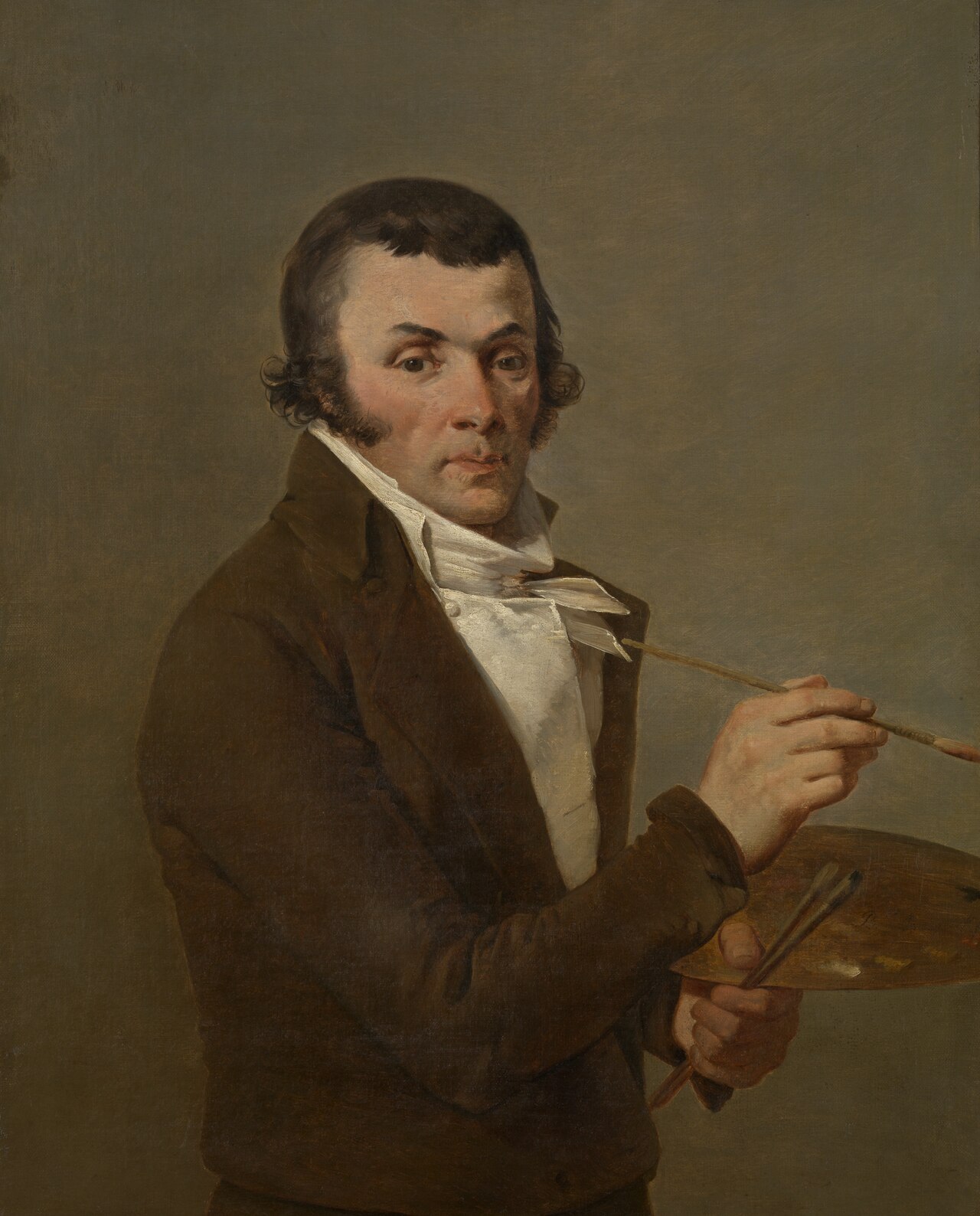
Major works Among Ommeganck’s most celebrated pieces is **A Bull** (1785), which portrays a solitary bull standing in a sun‑dappled meadow. The work exemplifies his skill in rendering the animal’s muscular form while situating it within a serene landscape. **Landscape with Sheep and a Hay Wagon** (1822) is a later composition that demonstrates his mature style: a group of sheep grazes near a rustic wagon, the scene bathed in the soft glow of an evening sky. The painting balances narrative detail—the hay wagon hints at agricultural labour—with an overall sense of peace. **Sheep at the Watering Hole** is occasionally listed with a date of 1750; however, that predates Ommeganck’s birth, and the work is more securely dated to the late 18th century. In any case, the painting captures a flock of sheep drinking from a reflective pool, showcasing his talent for rendering water and reflective surfaces. **Sheep** (1790) focuses on a single animal, allowing Ommeganck to explore texture and expression in isolation; the piece is frequently cited as an exemplar of his animal studies. Finally, **The Painter Jan Baptist Berré** is a portrait of his contemporary, the Dutch‑Flemish animal painter Jan Baptist Berré, indicating Ommeganck’s connections within the artistic community and his willingness to document fellow creators.
Influence and legacy Balthasar‑Paul Ommeganck’s impact extends beyond his canvases. By emphasizing the pastoral landscape and animal subjects at a time when historical and mythological themes dominated, he helped to broaden the acceptable subject matter for Flemish painters. His role as a teacher and his participation in the founding of the Antwerp Academy created institutional support for younger artists who wished to pursue landscape painting. Subsequent generations of Belgian painters—such as the 19th‑century Romantic landscapists—owed a debt to Ommeganck’s naturalistic approach and his dedication to depicting the everyday beauty of the countryside. Today, his works are held in major European collections, and art historians regard him as a pivotal figure in the transition from the Baroque tradition to a more modern, observational style of landscape art.
Overall, Ommeganck’s oeuvre offers a window into the agrarian life of his era, rendered with a technical mastery that continues to inspire scholars and collectors alike.
Frequently asked questions
Who was Balthasar‑Paul Ommeganck?
He was a Flemish painter (1755–1826) from Antwerp, best known for his pastoral landscapes featuring livestock, especially sheep.
What artistic style or movement is he associated with?
Ommeganck did not belong to a formal movement, but his work reflects late‑Baroque naturalism and anticipates early Romantic landscape painting.
What are his most famous works?
Key works include *A Bull* (1785), *Landscape with Sheep and a Hay Wagon* (1822), *Sheep at the Watering Hole*, *Sheep* (1790), and the portrait *The Painter Jan Baptist Berré*.
Why is he important in art history?
He revitalised landscape painting in the Low Countries, taught a generation of artists, and helped found Antwerp’s Academy, influencing Belgian art into the 19th century.
How can I recognise an Ommeganck painting?
Look for calm, sun‑lit countryside scenes, meticulous animal anatomy, a restrained earth‑tone palette and a gentle contrast between detailed foreground animals and softly rendered skies.