Anna-Geneviève Greuze
1762 – 1842
In short
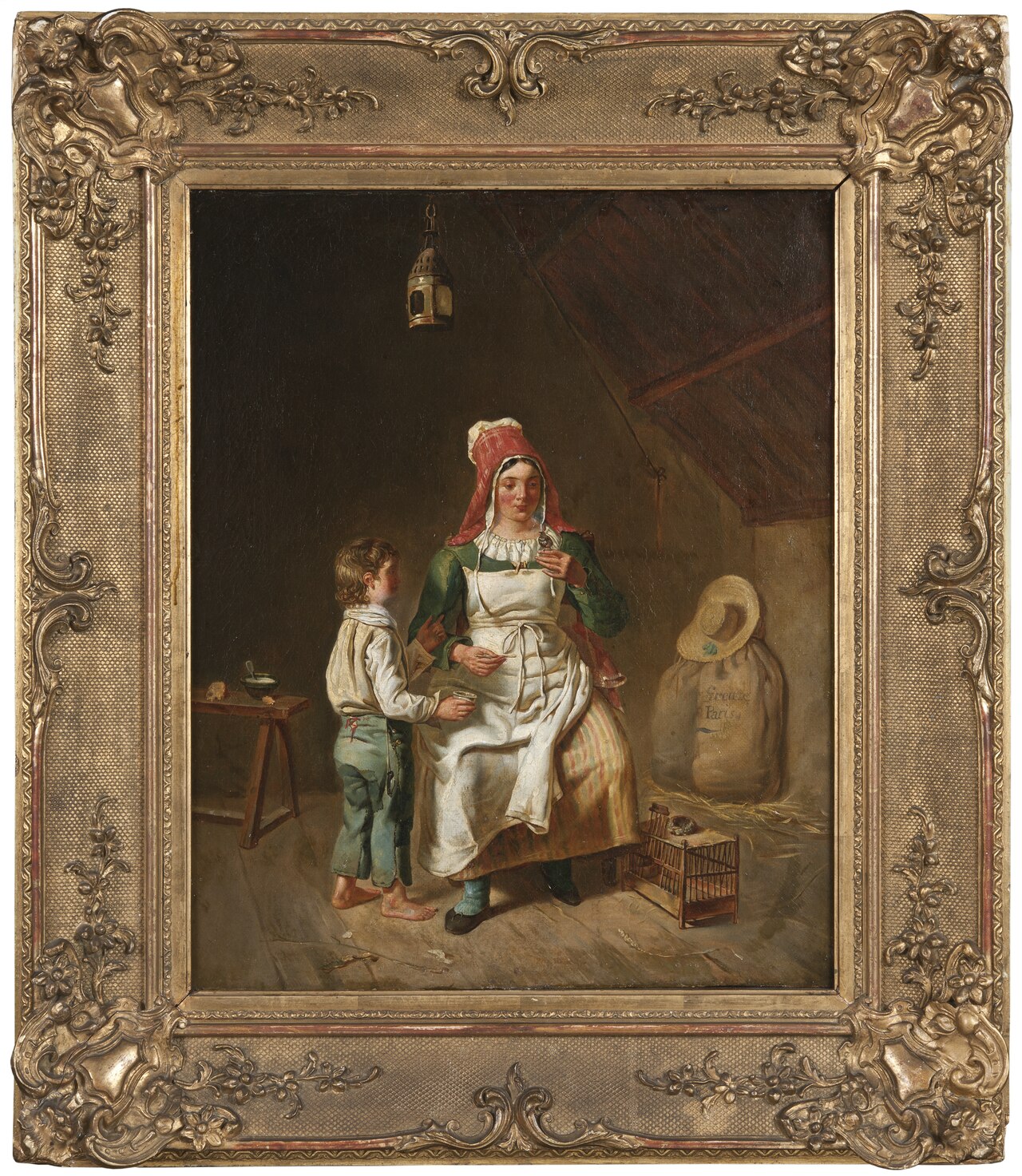
Anna‑Geneviève Greuze (1762–1842) was a French painter born and died in Paris, known for intimate genre scenes and portraiture. Her work includes domestic subjects such as children with toys and a late‑life depiction of a mother feeding a chick, as well as a portrait of the artist Jean‑Baptiste Greuze.
Notable works

_-_Little_girl_with_Bolognese_dog_-_494A_-_Gem%C3%A4ldegalerie.jpg)

Early life Anna‑Geneviève Greuze was born in Paris in 1762, into a family that was already connected with the artistic circles of the French capital. While the precise details of her upbringing are scarce, contemporary records indicate that she received a solid artistic education, which was unusual for women of her time. Growing up amidst the salons and academies of Paris, she would have been exposed to the works of leading painters of the late‑Rococo and early‑Neoclassical periods. This environment nurtured her technical skills and fostered an early interest in the depiction of everyday life, a theme that would dominate her later oeuvre.
Career and style Greuze began exhibiting publicly in the 1790s, a period of intense political and cultural upheaval in France. Though she never aligned herself with a specific movement, her paintings reflect the sentimental domesticity that characterised much of early‑19th‑century French genre painting. She favoured modest, interior settings populated by children, mothers, and pets, capturing moments of quiet affection. Her colour palette is often soft and muted, with an emphasis on pastel tones that enhance the gentle atmosphere of her scenes. The compositional balance in her works shows a clear influence of the academic tradition, yet she adapts it to convey personal narratives rather than grand historical subjects.
Signature techniques Greuze’s technique is marked by a delicate handling of brushwork, especially in rendering skin and fabric. She employed thin glazes to achieve subtle gradations of light, allowing the flesh tones to glow with a natural warmth. In her portraits, she paid particular attention to the eyes, using fine, controlled strokes to imbue her subjects with a sense of introspection. Her compositional approach often places the main figure slightly off‑centre, creating a dynamic tension that draws the viewer’s gaze across the canvas. The background elements—such as drapery, furniture, or animal companions—are rendered with enough detail to suggest a lived environment without distracting from the central narrative.
Major works - **Mother and Son Feeding A Chick (1842)** – Completed in the year of her death, this painting epitomises Greuze’s lifelong fascination with tender domestic moments. A mother leans over a small table, offering a chick to her infant son. The soft lighting and muted colour scheme highlight the intimacy of the scene, while the inclusion of the chick adds a symbolic layer of nurturing and growth. - **Child with a Doll (1800)** – This work showcases Greuze’s skill in portraying childhood innocence. A young girl sits cross‑legged, cradling a wooden doll. The careful rendering of the doll’s texture and the child’s contemplative expression reveal the artist’s attention to both material detail and emotional nuance. - **Little girl with Bolognese dog (1800)** – In this composition, a petite figure is accompanied by a Bolognese dog, a breed known for its fluffy white coat. The contrast between the girl’s muted attire and the dog’s luminous fur creates a visual harmony that underscores the affectionate bond between pet and owner. - **Portrait of Jean‑Baptiste Greuze (1804)** – While the exact relationship between Anna‑Geneviève and the celebrated painter Jean‑Baptiste Greuze remains undocumented, this portrait demonstrates her capacity for formal portraiture. The sitter is depicted with a dignified pose, his features rendered with precise, confident strokes that convey both respect and artistic admiration.
Influence and legacy Although Anna‑Geneviève Greuze did not achieve the fame of some of her male contemporaries, her body of work contributes valuable insight into the role of women artists in post‑Revolutionary France. Her paintings provide a counter‑narrative to the dominant historical and mythological subjects of the era, foregrounding everyday life and the emotional world of the domestic sphere. Modern scholars regard her oeuvre as an important example of how female painters navigated the expectations of the French Academy while carving out a niche for personal expression. Today, her works are studied for their technical finesse, their nuanced portrayal of gendered experiences, and their subtle commentary on the evolving social fabric of early‑19th‑century France.
Frequently asked questions
Who was Anna‑Geneviève Greuze?
Anna‑Geneviève Greuze (1762–1842) was a French painter from Paris known for intimate genre scenes and portraiture, active during the late 18th and early 19th centuries.
What style or movement is she associated with?
She is not linked to a single formal movement, but her work reflects the sentimental domestic genre that was popular in early‑19th‑century France, with academic influences.
What are her most famous works?
Her most recognised pieces include *Mother and Son Feeding A Chick* (1842), *Child with a Doll* (1800), *Little girl with Bolognese dog* (1800), and the *Portrait of Jean‑Baptiste Greuze* (1804).
Why does she matter in art history?
Greuze offers a rare female perspective on domestic life in post‑Revolutionary France, enriching our understanding of genre painting and highlighting the contributions of women artists to the period’s visual culture.
How can I recognise an Anna‑Geneviève Greuze painting?
Look for soft pastel palettes, delicate brushwork, and subjects that depict quiet, intimate moments—often children, mothers, or pets—rendered with careful attention to texture and a subtle, narrative focus.