André Charles Boulle
1642 – 1732
In short
André‑Charles Boulle (1642‑1732) was a French cabinetmaker renowned for pioneering complex marquetry inlay, especially of tortoiseshell, brass and pewter, and was celebrated by the court of Louis XIV as the pre‑eminent master of French furniture decoration.
Notable works


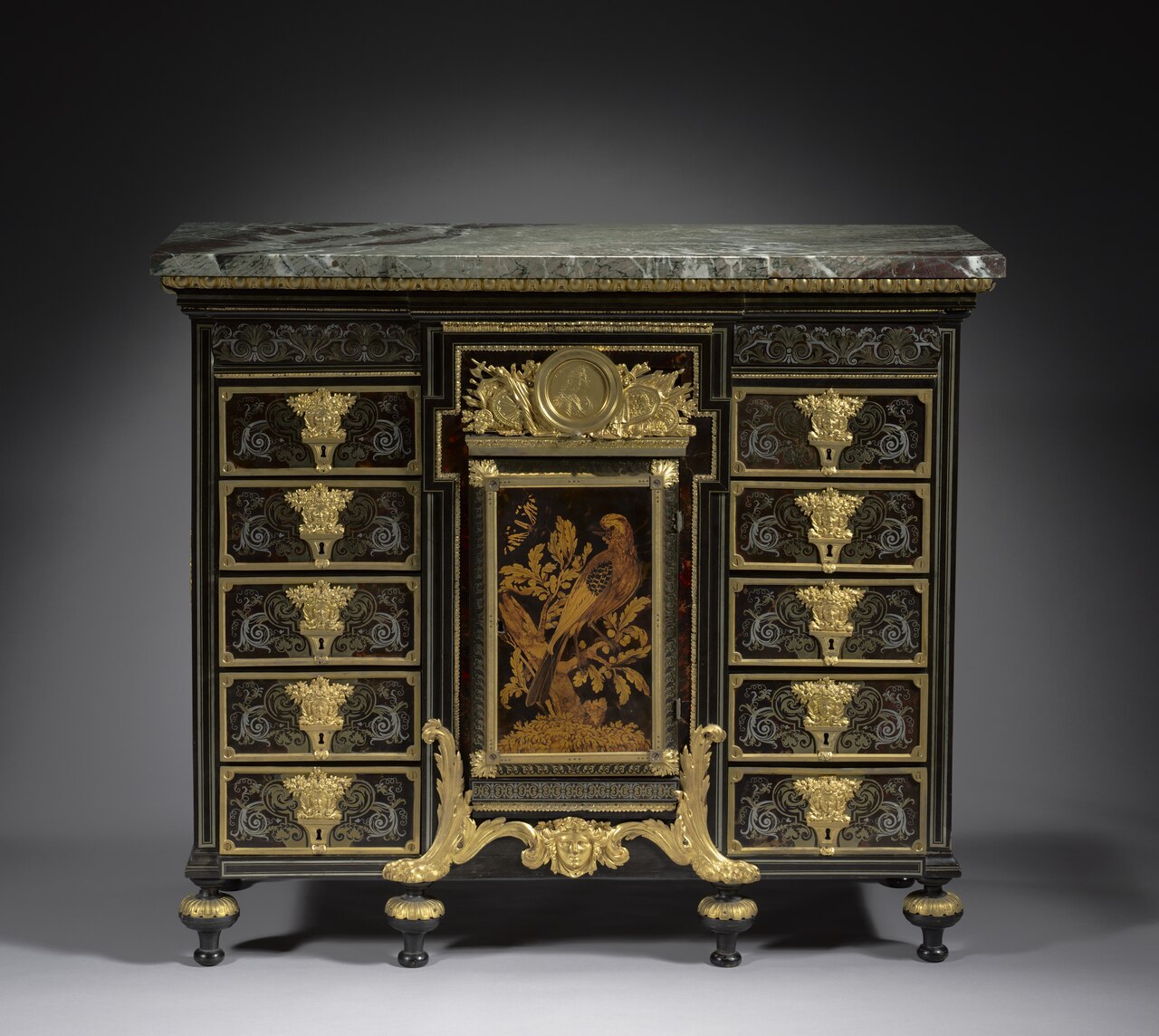
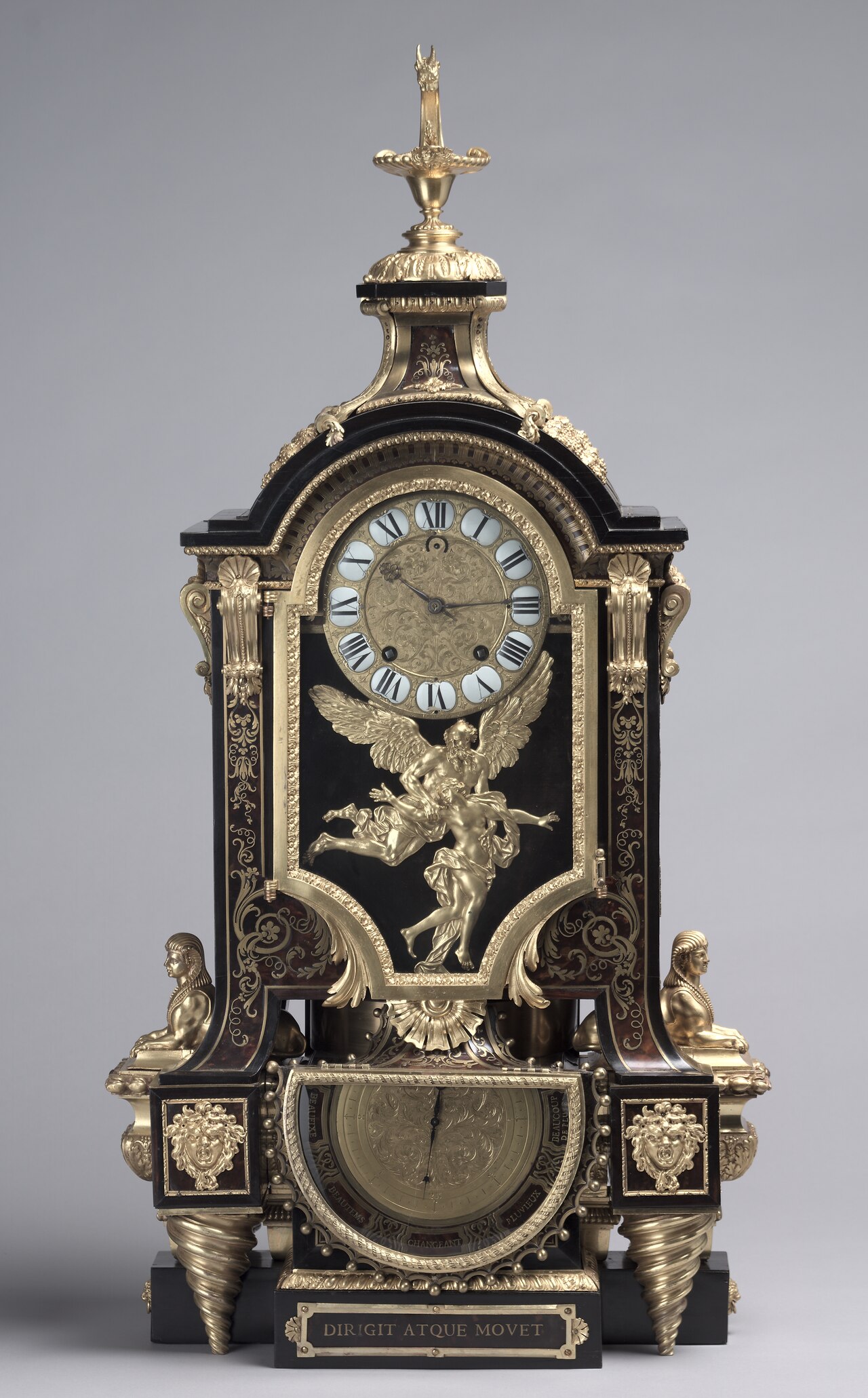

Early life André‑Charles Boulle was born in Paris in 1642 into a family that already had connections with the world of metal‑working and decorative arts. His father, Pierre Boulle, was a metal‑worker who supplied the French royal workshops, giving the young André‑Charles early exposure to the techniques of gilding, engraving and the handling of exotic materials such as tortoiseshell. Growing up in the bustling capital of the Ancien Régime, Boulle benefited from the flourishing artistic climate of the mid‑seventeenth century, which was dominated by the grandeur of the Sun King’s court and the burgeoning demand for sumptuous interiors.
Career and style Boulle’s professional breakthrough came in the 1660s when he was admitted to the prestigious guild of ébénistes (cabinetmakers). His reputation grew rapidly, and by the early 1670s he had secured commissions from the royal household. The influential finance minister Jean‑Baptiste Colbert personally recommended Boulle to Louis XIV, describing him as “the most skilled craftsman in his profession”. The king’s patronage allowed Boulle to develop a distinctive decorative language that combined the classic French baroque taste for dramatic, richly ornamented surfaces with a uniquely technical mastery of inlay. His work was characterised by a harmonious balance between the structural solidity of the furniture piece and the intricate pictorial narratives created through the juxtaposition of contrasting materials.
Signature techniques Boulle is best remembered for perfecting a form of marquetry that later became known as “Boulle work”. The process involved cutting sheets of tortoiseshell, brass, pewter and ebony into identical patterns, then inverting the pieces to produce a “counter‑point” or negative image. The resulting panels could be assembled to display alternating light and dark motifs, often depicting marine scenes, mythological figures, or exotic birds. Boulle’s workshop employed a team of skilled artisans who prepared the raw materials, cut the intricate designs on saws and chisels, and then assembled the inlays with a precision that set a new standard for French decorative arts. The technique required not only artistic imagination but also an intimate knowledge of the physical properties of each material, as tortoiseshell is fragile, brass is malleable, and ebony is extremely dense.
Major works Among Boulle’s surviving masterpieces, several stand out for their historical importance and technical brilliance. The **Armoire aux perroquets** (Wardrobe with parrots), executed between 1680 and 1700 and now housed in the Louvre (catalogue reference OA 5516), showcases a vibrant tableau of parrots and foliage rendered in tortoiseshell and brass against a deep ebony background. The piece demonstrates Boulle’s ability to create a narrative composition that functions as both a functional wardrobe and a visual spectacle.
The Cabinet of 1690, also in the Louvre, exemplifies the full‑scale application of Boulle’s inlay technique on a wall‑mounted display case. Its panels combine marine motifs with intricate arabesques, and the contrasting metal and shell surfaces catch the light in a way that enhances the three‑dimensional effect of the carved forms.
A Clock dated 1695 illustrates Boulle’s versatility in applying his decorative language to functional objects beyond furniture. The clock’s face is set within a frame of ebony and brass‑inlaid tortoiseshell, with the movement concealed beneath a richly ornamented lid. This work underscores how Boulle’s aesthetic could be adapted to time‑keeping devices, a popular luxury item among the aristocracy.
In the early eighteenth century, Boulle continued to receive high‑profile commissions. The Commode of 1715, a later work, displays a more restrained composition, reflecting the gradual shift towards the lighter Rococo style that followed Louis XIV’s reign. Nevertheless, the hallmark Boulle inlay remains central to its decorative scheme.
Finally, the Armoire (wardrobe) of 1712 demonstrates the durability of Boulle’s technique. Even after decades of use, the inlaid panels retain their lustre, attesting to the quality of the materials and the meticulous execution of the workshop.
Influence and legacy André‑Charles Boulle’s impact on French decorative arts extended far beyond his lifetime. The term “Boulle work” became synonymous with the highest level of marquetry, and his family workshop continued to produce furniture for the royal court well into the eighteenth century. The techniques he refined were taught in the École Boulle, a Parisian college of fine arts and applied crafts founded in 1886, which still bears his name and perpetuates his legacy through contemporary training in metal‑working, woodworking and design.
Boulle’s influence is evident in the work of later ébénistes such as Pierre-Antoine Bellangé and the early Neoclassical cabinets of Jean-Henri Riesener, who adopted and adapted the inlay motifs to suit evolving tastes. Moreover, his approach to integrating narrative imagery into functional objects paved the way for the decorative eclecticism of the nineteenth and twentieth centuries, where designers frequently referenced historic French styles.
Today, Boulle’s surviving pieces are among the most prized items in museum collections and private holdings, valued both for their artistic merit and for the technical ingenuity they represent. Scholars regard him as the archetype of the French master‑craftsman, a figure who combined artistic vision with unrivalled material expertise to create objects that remain both beautiful and historically significant.
--- André‑Charles Boulle’s name therefore endures not only as a marker of a specific decorative technique but also as a symbol of the exquisite craftsmanship that defined the height of French baroque interior design.
Frequently asked questions
Who was André‑Charles Boulle?
André‑Charles Boulle (1642‑1732) was a French cabinetmaker celebrated as the pre‑eminent master of marquetry, especially known for his intricate inlay of tortoiseshell, brass and pewter.
What artistic style or movement is Boulle associated with?
Boulle worked primarily in the French Baroque style, creating lavish, narrative‑driven furniture that later influenced the Rococo and Neoclassical movements.
What are his most famous works?
His most renowned pieces include the Armoire aux perroquets (Wardrobe with parrots, Louvre), the 1690 Cabinet, the 1695 Clock, the 1712 Armoire, and the 1715 Commode.
Why is Boulle considered important in art history?
Boulle perfected a complex inlay technique that set a new standard for French decorative arts, and his name became synonymous with the highest quality of marquetry, influencing generations of furniture makers.
How can I recognise an authentic Boulle piece?
Authentic Boulle work features contrasting inlays of tortoiseshell and metal (often brass or pewter) set into ebony, with intricate, often marine or exotic motifs and a high level of craftsmanship.