Alexander Struys
1852 – 1941
In short
Alexander Struys (1852–1941) was a Belgian painter who worked in a realist style, producing genre scenes and portraits noted for their psychological depth. His most recognised works include The Breadwinner (1887) and Desperation (1895).
Notable works
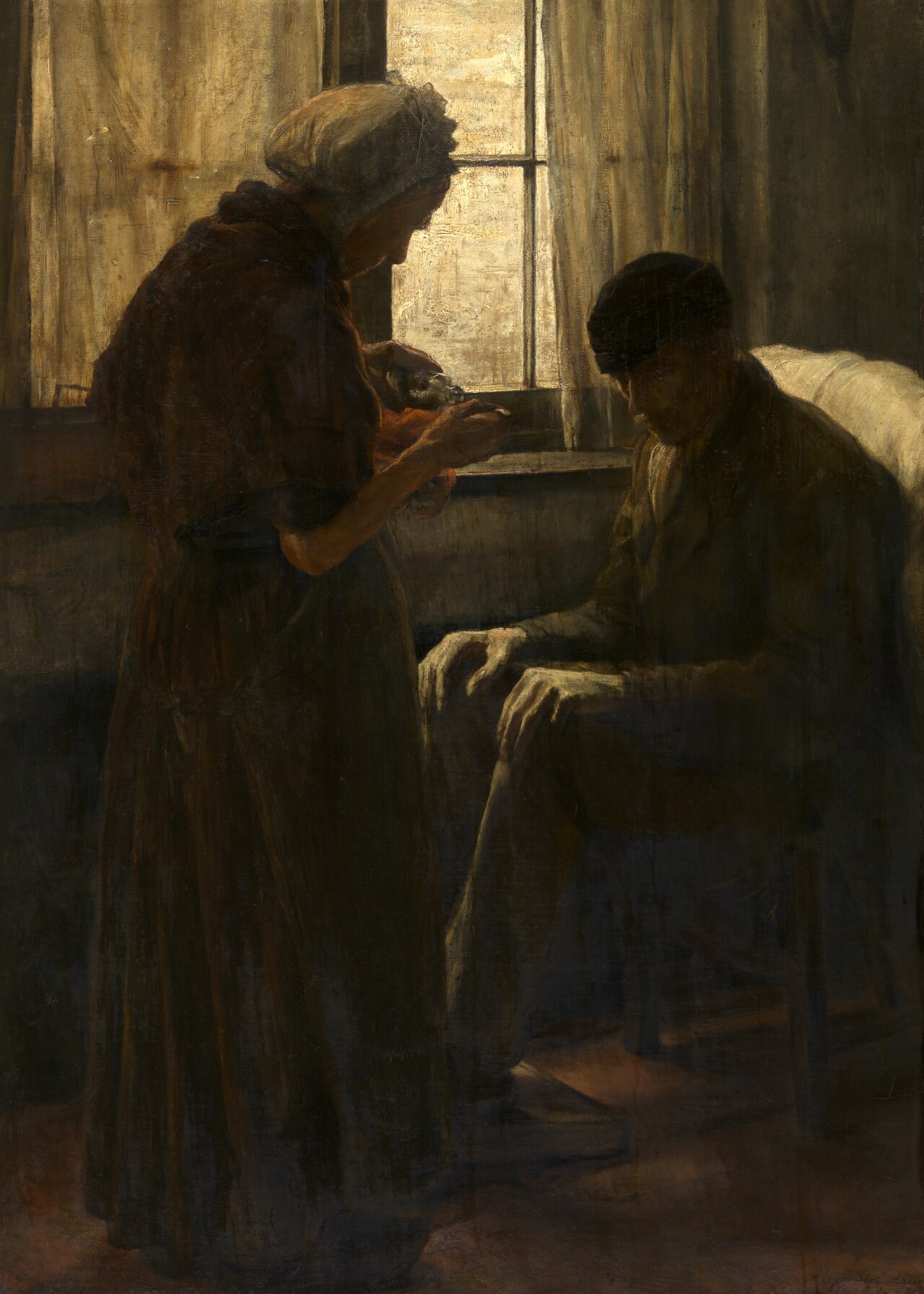
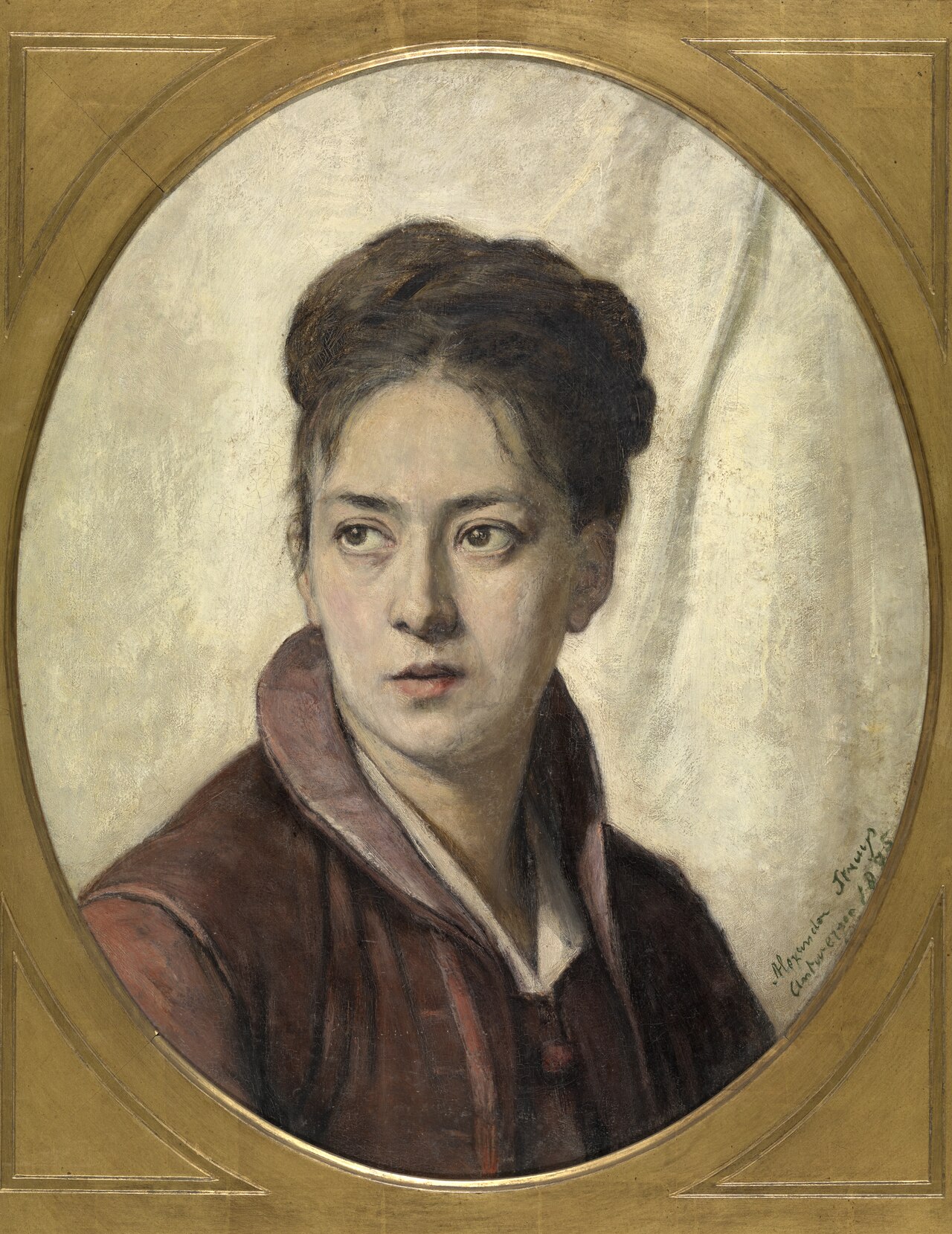
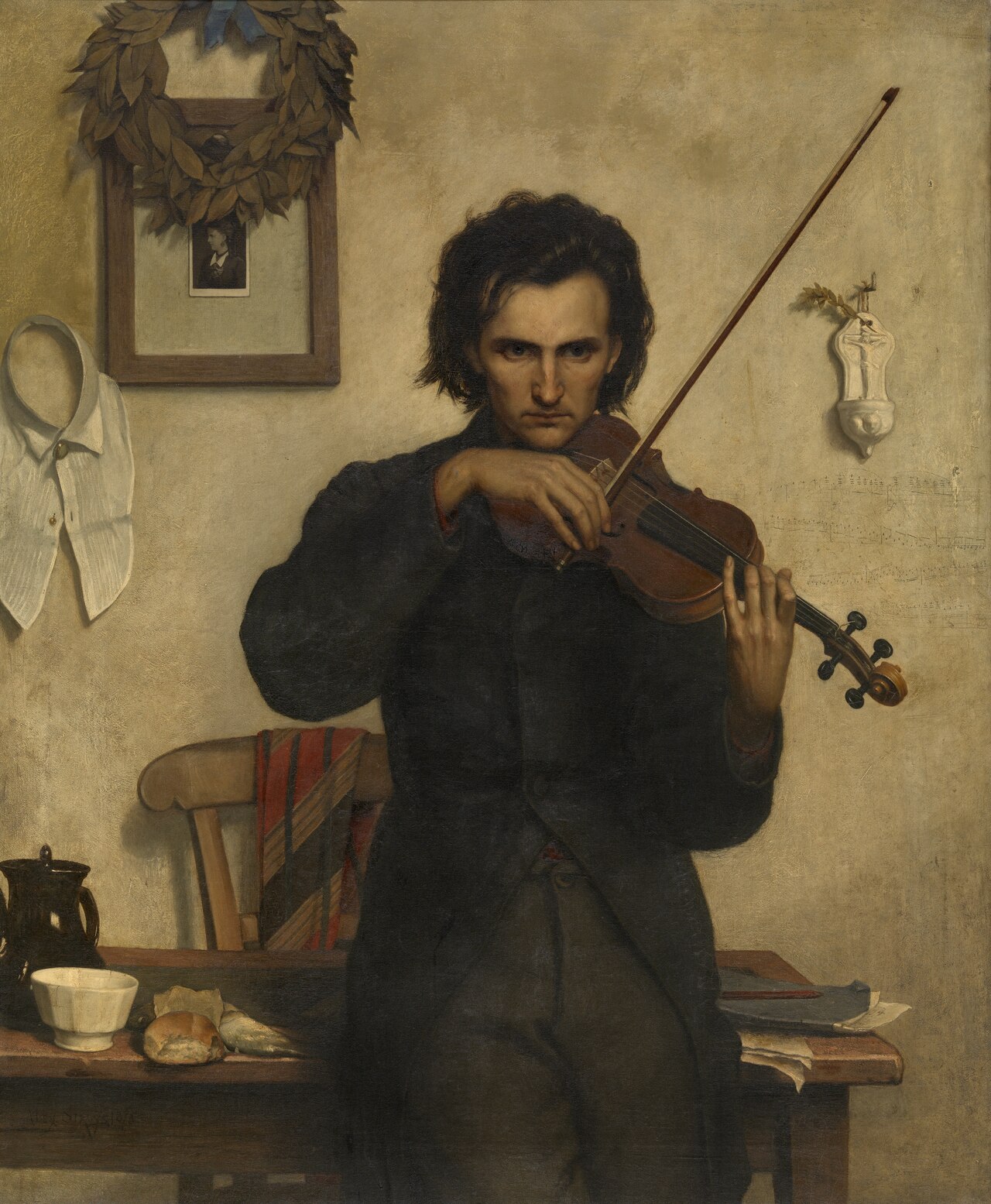
.jpg)

Early life Alexander Theodore Honoré Struys was born in 1852 in the suburb of Berchem, near Antwerp, in what was then the Kingdom of Belgium. Little is recorded about his family background, but he grew up in a region that was experiencing rapid industrialisation and social change. These conditions would later inform his interest in everyday subjects and the lives of ordinary people. Struys received his first artistic instruction locally before moving to a formal academy in Belgium, where he was introduced to the principles of academic drawing and the emerging realist tendencies that were challenging the dominant romantic and historicist traditions.
Career and style After completing his studies, Struys began exhibiting his work in the 1870s, quickly gaining a reputation for his unflinching depictions of working‑class life. He aligned himself with the realist movement, which sought to portray subjects truthfully, without idealisation. Struys specialised in genre scenes—vivid snapshots of domestic interiors, markets, and street life—while also producing a substantial body of portraiture. His canvases often convey a quiet intensity, focusing on the psychological states of his sitters rather than decorative detail. Throughout his career he remained committed to a naturalistic palette and to a narrative approach that foregrounded human emotion and moral nuance.
Signature techniques Struys’s technique combined careful observation with a restrained colour scheme. He favoured a limited palette of earth tones, muted blues and ochres, which he layered to achieve depth and subtle tonal variation. His brushwork is generally smooth, allowing the viewer to focus on the subject rather than the texture of the paint. Light is employed strategically, often entering from a single source to highlight the faces or hands of his figures, creating a chiaroscuro effect that heightens drama. In composition, Struys frequently used diagonal lines and carefully balanced groups of figures to guide the eye across the canvas, a method that reinforces the narrative content of each scene.
Major works - **The Breadwinner (1887)** – This painting depicts a solemn man returning home with a modest loaf of bread, his gaze fixed on the empty kitchen table. The work is a poignant commentary on poverty and the dignity of labour, rendered with a muted palette that underscores the austerity of the setting. - **Catharina Beersmans (1895)** – A portrait of a young woman, Catharina is shown in a simple interior, her expression contemplative. Struys captures the delicate interplay of light on her skin and the subtle tension between modesty and self‑assurance, exemplifying his skill in portraiture. - **Peut-être (1875)** – Translating to “Perhaps,” this early work presents a solitary figure lost in thought, seated beside a window. The ambiguous title reflects the painting’s open‑ended narrative, while the composition’s restrained lighting invites speculation about the subject’s inner world. - **Desperation (1895)** – One of Struys’s most emotionally charged pieces, it portrays a mother clutching her child amidst a bleak domestic setting. The stark contrasts and the raw expression on the mother’s face convey a powerful sense of anguish, making the work a hallmark of his social realism. - **Birds of Prey. The Will (1876)** – In this allegorical composition, a hawk is poised to strike, symbolising the relentless drive of human ambition. Though less literal than his genre scenes, the painting retains Struys’s characteristic attention to detail and his ability to imbue animal subjects with symbolic weight.
Influence and legacy Alexander Struys occupies a significant place in Belgian art history as a leading exponent of realism during a period when the country was negotiating its cultural identity. His commitment to depicting the lives of ordinary people resonated with contemporary social concerns and paved the way for later Belgian artists who explored similar themes. Though he never achieved the international fame of some of his French contemporaries, Struys’s works are held in several Belgian museums and continue to be studied for their technical proficiency and empathetic narrative. Modern scholars regard his paintings as valuable documents of 19th‑century Belgian society, and his approach to portraiture influences present‑day realist painters who seek to capture psychological depth without overt dramatisation.
Frequently asked questions
Who was Alexander Struys?
Alexander Struys (1852–1941) was a Belgian painter noted for his realist genre scenes and portraits, focusing on everyday life and social issues.
What artistic style or movement is he associated with?
He worked within the realist movement, emphasizing truthful representation of subjects and a naturalistic colour palette.
What are his most famous works?
His best‑known paintings include The Breadwinner (1887), Desperation (1895), Catharina Beersmans (1895), Peut-être (1875), and Birds of Prey. The Will (1876).
Why is Alexander Struys important in art history?
Struys is important for his empathetic depiction of working‑class life in Belgium, his contribution to the country’s realist tradition, and his influence on later artists who explored social realism.
How can I recognise an Alexander Struys painting?
Look for muted earth tones, careful chiaroscuro, a focus on ordinary figures, and a narrative that conveys psychological tension or social commentary.