Adrien Moreau
1843 – 1906
In short
Adrien Moreau (1843–1906) was a French painter, sculptor and illustrator known for his genre and historical scenes. He worked mainly in the academic realist style and produced works such as Contemplation (1873) and The Proposal (1878).
Notable works
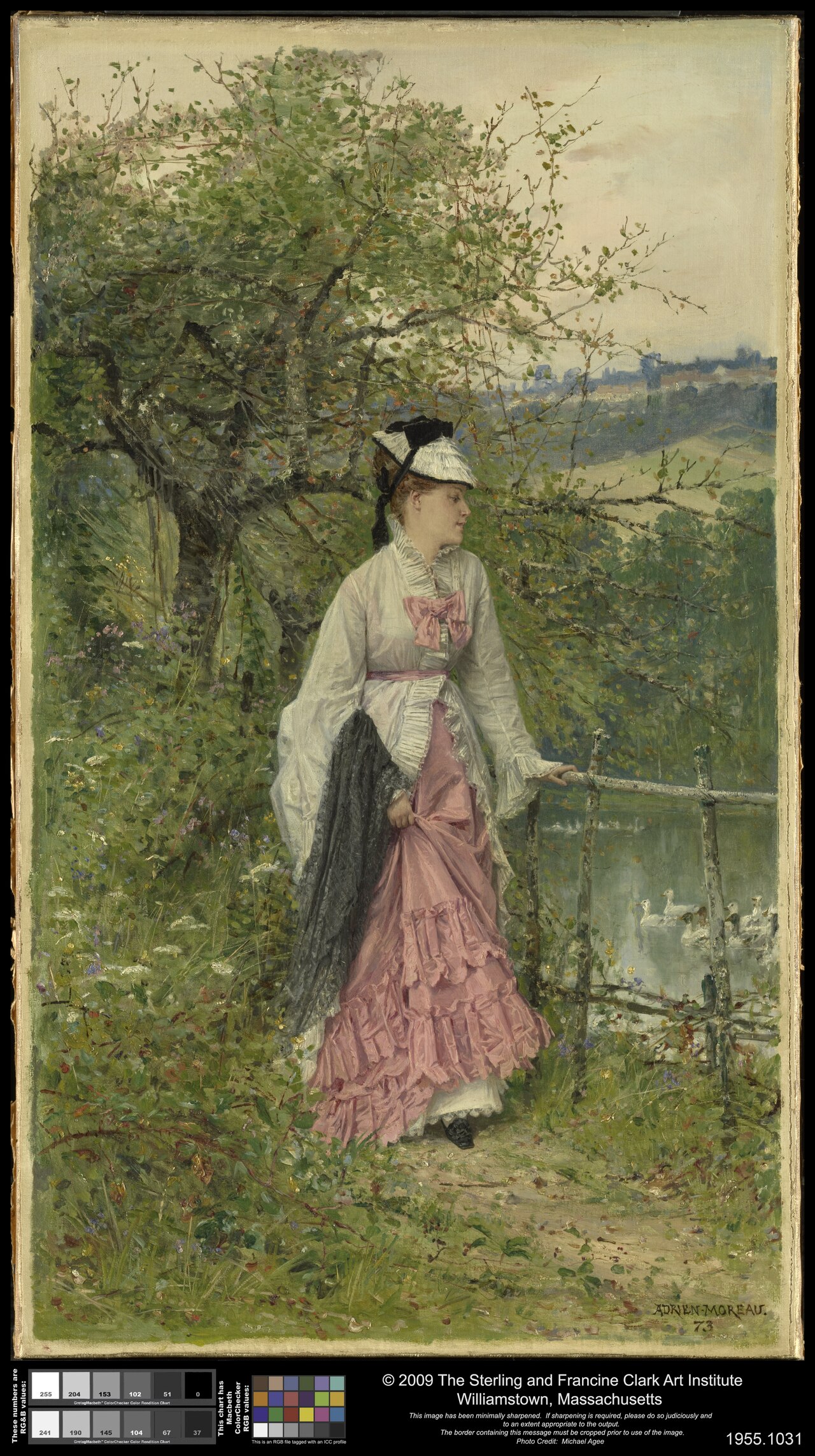
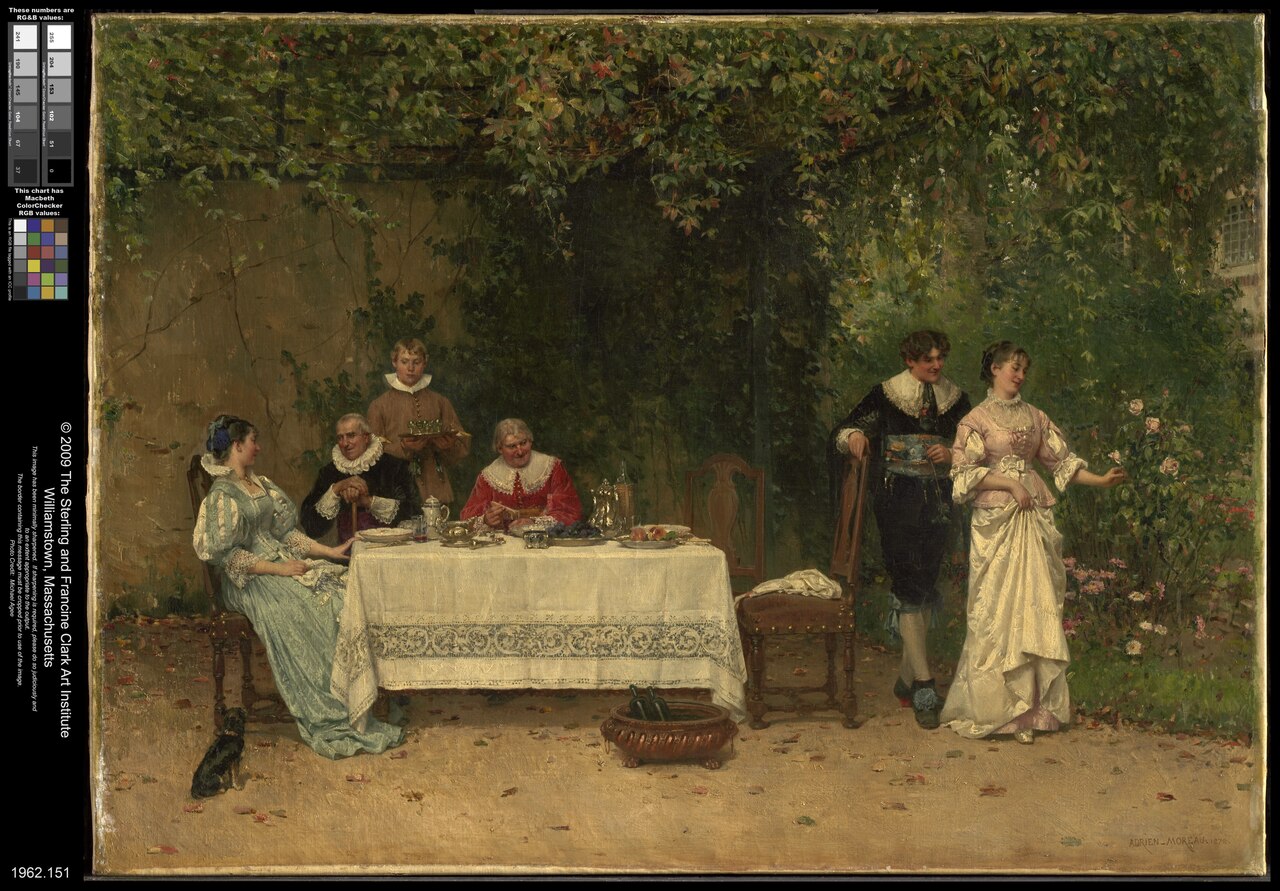


Early life Adrien Nicolas Moreau was born in 1843 in the historic town of Troyes, located in the Champagne region of north‑central France. Little is recorded about his family background, but like many provincial artists of his generation he moved to Paris in his youth to pursue artistic training. Paris offered the most extensive opportunities for formal study, and it is probable that Moreau attended the École des Beaux‑Arts or a comparable atelier where he would have been exposed to the academic curriculum that dominated French art education in the mid‑19th century. This environment shaped his technical proficiency and introduced him to the prevailing taste for narrative painting.
Career and style Moreau built his reputation as a genre and historical painter, a dual focus that was common among artists seeking both popular appeal and critical recognition. His work aligns with the academic realist tradition that prized precise drawing, careful modelling of form, and an emphasis on storytelling. While he never became a leading figure of a specific avant‑garde movement, his paintings reflect the broader currents of French realism and the lingering influence of the Salon system. He also worked as a sculptor and illustrator, producing drawings for books and periodicals that demonstrated his facility with line and composition.
Throughout his career, Moreau exhibited regularly at the Paris Salon and other provincial venues. Critics praised his ability to render everyday moments with a dignified tone, and his historical compositions were noted for their fidelity to period costume and architecture. The consistency of his style—characterised by clear narrative focus, balanced composition, and a restrained palette—allowed him to maintain a steady market among collectors who favoured the polished aesthetic of academic art.
Signature techniques Moreau’s technique combines several hallmarks of academic training. He employed a controlled chiaroscuro to model figures, using subtle gradations of light and shadow to give his subjects a three‑dimensional presence. His brushwork is generally smooth and invisible, a deliberate choice that reinforces the illusion of reality rather than drawing attention to the painter’s hand. In composition, he favoured a central focal point surrounded by secondary actions that guide the viewer’s eye across the canvas. This narrative framing often incorporates architectural elements—doorways, windows, or interior furnishings—that serve both decorative and structural purposes.
Colour in Moreau’s work tends toward a muted, earthy spectrum, with occasional accents of richer hues to highlight focal details such as a garment or a piece of jewellery. He demonstrated a particular skill for rendering textiles, capturing the sheen of silk, the matte quality of wool, and the delicate translucency of lace. In his illustrations, he translated these painterly concerns into line, using cross‑hatching and stippling to suggest texture and volume.
Major works **Contemplation (1873)** – This early canvas depicts a solitary figure, likely a young woman, seated by a window and absorbed in thought. The composition is anchored by the vertical line of the window frame, while the soft light filtering through creates a gentle contrast between the interior space and the hinted exterior world. The work exemplifies Moreau’s interest in intimate moments and his skill at rendering the subtleties of light on fabric and skin.
The Proposal (1878) – In this narrative painting, a man kneels before a woman, offering a ring. The scene captures a pivotal social ritual with a clear, almost theatrical arrangement of the figures. Moreau’s handling of the gesture— the slight bend of the man’s knee, the tentative reach for the woman’s hand—conveys tension and anticipation. The surrounding décor, rendered with meticulous attention to period detail, situates the event within a domestic interior typical of 19th‑century bourgeois life.
The Fortune Teller – Though the exact date is uncertain, this composition continues Moreau’s fascination with everyday encounters. A young woman consults a fortune‑teller, surrounded by symbolic objects such as tarot cards and a crystal ball. The painting balances realism with a hint of the mystical, using the soft glow of lamplight to highlight the central figures while casting the peripheral surroundings into gentle shadow.
Return From Market – This work portrays a group of villagers carrying produce and wares after a day’s trade. The dynamic arrangement of figures, the varied textures of baskets, cloth, and fruit, and the bustling atmosphere demonstrate Moreau’s ability to capture collective activity while maintaining individual characterisation. The painting’s composition leads the eye from the foreground to a distant village road, suggesting both the immediacy of the scene and a broader social context.
Influence and legacy Adrien Moreau did not found a school or spearhead a radical stylistic shift, but his body of work contributes to the rich tapestry of late‑19th‑century French academic painting. By consistently depicting genre scenes with historical accuracy and emotional nuance, he provided visual documentation of contemporary customs and interior spaces. His illustrations appear in several late‑Victorian publications, where his clear line work and narrative clarity were highly valued.
In museum collections, Moreau’s paintings are held chiefly in regional French institutions, where they are displayed alongside contemporaries who shared his commitment to realism and narrative. Art historians regard him as a representative figure of the academic tradition that persisted alongside the emerging Impressionist and Post‑Impressionist movements. While his name may not be as widely recognised as that of more avant‑garde peers, scholars of French genre painting continue to reference his work for its technical proficiency and its illustration of everyday French life in the decades preceding the turn of the century.
Modern appreciation of Moreau benefits from renewed interest in genre painting as a cultural record. His paintings are frequently cited in exhibitions exploring the intersection of art and social history, and his illustrative style informs contemporary graphic artists who seek to evoke a 19th‑century aesthetic. In this way, Adrien Moreau’s legacy endures, offering both visual pleasure and historical insight.
Frequently asked questions
Who was Adrien Moreau?
Adrien Moreau (1843–1906) was a French painter, sculptor and illustrator best known for his genre and historical scenes rendered in an academic realist style.
What artistic style or movement is he associated with?
Moreau worked within the academic realist tradition, producing polished narrative paintings that reflected the conventions of the French Salon system rather than aligning with avant‑garde movements.
What are his most famous works?
His most recognised paintings include Contemplation (1873), The Proposal (1878), The Fortune Teller, and Return From Market, each illustrating his skill in portraying intimate and communal moments.
Why does Adrien Moreau matter in art history?
He provides a clear example of late‑19th‑century academic genre painting, documenting everyday French life and contributing to the visual record of the period while exemplifying the technical standards of the era.
How can I recognise a painting by Adrien Moreau?
Look for smooth, invisible brushwork, careful chiaroscuro, balanced compositions centred on narrative moments, and a muted colour palette that highlights textures such as fabrics and everyday objects.