Adam de Coster
1586 – 1643
In short
Adam de Coster was a Flemish painter from the Habsburg Netherlands, active during the Baroque period. He was known for his genre scenes with strong chiaroscuro effects and was a prominent member of the Antwerp Caravaggisti. De Coster's work often featured tenebrist scenes, earning him the nickname Pictor Noctium.
Notable works


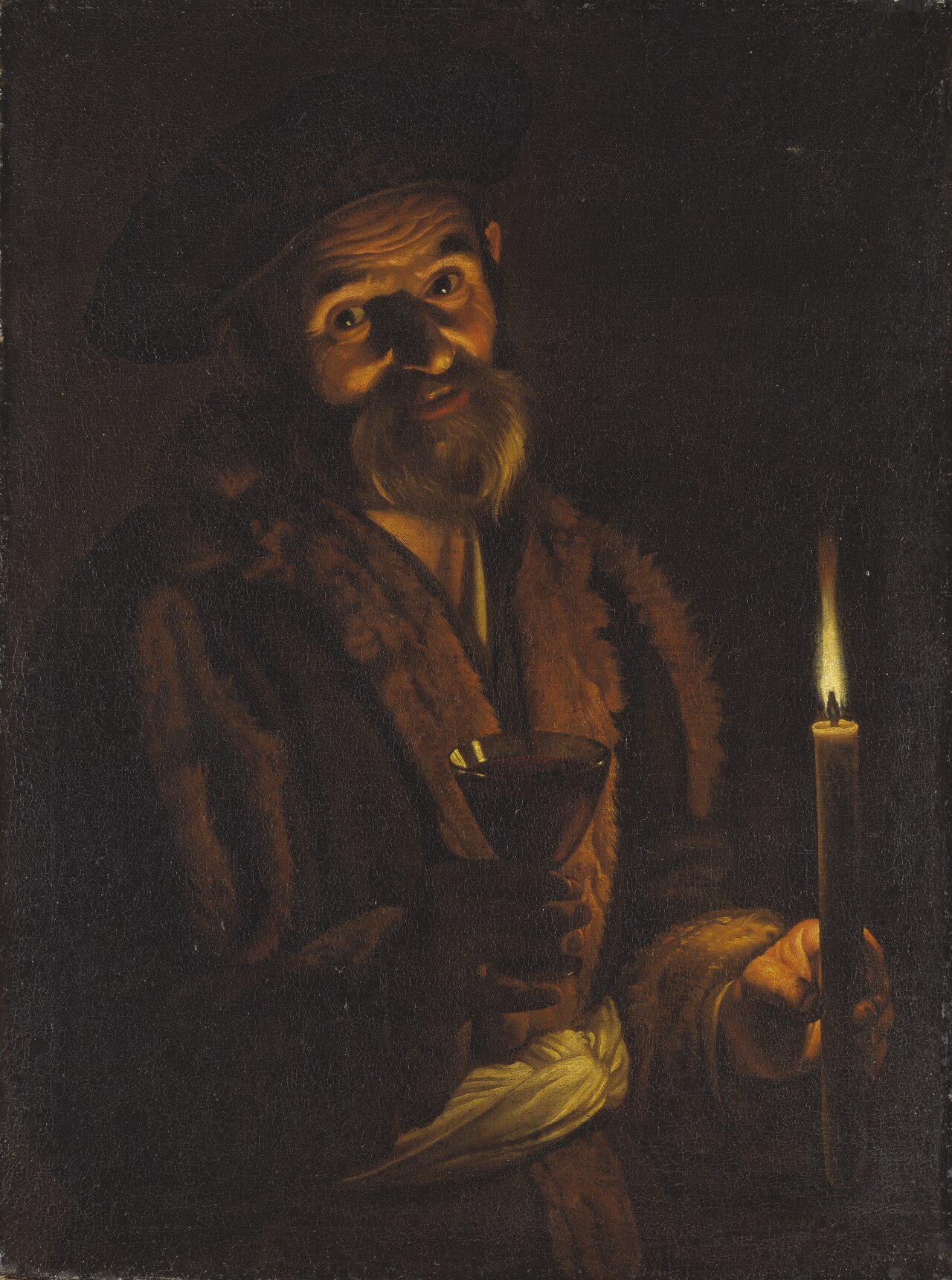

Early life Adam de Coster was born in 1586 in Mechelen, which is now part of modern-day Belgium. During his time, the region was part of the Habsburg Netherlands, a complex political entity that comprised a significant portion of the Low Countries. Little is known about de Coster's early life, but it is believed that he received his artistic training in the region, possibly in Antwerp, which was a major artistic hub.
Career and style De Coster's career as a painter is notable for his association with the Antwerp Caravaggisti, a group of artists influenced by the dramatic and emotionally charged works of Caravaggio. The Caravaggisti movement was international in scope, with artists across Europe interpreting Caravaggio's style in personal and innovative ways. De Coster's own style is characterized by the use of strong chiaroscuro, which gives his paintings a sense of depth and volume. He was particularly drawn to depicting scenes at night or in dimly lit settings, which became a hallmark of his work.
Signature techniques One of the defining features of de Coster's paintings is the use of tenebrism, a style that emphasizes the contrast between light and dark. This technique, also known as chiaroscuro, was not unique to de Coster but was a characteristic of the Caravaggisti movement. De Coster's mastery of tenebrism allowed him to create compelling and atmospheric scenes that drew the viewer in. His use of light was not just about creating a sense of drama but also about defining the forms and textures within his compositions.
Major works De Coster's oeuvre includes several notable works that showcase his skill with tenebrism and his ability to capture intimate, often nocturnal scenes. 'The lute player' (1625) is one such example, where the musician is illuminated against a dark background, highlighting the instrument and the player's hands. 'Evening concert' (1670) is another work that demonstrates de Coster's ability to depict warm, inviting scenes, despite the challenges of painting in the tenebrist style. 'A young woman holding a distaff before a lit candle' and 'An Old Man with a Candle and a Glass' further illustrate de Coster's fascination with light sources and their effects on the human figure. 'Two Sculptors at Night in Rome. Double Portrait of Francois Duquesnoy and Georg Petel' (1622) is a significant work, not only for its tenebrist qualities but also for the insight it provides into the artistic and intellectual circles of the time.
Influence and legacy Adam de Coster's contributions to the Baroque period and the Caravaggisti movement are significant. His work, along with that of his contemporaries, helped shape the artistic landscape of Europe during the 17th century. De Coster's emphasis on light and shadow, his mastery of tenebrism, and his ability to create compelling, intimate scenes have influenced generations of artists. Today, de Coster is recognized as a key figure in the history of Flemish painting, and his works continue to be celebrated for their beauty, their emotional depth, and their historical significance.
Frequently asked questions
Who was Adam de Coster?
Adam de Coster was a Flemish painter from the Habsburg Netherlands, active during the Baroque period, known for his genre scenes with strong chiaroscuro effects.
What style or movement was Adam de Coster associated with?
De Coster was associated with the Baroque period and was a prominent member of the Antwerp Caravaggisti, a group influenced by Caravaggio's dramatic and emotionally charged works.
What are some of Adam de Coster's most famous works?
Some of his most notable works include 'The lute player', 'Evening concert', 'A young woman holding a distaff before a lit candle', 'An Old Man with a Candle and a Glass', and 'Two Sculptors at Night in Rome. Double Portrait of Francois Duquesnoy and Georg Petel'.
Why does Adam de Coster matter in the history of art?
De Coster matters because of his contributions to the Baroque period and the Caravaggisti movement, his mastery of tenebrism, and his influence on later generations of artists.
How can I recognize Adam de Coster's work?
You can recognize de Coster's work by looking for strong chiaroscuro effects, often with a single light source, and a focus on intimate, nocturnal scenes that emphasize the contrast between light and dark.