Abraham van Dijck
1635 – 1680
In short
Abraham van Dijck (1635–1680) was a Dutch Golden Age painter from Amsterdam who worked chiefly in the mid‑17th century. He is known for his religious and genre scenes, many of which display a restrained Baroque sensibility.
Notable works



Early life Abraham van Dijck was born in Amsterdam in 1635, during the height of the Dutch Republic’s cultural flourishing. Little is recorded about his family background, but the city’s vibrant artistic environment would have provided ample opportunity for exposure to the works of leading painters such as Rembrandt, Gerard Dou and the Utrecht Caravaggisti. Contemporary guild records indicate that van Dijck entered the Amsterdam Guild of Saint Luke in his early twenties, a common step for aspiring professionals seeking to establish a workshop and receive commissions.
Career and style Van Dijck’s career unfolded primarily in the 1650s and 1660s, a period when the Dutch art market was characterised by a demand for both devotional works and domestic genre scenes. His oeuvre reflects a synthesis of influences: the chiaroscuro and psychological depth associated with Rembrandt, combined with a more polished, colour‑rich approach reminiscent of the later Amsterdam school. While it is difficult to assign him to a single movement, his paintings display the characteristic balance of realism and idealisation that typified the Dutch Golden Age.
His subjects range from biblical narratives to intimate interior scenes. Van Dijck favoured a restrained palette of earth tones, occasional warm reds and deep blues, and often employed a soft modelling of light to give his figures a three‑dimensional presence. The compositional structure tends toward the balanced, with clear focal points and a measured use of background details that support, rather than dominate, the narrative.
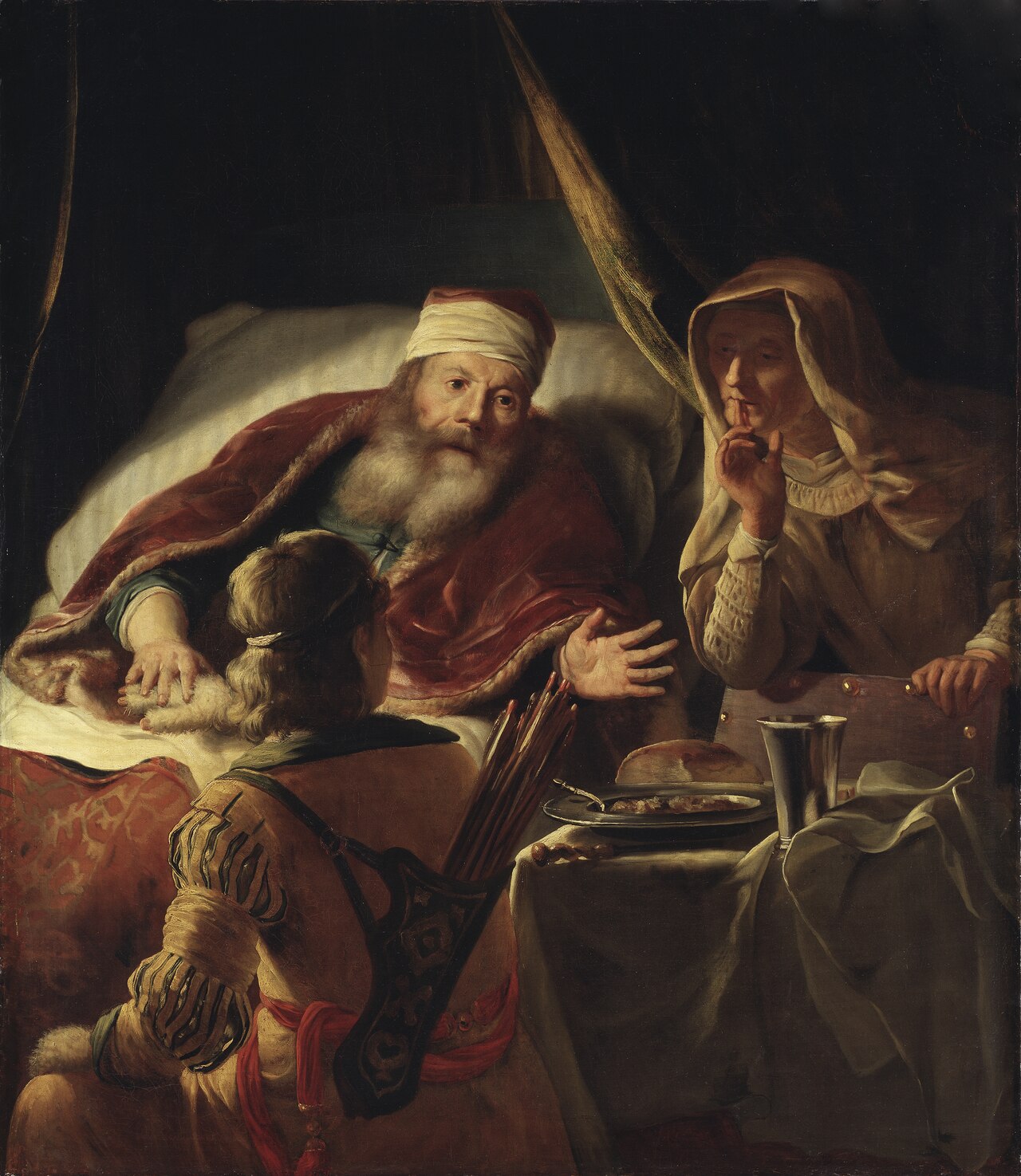
Signature techniques Van Dijck’s technique is distinguished by several recurring features. First, he applied thin, translucent glazes over a solid underpainting, a method that allowed subtle shifts in tone and contributed to the luminous quality of his canvases. Second, his handling of drapery shows a careful observation of fabric folds, achieved through fine, layered brushwork that captures both texture and movement. Third, he often placed a single light source—typically a window or candle—in the composition, creating a gentle chiaroscuro that highlights the central figures while leaving peripheral elements in softer shadow. This approach both clarifies the narrative and creates a contemplative atmosphere.
Major works The surviving corpus of van Dijck’s work includes a handful of dated pieces that illustrate his artistic range.
- The Departure of Benjamin (1650) – This early work portrays the biblical episode of Benjamin’s departure, rendered with a calm, almost theatrical staging. The figures occupy a shallow interior space, their expressions conveying a mixture of resolve and melancholy. The composition’s vertical framing and the subtle use of colour echo the influence of Dutch genre painters, while the careful rendering of facial features hints at Rembrandt’s impact.
- Manoah’s Sacrifice (1654) – In this biblical scene, van Dijck captures the moment of sacrifice with a focus on the sacrificial altar and the surrounding participants. The painting is notable for its balanced arrangement of light and dark, the warm glow of the altar fire contrasting with the darker background. The artist’s handling of the cloth and the anatomical precision of the figures demonstrate his mature technical skill.
- Family Saying Grace (1657) – This genre piece depicts a modest household pausing for prayer before a modest meal. The work exemplifies van Dijck’s ability to convey piety within everyday life, a theme popular among Dutch patrons. The composition is intimate, with the family gathered around a low table; the delicate rendering of the tableware and the soft illumination from a nearby window reinforce the sense of domestic serenity.
- Old Woman with a Book (1659) – Here van Dijck presents an elderly woman absorbed in reading, a subject that underscores the era’s respect for learning and humility. The painting’s subdued palette and the careful depiction of the woman’s aged skin and hands showcase the artist’s skill in portraiture. The background is minimal, allowing the viewer’s attention to remain on the figure’s contemplative expression.
- Isaac Blessing Jacob – Although undated, this biblical composition aligns with van Dijck’s recurring interest in Old Testament stories. The scene centres on the moment Isaac bestows his blessing on Jacob, with a clear emphasis on the emotional exchange between the two figures. The work’s composition, with a tight focus on the characters and a gentle illumination, reflects the painter’s consistent narrative approach.
These works collectively reveal van Dijck’s dedication to narrative clarity, his nuanced treatment of light, and his capacity to blend devotional seriousness with the domestic realism prized by his contemporaries.
Influence and legacy Abraham van Dijck did not achieve the fame of Rembrandt or Vermeer, and his name appears less frequently in standard surveys of Dutch Golden Age painting. Nevertheless, his oeuvre contributes valuable insight into the broader spectrum of mid‑17th‑century Dutch art. By integrating the dramatic lighting of the Caravaggisti with the refined domesticity of the Amsterdam school, van Dijck occupies a transitional position that bridges the more overtly theatrical works of his early peers with the quieter, introspective pieces that followed.
His paintings were collected by regional patrons in Amsterdam and Dordrecht, and a few works entered private collections that later passed to museums in the Netherlands. Modern scholarship, while limited, recognises van Dijck as an example of the many competent, though less celebrated, artists who sustained the commercial art market and helped disseminate the visual language of the Dutch Golden Age beyond its most famous masters. His works continue to be exhibited in Dutch galleries and occasionally appear in international exhibitions focused on 17th‑century European art, offering viewers a nuanced perspective on the period’s artistic diversity.
In sum, Abraham van Dijck’s career illustrates the productive interplay between established artistic traditions and individual expression, reinforcing the richness of Dutch artistic production in the latter half of the 17th century.
Frequently asked questions
Who was Abraham van Dijck?
Abraham van Dijck (1635–1680) was a Dutch Golden Age painter from Amsterdam who produced religious and genre scenes in the mid‑17th century.
What style or movement is he associated with?
He is linked to the Dutch Golden Age, blending Rembrandt‑inspired chiaroscuro with the polished colour sensibility of the later Amsterdam school, though he does not belong to a single defined movement.
What are his most famous works?
Among his best‑known paintings are *The Departure of Benjamin* (1650), *Manoah’s Sacrifice* (1654), *Family Saying Grace* (1657), *Old Woman with a Book* (1659) and the biblical scene *Isaac Blessing Jacob*.
Why does he matter in art history?
Van Dijck exemplifies the many skilled artists who sustained the Dutch art market, offering a bridge between dramatic Baroque influences and the quieter domestic realism that characterised later Dutch painting.
How can I recognise a van Dijck painting?
Look for a balanced composition, soft chiaroscuro from a single light source, careful modelling of drapery, and a restrained palette that highlights intimate narrative moments.