Wouter Crabeth II
1594 – 1644
In short
Wouter Crabeth II (1594–1644) was a Dutch painter from Gouda who specialised in genre scenes, biblical subjects and occasional portraits. After a formative period in Italy he adopted a Caravaggesque style, producing works such as The Incredulity of St Thomas and several civic commissions for his hometown.
Notable works


_-_The_officers_of_Gouda%27s_four_civil_militia_ensigns,_led_by_Col._Herman_Herbertsz..jpg)
_-_Music_Making_Company.jpg)
Early life Wouter Pietersz. Crabeth II was born in 1594 in the city of Gouda, a thriving centre of glass‑making and trade in the Dutch Republic. He came from a family with artistic connections; his father, Pietersz. Crabeth, was a respected craftsman, and the younger Wouter was exposed to the visual culture of Gouda’s churches and guild halls from an early age. Little is recorded about his formal training, but contemporary documents suggest that he began his apprenticeship locally before travelling abroad to further his education.
Career and style Around the early 1610s Crabeth embarked on a long‑term stay in Italy, a common pilgrimage for Dutch artists seeking exposure to the latest artistic developments. In the Roman and Neapolitan circles he encountered the work of Caravaggio and his followers, the Caravaggisti, whose dramatic chiaroscuro and naturalistic treatment of biblical narratives left a lasting imprint on his own practice. Upon returning to the Dutch Republic, Crabeth settled back in Gouda, where he combined his Italian influences with the burgeoning Dutch genre tradition. His paintings display a keen eye for everyday life, rendered with a heightened sense of drama that aligns him with the broader Baroque movement, even though a specific school or movement is not formally attached to his name.
Signature techniques Crabeth’s visual language is characterised by several recurring technical choices. First, he employed a strong contrast between light and shadow, often illuminating his figures from a single, off‑centre source to create a three‑dimensional effect. Second, his brushwork balances tight modelling of faces and hands with looser, more gestural treatment of background elements, allowing the narrative to remain clear without overwhelming detail. Third, he frequently used a limited, earthy palette—deep ochres, muted reds, and subdued greens—punctuated by occasional bright accents that draw the viewer’s eye to the focal point. Finally, his compositions often incorporate a subtle theatrical staging, positioning figures in dynamic poses that suggest a moment captured just before action unfolds.
Major works Among Crabeth’s surviving oeuvre, several works stand out for both their artistic merit and their documentation of his career trajectory.
- The Incredulity of St Thomas (1620) – This early biblical painting demonstrates Crabeth’s mastery of Caravaggesque lighting. The figure of Thomas is rendered in half‑light, his skeptical expression highlighted by a shaft of illumination that emphasizes the tactile interaction with the crucifix. The work reflects the artist’s ability to convey theological tension through intimate, human gestures.
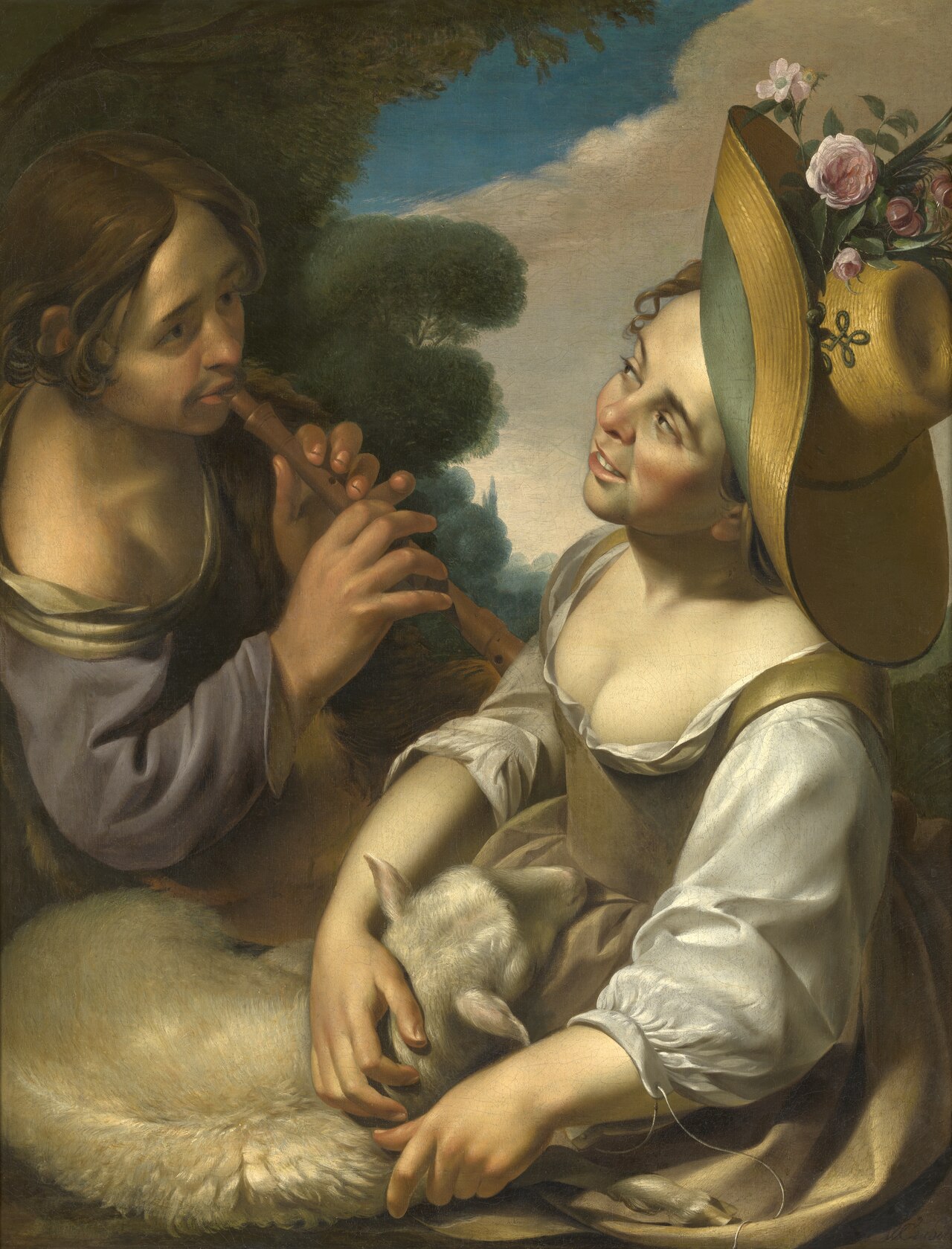
- Pastoral Amusement – A genre scene that captures a leisurely moment in a rural setting, this painting showcases Crabeth’s interest in everyday life. Figures are depicted in relaxed poses, engaged in play and conversation, while the surrounding landscape is rendered with muted tones that suggest a warm, sun‑lit afternoon.
- Card Players (1700) – Although dated after Crabeth’s death, the piece is traditionally attributed to his workshop or a follower who emulated his style. The composition features a group of men gathered around a table, their faces illuminated by a single lamp. The work illustrates the enduring influence of Crabeth’s chiaroscuro technique on later Dutch genre painters.
- Officers and Guardsmen of the Company of Colonel Herman Herbertsz. (1644) – Completed in the year of his death, this civic commission portrays a militia company in formal attire. The portrait group is arranged with a clear hierarchy, the colonel positioned centrally, his uniform richly detailed. The painting serves both as a historical record of Gouda’s civic guard and as a testament to Crabeth’s capacity for large‑scale, collaborative portraiture.
- Company Making Music (1635) – This work depicts a troupe of musicians rehearsing, each figure engaged with an instrument. The scene is suffused with a warm glow that unifies the ensemble, while the individual expressions convey a sense of concentration and camaraderie. The painting exemplifies Crabeth’s skill in rendering collective activity without losing the individuality of each participant.
Influence and legacy Wouter Crabeth II occupies a niche position within Dutch art history. While he never achieved the fame of contemporaries such as Rembrandt, his synthesis of Caravaggist chiaroscuro with Dutch genre sensibilities contributed to the broader diffusion of Baroque aesthetics in the northern Netherlands. His civic commissions for Gouda underscore his role as a local artist who catered to both religious and secular patrons, bridging the gap between elite portraiture and popular genre scenes.
Later Dutch painters, particularly those working in the mid‑17th century, drew upon Crabeth’s lighting schemes and compositional arrangements. The attribution of later works, such as the aforementioned *Card Players*, indicates that his workshop or followers continued to produce works in his manner well after his death. Modern scholarship recognises Crabeth as an example of the transnational artistic exchange that characterised the early modern period: a Dutch artist shaped by Italian Baroque, who in turn helped transmit those ideas back to his homeland.
Today, Crabeth’s paintings are held in regional museums and municipal collections, where they are displayed alongside works by his contemporaries to illustrate the diversity of Dutch visual culture in the early 17th century. His legacy persists in the subtle yet persistent presence of Caravaggesque lighting in Dutch genre painting, a testament to his role as a conduit between artistic centres and provincial patronage.
---
In sum, Wouter Crabeth II’s career reflects the fluid artistic currents of his time: a Dutch painter rooted in his native Gouda, yet profoundly shaped by Italian Baroque, whose works continue to offer insight into the interplay of religious narrative, everyday life, and civic identity in early modern art.
Frequently asked questions
Who was Wouter Crabeth II?
Wouter Crabeth II (1594–1644) was a Dutch painter from Gouda known for genre scenes, biblical subjects and occasional portraits, whose style was shaped by his time in Italy and the influence of Caravaggio.
What artistic style or movement is he associated with?
He is not tied to a specific movement, but his work reflects Caravaggesque chiaroscuro combined with Dutch Baroque genre painting.
What are his most famous works?
Key works include *The Incredulity of St Thomas* (1620), *Pastoral Amusement*, *Officers and Guardsmen of the Company of Colonel Herman Herbertsz.* (1644) and *Company Making Music* (1635).
Why does Crabeth matter in art history?
He helped transmit Italian Baroque lighting and drama to the Dutch Republic, influencing later genre painters and providing a visual record of civic and religious life in Gouda.
How can I recognise a painting by Wouter Crabeth II?
Look for strong, single‑source lighting, earthy colour palettes, tight modelling of faces with looser backgrounds, and scenes that blend everyday activity with a subtle theatrical staging.