William Lionel Wyllie
1851 – 1931
In short
William Lionel Wyllie (1851–1931) was a British painter renowned for his marine subjects in oil and watercolour. He is regarded as the most distinguished marine artist of his era, with works held by major institutions such as the Tate and the National Maritime Museum.
Notable works

_15.jpg)
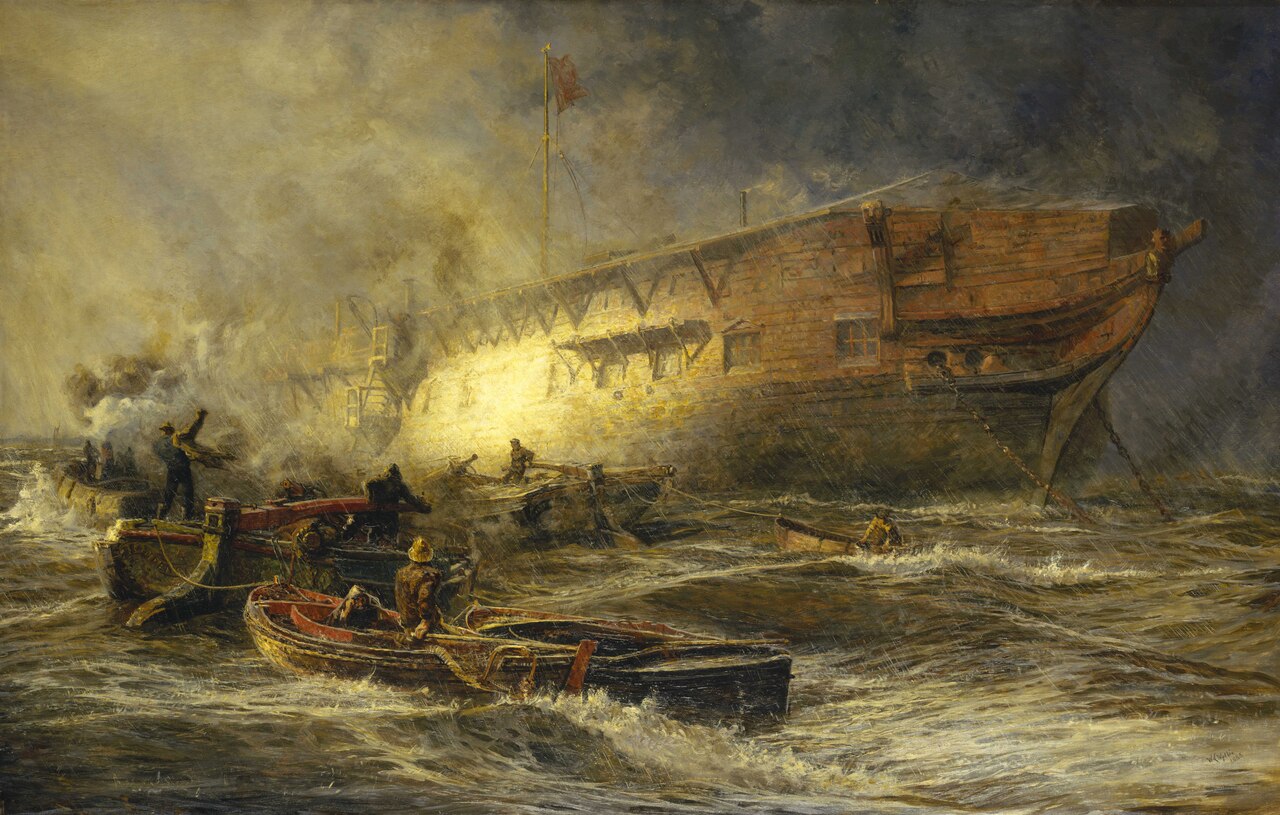
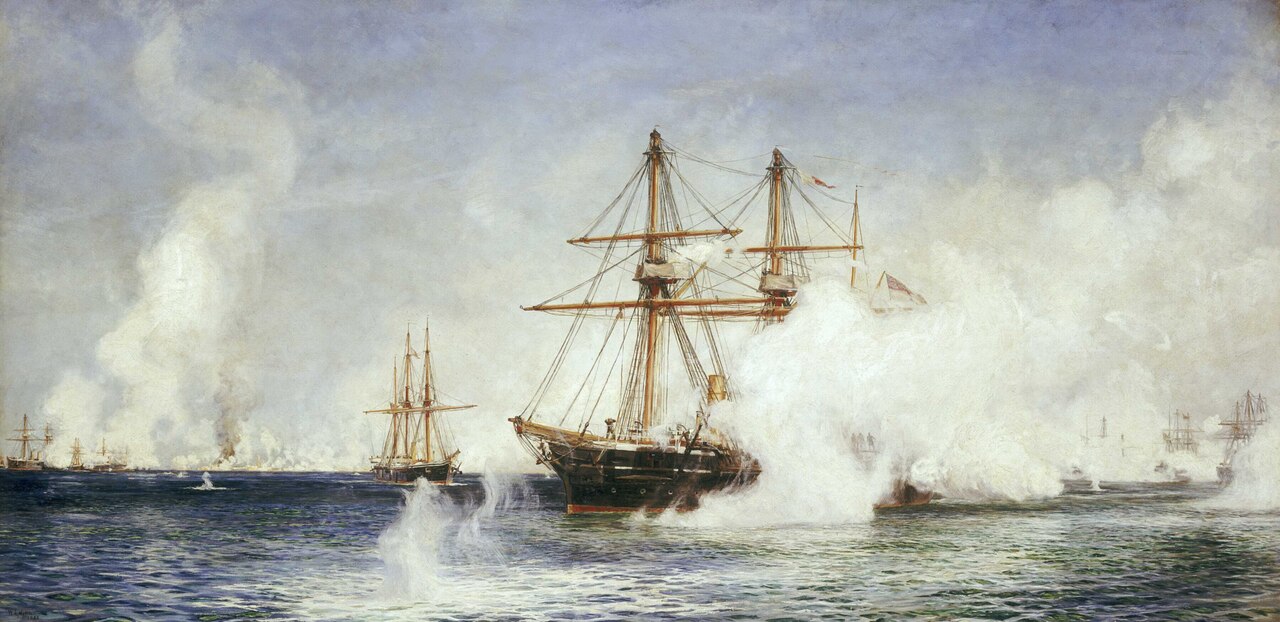

Early life William Lionel Wyllie was born in London on 21 March 1851 into a family with artistic connections; his mother, the painter Eleanor Wyllie, encouraged his early interest in drawing. He received his first formal training at the Royal Academy Schools, where he was exposed to the academic traditions of the mid‑nineteenth century. The bustling Thames and the Royal Naval College in nearby Greenwich provided a vivid backdrop that shaped his lifelong fascination with ships, sea‑scapes, and the interplay of light on water.
Career and style After completing his studies, Wyllie quickly established himself as a specialist in maritime painting. He exhibited regularly at the Royal Academy from the 1870s onward, earning a reputation for technical accuracy and atmospheric sensitivity. While he never aligned himself with a specific avant‑garde movement, his work reflects a synthesis of academic realism, the tonal subtlety of the English watercolour tradition, and a growing interest in the drama of modern naval warfare. Throughout his career he produced both large‑scale oil canvases for public commissions and smaller watercolours for private collectors, demonstrating an ability to adapt his style to varying formats without sacrificing the core concern for nautical detail.
Signature techniques Wyllie's paintings are distinguished by several recurring techniques. First, his handling of water—whether the glittering surface of a calm harbour or the tumult of a storm‑tossed sea—relies on layered washes in watercolour, creating a luminous depth that suggests both movement and atmosphere. In oil, he often employed a restrained palette of blues, greys, and muted earth tones, allowing the colour of the sky and the subtle reflections on hulls to dominate the composition. He also made extensive use of preparatory sketches and marine photographs, a practice that lent his depictions of ships, rigging, and technical details a documentary quality. Finally, his ability to capture fleeting light—sunlight breaking through cloudbanks, the phosphorescent glow of a moonlit deck—adds an emotive resonance that elevates his work beyond pure illustration.
Major works Among Wyllie's most celebrated pieces are several that illustrate his range of subject matter and his skill at rendering both historic and contemporary events.
- Loss of HMS Pathfinder, September 5th 1914 – This oil painting records the sinking of the British cruiser HMS *Pathfinder* early in World War I. Wyllie's composition places the damaged vessel against a stark, smoky horizon, emphasizing the tragedy of naval loss while maintaining precise detail of the ship’s construction.
- The Miraculous Draught of Fishes – A departure from his usual naval scenes, this work interprets the biblical miracle with a gentle, lyrical watercolour style. The composition balances narrative content with Wyllie's characteristic treatment of water, using soft washes to suggest the miraculous abundance of fish.
- Storm and Sunshine: A Battle with the Elements (1885) – In this dramatic oil, a merchant ship battles a fierce storm while a break in the clouds allows a shaft of sunlight to illuminate the sails. The piece exemplifies Wyllie's ability to dramatise the struggle between human endeavour and nature.
- 'Well Done "Condor"': The Bombardment of Alexandria (1883) – This watercolour captures the Royal Navy’s bombardment of Alexandria during the 1882 conflict. The painting highlights the disciplined firing of the British gunboat *Condor*, with precise rendering of smoke, fire, and the distant Egyptian coastline.
- The 'Teutonic' leaving Liverpool (1889) – Depicting the departure of the famous passenger liner *Teutonic* from the Mersey, this work showcases Wyllie's interest in contemporary maritime commerce. The composition features a bustling dock, the sleek hull of the liner, and reflective water that mirrors the industrial architecture of Liverpool.
These works, together with numerous portrait‑size watercolours of Royal Navy vessels, illustrate Wyllie's commitment to documenting the evolving technology and culture of seafaring Britain.
Influence and legacy William Lionel Wyllie's legacy endures through both his prolific output and his impact on subsequent generations of marine artists. His meticulous approach to ship anatomy set a benchmark for accuracy that later illustrators of naval subjects, such as his son and fellow painter Lionel Wyllie, emulated. Institutional recognition—placements in the Tate, the Imperial War Museum, the National Maritime Museum, and the National Museum of the Royal Navy—ensured that his work remained visible to scholars and the public alike. Moreover, his watercolours continue to be studied in art schools for their masterful handling of transparent media and atmospheric perspective. Though he never joined a formal movement, Wyllie's synthesis of academic realism with a vivid, narrative sensibility helped to define the visual language of British maritime art at the turn of the twentieth century, cementing his reputation as the pre‑eminent marine painter of his time.
Frequently asked questions
Who was William Lionel Wyllie?
William Lionel Wyllie (1851–1931) was a British painter best known for his detailed and atmospheric marine subjects in oil and watercolour.
What artistic style or movement is he associated with?
Wyllie did not belong to a specific avant‑garde movement; his work blends academic realism, the English watercolour tradition, and a narrative focus on naval life.
What are his most famous works?
His most celebrated paintings include *Loss of HMS Pathfinder* (1914), *The Miraculous Draught of Fishes*, *Storm and Sunshine* (1885), *'Well Done "Condor"'* (1883), and *The 'Teutonic' leaving Liverpool* (1889).
Why is Wyllie important in art history?
He is regarded as the most distinguished marine artist of his era, setting high standards for technical accuracy and atmospheric rendering that influenced later marine painters and remain studied in major museums.
How can I recognise a Wyllie painting?
Look for precise ship details, layered water washes or subtle oil palettes, and a focus on light—often a break in clouds or moonlight—creating a dramatic yet realistic sea scene.