Willem Pieterszoon Buytewech
1591 – 1624
In short
Willem Pieterszoon Buy Buytewech (1591–1624) was a Dutch Baroque painter, draughtsman and etcher from Rotterdam, best known for pioneering the merry‑company genre in Dutch art. He produced lively, small‑scale genre scenes and is remembered as “Gheestige Willem”.
Notable works


Early life Willem Pieterszoon Buytewech was born in Rotterdam in 1591, during the early years of the Dutch Republic. Little is recorded about his family background, but contemporary sources indicate that he was trained locally, likely within the workshop of a Rotterdam master who specialised in portraiture and genre subjects. By the turn of the century he had acquired the skills of a draughtsman and began to experiment with oil painting, a medium that would define his short but productive career.
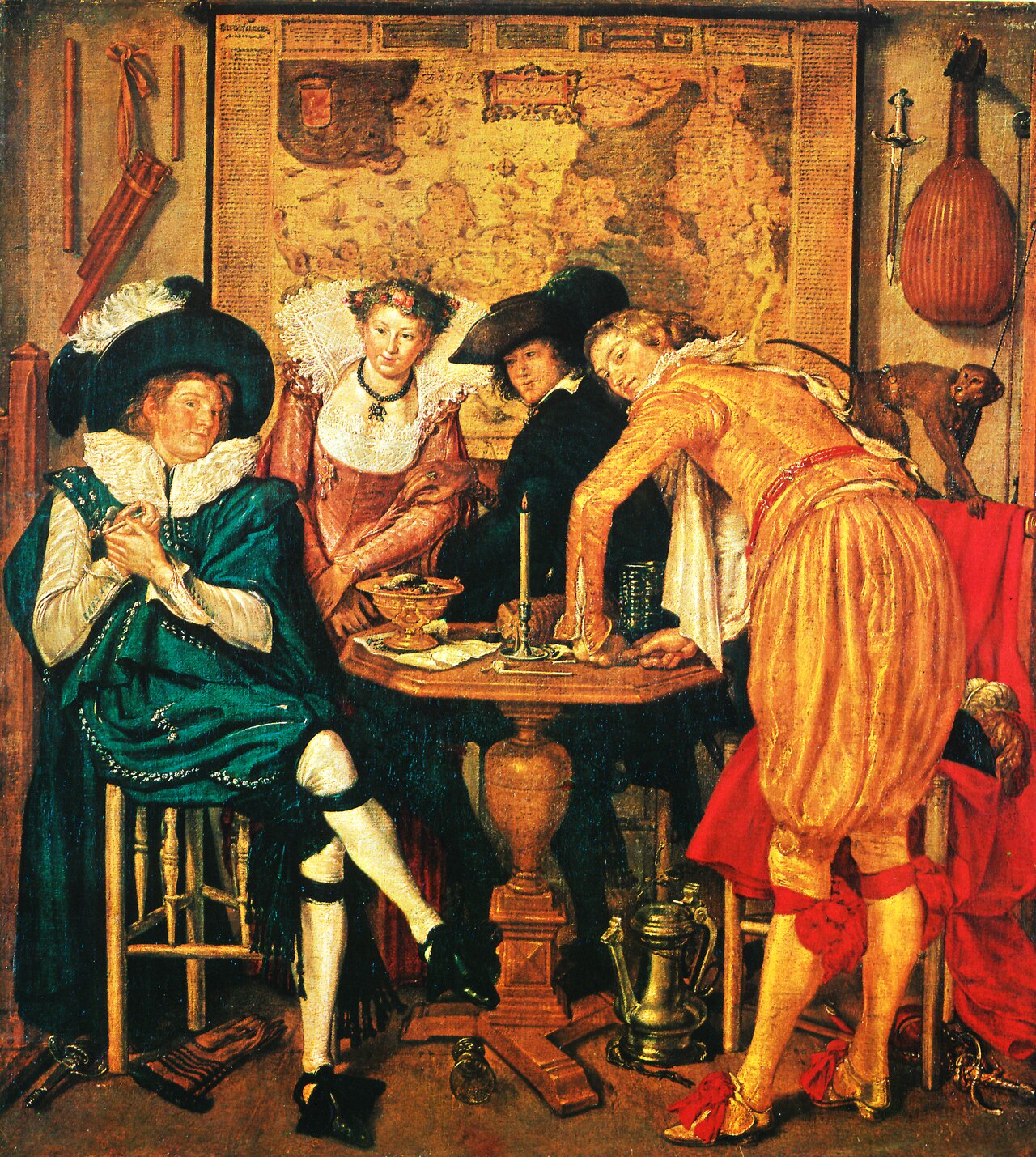
Career and style Buytewech quickly established himself as a versatile artist, working both as a painter and an etcher. He moved between Rotterdam and Amsterdam, the two principal artistic centres of the Dutch Republic, and joined the local guild of Saint Luke, which granted him the right to sell his works publicly. His style is firmly rooted in the Baroque tradition, characterised by vigorous brushwork, a bright colour palette and a keen eye for the details of everyday life. He was especially drawn to the emerging genre of the “merry company”, a scene that depicts elegantly dressed figures enjoying music, drink and conversation in an intimate setting. These works combine a sense of conviviality with a subtle moral undertone, reflecting the social dynamics of the early‑seventeenth‑century Dutch middle class.
Signature techniques Buytewech’s technique is distinguished by several recurring elements. He favoured small‑scale panels, often no larger than a foot in height, which allowed for meticulous rendering of fabrics, jewellery and interior décor. His handling of light shows a nuanced use of chiaroscuro: the illumination often falls on the faces and hands of his figures, creating a three‑dimensional effect against a darker background. In his etchings, he employed fine, cross‑hatching lines to suggest texture and depth, a method that later Dutch printmakers would adopt. The artist also paid particular attention to the arrangement of objects within the composition, using architectural elements such as arches and windows to frame the central activity and guide the viewer’s eye through the scene.
Major works - **Merry Company (1620)** – This oil on panel is a quintessential example of Buytewech’s merry‑company genre. A group of well‑dressed men and women are gathered around a table laden with a goblet, musical instruments and a lute. The scene is set in an interior with a large window that admits a soft daylight, highlighting the sheen of silk and the reflective surfaces of glassware. The work demonstrates his skill in portraying texture and his ability to capture a moment of conviviality with a hint of moral reflection. - **An Elegant Party in the Open (1616)** – In this outdoor composition, a group of aristocratic figures enjoys a leisurely picnic beneath a pergola. The painting showcases Buytewech’s adeptness at rendering foliage and the play of light on fabric, while the composition balances the figures with an architectural backdrop of a distant villa. The work reflects the influence of Italianate landscape painting that was circulating in the Dutch Republic at the time. - **Italian Nobleman (1615)** – This portrait presents a solitary male sitter dressed in an elaborate, richly embroidered costume that suggests an Italian courtly background. The figure is rendered with a direct gaze, and the subtle modelling of the face reveals Buytewech’s command of chiaroscuro. The portrait illustrates his capacity to work beyond genre scenes, adapting his baroque sensibility to the demands of portraiture. - **Ruins of Castle Kleef near Haarlem (1615)** – A landscape featuring the decaying remains of Castle Kleef, this work combines a topographical interest with a romantic sensibility. The ruins are set against a sky streaked with clouds, and the composition includes distant figures in contemporary dress, providing a narrative element. The painting underscores Buytewech’s versatility, showing that he could move fluidly between genre, portrait and landscape subjects.
Influence and legacy Willem Buytewech’s contribution to Dutch art lies primarily in his early development of the merry‑company genre, a subject that would become a staple of the Dutch Golden Age. His contemporaries dubbed him “Gheestige Willem” (Spirited William), a nickname that reflects both his lively personality and the energetic quality of his paintings. Later artists such as Dirck Hals and the young Pieter de Hooch expanded upon his compositional formulas, adopting his focus on interior spaces and social interaction. Although his career was cut short by his death in Rotterdam in 1624, his works were collected by affluent patrons and remained in private collections for centuries, eventually entering museum holdings across Europe and North America. Today, Buytewech is recognised as a pivotal figure who helped shape the visual language of Dutch genre painting, bridging the exuberance of early Baroque with the more restrained realism that characterised the later Dutch Golden Age.
Frequently asked questions
Who was Willem Pieterszoon Buytewech?
He was a Dutch Baroque painter, draughtsman and etcher (1591–1624) from Rotterdam, known for pioneering the merry‑company genre in Dutch art.
What artistic style or movement is he associated with?
Buytewech worked within the Baroque tradition, producing lively genre scenes that combine bright colour, chiaroscuro and detailed interiors.
What are his most famous works?
His best‑known paintings include *Merry Company* (1620), *An Elegant Party in the Open* (1616), *Italian Nobleman* (1615) and *Ruins of Castle Kleef near Haarlem* (1615).
Why is he important in art history?
He was one of the earliest specialists in the merry‑company genre, influencing later Dutch genre painters and helping to define a key visual theme of the Dutch Golden Age.
How can I recognise a Buytewech painting?
Look for small‑scale panels with bright, meticulously rendered fabrics, a focus on social gatherings, careful use of light on faces and hands, and a subtle moral undertone typical of his merry‑company scenes.