Watanabe Kazan
1793 – 1841
In short
Watanabe Kazan (1793–1841) was a Japanese samurai‑class painter, scholar and statesman of the late Edo period, known for his portraiture and early experiments with Western painting techniques.
Notable works

_-_Google_Art_Project.jpg)

Early life Watanabe Kazan was born in 1793 in Miyakezaka, a district of Edo (modern‑day Tokyo). He came from a samurai family that served the Tokugawa shogunate, a background that gave him access to both the elite cultural circles of the capital and the intellectual currents of the time. From a young age Kazan displayed a talent for calligraphy and painting, and his family encouraged his studies in the classical Chinese literati tradition (nanga) as well as the practical arts required of a low‑ranking bureaucrat. By his teens he was already proficient in brushwork and poetry, and he began to cultivate a reputation as a scholar‑artist, a role that would shape his later career.
Career and style In his twenties Kazan entered the shogunate’s administrative service, where he served as a low‑level official in the Kansei reforms. The period was marked by intense debate over Japan’s isolationist policies, and Kazan became an advocate of rangaku – the study of Western science and technology. He corresponded with leading rangaku scholars such as Takano Chōei and learned about European painting techniques from imported manuals. This exposure led him to experiment with oil painting and perspective, a rarity among Edo‑period artists who typically worked in ink and colour on silk or paper.
Kazan’s artistic style therefore straddles two traditions. His early works reflect the restrained elegance of the nanga school, with monochrome brushstrokes and an emphasis on literary allusion. Later, under the influence of rangaku, he incorporated a more realistic rendering of facial features, subtle modelling of light, and a tentative use of chiaroscuro. He never abandoned his Japanese aesthetic; instead, he blended Western observation with native compositional principles, producing portraits that feel both intimate and formally balanced.
Signature techniques Kazan’s signature techniques can be summarised as follows: 1. **Hybrid brushwork** – he combined the soft, flowing strokes of ink painting with the controlled, layered application of oil pigments, allowing for nuanced texture in clothing and skin. 2. **Subtle perspective** – rather than the dramatic linear perspective of European masters, Kazan employed a modest, almost atmospheric depth that suggested space without overwhelming the composition. 3. **Emphasis on facial expression** – his portraits capture a psychological presence, using slight variations in eye direction, mouth curvature, and the positioning of the head to convey status and temperament. 4. **Use of colour washes** – he often applied a thin, translucent wash of colour over ink outlines, a technique that adds depth while preserving the immediacy of the brush line. 5. **Integration of poetic inscription** – each work is accompanied by a short haiku or classical Chinese verse, linking the visual image to a literary context.
These methods set Kazan apart from his contemporaries and foreshadow the later Meiji‑era synthesis of Japanese and Western art.
Major works Kazan’s surviving oeuvre is relatively small, but several pieces illustrate his artistic development:
- Portrait of Takami Senseki (1837) – This oil‑on‑canvas portrait shows the scholar Takami Senseki seated against a muted background. Kazan captures the subject’s contemplative gaze with a delicate gradation of skin tones, while the scholar’s robes are rendered in a restrained colour palette that hints at the wearer’s modesty.
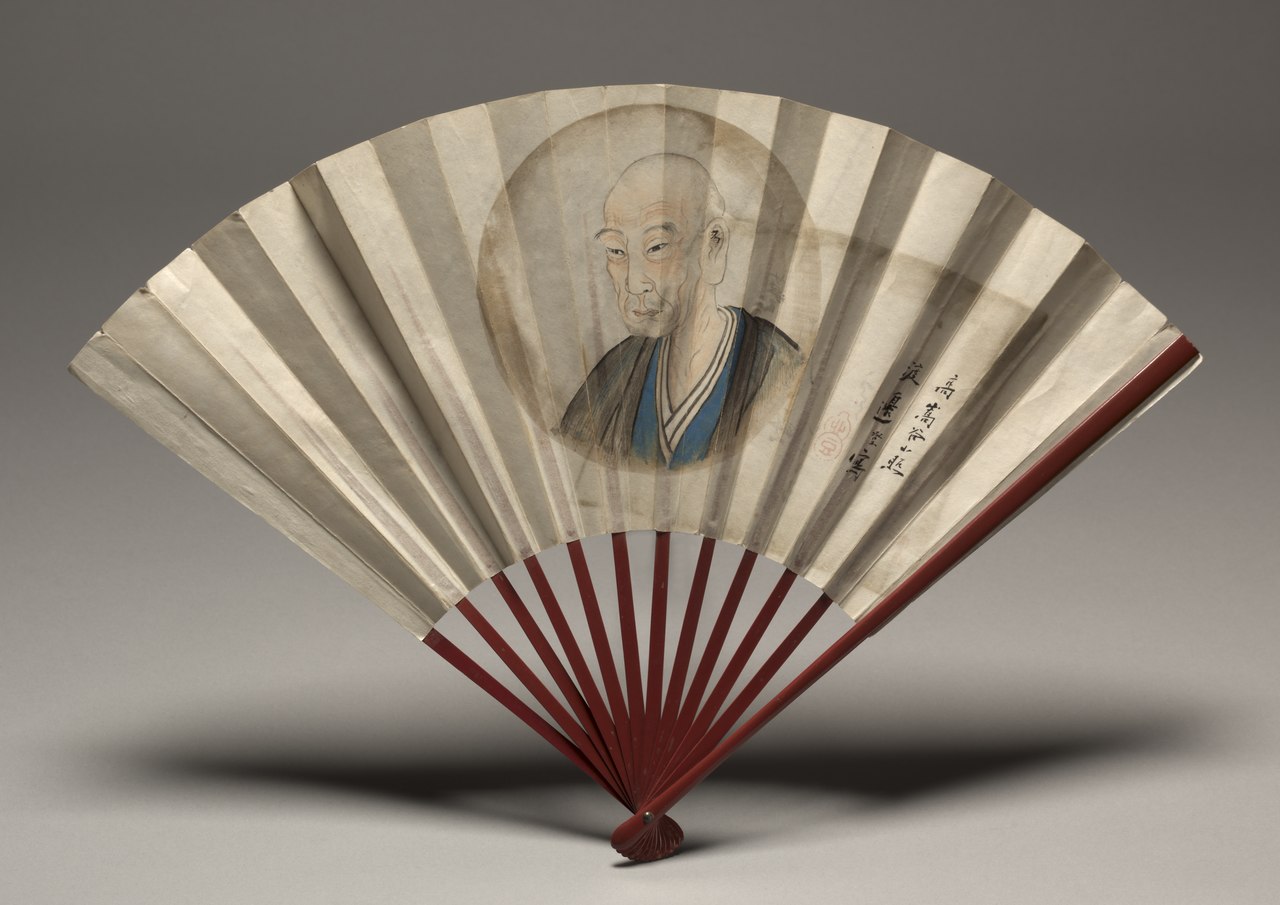
- Portrait of Sato Issai (age 50) – In this work Kazan employs a blend of ink and colour wash to depict the veteran Confucianist Sato Issai. The portrait’s strength lies in its psychological depth; the subject’s furrowed brow and slightly turned head convey both experience and a measured resolve.
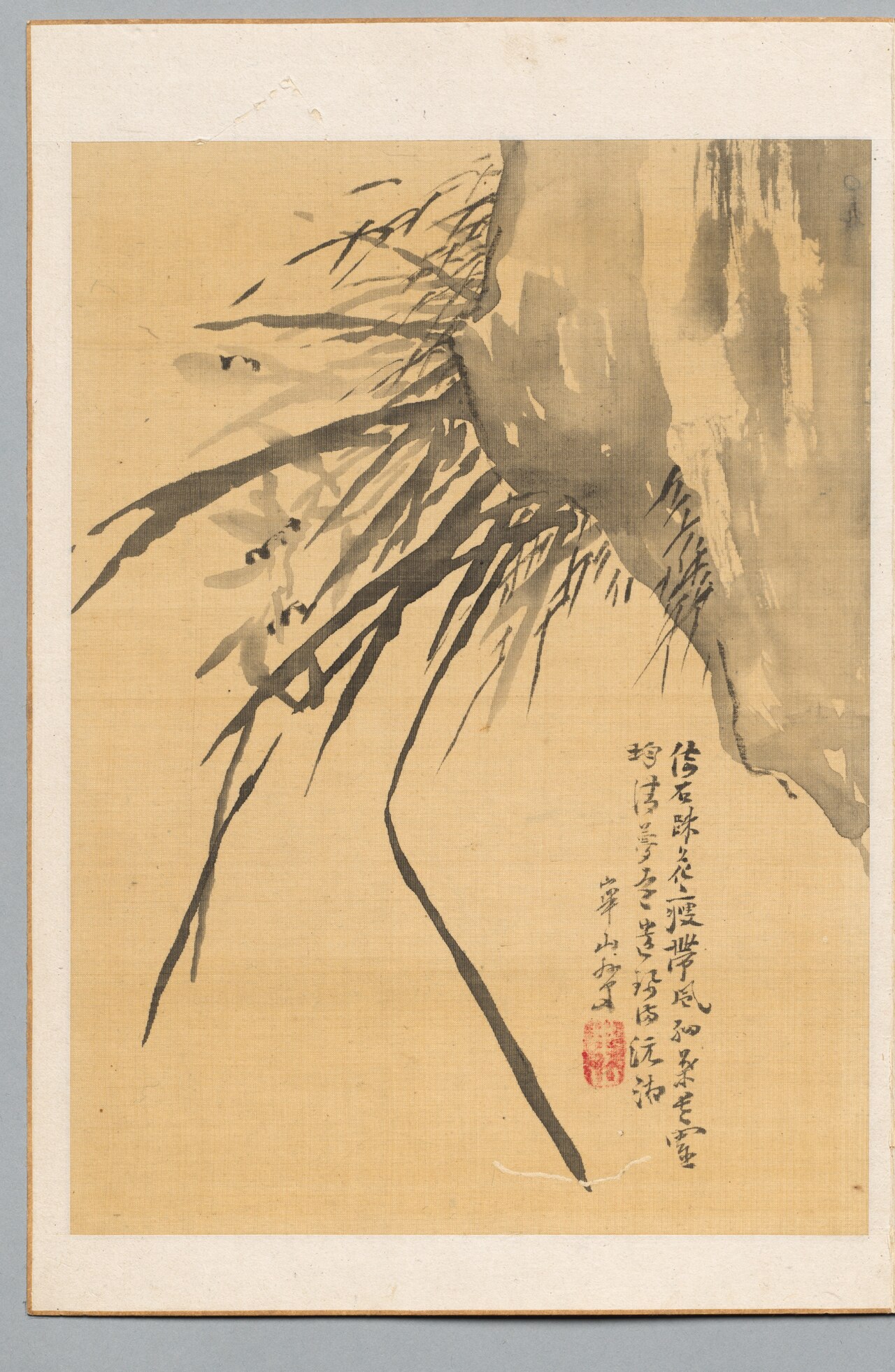
- Orchid (1830) – Though not a portrait, the Orchid painting demonstrates Kazan’s ability to render botanical subjects with scientific precision. The delicate petals are painted with fine, almost microscopic detail, reflecting his rangaku interest in natural observation.
- Portrait of Kō Sūkoku (1817) – One of Kazan’s earliest surviving portraits, this piece shows a youthful official in traditional court dress. The composition is balanced by a simple backdrop, and the brushwork remains firmly within the nanga tradition, indicating Kazan’s formative period.
- Portrait of Ōzora Buzaemon (1827) – This portrait marks a transitional moment. The subject is rendered with a more realistic anatomy, and Kazan introduces a faint shading technique that suggests three‑dimensional form, foreshadowing his later experiments with Western lighting.
Together, these works illustrate Kazan’s gradual shift from classical Japanese aesthetics toward a hybrid style that incorporated observational realism.
Influence and legacy Watanabe Kazan’s career was cut short when, in 1841, he was implicated in a political scandal surrounding the shogunate’s foreign policy. The scandal forced him to commit seppuku, and he died at Ikenohara Park. Though his life ended abruptly, his artistic and intellectual contributions resonated throughout the late Edo and early Meiji periods.
Kazan is now recognised as one of the earliest Japanese artists to engage seriously with Western painting techniques, predating the more systematic yōga movement of the Meiji era. His hybrid approach inspired later artists such as Kawanabe Kyōsai and Yokoyama Taikan, who also sought to reconcile Japanese tradition with modern influences. Scholars of rangaku cite Kazan as a model of the scholar‑artist who used visual art to complement scientific inquiry, highlighting his role in Japan’s gradual opening to the world.
In contemporary museum collections, Kazan’s works are valued both for their aesthetic qualities and for their historical significance as early examples of cross‑cultural artistic dialogue. Exhibitions on Edo‑period portraiture frequently include his paintings to illustrate the nuanced transition from monochrome ink to colour and perspective, while academic studies of Japanese intellectual history regard him as a key figure in the debate over modernization.
Overall, Watanabe Kazan stands as a bridge between Japan’s insular artistic past and the global currents that would reshape its visual culture in the decades after his death.
Frequently asked questions
Who was Watanabe Kazan?
Watanabe Kazan (1793–1841) was a Japanese samurai‑class painter, scholar and statesman of the late Edo period, known for his portraiture and early experiments with Western painting techniques.
What style or movement is he associated with?
Kazan worked at the intersection of the traditional nanga (literati) school and rangaku‑influenced Western techniques, creating a hybrid style that blended Japanese brushwork with modest perspective and colour modelling.
What are his most famous works?
His best‑known pieces include the Portrait of Takami Senseki (1837), Portrait of Sato Issai (age 50), Orchid (1830), Portrait of Kō Sūkoku (1817) and Portrait of Ōzora Buzaemon (1827).
Why does he matter in art history?
Kazan is recognised as one of the earliest Japanese artists to incorporate Western painting methods, making him a forerunner of the yōga movement and a key figure in the cultural shift that led to modern Japanese art.
How can I recognise a Watanabe Kazan painting?
Look for portraits that combine delicate ink outlines with subtle colour washes, feature realistic facial expressions, and often include a small poetic inscription in the corner.