Vincent Malo (I)
1602 – 1644
In short
Vincent Malo (1602–1644) was a Flemish painter from Cambrai who trained in Antwerp before spending most of his career in Italy, where he worked under the Italianised name Vincenzo Malo. He produced genre scenes, religious and mythological subjects, and occasional portraits, blending Northern realism with Italian Baroque influences.
Notable works



_-_The_Virgin_and_Child_with_St_John_the_Baptist_-_RCIN_406058_-_Royal_Collection.jpg)
Early life Vincent Malo was born in 1602 in Cambrai, a town that lay on the frontier between the Spanish Netherlands and the Holy Roman Empire. Little is known about his family background, but the city’s proximity to artistic centres such as Brussels and Antwerp meant that he was exposed to the vibrant Flemish artistic milieu from an early age. He likely began his apprenticeship in the early 1620s, a period when Antwerp was a hub for the production of both devotional imagery and genre scenes. The city’s guild system required aspiring painters to study under a master, and records suggest that Malo completed his training in the workshop of a prominent Antwerp painter, absorbing the technical rigour and compositional principles that characterised the Flemish Baroque.
Career and style After finishing his apprenticeship, Malo spent several years working in Antwerp, producing works for local patrons and for the thriving export market. By the mid‑1630s he had established a reputation for his ability to render everyday life with a naturalistic eye while also handling more elevated religious subjects. Seeking broader opportunities, Malo moved to Italy, a common path for Northern artists eager to encounter the Italian Baroque’s dynamic compositions and dramatic chiaroscuro. In Italy he was known as Vincenzo Malo, Vincenzo Malò, or Vincenzio Malo, reflecting the Italianisation of his name.
In Italy, Malo’s style evolved under the influence of Caravaggio’s tenebrism and the colouristic richness of the Roman school. He combined the Flemish attention to detail with the Italian appetite for theatrical narrative, producing paintings that balanced meticulous surface treatment with a sense of movement and emotional intensity. While he never aligned himself with a formal movement, his work can be situated within the broader diffusion of Flemish Baroque sensibilities across Italy, contributing to the hybrid visual language that characterised many court and ecclesiastical commissions of the period.
Signature techniques Malo’s paintings are distinguished by several recurring techniques. First, his handling of light often employs a subtle, directional illumination that models figures with a soft yet decisive contrast, a nod to Caravaggist influence. Second, his brushwork varies between fine, almost invisible strokes for textures such as fabrics and skin, and broader, more expressive passages for backgrounds and foliage, creating a layered visual depth. Third, his compositional arrangements frequently place the primary action in the foreground while using secondary figures and architectural elements to guide the viewer’s eye through the narrative. Finally, Malo’s colour palette tends toward warm earth tones punctuated by vivid reds or blues, a combination that enhances both the realism of genre scenes and the devotional impact of religious subjects.
Major works Although the exact dating of many of Malo’s extant paintings remains uncertain, a handful of works are regularly associated with his oeuvre. *Madonna and Child in a garden arbor* (c. 1630) demonstrates his early mastery of intimate devotional subjects, featuring a tender interaction between the Virgin and the infant set against a lush, carefully rendered garden. The painting’s delicate handling of foliage and the gentle modulation of light reveal his Flemish roots while the composition’s lyrical quality reflects Italian influences.
*The Virgin and Child with St John the Baptist* (c. 1631) continues this devotional thread, placing the three figures in a harmonious triangular arrangement. The work’s subtle chiaroscuro and the expressive faces of the children underscore Malo’s ability to convey narrative emotion without resorting to overt dramatics.
Genre scenes such as *Peasants playing cards outside an inn* and *Christ in the house of Martha and Mary* are often listed with posthumous dates (1650). These dates likely refer to later copies, workshop productions, or misattributions, as Malo died in 1644. Nevertheless, the compositions attributed to him display his characteristic blend of everyday realism and narrative clarity. In the former, the artist captures a moment of conviviality among rural figures, using precise rendering of clothing and objects to evoke a tangible atmosphere. In the latter, the biblical episode is rendered with a calm domesticity, emphasizing the human aspects of the narrative.
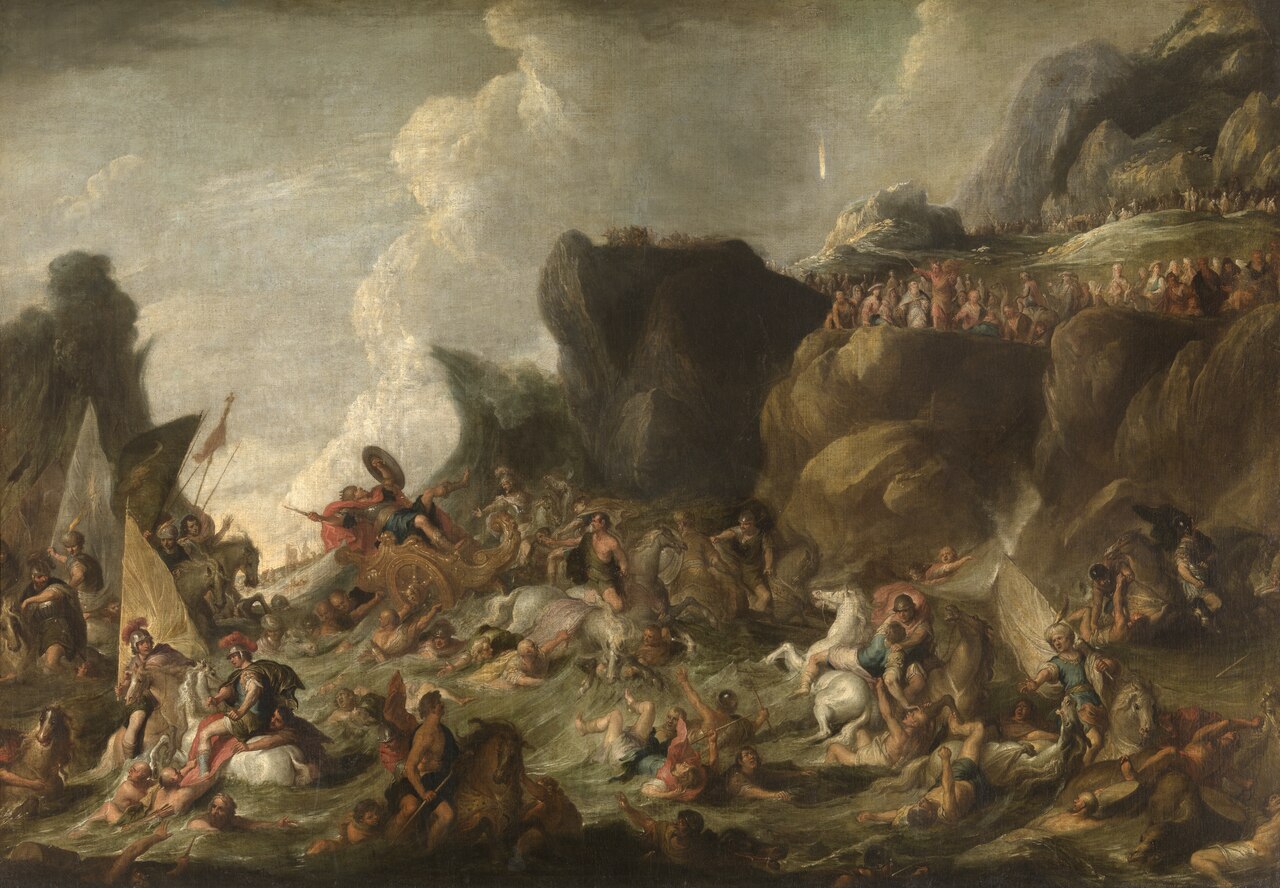
*The Death of the Pharaoh* (often dated 1700) is another work whose attribution is debated. If it indeed derives from Malo’s hand, it would represent a later, perhaps workshop‑based production that adapts his style to a more dramatic, mythic subject. The painting’s dynamic composition, with a stark contrast between light and shadow, aligns with the Baroque fascination with theatricality, suggesting that Malo’s influence persisted beyond his lifetime.
Influence and legacy Vincent Malo’s career exemplifies the cross‑cultural exchange that enriched European art in the seventeenth century. By transplanting Flemish techniques into the Italian context, he contributed to the diffusion of Northern realism within the Roman artistic sphere. His works, though not as widely known as those of his contemporaries Rubens or Caravaggio, were collected by patrons who appreciated the synthesis of detail and drama.
Malo’s legacy endures in the way later artists approached genre painting, particularly in the integration of everyday subjects with a refined compositional language. His blending of Northern and Italian styles offered a model for subsequent generations of artists navigating multiple artistic traditions. Moreover, the continued scholarly interest in his oeuvre—reflected in the ongoing reassessment of attributions and the study of his workshop practices—underscores his role as a bridge between the Flemish Baroque and the Italian Baroque, enriching the artistic tapestry of the early modern period.
Frequently asked questions
Who was Vincent Malo?
Vincent Malo (1602–1644) was a Flemish painter from Cambrai who trained in Antwerp and spent most of his career in Italy, where he was known as Vincenzo Malo.
What artistic style or movement is he associated with?
Malo did not belong to a formal movement, but his work blends Flemish Baroque realism with Italian Baroque influences, especially the use of chiaroscuro and dramatic composition.
What are his most famous works?
Among the works most frequently linked to him are *Madonna and Child in a garden arbor* (c. 1630), *The Virgin and Child with St John the Baptist* (c. 1631), and genre scenes such as *Peasants playing cards outside an inn*.
Why is Vincent Malo important in art history?
Malo serves as a key example of cultural exchange between Northern and Italian art, helping to spread Flemish techniques into the Roman Baroque and influencing later artists’ treatment of genre and religious subjects.
How can I recognise a painting by Vincent Malo?
Look for a balanced composition that combines precise detail in figures and fabrics with warm, dramatic lighting, often featuring everyday subjects rendered with a subtle, narrative intimacy.