Tsubaki Chinzan
1801 – 1854
In short
Tsubaki Chinzan (1801–1854) was a Japanese painter of the Edo period who worked in the nanga (Southern School) style. He is best known for works such as Portrait of Yue Fei and Pine Tree and Fungus, and he helped bridge Chinese literati painting with Japanese aesthetic traditions.
Notable works


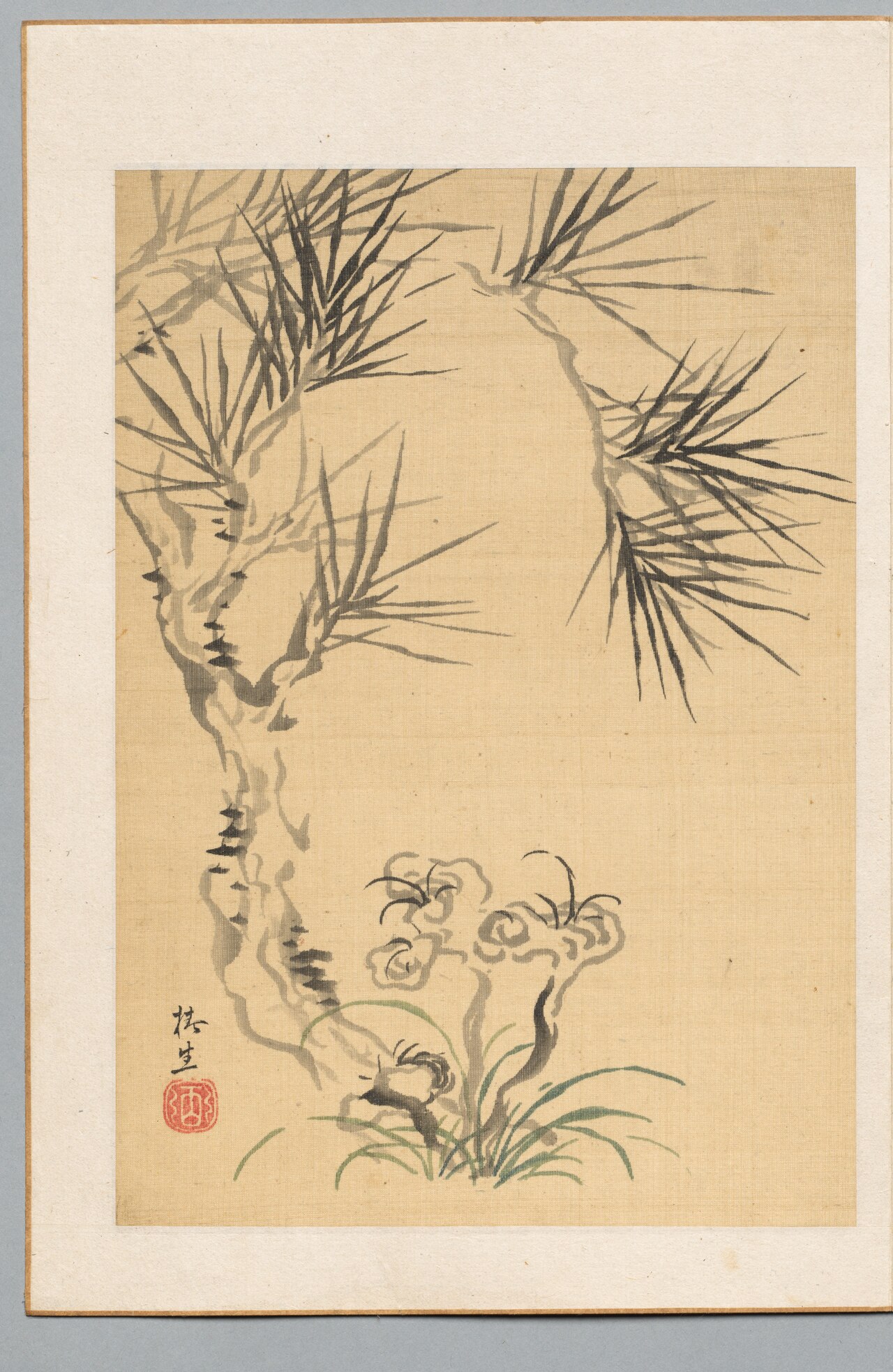
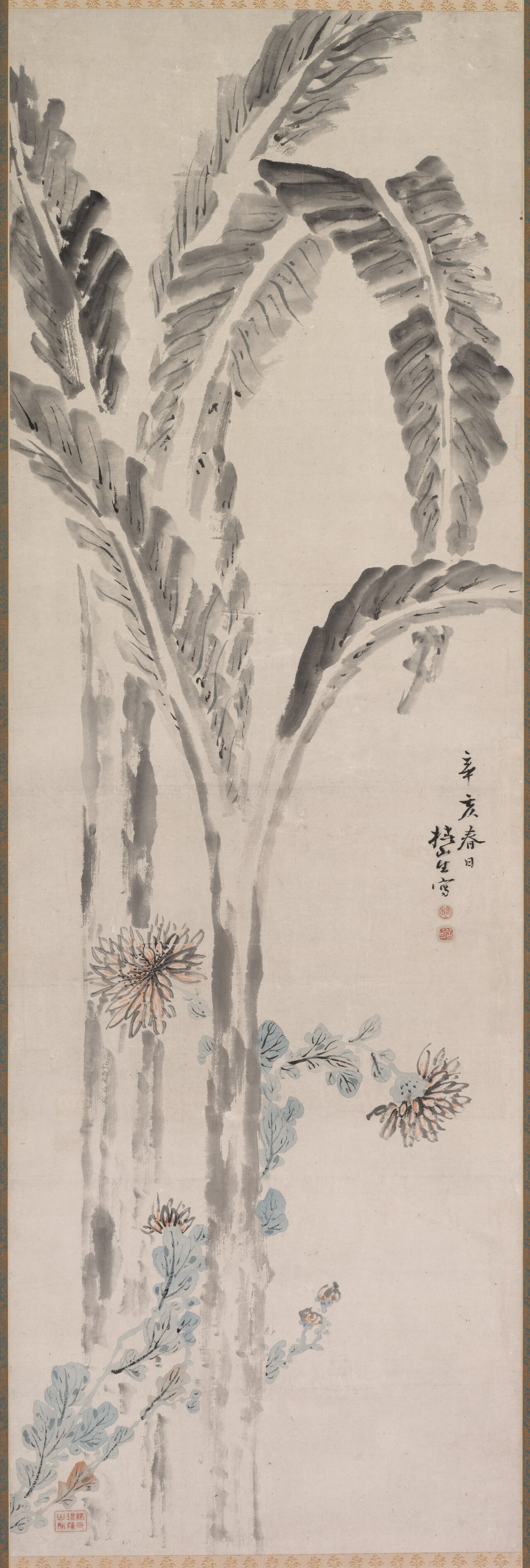
Early life Tsubaki Chinzan was born in 1801 in Edo, the bustling capital of the Tokugawa shogunate. He was originally called Tasuku, a name later replaced by a series of art‑names that reflected his scholarly aspirations: Hekiin Sambō, Kyūan (休庵), Shikyūan (四休庵) and Takukadō (琢華堂). Little is recorded about his family background, but the adoption of multiple pseudonyms and the pursuit of a literati painting style suggest a upbringing that valued education and the arts, typical of the cultured samurai or merchant classes of the period.
Career and style Chinzan began his artistic training in his teens, absorbing the techniques of the nanga movement that had taken root in Japan from the late 18th century onward. Nanga, literally “Southern School,” was a Japanese reinterpretation of Chinese Southern School painting, characterised by an emphasis on personal expression, brush‑driven spontaneity and a scholarly, often poetic, approach to subject matter. Unlike the more formal ukiyo‑e genre, nanga painters favoured ink‑and‑wash media, monochrome palettes, and compositions that evoked the spirit of Chinese literati masters such as Shen Zhou and Wang Yuanqi.
Chinzan’s work shows a clear engagement with these Chinese models, yet he also incorporated distinctly Japanese motifs—mountainous landscapes, native flora and seasonal scenes—creating a hybrid visual language. Throughout the 1820s and 1830s he produced a series of small scrolls and hanging paintings that were circulated among the educated elite of Edo, gaining a reputation for refined brushwork and subtle tonal modulation.
Signature techniques Chinzan’s technique is distinguished by several recurring elements:
* Ink wash layering – He built atmospheric depth by applying successive washes of ink, allowing earlier layers to dry before adding softer tones. This produced a sense of mist and distance that is typical of nanga landscapes. * Controlled spontaneity – While his strokes appear free, they are carefully calibrated; the brush is held at a slight angle to produce varied line weight, a hallmark of Chinese literati training. * Use of negative space – Empty areas of the paper are not merely background but an active component of composition, suggesting clouds, water or the intangible spirit of the subject. * Elegant calligraphic integration – Chinzan often incorporated his own poetry or seal inscriptions into the painting, merging visual and literary art forms. * Colour accents – Though primarily monochrome, he occasionally introduced restrained colour—most notably delicate reds or greens—to highlight focal points such as blossoms or the plumage of birds.
These techniques together give his paintings a contemplative mood, inviting the viewer to linger on the subtle interplay of light, shadow and texture.
Major works Chinzan’s surviving oeuvre includes several dated pieces that illustrate the breadth of his interests.
* Portrait of Yue Fei (1850) – This work depicts the legendary Song‑dynasty general revered in Chinese culture for his loyalty. Chinzan renders Yue with a dignified yet understated presence, employing a restrained ink wash for the background and a precise brush for the facial features. The portrait reflects Chinzan’s deep respect for Chinese historical subjects, a common trait among nanga painters. * Paradise Flycatchers amid Flowering Branches (1852) – In this composition, a pair of brightly coloured flycatchers perches among blossoming branches, their feathers rendered with fine, coloured strokes that contrast against the subdued ink wash of the bark. The piece demonstrates Chinzan’s ability to combine the vivid naturalism of Japanese bird‑painting with the poetic ambience of nanga. * Deep and Quiet Bamboo Grove by a Ravine (1849) – Here the artist captures the quiet strength of bamboo stalks bending gently beside a narrow ravine. The bamboo is executed with swift, rhythmic strokes that convey both movement and stability, while the surrounding rocks and water are suggested through soft washes, creating a harmonious balance. * Pine Tree and Fungus (1837) – One of his earlier dated works, this painting juxtaposes an ancient pine, symbolising longevity, with a cluster of mushrooms that hint at hidden life. The pine’s rugged bark is detailed with deliberate, angular lines, whereas the fungi are suggested with delicate stippling, illustrating Chinzan’s skill in rendering diverse textures. * Banana Plant and Chrysanthemum (1837) – This work pairs an exotic banana plant—a motif occasionally adopted by Japanese artists to denote foreign influence—with a chrysanthemum, a flower associated with autumn and the imperial court. The composition balances the bold, large‑leafed banana fronds against the refined, layered petals of the chrysanthemum, reflecting Chinzan’s interest in contrasting domestic and foreign botanical subjects.
These works collectively showcase Chinzan’s versatility, ranging from portraiture to landscape and botanical studies, all filtered through a consistent nanga sensibility.
Influence and legacy Although Chinzan did not found a distinct school, his paintings contributed to the continued vitality of the nanga movement during the late Edo period. By integrating Japanese iconography with Chinese literati techniques, he helped the style remain relevant as Japan approached the political upheavals of the Meiji Restoration. Later artists such as Yokoyama Taikan and Kiyokata Sawahiko, who explored the synthesis of traditional ink painting with modern aesthetics, can trace part of their lineage to the groundwork laid by painters like Chinzan.
His works are now held in several Japanese museum collections, including the Tokyo National Museum and the Kyoto National Museum, where they are displayed alongside other nanga masters to illustrate the evolution of the style. Scholars cite Chinzan as a representative figure of the “late nanga” period, noting his careful balance of scholarly restraint and emotive brushwork.
In contemporary art‑history circles, Chinzan is valued not only for the visual qualities of his paintings but also for the cultural dialogue his art embodies—bridging Chinese literary tradition and Japanese aesthetic concerns. As research on Edo‑period painting expands, his signed pieces continue to provide insight into the transmission of artistic ideas across East Asia and the ways Japanese artists negotiated their own identity within that exchange.
Frequently asked questions
Who was Tsubaki Chinzan?
Tsubaki Chinzan (1801–1854) was a Japanese Edo‑period painter who worked in the nanga, or Southern School, style, creating works that blended Chinese literati influences with Japanese subjects.
What artistic movement or style is he associated with?
He is associated with the nanga movement, a Japanese adaptation of Chinese Southern School painting that emphasizes ink wash, personal expression and scholarly themes.
What are his most famous works?
Among his most recognised pieces are Portrait of Yue Fei (1850), Paradise Flycatchers amid Flowering Branches (1852), Deep and Quiet Bamboo Grove by a Ravine (1849), Pine Tree and Fungus (1837) and Banana Plant and Chrysanthemum (1837).
Why does Tsubaki Chinzan matter in art history?
He helped sustain the nanga tradition into the late Edo period, merging Chinese literary aesthetics with Japanese motifs, and his work influenced later modern‑Japanese painters who sought to reconcile tradition and innovation.
How can I recognise a Tsubaki Chinzan painting?
Look for finely rendered ink washes, a balanced use of negative space, subtle colour accents, and often a poetic inscription or seal; his subjects frequently combine Japanese flora or birds with a calm, literati‑style composition.