Tanomura Chikuden
1777 – 1835
In short
Tanomura Chikuden (1777–1835) was a Japanese painter and Confucian scholar of the Edo period. He is noted for his literati‑style landscapes, calligraphy and a small body of works that blend Chinese artistic principles with Japanese sensibilities.
Notable works


_-_2023.583.26a,_b_-_Metropolitan_Museum_of_Art.jpg)
Early life Tanomura Chikuden was born in 1777 in the town of Taketa, located in the present‑day Ōita Prefecture on the island of Kyushu. Little is recorded about his family background, but the region was known for its scholarly traditions and a modest level of prosperity that allowed young men to pursue education. From an early age Chikuden displayed a keen interest in Chinese classics, particularly Confucian texts, which shaped his intellectual development and later artistic outlook. He received instruction in calligraphy and classical literature, a common foundation for the educated elite of the Edo period.
Career and style After completing his early education, Chikuden moved to Osaka, a major commercial and cultural centre of western Japan. There he entered the circles of literati artists, a group of scholars‑painter‑calligraphers who sought to emulate the Chinese scholar‑official tradition (the so‑called *nanga* school). While the precise details of his apprenticeship are unclear, his works reveal a strong influence of Chinese ink‑painting techniques, especially those of the Yuan and Ming masters. He combined these influences with native Japanese motifs, producing a style that is both contemplative and subtly decorative. His paintings are characterised by a restrained palette, delicate brushwork, and an emphasis on the spiritual resonance of natural subjects rather than strict realism.
Signature techniques Chikuden’s technique centred on the use of ink washes and fine line work. He employed a varied range of brushstrokes – from the light, almost calligraphic strokes used for bamboo leaves to the broader, more fluid washes that suggest mist or distant mountains. In his landscape compositions he often left portions of the paper untouched, allowing the white space to function as atmospheric depth. His calligraphic pieces, such as the dated 1822 work, display a disciplined yet expressive hand, reflecting his mastery of the Confucian emphasis on moral cultivation through writing. The integration of poetry, seal inscriptions and subtle colour accents (often in muted blues or greens) further distinguishes his paintings.
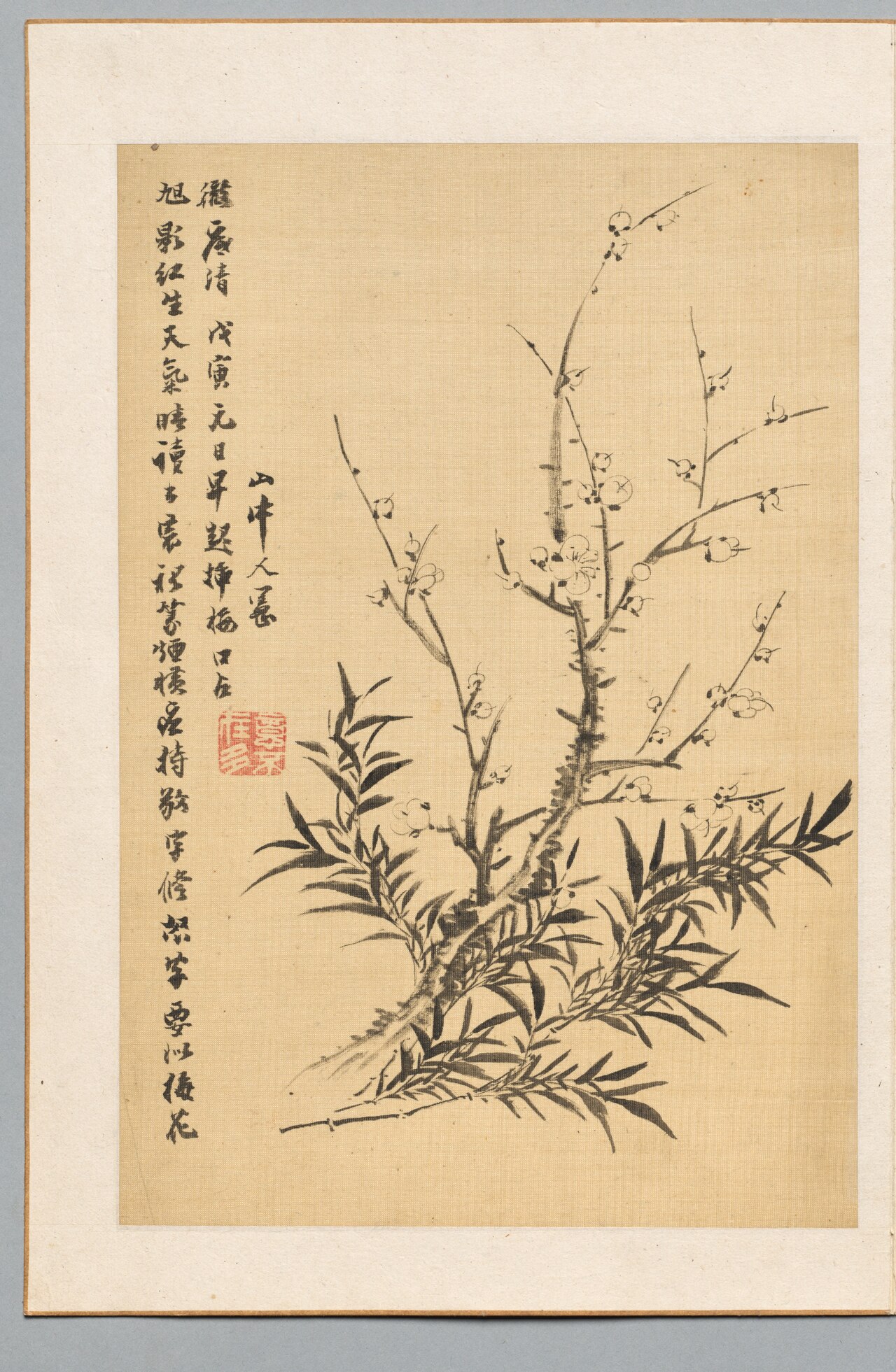
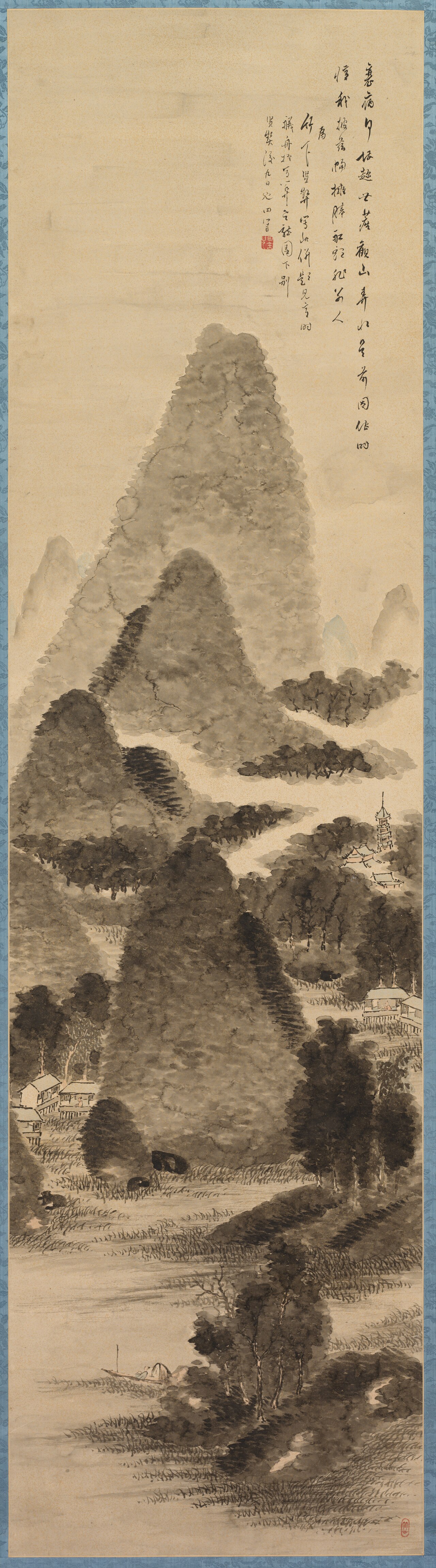
Major works - **Rainstorm over a River Village (1806)** – This early landscape captures a dramatic storm sweeping across a modest settlement. The composition balances turbulent clouds with the calm of the river, using swift, dark strokes to convey rain while retaining delicate details in the village structures. - **Mountain View and Blue Water (1817)** – In this piece Chikuden juxtaposes towering peaks with a tranquil body of water rendered in a soft blue wash. The work exemplifies his skill in rendering depth through layered ink tones and demonstrates his affinity for the philosophical idea of nature as a source of moral reflection. - **Plum Blossoms and Bamboo (1818)** – A classic pairing of two motifs that hold symbolic meaning in East Asian art, the painting presents blossoming plum branches against the resilient bamboo. The contrast between the fleeting beauty of the plum blossoms and the steadfast bamboo underscores Confucian virtues of humility and perseverance. - **Calligraphy (1822)** – Though primarily a painter, Chikuden’s calligraphic work is highly regarded. Executed in a disciplined yet fluid script, the piece reflects his scholarly background and serves as an example of the integration of text and image that was central to literati practice. - **Monkey Offering a Qin to Scholar (異類酬徳図, Irui hōtoku zu, 1833)** – One of his later works, this composition depicts a monkey presenting a lute‑like instrument to a scholar, a motif that conveys the idea of reciprocal virtue. The piece combines narrative content with the artist’s characteristic brushwork, and its subtle humour adds a humanising element to his otherwise solemn oeuvre.
Influence and legacy Tanomura Chikuden occupies a modest yet distinct place in Japanese art history. While not as widely known as some contemporaries, his work provides valuable insight into the cross‑cultural artistic exchanges of the Edo period, particularly the way Japanese artists internalised Chinese scholarly aesthetics. His paintings are cited in studies of the *nanga* movement for their sincere adherence to literati ideals and for the way they merge Chinese brush techniques with Japanese subject matter. Contemporary scholars appreciate Chikuden’s ability to convey philosophical depth through simple, natural scenes, and his surviving works are held in several Japanese museum collections. Though the direct line of influence is difficult to trace, his approach to integrating calligraphy, poetry and painting continues to inform the practice of modern Japanese ink artists seeking a balance between tradition and personal expression.
Frequently asked questions
Who was Tanomura Chikuden?
Tanomura Chikuden (1777–1835) was a Japanese painter and Confucian scholar of the Edo period, known for his literati‑style landscapes and calligraphy.
What artistic style or movement is he associated with?
He is linked to the Japanese literati, or *nanga*, tradition, which adapts Chinese scholar‑official painting techniques to Japanese subjects.
What are his most famous works?
Key works include *Rainstorm over a River Village* (1806), *Mountain View and Blue Water* (1817), *Plum Blossoms and Bamboo* (1818), his 1822 calligraphy piece, and *Monkey Offering a Qin to Scholar* (1833).
Why does Tanomura Chikuden matter in art history?
He exemplifies the Edo‑period synthesis of Chinese literati aesthetics with Japanese themes, offering a nuanced view of cultural exchange and the moral dimensions of art.
How can I recognise a Tanomura Chikuden painting?
Look for restrained ink washes, delicate brushstrokes, ample white space, and motifs such as mountains, water, plum blossoms or bamboo, often combined with subtle colour accents and calligraphic inscriptions.