Sōami
1455 – 1525
In short
Sōami (c.1455–1525) was a Japanese painter of the Ami school, celebrated for his landscape paintings and for advancing ink‑wash techniques that shaped later Japanese art.
Notable works

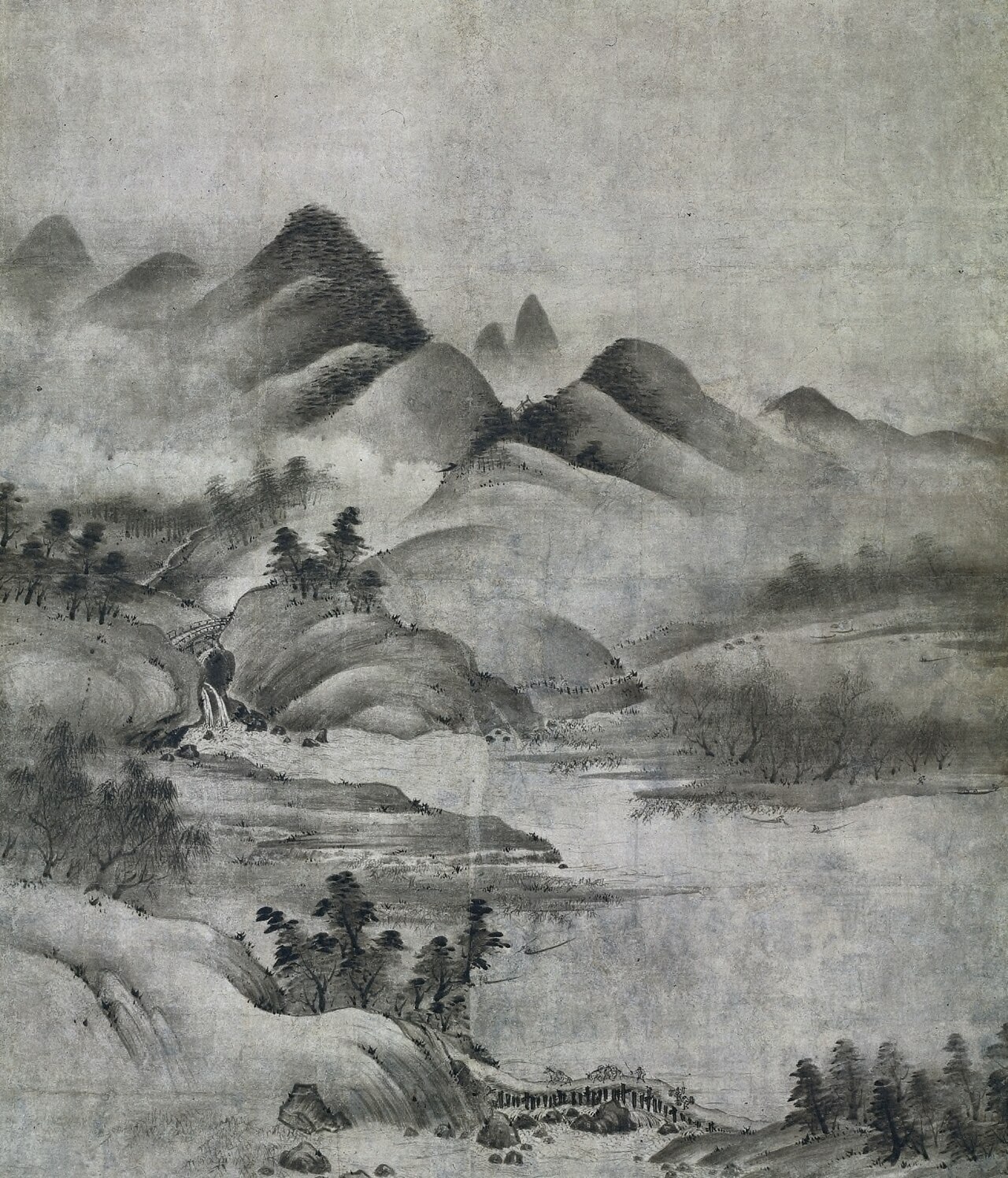
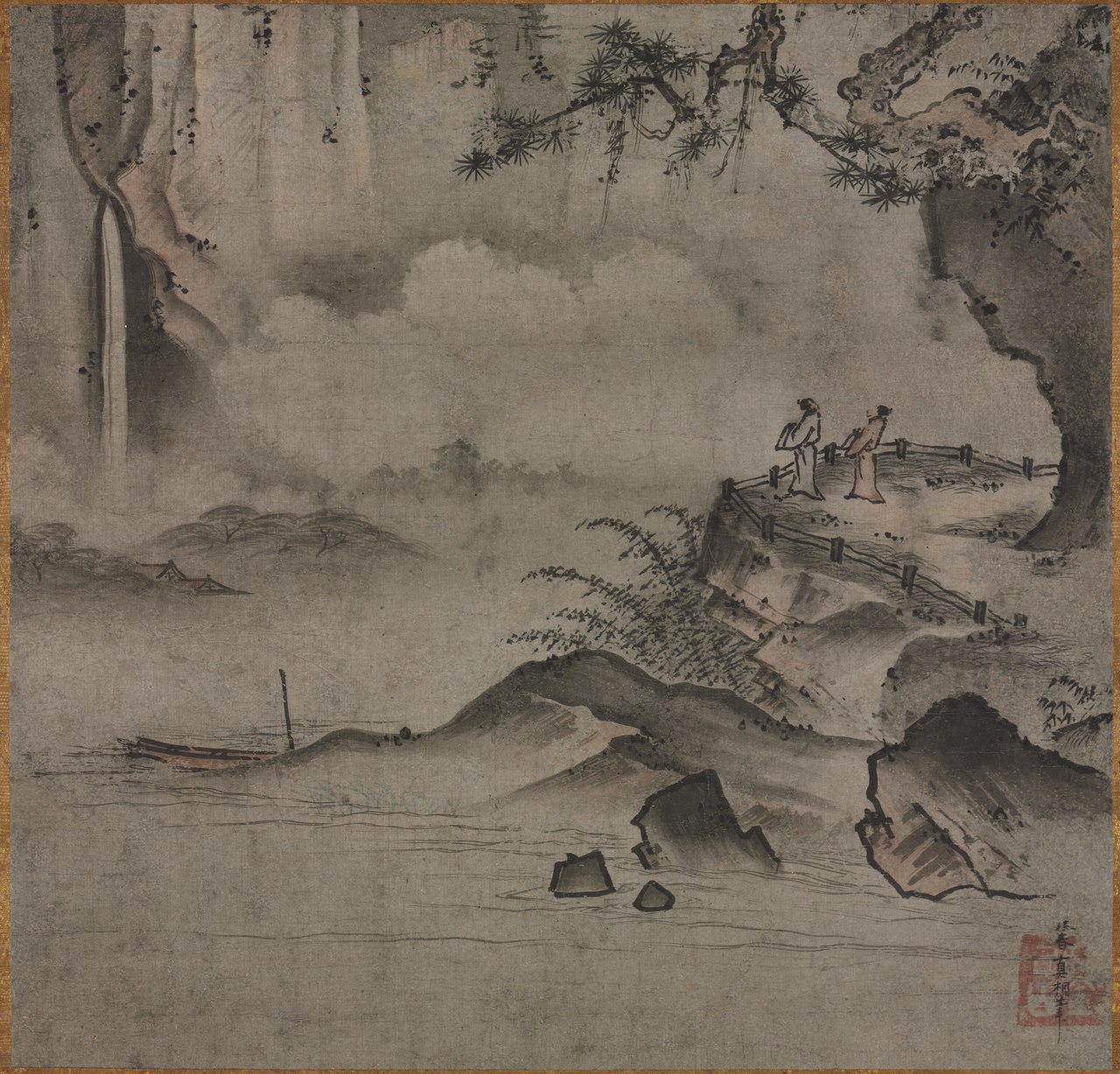


Early life Sōami was born around 1455 in Japan, though the precise location of his birth remains unknown. Contemporary records provide little personal detail, reflecting the common practice of the period where artists were often identified by their school or patronage rather than by individual biography. He is believed to have been trained within the Ami artistic lineage, a family of painters and connoisseurs who served the imperial court and the aristocracy. The Ami tradition emphasized a scholarly approach to painting, integrating Chinese aesthetic principles with native Japanese sensibilities.
Career and style Sōami emerged as a painter during the late Muromachi period, a time when Zen Buddhism and the tea ceremony were profoundly influencing visual culture. His work is situated within the broader Ami school, which combined monochrome ink techniques (suiboku) with a restrained, poetic view of nature. Sōami’s landscapes are characterised by a balance of emptiness and detail, employing subtle gradations of ink to evoke mist, water, and distant mountains. He often composed his scenes on silk or paper scrolls, allowing for a fluid, continuous brushstroke that suggested both immediacy and contemplation.
The artist’s style reflects the principles of wabi‑sabi, valuing simplicity, imperfection, and transience. While drawing inspiration from Chinese Song‑dynasty masters, Sōami adapted these influences to Japanese subjects, favouring local scenery such as waterfalls, pine groves, and temple precincts. His paintings frequently contain a single, dominant element—often a waterfall or a lone tree—set against a vast, mist‑filled background, creating a sense of depth and spiritual solitude.
Signature techniques Sōami’s technical repertoire includes several hallmarks that distinguish his work from that of his contemporaries:
* Monochrome ink wash (suiboku) – He employed a range of ink densities, from faint washes to deep black strokes, to render atmospheric effects. * Dry brush (katsubushi) – By using a relatively dry brush, Sōami achieved textured surfaces that suggest rock faces or foliage without heavy pigment. * Negative space – Large swathes of untouched paper convey mist or sky, allowing the viewer’s imagination to fill the void. * Layered washes – Successive layers of ink create a sense of depth, particularly in water and mountain forms. * Elegant calligraphic brushwork – His lines carry a calligraphic quality, reflecting his training in Chinese brush techniques and his familiarity with poetry.
These methods combined to produce paintings that are both restrained and evocative, capturing the fleeting qualities of the natural world.
Major works The surviving oeuvre attributed to Sōami includes several notable pieces, although the dating of some works is contested due to inconsistencies with his lifespan.
* Shōren‑in Temple (attributed 1150) – This early date predates Sōami’s life, suggesting that the work may be a later copy of an older composition, or that the attribution is symbolic rather than literal. The painting depicts the temple’s garden with a serene arrangement of trees and a reflective pond, employing the same ink‑wash approach that defines Sōami’s style. * Landscape (1512) – A classic example of his mature period, this scroll presents a mountainous scene shrouded in mist. The composition balances bold, dark outlines of distant peaks with delicate, almost translucent washes that suggest atmospheric depth. * Gazing at a Waterfall (1512) – In this work, Sōami captures a cascade of water tumbling over rocky ledges. The waterfall is rendered with swift, vertical strokes, while the surrounding rocks are suggested by subtle ink stippling. The piece exemplifies his ability to convey movement within a static medium. * Ink Landscape (Suiboku sansui zu) (1516) – This painting, whose title translates to “ink landscape,” showcases his refined use of layered washes. A lone pine tree stands on a cliff, framed by distant mountains that fade into mist, embodying the Zen aesthetic of simplicity and contemplation. * Rainy Landscape (attributed 1649) – The date of this piece post‑dates Sōami’s death, indicating that it may be a later work inspired by his style or a misdated attribution. The scene depicts a rain‑soaked terrain where blurred brushstrokes convey the softness of falling rain, reinforcing the atmospheric qualities typical of Sōami’s approach.
These works collectively illustrate Sōami’s command of monochrome media and his contribution to the visual language of Japanese landscape painting.
Influence and legacy Sōami’s impact on Japanese art extended well beyond his own lifetime. By refining the ink‑wash technique, he helped lay the groundwork for the later Edo‑period schools of painting, particularly the Nanga (literati) movement, which prized scholarly brushwork and poetic subject matter. His emphasis on minimalism and the spiritual resonance of nature influenced the aesthetics of the tea ceremony, where the appreciation of simple, natural objects paralleled his artistic philosophy.
Later artists and collectors have repeatedly turned to Sōami’s works as exemplars of the Ami school’s ideals. Even when specific attributions remain uncertain, the stylistic hallmarks he popularised—such as the use of negative space and layered ink washes—are evident in countless subsequent Japanese paintings. Contemporary art historians regard Sōami as a pivotal figure in the transition from the heavily ornamented court paintings of the early Muromachi period to the more introspective, nature‑focused art that defined later centuries.
In summary, Sōami stands as a bridge between Chinese-inspired brush techniques and a distinctly Japanese sensibility, his legacy persisting in the continued appreciation of ink landscape painting across East Asia and beyond.
Frequently asked questions
Who was Sōami?
Sōami (c.1455–1525) was a Japanese painter of the Ami school, known for his landscape paintings and development of ink‑wash techniques.
What style or movement is Sōami associated with?
He is linked to the Ami school, a tradition that blended Chinese monochrome ink painting with Japanese Zen and wabi‑sabi aesthetics.
What are Sōami’s most famous works?
Key works include Landscape (1512), Gazing at a Waterfall (1512), Ink Landscape (Suiboku sansui zu) (1516), and the attributed pieces Shōren‑in Temple and Rainy Landscape.
Why does Sōami matter in art history?
His refined ink‑wash techniques and minimalist approach influenced later Japanese schools, especially the Nanga movement, and helped shape the visual language of Zen‑inspired art.
How can I recognise a painting by Sōami?
Look for monochrome ink washes, extensive use of negative space, delicate layered tones, and a serene, mist‑filled natural scene rendered with calligraphic brushstrokes.