Scarsellino
1550 – 1620
In short
Scarsellino (Ippolito Scarsella, 1550–1620) was an Italian painter from Ferrara, a leading figure of the Ferrarese School whose reformist style blended sacred subjects with pioneering landscape elements, foreshadowing 17th‑century landscape painting.
Notable works

Early life Ippolito Scarsella, commonly known as Scarsellino, was born in 1550 in Ferrara, a vibrant duchy in northern Italy. Ferrara’s court under the Este family had long nurtured a distinctive artistic milieu, and Scarsellino grew up amid the legacy of the Ferrarese School, which prized elegant line, refined colour, and a poetic sensibility. Although documentary evidence of his apprenticeship is scarce, it is widely accepted that he received his formative training locally, absorbing the influence of earlier Ferrarese masters such as Dosso Dossi and Giovanni da Bologna. The city’s exposure to the broader currents of the Italian Renaissance, especially the works of Correggio and Parmigianino, provided a fertile ground for his emerging style.
Career and style Scarsellino’s career unfolded during a period of artistic transition. By the 1570s he had begun to receive commissions for both public and private devotional works, and his reputation spread beyond Ferrara to nearby centers such as Bologna and Rome. He is characterised as a reformist painter: while retaining the graceful Mannerist elongation of figures, he introduced a more naturalistic treatment of space and light. His compositions often place holy figures within expansive, atmospheric landscapes, a departure from the confined interiors that dominated earlier Ferrarese altarpieces. This synthesis of sacred narrative and open scenery anticipates the landscape‑focused genre that would dominate the Baroque era.
Signature techniques Scarsellino’s palette is notable for its luminous, slightly muted tones, achieved through delicate layering of glazes that soften edges and create a gentle atmospheric haze. He employs chiaroscuro to model forms subtly, favouring a diffused light that washes over both figures and surroundings. In his landscapes, atmospheric perspective is achieved by reducing colour intensity and contrast as the terrain recedes, a technique that lends depth without sacrificing the narrative focus. His brushwork is fluid yet controlled, allowing the foliage and clouds to suggest movement while maintaining a cohesive compositional balance. These technical choices contribute to a serene, contemplative mood that distinguishes his works from the more dramatic Mannerist contemporaries.
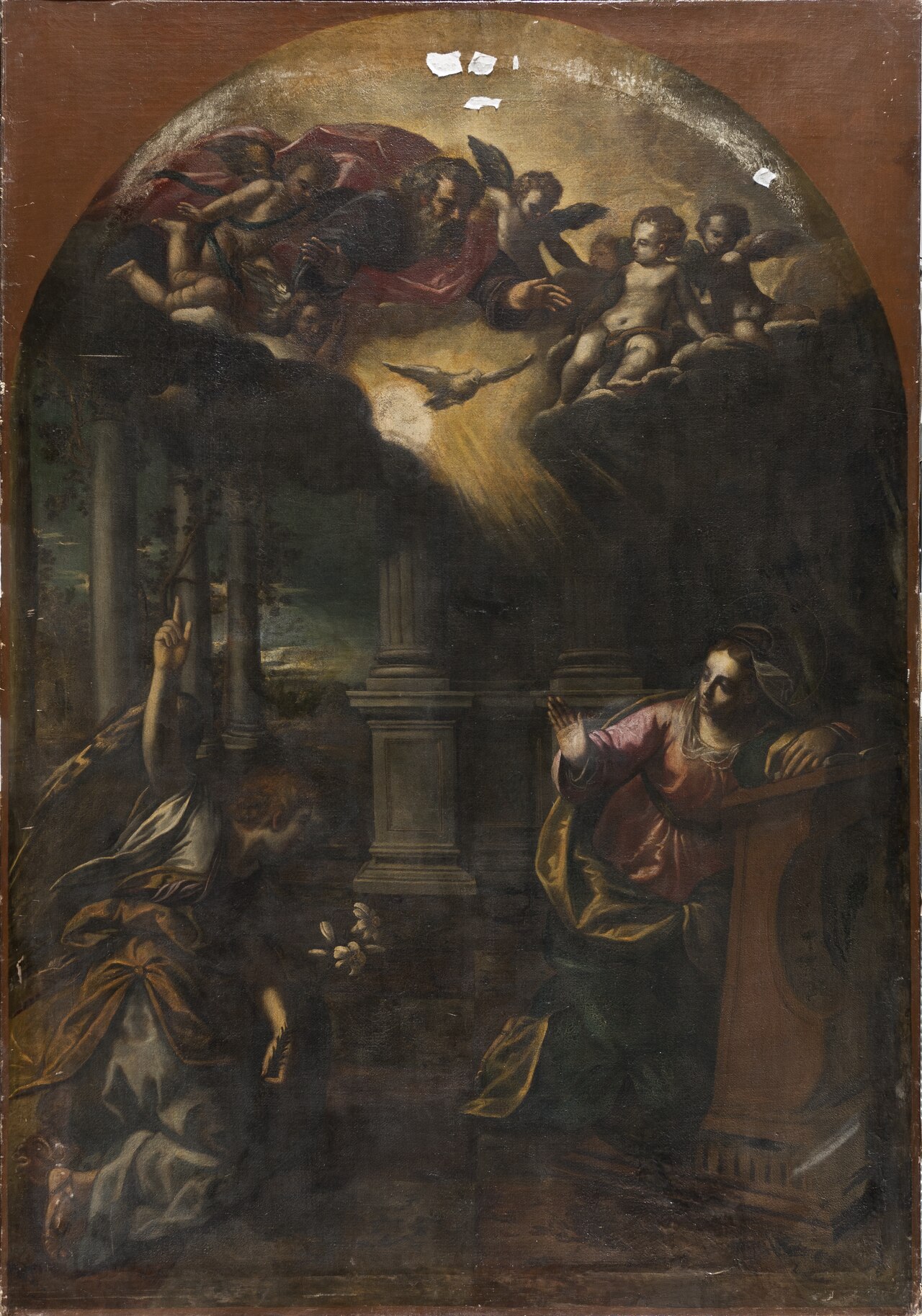
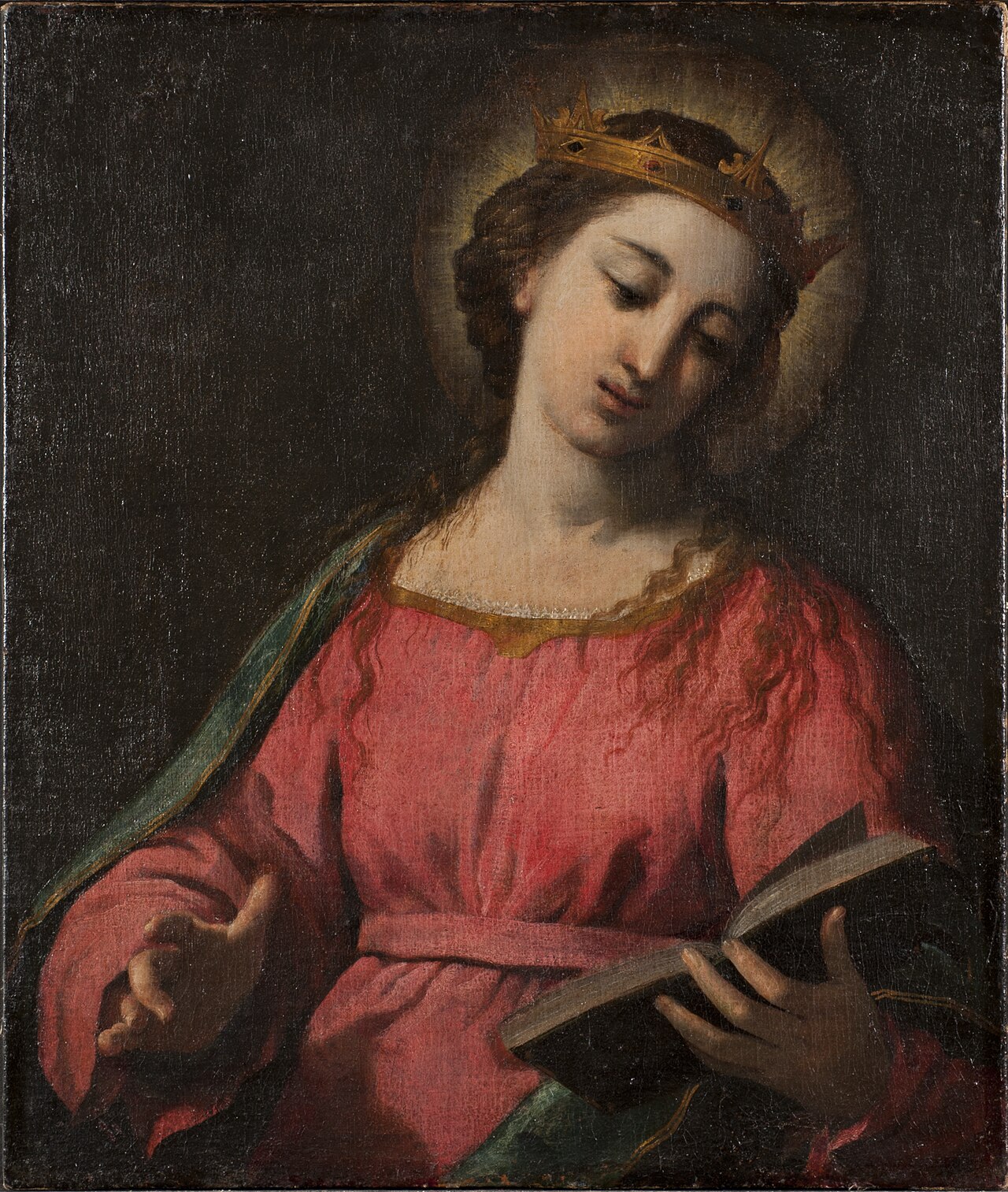
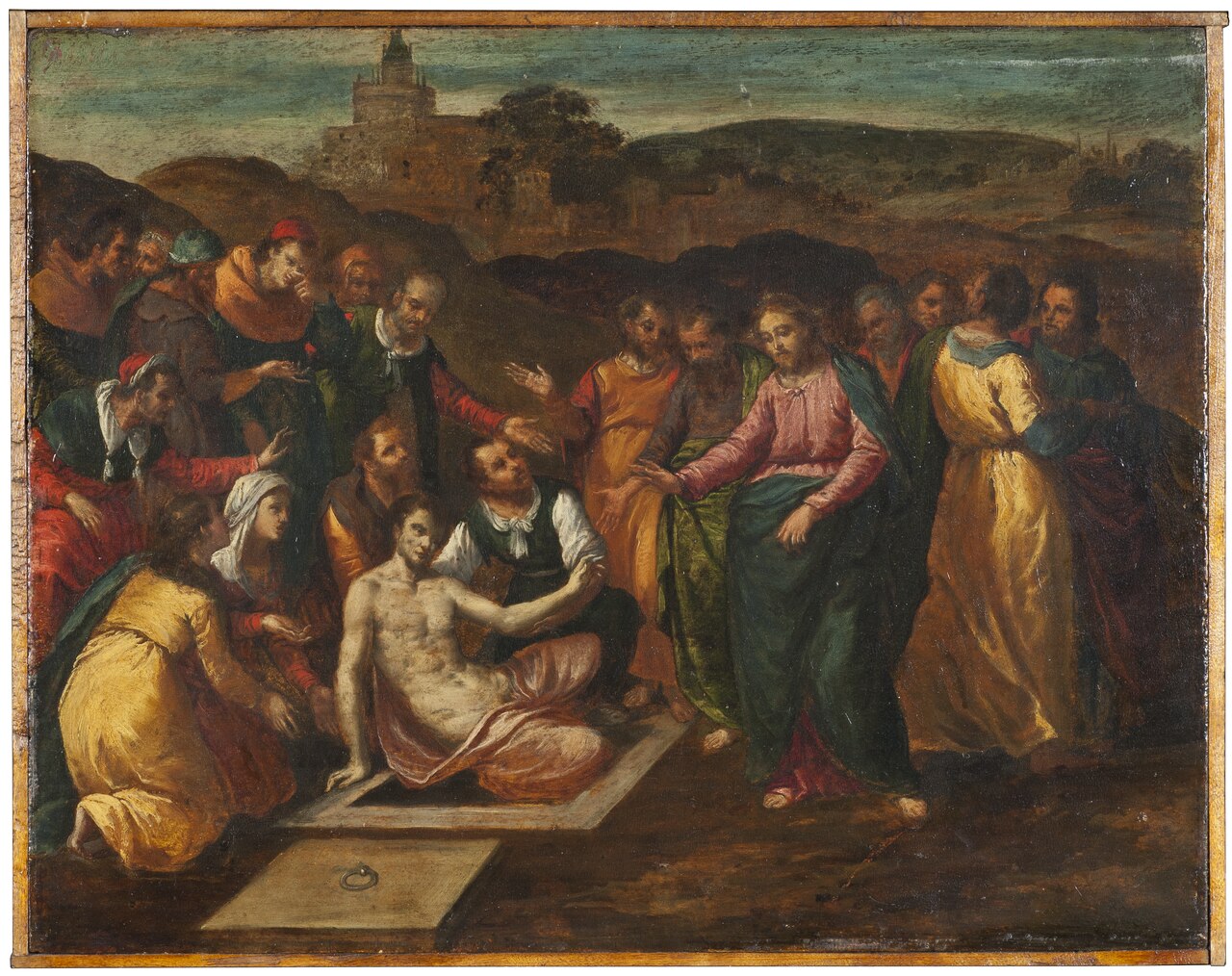
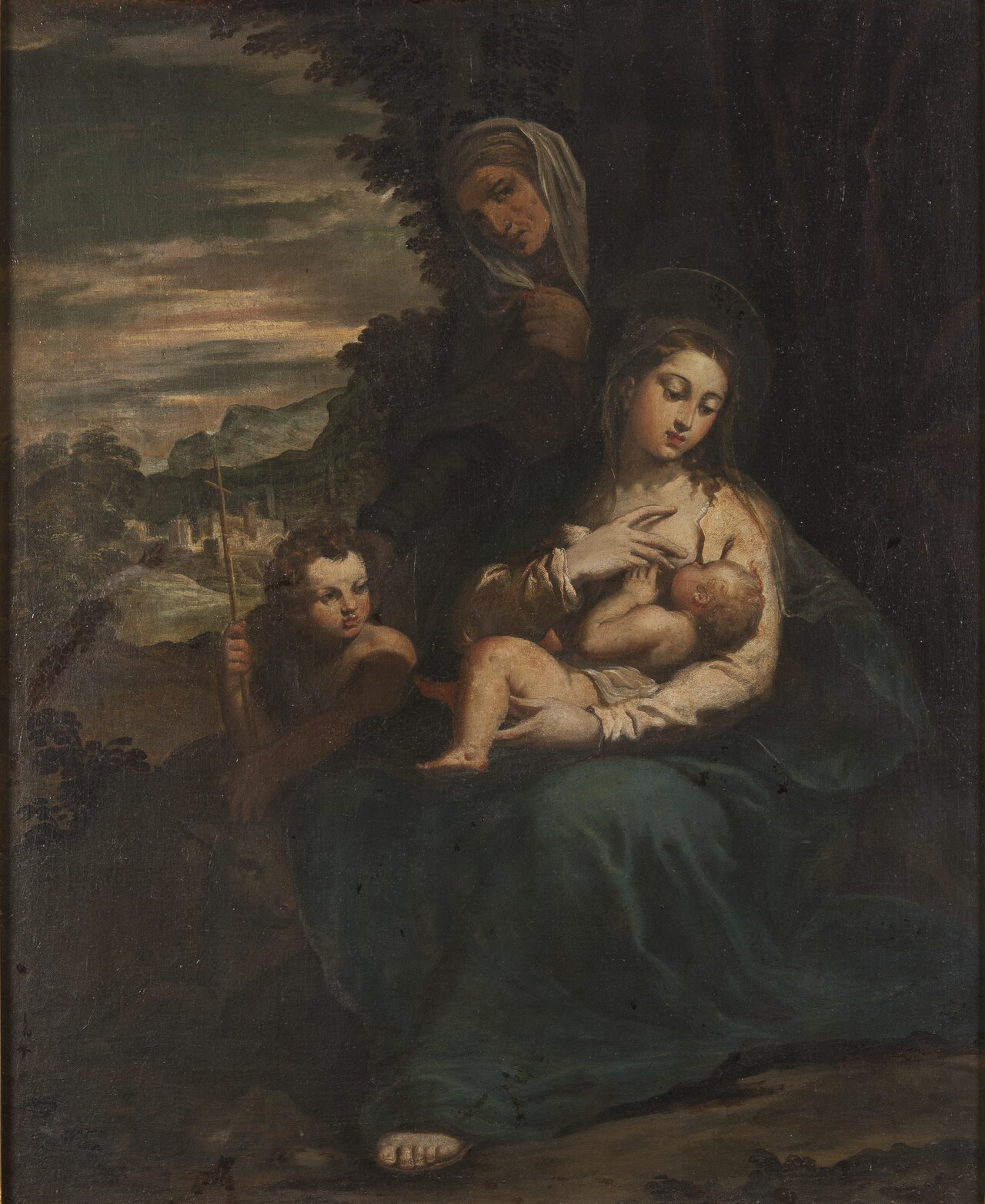
Major works - **The Virgin Adored by Saints (1609)** – This altarpiece, dated 1609, exemplifies Scarsellino’s mature style. The Virgin is centrally positioned on a modest throne, surrounded by a group of saints rendered with serene expressions. Behind them, a gently rolling landscape unfolds, bathed in a soft, golden light that unifies the sacred and natural realms. The work’s balanced composition and subtle colour harmonies illustrate his skill in integrating figures with environment. - **The Annunciation** – Though undated, this composition follows the same compositional logic. The Angel Gabriel appears in a luminous, airy space, while the Virgin occupies a modest interior that opens onto a hinted landscape through an open window. The delicate handling of light underscores the moment’s spiritual significance without resorting to theatrical flamboyance. - **Female Saint** – This single‑figure piece presents a saintly woman in modest attire, set against a tranquil background of trees and distant hills. The figure’s calm posture and the gentle modulation of colour convey a sense of inner devotion, while the surrounding foliage reinforces the painter’s affinity for integrating natural elements. - **The Raising of Lazarus (1650)** – The date attributed to this work post‑dates Scarsellino’s death and is therefore considered uncertain. Scholars often treat the painting as a later attribution or a workshop copy. Nevertheless, the composition—featuring a dramatic biblical miracle framed by a broad, expressive landscape—mirrors the thematic concerns evident in his authenticated oeuvre. - **The Virgin and Child with St Elizabeth and the Infant St John** – In this intimate group portrait, the Virgin and Child are tenderly embraced, while St Elizabeth and the infant St John appear in a subsidiary pose. The backdrop is a verdant, softly illuminated valley, reinforcing the familial bond through a harmonious blend of figure and terrain.
Influence and legacy Scarsellino’s integration of landscape into sacred narrative positioned him as a pivotal bridge between late‑Renaissance Mannerism and the emerging Baroque sensibility. His works influenced younger Ferrarese artists, who adopted his atmospheric treatment of space and his gentle, colour‑rich palette. Moreover, his approach to landscape foreshadowed the more naturalistic depictions of the 17th‑century Italian school, contributing to the evolution of landscape painting as an independent genre. Although his name may not be as widely recognised as some of his contemporaries, art historians regard Scarsellino as a key figure in the diffusion of reformist ideals across northern Italy, and his paintings continue to be studied for their subtle synthesis of figure, light, and environment.
Frequently asked questions
Who was Scarsellino?
Scarsellino, born Ippolito Scarsella (1550–1620), was an Italian painter from Ferrara who became one of the leading representatives of the Ferrarese School, known for merging sacred subjects with pioneering landscape elements.
What artistic style or movement is Scarsellino associated with?
He is generally described as a reformist painter within the late‑Renaissance/Mannerist tradition, whose work anticipates the naturalistic landscape painting that flourished in the 17th century.
What are Scarsellino’s most famous works?
Among his most recognised pieces are *The Virgin Adored by Saints* (1609), *The Annunciation*, *Female Saint*, *The Virgin and Child with St Elizabeth and the Infant St John*, and the attributed *Raising of Lazarus*.
Why is Scarsellino important in art history?
He helped shift the focus of religious painting toward more open, atmospheric settings, influencing later Baroque landscape painters and expanding the expressive possibilities of the Ferrarese School.
How can I recognise a painting by Scarsellino?
Look for a calm, luminous palette, soft modelling of figures, and a seamless blend of sacred subjects with gently rolling, atmospheric landscapes that create a serene, contemplative mood.