Samuel Shelley
1750 – 1808
In short
Samuel Shelley (1750–1808) was a British miniaturist and watercolour painter known for his delicate portrait miniatures and genre scenes. Working mainly in London, he produced a range of works from intimate studies of children to elaborate literary subjects.
Notable works


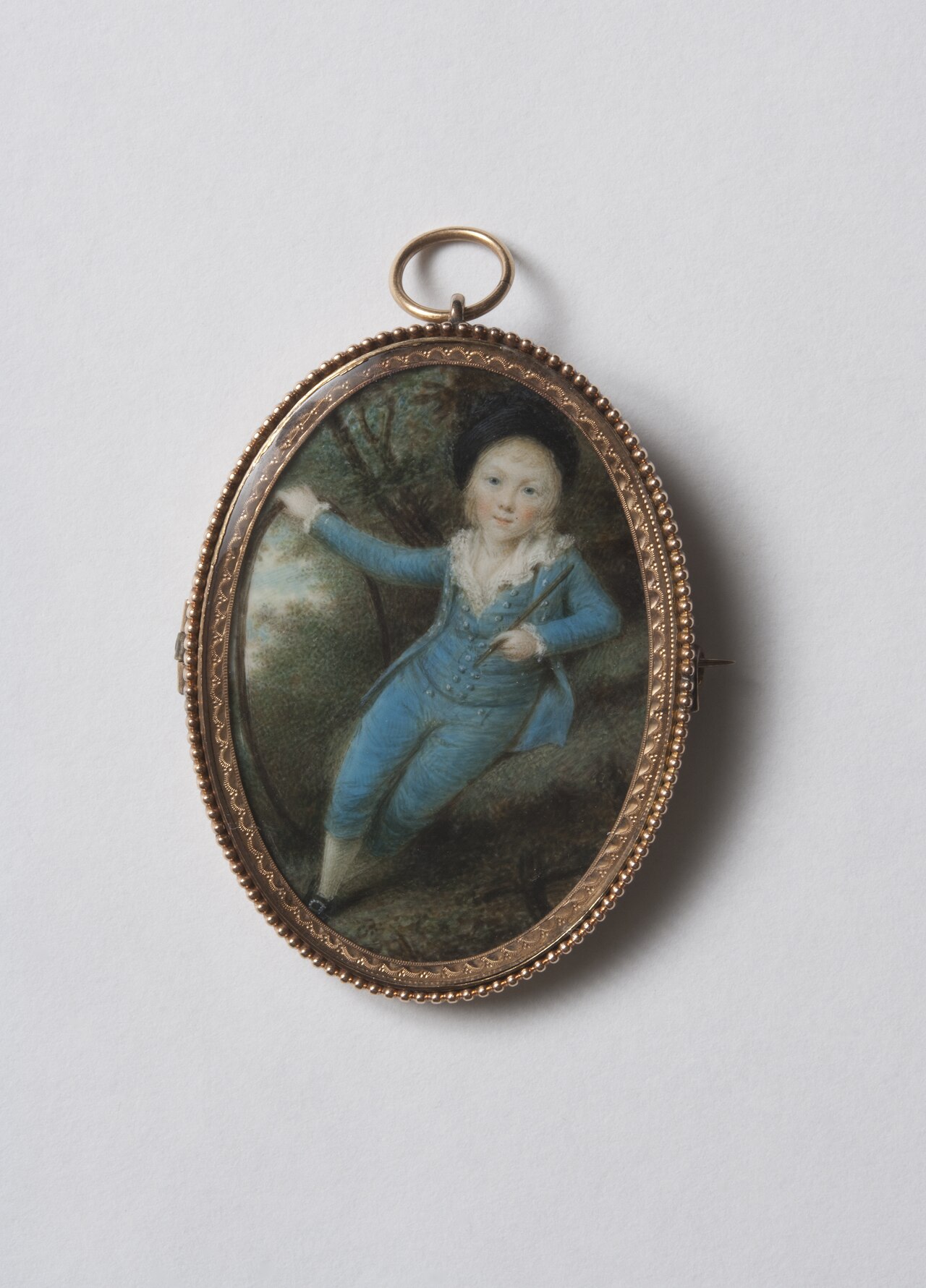
.jpg)

Early life Samuel Shelley was born in 1750 in the Whitechapel district of London, a bustling area that was home to a variety of artisans and tradespeople. Little is recorded about his family background, but the proximity to the city's artistic hubs suggests he was exposed to the visual culture of the capital from an early age. He likely received his initial training through apprenticeships common to the period, where young artists learned drawing, pigment preparation, and the precise brushwork required for miniature painting. By the late 1770s Shelley was establishing himself as a competent draftsman, a skill set that would underpin his later success in both miniature portraiture and watercolour.
Career and style Shelley’s professional career unfolded during a period when miniature painting enjoyed considerable popularity among the British middle and upper classes. Miniatures served both as personal mementos and as fashionable decorative objects, often set in ivory or vellum and displayed in lockets or brooches. Shelley capitalised on this market, producing a steady output of portrait miniatures that were praised for their fine detail and subtle colour harmonies. In addition to miniatures, he worked in watercolour, a medium that was gaining acceptance as a legitimate artistic practice rather than merely a sketching tool. His watercolours display a lightness of touch and an emphasis on atmospheric effects, aligning him with the broader English watercolour tradition that included artists such as Thomas Girtin and J.M.W. Turner.
While Shelley is not formally attached to any specific art movement, his work reflects the transitional aesthetic of late‑18th‑century Britain, balancing the Rococo’s decorative elegance with the emerging sensibility of the Romantic era. His subjects range from intimate domestic scenes to literary and historical narratives, indicating a versatile approach that appealed to diverse patronage.
Signature techniques Shelley’s miniatures are distinguished by a meticulous handling of fine brushwork, often employing a single‑hair brush to render delicate facial features and textile textures. He favoured a restrained palette of muted pinks, soft blues, and warm ochres, which lent his portraits a naturalistic yet refined appearance. In watercolour, he employed washes of translucent pigment to suggest depth and light, frequently layering washes to achieve nuanced tonal variation. His compositional choices often centre the figure against a simple, unobtrusive background, allowing the sitter’s expression and attire to dominate the visual field. These techniques, combined with a careful rendering of light on skin and fabric, create a sense of immediacy and intimacy that is characteristic of his oeuvre.
Major works Among Shelley’s documented works, **"Unknown Boy" (1782)** is an early example of his talent for capturing youthful innocence; the portrait’s soft modelling and subtle colour modulation reveal a sensitivity to the sitter’s emotional state. **"Portrait of a Man" (1800)** demonstrates his mature command of miniature portraiture, with a keen attention to the subject’s attire and a refined rendering of facial expression that conveys both status and personality. **"The Hours" (1801)** departs from strict portraiture, presenting an allegorical scene that reflects contemporary interests in classical mythology and the passage of time. **"Humphrey Repton" (1802)** is a portrait of the celebrated landscape gardener, illustrating Shelley’s ability to convey the intellectual vigor of his subjects through nuanced expression and thoughtful composition. Finally, **"Prince Rasselas and His Sister Conversing in Their Summer Palace on the Banks of the Nile" (1804)** showcases Shelley’s narrative ambition; the work combines a literary theme with an exotic setting, rendered in delicate watercolour that captures both the intimacy of the conversation and the atmospheric qualities of the imagined locale.
Influence and legacy Samuel Shelley’s contributions to British miniature painting and watercolour helped sustain the popularity of these media at a time when larger oil paintings were beginning to dominate the public sphere. Though he did not achieve the lasting fame of some contemporaries, his works were exhibited at the Royal Academy and collected by patrons who valued his refined technique. Shelley’s miniatures served as reference points for later artists who sought to balance realism with decorative elegance, particularly in the realm of portraiture. Moreover, his willingness to engage with literary and exotic subjects anticipates the thematic expansion seen in early‑19th‑century British art, where narrative and imagination became increasingly important. Today, his paintings are held in several public collections, where they continue to be studied for their technical mastery and as exemplars of the transitional aesthetic bridging the Georgian and Romantic periods.
Frequently asked questions
Who was Samuel Shelley?
Samuel Shelley (1750–1808) was a British miniaturist and watercolour painter known for his finely rendered portrait miniatures and genre scenes.
What style or movement is he associated with?
He is not linked to a specific movement, but his work reflects the late‑18th‑century British taste that blends Rococo elegance with early Romantic sensibility.
What are his most famous works?
Key works include "Unknown Boy" (1782), "Portrait of a Man" (1800), "The Hours" (1801), "Humphrey Repton" (1802), and "Prince Rasselas and His Sister Conversing in Their Summer Palace on the Banks of the Nile" (1804).
Why does Samuel Shelley matter in art history?
Shelley helped sustain the miniature portrait tradition in Britain and demonstrated the versatility of watercolour, influencing later artists who valued technical precision and intimate subject matter.
How can I recognise a Samuel Shelley painting?
Look for delicate brushwork, a muted colour palette, finely modelled faces, and often a simple background that highlights the sitter’s expression and attire.