Samuel Lover
1797 – 1868
In short
Samuel Lover (1797–1868) was an Irish songwriter, composer, novelist, and portrait painter known for his miniature portraits; he also wrote under the pseudonym "Ben Trovato" and was the grandfather of composer Victor Herbert.
Notable works
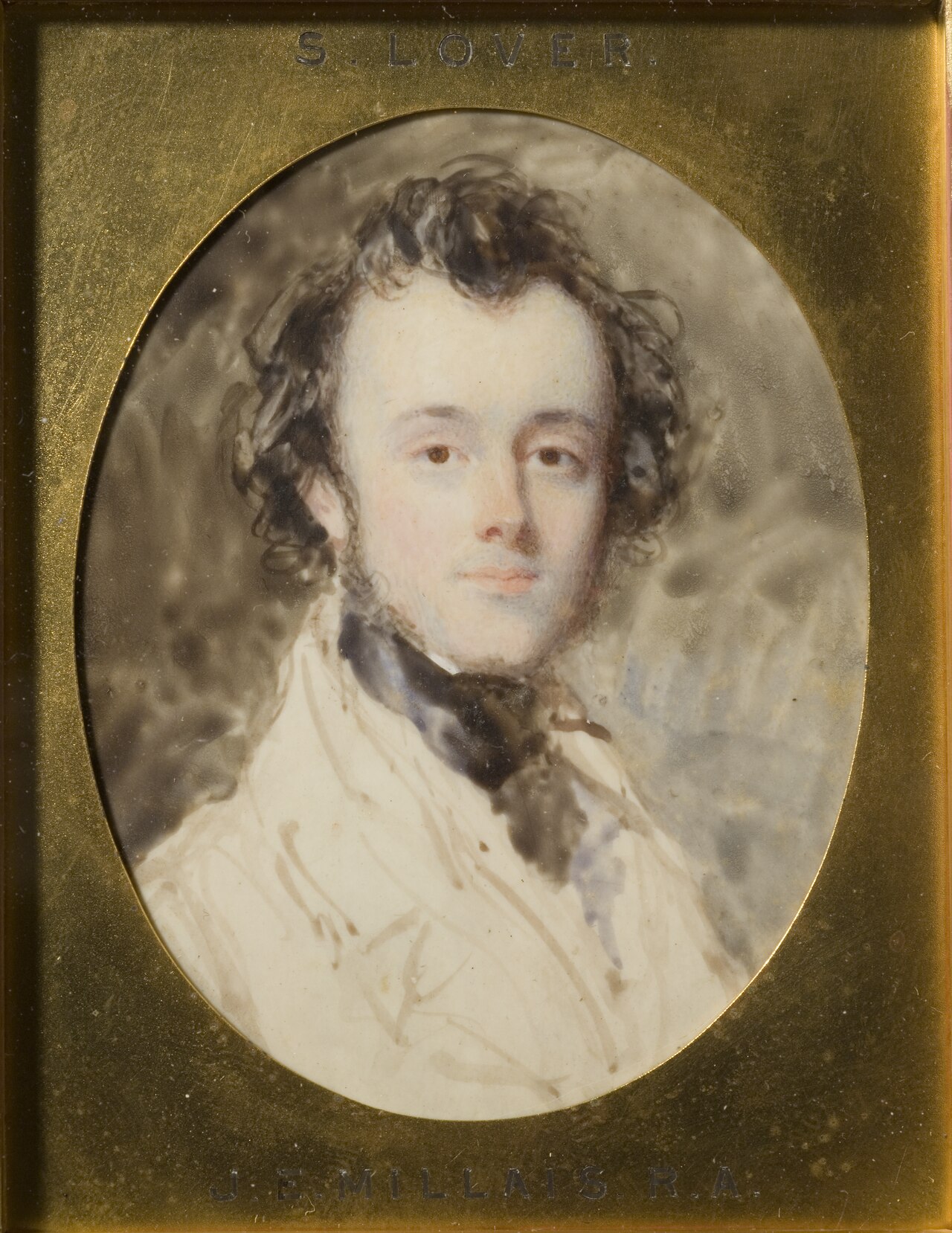


Early life Samuel Lover was born in 1797 in Dublin, the capital of what was then the United Kingdom of Great Britain and Ireland. He grew up in a culturally vibrant environment that combined Irish literary traditions with the broader artistic currents of the British Isles. Little is recorded about his formal education, but his early exposure to Dublin's theatrical and musical circles fostered a lifelong interest in both the visual and literary arts. Lover's family background provided him with the social connections that would later support his multidisciplinary career.
Career and style Lover's professional life was unusually eclectic. He first achieved public recognition as a songwriter and composer, producing popular ballads that circulated widely in Irish homes and pubs. His lyrical talent extended to prose, and he published several novels and short stories that reflected contemporary Irish society. Parallel to his literary output, Lover cultivated a reputation as a portrait painter, specializing in miniatures—a genre that demanded meticulous brushwork and an intimate scale. His style in miniature portraiture blended the delicate precision of the genre with a subtle sensibility for character, often capturing the sitter’s personality with a restrained yet expressive approach. While Lover was not formally associated with a specific artistic movement, his work reflects the broader 19th‑century British portrait tradition, marked by realism, attention to detail, and a focus on individual likeness.
Signature techniques Lover’s miniatures are distinguished by several recurring technical choices. He employed fine, layered brushstrokes to render skin tones with a luminous quality, using a limited palette that emphasized naturalistic colours. The use of watercolour on ivory or vellum was typical for his miniature works, allowing for a smooth surface that enhanced the translucency of flesh. In larger portrait formats, Lover retained the same meticulous attention to detail, often employing a restrained colour scheme that highlighted the sitter’s features without excessive ornamentation. His compositions frequently place the subject against a simple, neutral background, directing the viewer’s focus to facial expression and hand gestures. These techniques together create a sense of quiet intimacy that is characteristic of his portraiture.
Major works Among Lover’s documented paintings, a few stand out for their historical and artistic significance. **"Sir John Everett Millais, artist (1850)"** depicts the celebrated Pre‑Raphaelite painter John Everett Millais. The portrait captures Millais in a contemplative pose, emphasizing his intellectual presence through a restrained colour palette and careful rendering of facial features. This work illustrates Lover’s ability to portray fellow artists with respect and subtlety.
"Mrs Lover and her Daughter (1830)" is an early example of Lover’s skill in miniature portraiture. The painting presents a mother and child in a domestic setting, rendered with delicate brushwork that conveys tenderness. The intimate scale of the work allows for a nuanced observation of the subjects’ expressions, highlighting Lover’s capacity to convey emotion within the constraints of miniature format.
"Self‑Portrait (1845)" offers insight into Lover’s self‑perception as an artist. In this work, he presents himself with a modest demeanor, focusing on the eyes and hands—tools of his trade. The portrait’s muted tones and precise detailing align with his broader approach to portraiture, emphasizing authenticity over flamboyance.
"Notes at an Irish Election" is a less conventional entry among his oeuvre, reflecting Lover’s involvement in the political and social life of Ireland. While the exact medium is not definitively recorded, the piece likely combines visual observation with narrative elements, mirroring his literary interests. The work underscores his engagement with contemporary events and his capacity to translate civic moments into visual form.
Influence and legacy Samuel Lover’s legacy is multifaceted. As a writer and composer, his songs and stories contributed to the cultural tapestry of 19th‑century Ireland, influencing later Irish songwriters and storytellers. In the visual realm, his miniature portraits preserve a valuable record of Irish and British society, offering historians a window into personal attire, fashion, and social relations of the period. Although he did not align himself with a distinct artistic movement, his adherence to realistic representation and his technical proficiency positioned him within the mainstream of British portraiture.
Lover’s familial connection to Victor Herbert, a prominent early‑20th‑century composer, further extended his artistic lineage. Herbert’s success in American operetta and orchestral music can be traced, in part, to a family tradition of artistic ambition that began with Samuel Lover’s own multidisciplinary pursuits.
In contemporary scholarship, Lover is occasionally cited as an exemplar of the 19th‑century artist who navigated multiple creative domains. His works are held in several public collections, and his miniatures remain of interest to collectors and historians alike. By bridging literature, music, and visual art, Samuel Lover exemplifies the interconnected nature of cultural production in his era, and his contributions continue to inform studies of Irish artistic identity and the broader British portrait tradition.
Frequently asked questions
Who was Samuel Lover?
Samuel Lover (1797–1868) was an Irish songwriter, composer, novelist, and portrait painter, best known for his miniature portraits and his literary works under the pseudonym "Ben Trovato".
What artistic style or movement is he associated with?
Lover was not formally linked to a specific movement; his portraiture follows the 19th‑century British realist tradition, emphasizing precise detail and naturalistic colour.
What are his most famous works?
Key works include the portrait of Sir John Everett Millais (1850), Mrs Lover and her Daughter (1830), his Self‑Portrait (1845), and the politically themed piece Notes at an Irish Election.
Why does Samuel Lover matter in art history?
He provides a rare example of a 19th‑century artist active across music, literature, and visual art, preserving valuable visual records of his time and influencing later Irish cultural figures, notably his grandson Victor Herbert.
How can I recognise a Samuel Lover painting?
Look for miniature portraits rendered in watercolour on ivory or vellum, with fine layered brushstrokes, restrained colour palettes, and simple backgrounds that focus attention on the sitter’s expression and hands.