Robert Dodd
1748 – 1815
In short
Robert Dodd (1748–1815) was a British painter and engraver renowned for his marine scenes, especially depictions of naval battles from the French Revolutionary and Napoleonic Wars. Based in London, he produced detailed works such as HMS Shannon taking USS Chesapeake and The Battle of the First of June.
Notable works


_-_HMS_%27Shannon%27_Taking_USS_%27Chesapeake%27,_1_June_1813_-_BHC0602_-_Royal_Museums_Greenwich.jpg)
_-_The_Battle_of_the_First_of_June,_1794_-_BHC0469_-_Royal_Museums_Greenwich.jpg)
Early life
Robert Dodd was born in 1748 in the Tower Hamlets area of London, a district that was then a bustling hub of maritime commerce. Little is recorded about his family background, but the proximity to the River Thames and the nearby docks would have offered him early exposure to ships, sailors and the visual drama of naval life. Apprenticeship records suggest that he entered the trade of engraving in his teenage years, learning the technical skills that would later underpin his painted and printed works.
Career and style
By the 1770s Dodd had established himself as a competent draftsman and engraver, producing topographical views and ornamental prints for local publishers. The growing public appetite for images of Britain's naval exploits during the French Revolutionary period provided a natural niche for his talents. He began to specialise in marine subjects, a choice that aligned with the patriotic mood of the era and with the commercial demand for vivid accounts of sea battles. Dodd exhibited a number of his works at the Society of Artists and later at the Royal Academy, where his compositions were praised for their narrative clarity and compositional balance.
His style combined a rigorous observational approach with a flair for dramatics. Dodd favoured a relatively restrained colour palette, allowing the whites of sailcloth and the glints of cannon fire to dominate the visual field. He often placed ships against expansive skies or open seas, creating a sense of scale that highlighted both the power of the vessels and the vulnerability of their crews. The narrative thrust of his paintings was reinforced by careful staging of the action, ensuring that viewers could discern the key moments of conflict at a glance.
Signature techniques
Dodd’s background in engraving left a distinctive imprint on his painted works. He employed fine line work to delineate rigging, hull forms and the intricate details of naval architecture, a practice that lent his canvases an almost documentary quality. In addition to line, he utilised chiaroscuro to model the three‑dimensionality of ships, often illuminating the decks with a soft, diffused light that suggested early morning or twilight conditions. His water‑based washes added atmospheric depth, while his use of stippling in the foreground created a textured impression of waves and foam.
Another hallmark of Dodd’s technique was his careful handling of historical accuracy. He consulted contemporary ship plans, naval logs and eyewitness accounts to render the armaments, flags and insignia of each vessel correctly. This scholarly diligence made his works not only aesthetically pleasing but also valuable visual records for historians and naval enthusiasts.
Major works
* English ships in Table Bay, 1787 (1787) – This early marine painting captures a fleet anchored in the South African harbour of Table Bay. Dodd depicts the ships with meticulous rigging and a tranquil sky, underscoring the strategic importance of the Cape as a stopover for British vessels en route to the East Indies.
* Three Views of "Amity Hall" With a View of Dover and the White Cliffs – In this series Dodd turns his eye to the English coastline, offering three complementary perspectives of the historic Amity Hall estate and the iconic white cliffs of Dover. The works blend topographical precision with the atmospheric effects of light on the chalk cliffs, demonstrating his versatility beyond battle scenes.
* HMS Shannon taking USS Chesapeake, 1 June 1813 (1814) – One of Dodd’s most celebrated battle depictions, this painting records the dramatic boarding action in which the British frigate Shannon captured the American vessel Chesapeake. Dodd’s composition places the two ships at a close, almost confrontational distance, allowing the viewer to perceive the intensity of the melee and the smoke of cannon fire.
* The Battle of the First of June, 1794 (1795) – Also known as the Glorious First of June, this work illustrates the decisive British victory over the French fleet. Dodd arranges the fleets in sweeping arcs, using a palette of deep blues and fiery reds to convey both the chaos of combat and the order of naval tactics.
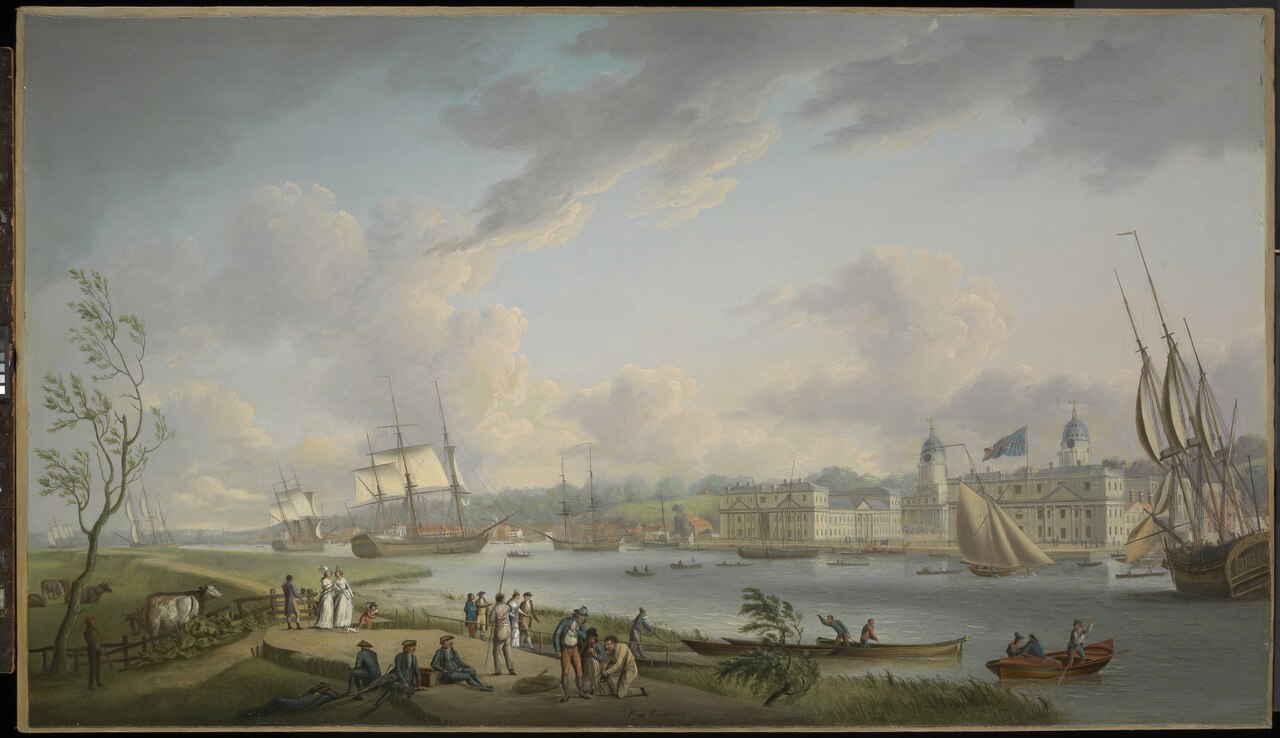
* Greenwich from the Isle of Dogs (1792) – In this topographical marine view Dodd presents the Thames estuary with Greenwich’s historic buildings silhouetted against a calm river. The painting is notable for its accurate rendering of the river’s flow and the subtle interplay of light on water, reflecting Dodd’s keen observational skill.
Across these works Dodd demonstrates a consistent commitment to historical fidelity, compositional drama and a nuanced treatment of light and atmosphere.
Influence and legacy
Robert Dodd’s oeuvre occupies a pivotal place in the development of British marine art. By bridging the documentary precision of engraving with the emotive power of oil painting, he set a standard for later marine painters such as Thomas Luny and William Anderson. His prints were widely circulated, reaching a broad audience that included naval officers, merchants and the general public, thereby shaping contemporary visual narratives of Britain’s maritime dominance.
Collections of Dodd’s works are held by major institutions, including the National Maritime Museum in Greenwich and the British Museum, where his prints continue to serve as primary sources for scholars of naval history. Modern exhibitions of 18th‑century marine art frequently cite Dodd as a reference point for the period’s aesthetic and technical conventions.
In academic circles Dodd is recognised not only for his artistic skill but also for his contribution to the visual documentation of the French Revolutionary and Napoleonic conflicts. His meticulous attention to ship design and battle chronology provides valuable corroboration for written histories. As a result, his paintings and engravings remain essential resources for researchers, curators and collectors interested in the intersection of art and naval warfare.
Overall, Robert Dodd’s legacy endures through the continued appreciation of his vivid marine scenes, the preservation of his prints in public collections, and his influence on subsequent generations of artists who sought to capture the drama of the sea and the ships that traversed it.
Frequently asked questions
Who was Robert Dodd?
Robert Dodd (1748–1815) was a British painter and engraver best known for his detailed marine paintings and prints of naval battles.
What artistic style or movement is he associated with?
He worked within the tradition of British marine art, combining documentary engraving techniques with the dramatic composition of late‑18th‑century painting.
What are his most famous works?
His most celebrated pieces include HMS Shannon taking USS Chesapeake (1814), The Battle of the First of June (1795), English ships in Table Bay (1787), Greenwich from the Isle of Dogs (1792) and the three‑view series of Amity Hall.
Why is Robert Dodd important in art history?
Dodd’s work provides a visual record of Britain’s naval power during the French Revolutionary and Napoleonic Wars and set a high standard for accuracy and drama in marine painting.
How can I recognise a Robert Dodd painting?
Look for precise line work, accurate ship details, a restrained colour palette, and a composition that places vessels against expansive skies or seas, often with a focus on a decisive moment of battle.