Richard Brakenburgh
1650 – 1702
In short
Richard Brakenburgh (1650–1702) was a Dutch Golden Age painter from Haarlem, recognised for his lively genre scenes of everyday Dutch life, including works such as Country Inn (1681) and The Feast of St. Nicholas (1685).
Notable works


_-_Interieur_mit_Trinkgesellschaft_-_2050_-_F%C3%BChrermuseum.jpg)
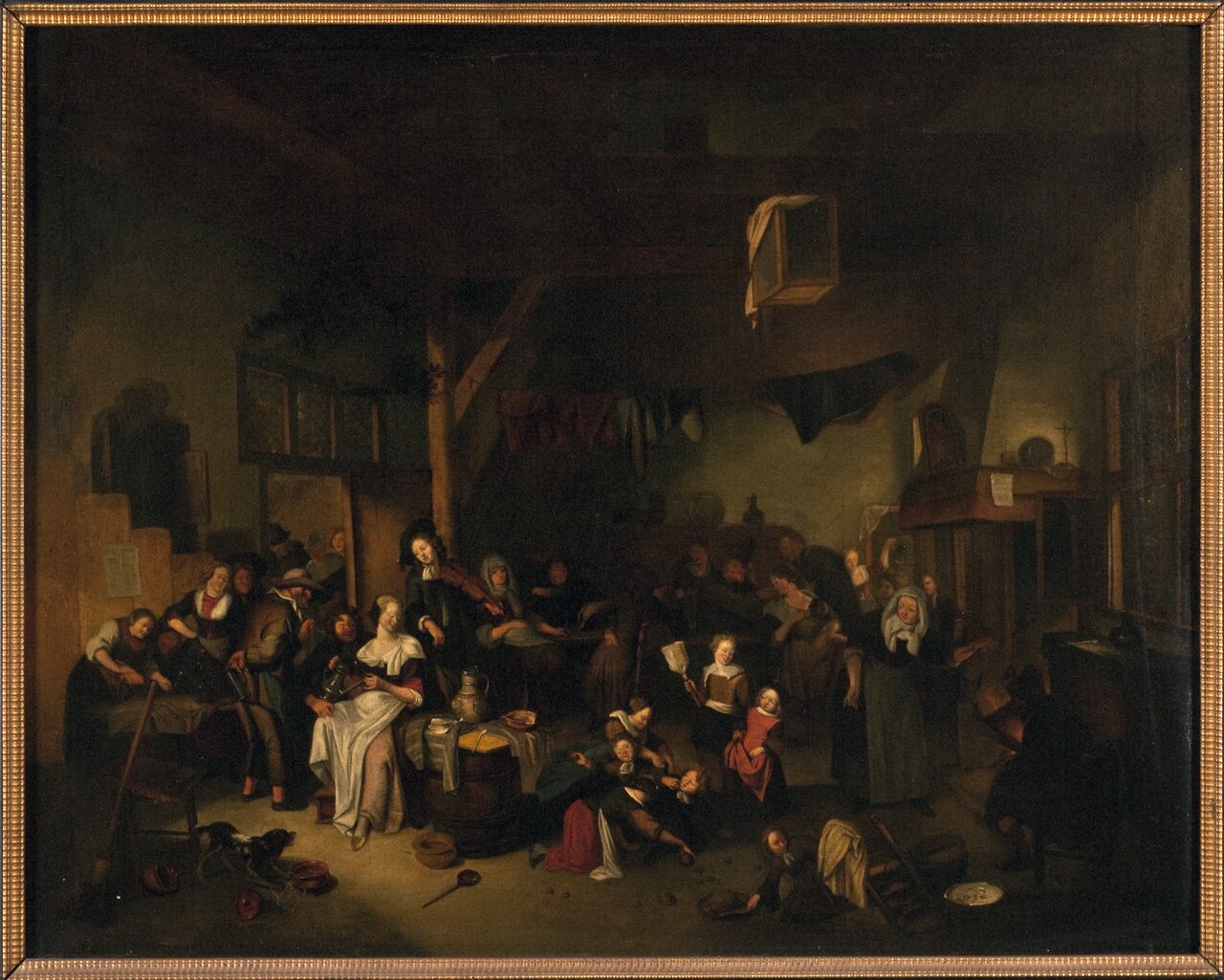
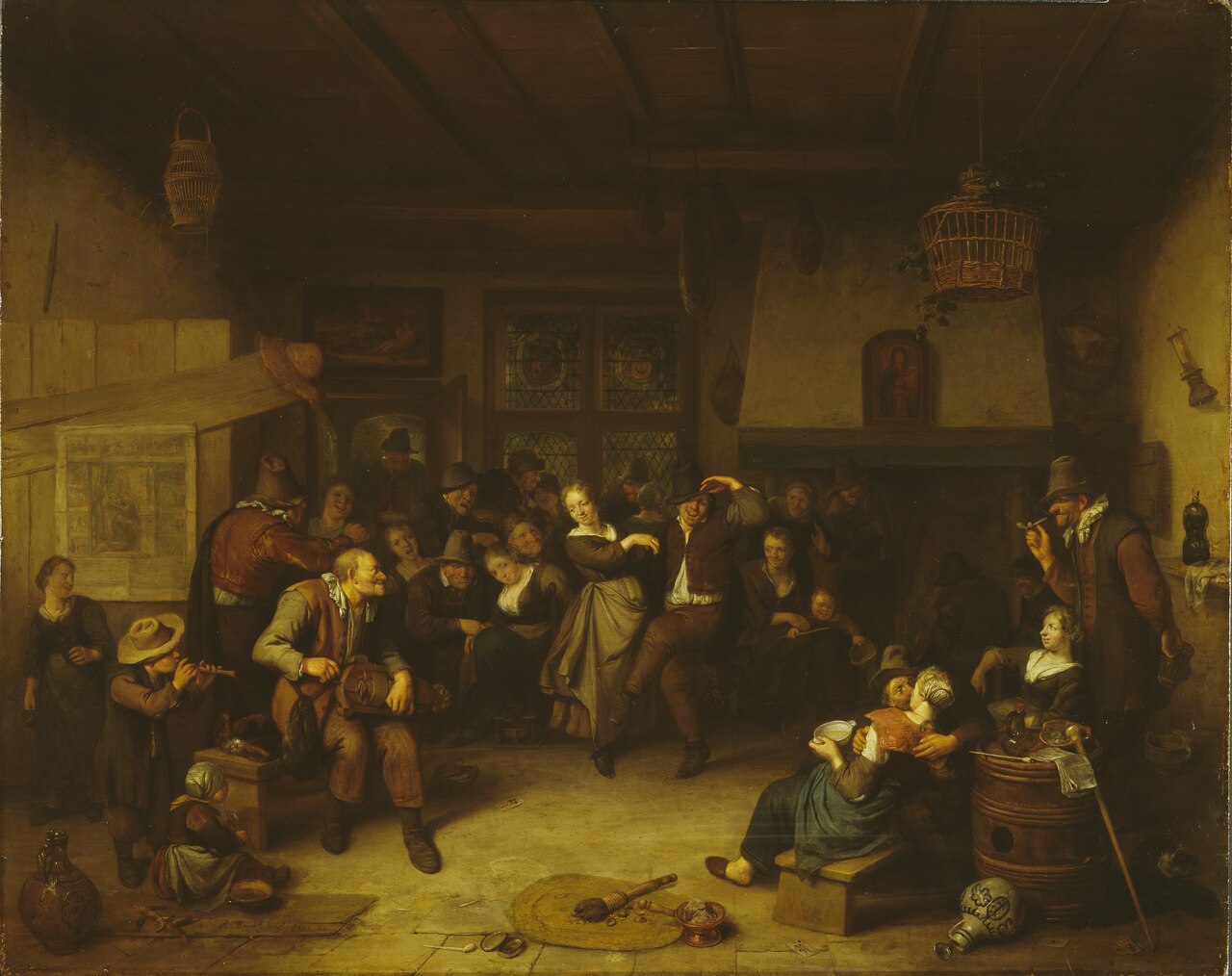
Early life Richard Brakenburgh was born in 1650 in the bustling artistic centre of Haarlem, a city that was a focal point of the Dutch Republic’s flourishing art market in the mid‑17th century. Little is recorded about his family background or formal apprenticeship, but the environment of Haarlem—home to masters such as Frans Hals and later the Haarlem school of genre painters—provided a fertile ground for a young artist to absorb the visual language of domestic and tavern scenes that dominated the market. By the time Brilliance began his own career, Haarlem’s guild of Saint Luke already regulated artistic production, and Brakenburgh would have had to register with the guild in order to sell his works publicly.
Career and style Brakenburgh’s professional activity is documented from the early 1680s onward, a period when the Dutch art market was increasingly driven by the middle‑class demand for genre paintings that depicted convivial interiors, festive gatherings and bucolic countryside settings. His style aligns with the broader Dutch genre tradition, characterised by a clear, often bright palette, careful observation of material textures, and a narrative focus that captures a moment of everyday life. Unlike the more austere moralising works of some of his contemporaries, Brakenburgh favoured scenes that celebrate merriment, music and communal feasting, reflecting a cultural optimism that persisted even as the Republic’s political fortunes waned.
The artist’s compositions typically centre a group of figures engaged in a shared activity, set within a well‑defined interior or a modest exterior space. Light enters from a window or doorway, illuminating the figures and highlighting the sumptuous details of clothing, tableware and interior furnishings. This treatment of light not only creates depth but also underscores the social interactions at the heart of each painting. Brakenburgh’s colour choices are generally warm, with reds, ochres and earth tones dominating, while occasional splashes of blue or green add visual interest.
Signature techniques Brakenburgh’s technical repertoire includes a finely blended underpainting that establishes the tonal structure before colour is applied in successive layers. He employed a delicate brushwork for the rendering of fabrics and textures, allowing the sheen of silk, the roughness of wool and the translucency of glassware to be discerned with clarity. The artist frequently used a modest amount of impasto to accentuate the gleam of metal objects—such as pewter plates or copper pots—creating a tactile contrast with the flatter painted surfaces of walls and floors.
Another hallmark of his work is the careful placement of symbolic objects that enrich the narrative without overwhelming the viewer. For example, a sprig of holly or a small figurine may hint at a seasonal celebration, while a partially opened book can suggest literacy or moral reflection. These details are rendered with a precision that invites close viewing, rewarding the observer with layers of meaning that extend beyond the immediate festivity.
Major works The surviving oeuvre of Richard Brakenburgh, though not extensive, offers a clear picture of his thematic interests. **Country Inn (1681)** presents a rustic tavern interior where patrons enjoy food and drink beneath a wooden beam‑supported ceiling. The composition is anchored by a central table laden with plates, while a group of jovial figures occupies the foreground, their gestures suggesting lively conversation.
The Feast of St. Nicholas (1685) captures the Dutch tradition of celebrating the saint’s day with children gathered around a festively decorated table. The painting is notable for its intricate depiction of period costumes and the inclusion of a large, illuminated candle that casts a warm glow across the scene, reinforcing the sense of communal warmth.
In Merry Party (1691), Brakenburgh expands the scale of his gatherings, depicting an outdoor celebration with musicians, dancers and onlookers. The work showcases his ability to render movement, as figures are caught mid‑step, their clothing swirling with kinetic energy.
Tavern Scene (1692) returns to an interior setting, this time focusing on a quieter moment where a solitary figure pours wine while a second patron watches. The subtle interplay of shadow and light in this painting demonstrates Brakenburgh’s mastery of atmospheric perspective.
Finally, Dance in a Cottage (1699) illustrates a domestic interior where a couple engages in a simple dance, surrounded by household objects that convey a sense of homely comfort. The composition’s balance, the gentle rhythm of the figures’ poses, and the soft lighting combine to create an intimate portrayal of everyday pleasure.
Across these works, Brakenburgh’s consistent attention to detail, his mastery of light, and his ability to convey narrative through ordinary subjects cement his reputation as a skilled practitioner of Dutch genre painting.
Influence and legacy While Richard Brakenburgh never achieved the fame of contemporaries such as Gerard ter Borch or Jan Steen, his paintings contributed to the rich tapestry of Dutch genre art that defined the late 17th century. His works were popular among local collectors and were likely circulated through the same dealers who handled the output of other Haarlem painters. By preserving scenes of domestic festivity, Brakenburgh provides modern scholars with valuable visual documentation of social customs, clothing and interior design of his era.
In later centuries, his paintings have been appreciated for their narrative charm and technical proficiency. Art historians regard Brakenburgh as an example of the second‑generation genre painters who continued the tradition established by earlier masters, adapting it to the tastes of a market that valued both entertainment and subtle moral commentary. His paintings occasionally appear in exhibitions focused on Dutch interior life, and they remain of interest to collectors who seek authentic representations of the Dutch Golden Age’s everyday culture.
Overall, Richard Brakenburgh stands as a representative figure of Haarlem’s vibrant artistic community, whose body of work offers insight into the social fabric of the Dutch Republic at the close of its golden period.
Frequently asked questions
Who was Richard Brakenburgh?
Richard Brakenburgh (1650–1702) was a Dutch Golden Age painter from Haarlem, best known for genre scenes of festive interiors and countryside gatherings.
What artistic style or movement is he associated with?
He worked within the Dutch genre painting tradition, producing lively depictions of everyday life that align with the broader Dutch Golden Age style.
What are his most famous works?
Key works include Country Inn (1681), The Feast of St. Nicholas (1685), Merry Party (1691), Tavern Scene (1692) and Dance in a Cottage (1699).
Why is Brakenburgh important in art history?
His paintings document the social customs, interior design and festive practices of late‑17th‑century Dutch society, enriching our understanding of everyday life during the Dutch Golden Age.
How can I recognise a Brakenburgh painting?
Look for warm, detailed interiors or rustic exteriors filled with figures engaged in celebration, a clear handling of light, fine brushwork on fabrics, and subtle symbolic objects that enhance the narrative.