Pieter Holsteyn II
1614 – 1673
In short
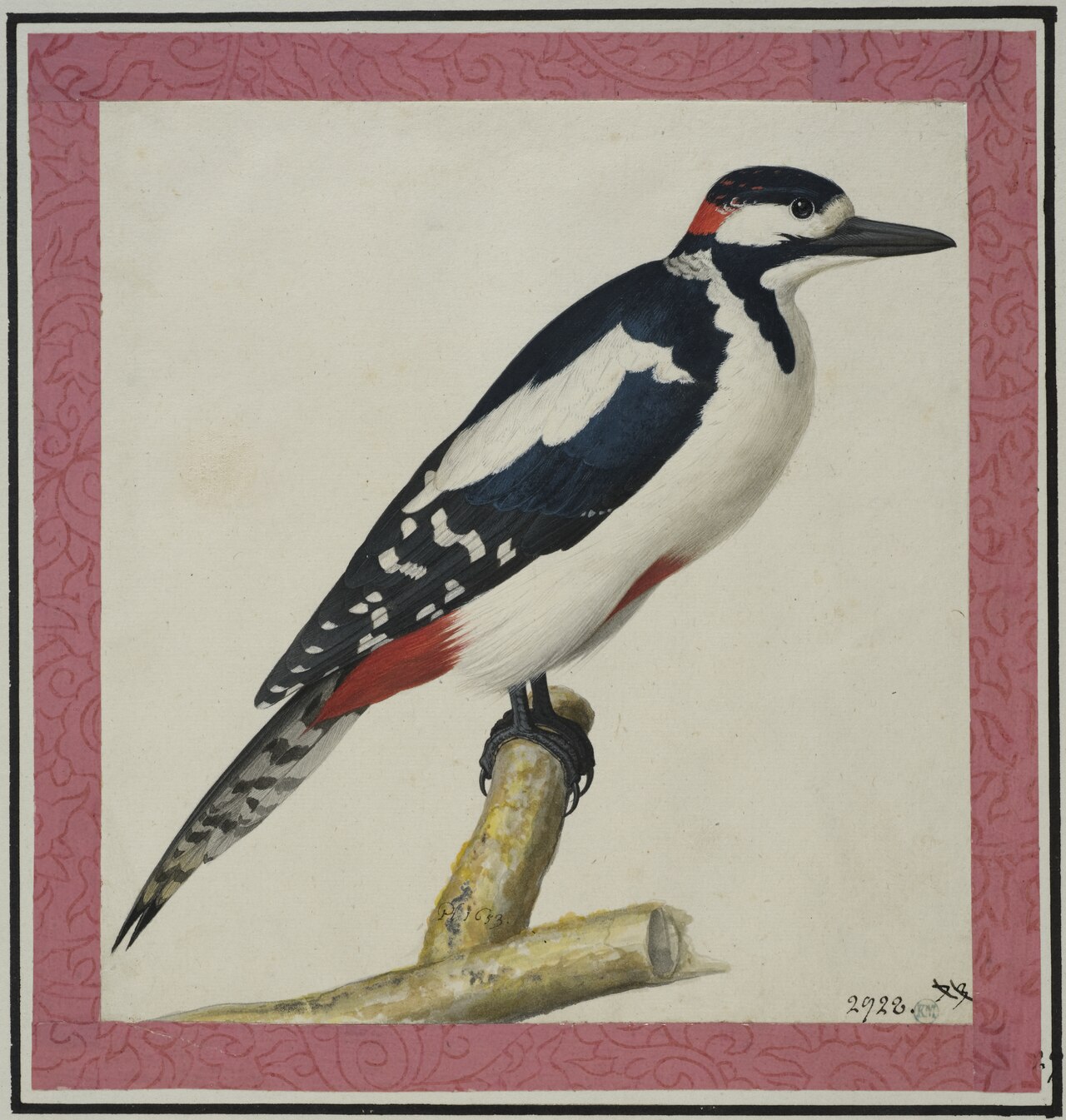
Pieter Holsteyn II (1614–1673) was a Dutch Golden Age painter and engraver from Haarlem, best known for his delicate watercolours and detailed natural‑history studies such as his 1645 Study of a Tulip and the 1653 Woodpecker.
Notable works


Early life Pieter Holsteyn II was born in 1614 in Haarlem, a thriving artistic centre of the Dutch Republic. He grew up in a family of artists; his father, Pieter Holsteyn I, was an established painter and engraver, and his brother, Johannes, also pursued a career in the visual arts. The Holsteyn household provided a workshop environment where young Pieter was introduced to drawing, ink work, and the emerging techniques of watercolor painting. While exact records of his apprenticeship are scarce, it is clear that the family workshop served as his primary training ground, exposing him to the commercial demands of the Haarlem market and the broader currents of Dutch Golden Age art.
Career and style By the 1630s Holsteyn had begun to work independently, catering to the tastes of Haarlem’s affluent merchants and collectors. His output straddles two complementary domains: fine art and scientific illustration. In the realm of decorative painting, he produced ornamental panels, portrait miniatures, and allegorical scenes, often employing a restrained palette and a keen eye for detail. Simultaneously, he cultivated a reputation as a specialist in natural‑history subjects, a niche that flourished in the mid‑seventeenth century as curiosity about exotic flora and fauna grew among the Dutch elite.
Holsteyn’s style reflects the broader aesthetic of the Dutch Golden Age—realism tempered by a lyrical sensibility. His watercolours are characterised by transparent washes, fine hatching, and a subtle modelling of light that gives objects a three‑dimensional presence without sacrificing the delicacy of the medium. In his engravings, he favoured line engraving and mezzotint techniques, producing prints that combined precise outlines with tonal variation. Though he never aligned himself with a formal artistic movement, his work shares affinities with the still‑life and natural‑history traditions of contemporaries such as Jan van Kessel the Elder and Maria Sibylla Merian.
Signature techniques Holsteyn’s watercolours reveal a mastery of several technical approaches that distinguish his oeuvre:
1. Layered washes – He built colour gradually, applying thin, translucent layers that allowed the white of the paper to illuminate the surface, creating a luminous effect particularly evident in botanical subjects. 2. Fine hatching and stippling – To render textures—whether the velvety petals of a tulip or the iridescent plumage of a bird—Holsteyn employed delicate cross‑hatching and stipple marks, a method that conveyed both structure and softness. 3. Use of gouache accents – While maintaining the overall transparency of watercolor, he occasionally added opaque gouache highlights to accentuate focal points, a technique that enhances depth and draws the viewer’s eye. 4. Engraving precision – In his prints, Holsteyn combined crisp line work with subtle tonal gradations, often using a drypoint technique to achieve fine, velvety lines that complement the more linear engraving strokes.
These methods allowed him to navigate the space between artistic representation and scientific documentation, a balance that appealed to patrons who valued both aesthetic beauty and empirical accuracy.
Major works
- Isabella d'Este – Although the exact nature of this work is debated, Holsteyn’s treatment of the historical figure draws on the tradition of portraiture that celebrated the intellectual and cultural achievements of Renaissance patrons. The composition likely incorporates emblematic objects that allude to Isabella’s patronage of the arts, rendered with the same meticulous attention to detail that characterises his natural‑history studies.
- Study of a Tulip (Perregoen Machieu) (1645) – This watercolor exemplifies Holsteyn’s skill in botanical illustration. The tulip is depicted with a vivid colour palette, subtle shading, and a background that suggests a simple yet elegant studio setting. The work reflects the Dutch fascination with tulip mania and the broader European interest in exotic horticulture. Holsteyn’s precise rendering of the flower’s form and texture demonstrates his ability to transform a scientific specimen into a work of art.
- Woodpecker (1653) – In this piece, Holsteyn captures the dynamic posture of the bird perched on a branch, its plumage rendered through fine hatching and layered washes that convey both the sheen of feathers and the bird’s lively character. The print’s composition balances naturalism with a compositional clarity that makes the woodpecker the unmistakable focal point. It stands as a testament to Holsteyn’s contribution to the visual vocabulary of ornithological illustration in the seventeenth century.
These works, together with a body of lesser‑known prints and watercolours, illustrate Holsteyn’s versatility and his capacity to navigate both courtly portraiture and scientific documentation.
Influence and legacy Pieter Holsteyn II never achieved the fame of Rembrandt or Vermeer, but his contributions to Dutch watercolor painting and natural‑history illustration were nevertheless significant. His meticulous approach to botanical and zoological subjects prefigured the later work of artists such as Maria Sibylla Merian, whose detailed studies of insects and plants would become iconic in the Enlightenment era. Holsteyn’s prints circulated among collectors in Haarlem and beyond, helping to disseminate a visual language that merged artistic elegance with empirical observation.
In Haarlem, the Holsteyn workshop continued to operate after Pieter’s death in 1673, influencing a generation of local painters who adopted his techniques of layered washes and fine hatching. Modern scholars regard his surviving watercolours as valuable primary sources for the study of seventeenth‑century horticulture, especially the varieties of tulips that sparked the famous speculative bubble.
Although Holsteyn’s name is not always prominent in popular accounts of the Dutch Golden Age, his oeuvre provides insight into the diverse artistic practices that flourished in the Republic. Contemporary exhibitions on Dutch natural history and watercolour painting frequently cite his work as an exemplar of the period’s interdisciplinary spirit, where art served both aesthetic and scientific purposes.
Today, Holsteyn’s paintings and prints are held in the collections of the Rijksmuseum, the British Museum, and several regional museums in the Netherlands. They continue to be studied for their technical brilliance and for the way they encapsulate a moment when the Dutch Republic was at the forefront of both artistic innovation and scientific curiosity.
Frequently asked questions
Who was Pieter Holsteyn II?
Pieter Holsteyn II (1614–1673) was a Dutch Golden Age painter and engraver from Haarlem, known for his watercolours and detailed natural‑history studies.
What artistic style or movement is he associated with?
He worked within the Dutch Golden Age tradition, blending realistic detail with a lyrical approach, especially in still‑life and scientific illustration.
What are his most famous works?
His most noted works include the 1645 Study of a Tulip, the 1653 Woodpecker, and a portrait titled Isabella d'Este.
Why does Pieter Holsteyn II matter in art history?
Holsteyn bridges art and science, influencing later natural‑history illustrators and providing valuable visual records of seventeenth‑century flora and fauna.
How can I recognise a Pieter Holsteyn II painting?
Look for delicate watercolours with layered washes, fine hatching, and a precise rendering of botanical or animal subjects, often combined with subtle gouache highlights.