Pieter de Grebber
1600 – 1652
In short
Pieter de Grebber (1600–1652) was a Dutch Baroque painter from Haarlem, active during the Dutch Golden Age. He is noted for religious and genre scenes that combine classical composition with a subtle, refined realism.
Notable works


_Saint_Augustin_-_Pieter_de_Grebber_-_Mus%C3%A9e_des_Beaux-Arts_de_Narbonne.jpg)

Early life Pieter de Grebber was born in 1600 in Haarlem, a thriving artistic centre of the Dutch Republic. He grew up in a family with strong artistic ties; his father, Frans de Grebber, was a respected painter and guild member, which provided Pieter with early exposure to workshop practices and the burgeoning market for paintings in the Netherlands. Haarlem’s vibrant cultural environment, characterised by a network of artists, patrons, and guilds, shaped his formative years. By the time he reached his teenage years, de Grebber was already apprenticing in his father’s studio, learning the fundamentals of drawing, composition, and the use of colour that would later define his mature style.
Career and style De Grebber established his independent career in the early 1620s, a period when Dutch art was shifting from the stark realism of the early Golden Age toward a more ornamented, Baroque sensibility. He worked primarily in Haarlem, where he received commissions from both civic institutions and private patrons. His oeuvre reflects a synthesis of influences: the compositional clarity of the Haarlem school, the dramatic chiaroscuro popularised by Caravaggio’s followers, and the refined elegance of Flemish Baroque painters such as Rubens. De Grebber’s paintings often portray religious subjects with a calm, dignified atmosphere, avoiding overt theatricality while still employing subtle light effects to highlight central figures. This balanced approach appealed to a clientele that valued both devotional seriousness and aesthetic sophistication.
In addition to religious works, de Grebber produced genre scenes and portraits that reveal his keen observation of everyday life. His figures are rendered with a smooth modelling of flesh, and his colour palette favours muted earth tones punctuated by occasional bright accents—particularly in garments and accessories—to draw the viewer’s eye. The artist’s careful handling of space, often achieved through architectural backdrops or landscape settings, conveys a sense of depth without sacrificing the intimacy of the narrative.
Signature techniques De Grebber’s technique is characterised by layered glazing, which gives his surfaces a luminous quality. He would begin with a fine underdrawing, then apply thin, translucent layers of pigment, allowing light to penetrate and reflect off lower tones. This method produces a soft modelling of form, especially evident in the rendering of skin and fabric. Another hallmark is his controlled use of chiaroscuro: rather than stark contrasts, he preferred gradual tonal shifts that model the figure gently, creating a serene mood. His brushwork varies between smooth, almost invisible strokes in the flesh tones and more expressive, textured passages in foliage or drapery, providing a subtle contrast that enhances visual interest.
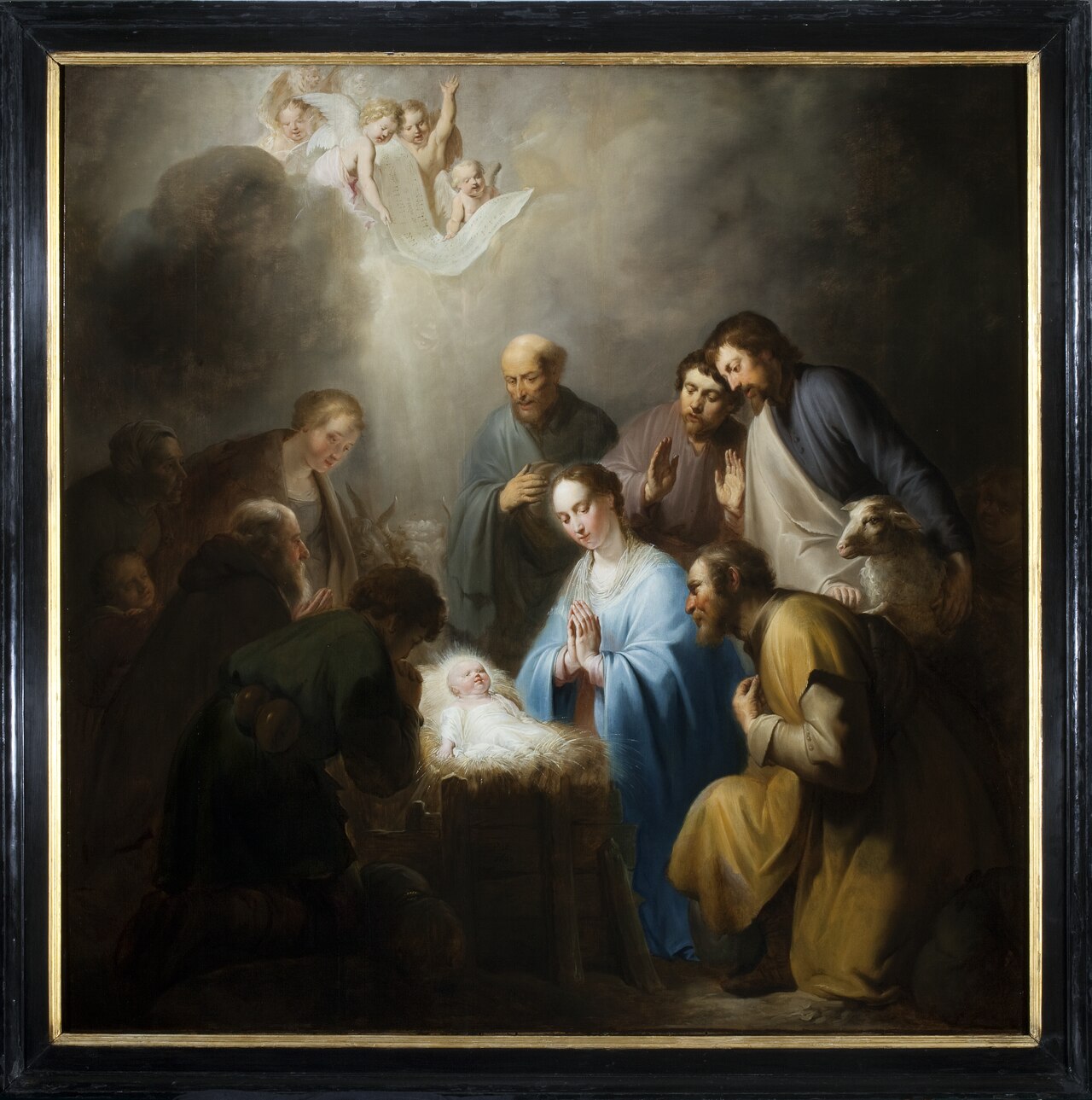
Major works - **A Girl Singing (1625)** – This genre painting captures a young woman mid‑song, her profile illuminated by a soft light source that highlights the delicate features of her face and the texture of her clothing. The composition is simple yet intimate, showcasing de Grebber’s ability to convey emotion through restrained gesture. - **Adoration of the Shepherds (1633)** – A religious commission, this work presents the Nativity scene with shepherds gathered around the infant Christ. De Grebber employs a balanced arrangement of figures, a muted colour scheme, and gentle lighting that emphasizes the sanctity of the moment without resorting to melodrama. - **Family portrait in a landscape by Pieter Fransz. de Grebber (1630)** – Though attributed to his father, this portrait demonstrates the family’s collaborative workshop atmosphere. It features a multi‑generational family set against a pastoral backdrop, illustrating the integration of portraiture and landscape that was popular among Haarlem patrons. - **Saint Augustin (c.1700, Musée des Beaux‑Arts de Narbonne)** – Though dated later than his lifetime, the painting is attributed to de Grebber’s workshop and reflects his mature style: a measured composition, subdued lighting, and a contemplative saint rendered with dignified restraint. - **An Oriental (1650)** – One of his later works, this painting depicts an exotic figure, reflecting the 17th‑century Dutch fascination with the East. De Grebber treats the subject with the same compositional poise as his religious works, using careful colour modulation to suggest the richness of fabrics while maintaining his characteristic calm atmosphere.
Influence and legacy Pieter de Grebber occupies a modest but significant place in Dutch Baroque painting. His synthesis of Haarlem classicism with Baroque chiaroscuro contributed to a distinctive regional style that influenced younger Haarlem artists, including members of the de Grebber family who continued the workshop tradition. Although he never achieved the fame of Rembrandt or Vermeer, his works were collected by affluent merchants and displayed in local churches, ensuring a steady demand for his refined aesthetic. Modern scholarship recognises de Grebber for his role in bridging the early Dutch realism with the more expressive Baroque idiom, and his paintings continue to be exhibited in European museums, offering insight into the nuanced visual culture of mid‑17th‑century Holland.
Frequently asked questions
Who was Pieter de Grebber?
Pieter de Grebber was a Dutch Baroque painter (1600–1652) from Haarlem, known for his religious, genre, and portrait works during the Dutch Golden Age.
What artistic movement did he belong to?
He worked within the Baroque movement, blending the classical compositional clarity of the Haarlem school with subtle chiaroscuro and refined realism.
What are his most famous works?
Key works include *A Girl Singing* (1625), *Adoration of the Shepherds* (1633), the family portrait (1630), *Saint Augustin* (c.1700), and *An Oriental* (1650).
Why is Pieter de Grebber important in art history?
He helped bridge early Dutch realism with Baroque sensibilities, influencing subsequent Haarlem artists and contributing to the nuanced visual culture of 17th‑century Holland.
How can I recognise a Pieter de Grebber painting?
Look for smooth, layered glazing, gentle chiaroscuro, muted colour palettes with occasional bright accents, and a calm, dignified composition that often features religious or domestic subjects.