Pierre Cuypers
1827 – 1921
In short
Pierre Cuypers (1827–1921) was a Dutch architect best known for designing the Rijksmuseum and Amsterdam Central Station and for restoring and creating more than a hundred churches throughout the Netherlands.
Notable works




Early life Pierre Cuypers was born on 9 April 1827 in the town of Roermond, in the Kingdom of the Netherlands. He grew up in a modest family; his father was a carpenter, which gave young Pierre early exposure to building trades. After completing basic schooling, Cuypers enrolled at the Royal Academy of Fine Arts in Amsterdam, where he studied drawing, perspective, and the principles of architecture. His education coincided with a period of renewed interest in historic styles, particularly the Gothic Revival, which would later influence his design ethos.
Career and style After graduating, Cuypers returned to Roermond and began practising as an architect. In the 1850s he secured commissions for modest parish churches, gradually building a reputation for sensitive handling of historic forms. By the 1860s he was recognised as a leading proponent of the Neo‑Gothic style in the Netherlands, adapting medieval motifs to contemporary needs. His approach combined rigorous historic research with a pragmatic concern for structural integrity and functional planning.
Cuypers’ career accelerated in the 1870s when he was appointed chief architect for major public projects. He was tasked with designing a new national museum in Amsterdam, a commission that resulted in the Rijksmuseum (1876–1885). The building exemplifies his synthesis of Neo‑Gothic ornamentation with a modern, museum‑grade layout. Shortly thereafter, he designed Amsterdam Central Station (1881–1889), a project that required integrating railway technology with an elegant, historicist façade. Both works cemented his status as the pre‑eminent Dutch architect of his generation.
Throughout his career Cuypers remained deeply involved in restoration. He believed that preserving historic structures was a civic duty, and he applied his scholarly knowledge to the careful repair of medieval churches and civic monuments. His style, while rooted in Gothic Revival, was not a mere pastiche; he often incorporated Romanesque and Classical details where appropriate, creating a distinctive, eclectic vocabulary that balanced reverence for the past with the demands of modern use.
Signature techniques Cuypers is recognised for several recurring techniques:
1. Structural honesty – He emphasised visible structural elements, such as ribbed vaults and buttresses, allowing the building’s skeleton to become part of its decorative scheme. 2. Polychromy – Cuypers frequently employed colour in stone, brick, and tile, creating rhythmic patterns that enlivened façades while respecting historic precedents. 3. Ornamental integration – Sculptural details, tracery, and stained‑glass windows were designed in concert with the overall architecture, ensuring a cohesive visual experience. 4. Adaptive restoration – In restoration projects he combined archival research with contemporary building techniques, often reinforcing historic walls with concealed steel or iron without compromising aesthetic integrity. 5. Modular planning – Especially in his railway stations, Cuypers used modular spatial arrangements that could accommodate future expansions, a forward‑looking approach rarely seen among his historicist peers.
These techniques manifested across his ecclesiastical, civic, and infrastructural works, giving them a recognisable yet adaptable character.
Major works While Cuypers’ oeuvre includes over one hundred churches, a handful of commissions illustrate his range:
- Rijksmuseum (1876–1885) – Situated on Amsterdam’s Museumplein, the museum’s soaring towers, elaborate stone carving, and richly coloured brickwork embody Cuypers’ Neo‑Gothic vision. The interior spaces were organised to display art collections efficiently, a functional innovation for its time.
- Amsterdam Central Station (1881–1889) – This iconic railway terminus merges a monumental façade with a spacious, iron‑supported train hall. Cuypers’ use of ornamental brickwork and sculptural groups creates a civic landmark that bridges historicist aesthetics and industrial technology.
- Binnenhof Fountain (1883) – Located in The Hague, the fountain demonstrates Cuypers’ skill in public sculpture. Its classical proportions and decorative reliefs reflect his ability to work across mediums beyond architecture.
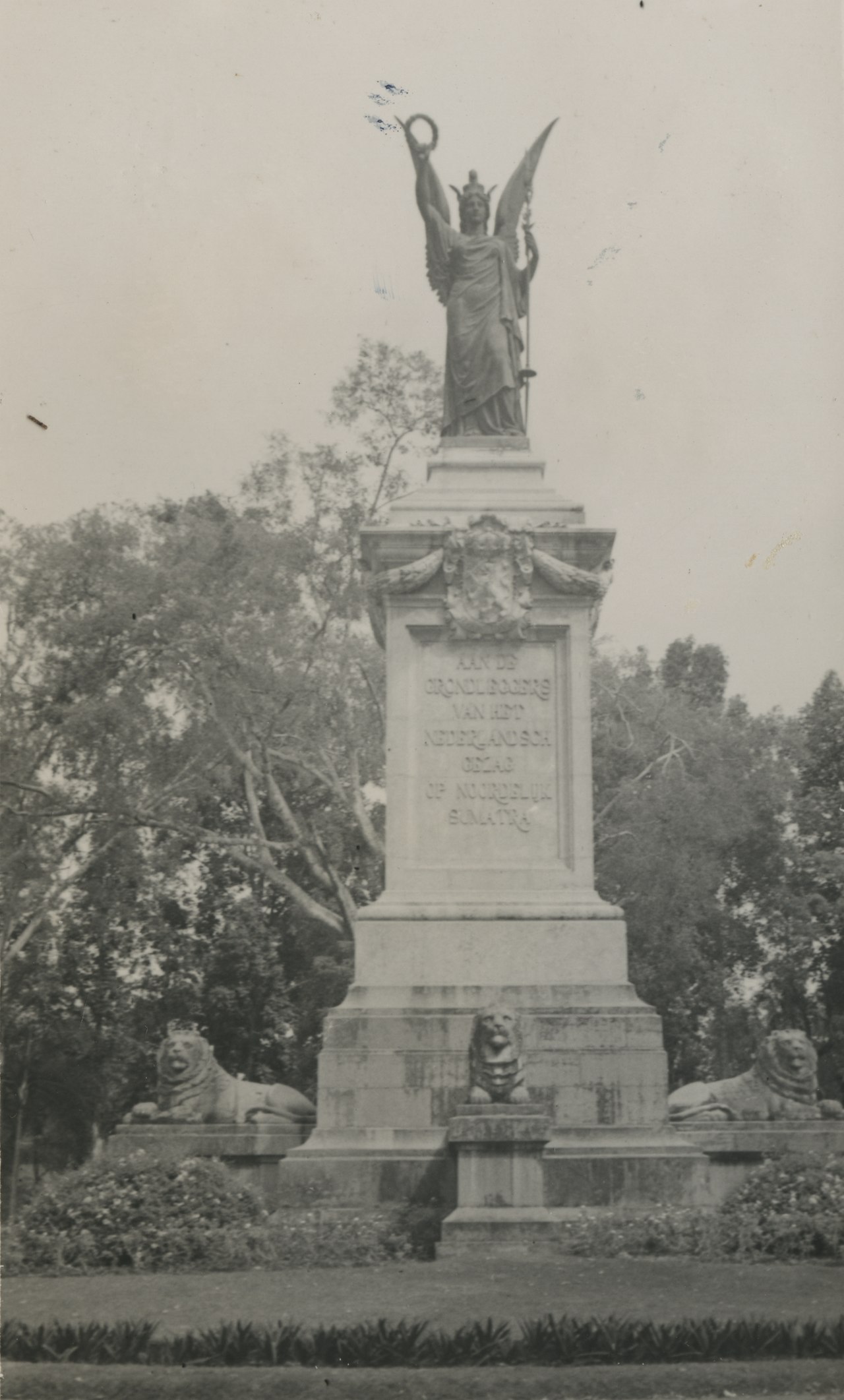
- Aceh Monument (1898) – Erected to commemorate Dutch involvement in the Aceh War, the monument combines a stone obelisk with allegorical figures. Its design reflects Cuypers’ capacity to convey national narratives through sculptural architecture.
- Baroniemonument (1905) – This memorial, situated in Roermond, showcases Cuypers’ later style, where he softened Gothic details with a more restrained, neoclassical approach, illustrating his evolving aesthetic in the early twentieth century.
- Design for a screen for the Bloedkapel in the Sint‑Petruskerk, Boxtel (1917) – In this later work Cuypers provided a finely carved wooden screen that frames the chapel’s altar, demonstrating his continued commitment to liturgical art well into his eighties.
- Drawing after one of the weepers from the tomb of Isabella of Bourbon (1500) – Though primarily an architect, Cuypers produced detailed drawings of historic sculptures, reflecting his scholarly interest in Renaissance art and his practice of documenting heritage.
These works, together with numerous restored churches such as the St. Martin’s Cathedral in Utrecht, illustrate the breadth of Cuypers’ contribution to Dutch built heritage.
Influence and legacy Pierre Cuypers left an indelible mark on Dutch architecture. His advocacy for historic preservation helped establish the Netherlands’ early heritage‑conservation movement, influencing later architects and preservationists. The Rijksmuseum and Amsterdam Central Station remain iconic symbols of Dutch national identity, visited by millions each year and serving as benchmarks for integrating historic style with modern function.
Cuypers also mentored a generation of architects, many of whom adopted his emphasis on rigorous historical research and structural clarity. His churches continue to serve active congregations, and their interiors retain the luminous quality that Cuypers prized. In the broader European context, his work contributed to the spread of Neo‑Gothic architecture, demonstrating how regional traditions could be reinterpreted for contemporary civic projects.
Today, scholars regard Cuypers as a pivotal figure in the transition from historicist revival to the more restrained, rationalist architecture of the early twentieth century. His legacy endures not only in the monuments that bear his name but also in the continuing practice of thoughtful restoration that balances respect for the past with the needs of the present.
Frequently asked questions
Who was Pierre Cuypers?
Pierre Cuypers (1827–1921) was a Dutch architect renowned for designing the Rijksmuseum and Amsterdam Central Station and for restoring and building over one hundred churches across the Netherlands.
What artistic style or movement is he associated with?
Cuypers is most closely linked to the Neo‑Gothic movement, though his work also incorporates Romanesque, Classical and early modern elements, reflecting a flexible historicist approach.
What are his most famous works?
His most celebrated projects are the Rijksmuseum (1876–1885) and Amsterdam Central Station (1881–1889), along with notable monuments such as the Binnenhof Fountain (1883) and the Aceh Monument (1898).
Why is Pierre Cuypers important in art and architectural history?
He helped shape Dutch national identity through landmark public buildings, pioneered systematic heritage restoration, and influenced subsequent generations with his blend of historic aesthetics and modern functionality.
How can I recognise a Pierre Cuypers building or design?
Look for characteristic Neo‑Gothic features—pointed arches, visible structural ribs, elaborate stone carving, polychromatic brickwork—and a harmonious integration of decorative sculpture with functional architecture.