Philip Fruytiers
1610 – 1666
In short
Philip Fruytiers (1610–1666) was a Flemish Baroque painter and engraver from Antwerp, noted for his miniature portraits in watercolor and gouache and later recognised for larger canvases signed with his monogram PHF. His work contributes to the understanding of Antwerp's 17th‑century artistic production, bridging intimate portraiture and larger religious compositions.
Notable works



Early life Philip Fruytiers was born in 1610 in Antwerp, a thriving centre of artistic activity in the Habsburg Netherlands. Little is recorded about his family background or early training, but the city's vibrant guild system suggests that he would have been apprenticed in a local workshop, most likely within the Guild of Saint Luke, which regulated the practice of painters and engravers. Antwerp in the early‑17th century was dominated by the legacy of Peter Paul Rubens and the flourishing of the Baroque style, providing a fertile environment for a young artist to develop technical skill and an appreciation for dramatic composition.
Career and style Fruytiers emerged as a versatile practitioner, working both as a painter and as an engraver. In the first half of his career he specialised in miniature portraiture, a genre prized by the affluent merchant class for its portability and intimacy. These works were typically executed in watercolor or gouache on vellum or paper, allowing for fine detail and a luminous colour palette. The miniatures display a restrained elegance, with careful attention to facial expression and costume, reflecting the influence of the Flemish portrait tradition while also incorporating the softer tonalities associated with water‑based media.
During the 1630s and 1640s Fruytiers expanded his repertoire to include larger religious compositions. Though the exact chronology of these works is not fully documented, several canvases bearing the monogram PHF have been attributed to him based on stylistic analysis and provenance research. These larger works reveal a more robust Baroque language: dynamic figures, vigorous chiaroscuro, and a heightened sense of narrative drama. The shift from intimate miniatures to grand altarpieces suggests that Fruytiers was responsive to the demands of Antwerp’s churches and confraternities, which commissioned works that reinforced Counter‑Reformation ideals.
Signature techniques Fruytiers’ technique can be identified by a combination of three hallmarks: 1. **Fine brushwork** – Whether in miniature or on canvas, his handling of paint is precise, allowing for delicate rendering of skin tones and textile textures. 2. **Layered glazing** – Particularly evident in his watercolor miniatures, he employed multiple translucent layers to achieve depth and a subtle glow. 3. **Monogrammed signature** – The initials “PHF” appear in the lower corners of many larger works, often rendered in a discreet yet legible hand, providing a reliable means of attribution.
His engravings, though less numerous, show a crisp line quality and an ability to translate painterly effects into print, a skill that aligns him with other Flemish artists who worked across media.
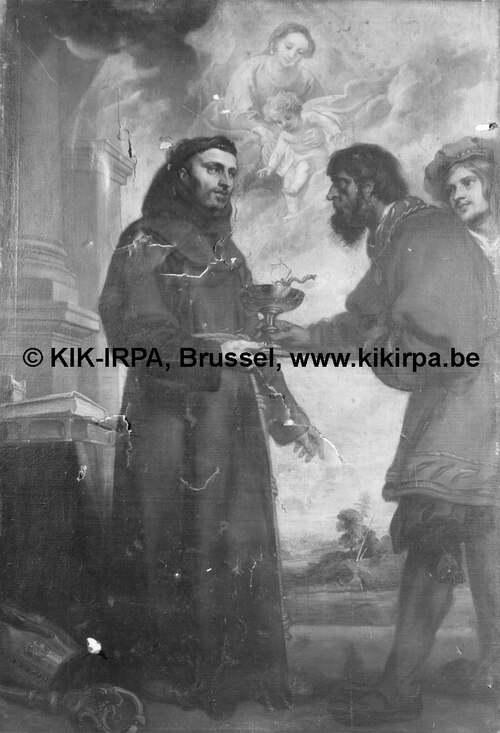
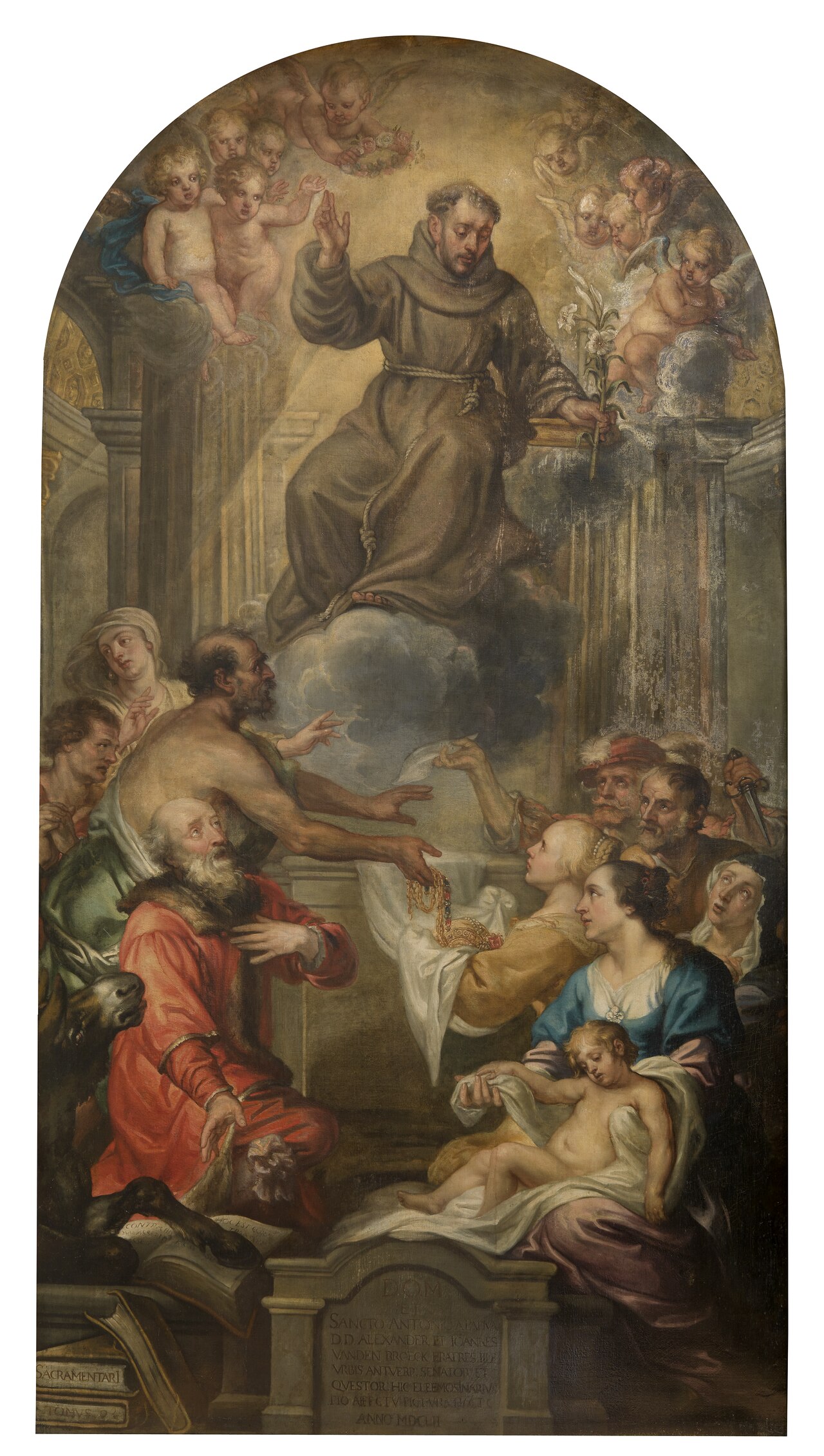
Major works - **Saint Francis of Assisi (1650)** – This canvas depicts the saint in a moment of contemplative prayer, surrounded by a luminous aura that underscores his spiritual purity. The composition balances the saint’s serene expression with a subtle play of light, characteristic of Fruytiers’ mature Baroque style. - **Saint James of the Marches and the Poisoned Cup** – A narrative work that captures the dramatic moment when Saint James confronts a poisoned chalice. Fruytiers uses strong diagonal lines and a darkened background to heighten tension, while the saint’s calm demeanor provides a moral counterpoint. - **Saint Louis IX, King of France, the Crusader (1638)** – Executed early in his larger‑canvas period, this painting presents the French monarch in crusader armour, set against a battlefield horizon. The work reflects the period’s fascination with chivalric heroism and contains intricate details of armour that showcase Fruytiers’ technical skill. - **The Apotheosis of Saint Antony of Padua (1652)** – A richly coloured altarpiece in which Saint Antony is elevated among angels and heavenly light. The composition is orchestrated to draw the viewer’s eye upward, reinforcing the theme of divine elevation. - **Portrait of David II Teniers (1655)** – A miniature portrait, likely of a relative of the more famous David Teniers the Younger. The work exemplifies Fruytiers’ mastery of watercolor, with a subtle modelling of facial features and a nuanced rendering of the sitter’s attire.
These works collectively illustrate Fruytiers’ ability to navigate both intimate portraiture and expansive religious narratives, cementing his place within the Antwerp Baroque milieu.
Influence and legacy For much of the 19th and early 20th centuries, Fruytiers was principally remembered for his miniature portraits, which were collected by connoisseurs of fine decorative arts. The discovery, in the 1960s, of several signed large canvases prompted a reassessment of his oeuvre, revealing a more comprehensive artistic output than previously recognised. Scholars now view Fruytiers as a bridge between the intimate Flemish portrait tradition and the broader Baroque currents that dominated Antwerp’s public art. His works contribute to a fuller understanding of how artists in the Habsburg Netherlands adapted their practice to shifting patronage, moving from private commissions to ecclesiastical projects.
In contemporary scholarship, Fruytiers is cited as an example of an artist whose versatility allowed him to thrive within the competitive market of 17th‑century Antwerp. His paintings are held in regional museums and private collections, and ongoing research continues to refine the attribution of works bearing his monogram. By integrating meticulous technique with the expressive vigor of the Baroque, Philip Fruytiers remains a noteworthy figure in the narrative of Flemish art history.
---
Further reading: Recent exhibition catalogues on Antwerp Baroque painting, monographs on Flemish miniature portraiture, and catalogue raisonnés of 17th‑century Dutch and Flemish engravers provide additional context for Fruytiers’ artistic environment.
Frequently asked questions
Who was Philip Fruytiers?
Philip Fruytiers (1610–1666) was a Flemish Baroque painter and engraver from Antwerp, known for miniature portraiture and later for larger religious canvases signed with the monogram PHF.
What artistic style or movement is he associated with?
He worked within the Flemish Baroque tradition, combining the dramatic lighting and narrative vigor of the Baroque with the delicate detail of miniature portraiture.
What are his most famous works?
Key works include Saint Francis of Assisi (1650), Saint James of the Marches and the Poisoned Cup, Saint Louis IX, King of France, the Crusader (1638), The Apotheosis of Saint Antony of Padua (1652), and the Portrait of David II Teniers (1655).
Why is Philip Fruytiers important in art history?
His career illustrates the versatility of Antwerp artists, bridging intimate portraiture and large‑scale religious commissions, and his rediscovered canvases have enriched our understanding of the city's Baroque output.
How can I recognise a work by Fruytiers?
Look for finely rendered figures, layered glazing in water‑based media, and the discreet “PHF” monogram in the lower corner of larger canvases; his miniatures often display a soft colour palette and meticulous detail.