Nathaniel Dance-Holland
1735 – 1811
In short
Nathaniel Dance-Holland (1735–1811) was a British painter and baronet who worked in a realist style, producing portraits and historical scenes. He also served as a Member of Parliament, linking the worlds of art and politics in late‑18th‑century Britain.
Notable works


_-_Timon_of_Athens_-_RCIN_406725_-_Royal_Collection.jpg)
Early life Nathaniel Dance-Holland was born in 1735 in the Kingdom of Great Britain, into a family that would later be ennobled. Details of his childhood are sparse, but like many aspiring artists of his generation, he would have received a classical education that included drawing from life and study of the Old Masters. Training for a painter in mid‑eighteenth‑century Britain typically involved apprenticeship in a London studio, attendance at a drawing academy, and exposure to the burgeoning Royal Academy of Arts, which was founded in 1768. These formative experiences provided Dance-Holland with the technical foundation that underpinned his later professional practice.
Career and style Dance-Holland emerged as a portraitist and history painter during a period when British art was increasingly oriented toward realism and a faithful representation of contemporary life. His work reflects the influence of Dutch portraiture, with its attention to texture, and the British tradition of dignified, character‑focused portraiture exemplified by artists such as Sir Joshua Reynolds. Though he never achieved the fame of Reynolds or Thomas Gainsborough, Dance-Holland secured a respectable patronage network that included naval officers, members of the gentry, and cultural institutions. In addition to his artistic pursuits, he was created a baronet and entered politics, serving as a Member of Parliament. This dual career reinforced the perception of the artist as a gentleman of public standing, a status that was relatively rare for painters of his era.
Signature techniques A hallmark of Dance-Holland’s technique is his meticulous rendering of fabrics and surfaces. He employed a layered oil approach, building up glazes to achieve subtle variations in light and shadow. This method allowed him to capture the sheen of silk, the softness of velvet, and the reflective quality of metallic objects with convincing realism. His compositions often place the sitter against a restrained background, directing the viewer’s attention to the face and hands, which are rendered with fine detail and expressive brushwork. In historical compositions, he balanced narrative clarity with a naturalistic rendering of figures, ensuring that the drama of the scene did not overwhelm the realistic treatment of individual characters.
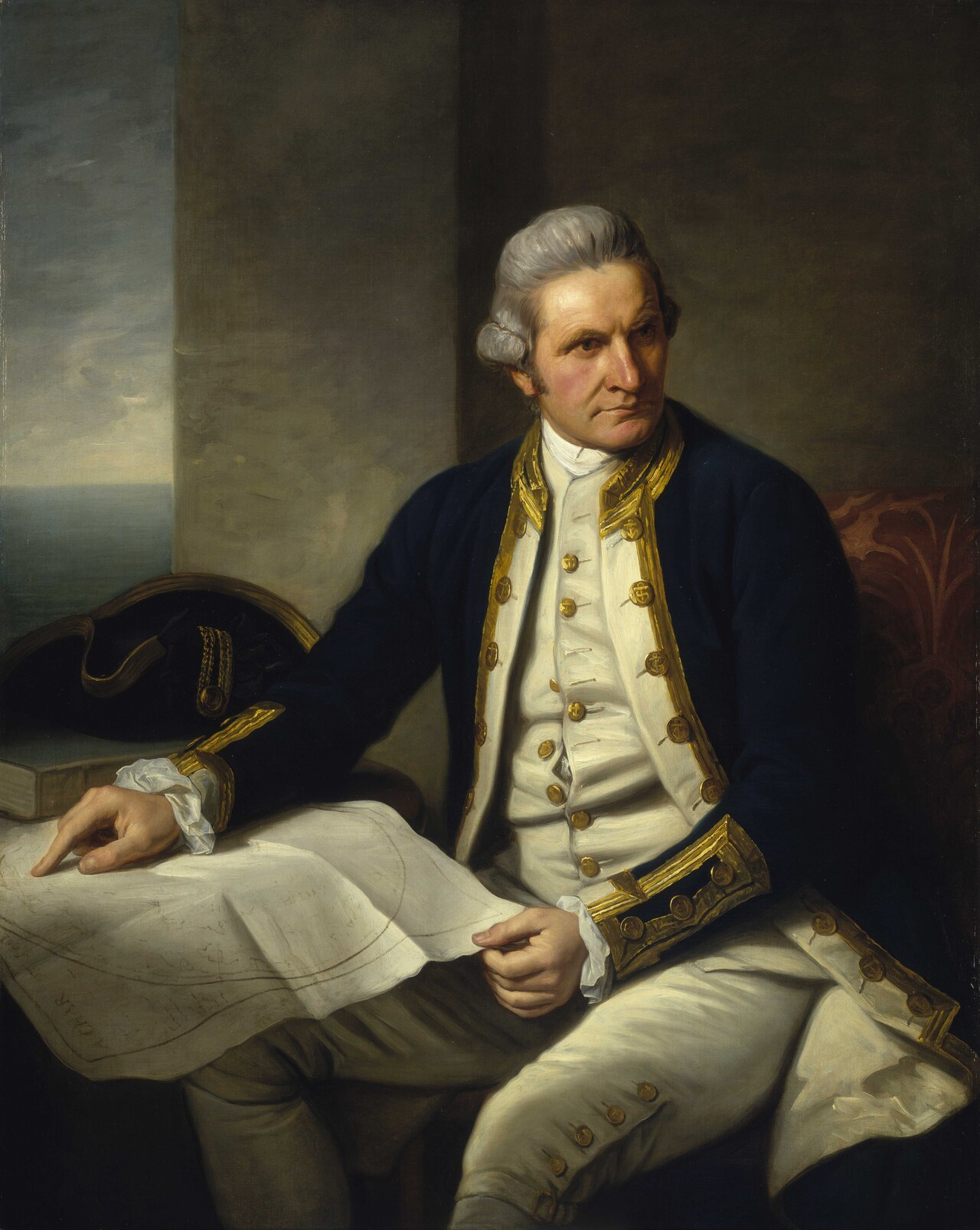
Major works - **Captain James Cook, 1728–79 (1775)** – This portrait of the famed explorer was commissioned shortly after Cook’s voyages became public knowledge. Dance-Holland presents Cook in a dignified pose, uniformed in naval attire, with a globe and navigational instruments subtly suggested in the background. The work demonstrates the artist’s ability to combine portraiture with emblematic references to the sitter’s achievements. - **The Meeting of Dido and Aeneas (1766)** – A narrative composition drawn from classical mythology, the painting captures the poignant moment when Dido bids farewell to Aeneas. Dance-Holland’s realist approach lends a tangible quality to the emotional exchange, with careful attention to the drapery of the characters and the architectural setting. - **The Pybus family (1769)** – This group portrait of the Pybus family exemplifies the artist’s skill in arranging multiple figures within a harmonious composition. Each family member is depicted with individualized expression, and the subtle interplay of light across their clothing reinforces the sense of a cohesive domestic scene. - **Cristiano Giuseppe Lidarti and Giovanni Battista Tempesti (1759)** – In this double portrait, Dance-Holland renders two contemporary artists, highlighting their professional tools—Lidarti with a musical manuscript and Tempesti with a palette. The work reflects the artist’s interest in portraying fellow creatives, and it showcases his capacity to render both likeness and occupational context. - **Timon of Athens (1767)** – Based on Shakespeare’s tragic play, the painting illustrates the titular character in a moment of introspection. Dance-Holland’s realistic handling of facial expression and the textured environment underscores the moral gravity of the scene, while the composition maintains a clear narrative focus.
Influence and legacy Nathaniel Dance-Holland’s legacy occupies a modest niche within British art history. While his name is not as widely recognized as some of his contemporaries, his contributions illustrate the broader movement toward realism in eighteenth‑century portraiture and history painting. His dual role as a baronet and parliamentarian exemplifies the gradual elevation of artists within the social hierarchy of the period, paving the way for later generations of painter‑statesmen. Contemporary scholarship values his works for their documentary insight into the visual culture of the Georgian era, and his paintings continue to be consulted by historians seeking authentic depictions of notable figures such as Captain Cook. Though his influence on later stylistic developments was indirect, the meticulous technique and dignified representation he championed remain reference points for scholars examining the transition from Rococo elegance to a more sober, realistic aesthetic in British art.
Frequently asked questions
Who was Nathaniel Dance-Holland?
Nathaniel Dance-Holland (1735–1811) was a British painter and baronet who worked primarily in a realist style, producing portraits and historical scenes, and also served as a Member of Parliament.
What artistic movement is he associated with?
He is associated with realism, a movement that emphasized truthful, detailed representation of subjects, especially in portraiture and narrative painting.
What are his most famous works?
His most frequently cited works include the portrait of Captain James Cook (1775), The Meeting of Dido and Aeneas (1766), The Pybus family (1769), the double portrait of Cristiano Giuseppe Lidarti and Giovanni Battista Tempesti (1759), and Timon of Athens (1767).
Why does he matter in art history?
He exemplifies the rising professionalism of British artists in the late 18th century, bridging art and politics, and his realistic technique contributed to the shift away from ornamental Rococo toward a more naturalistic visual language.
How can I recognise a painting by Dance-Holland?
Look for careful rendering of fabrics, a subdued background that highlights the sitter’s face and hands, and a balanced composition that combines realistic detail with a dignified, often narrative, theme.