Mori Sosen
1747 – 1821
In short
Mori Sosen was a Japanese painter active during the Edo period. He is particularly renowned for his realistic and lively depictions of animals, especially monkeys and wild boars, often rendered with exceptional detail and dynamism.
Notable works


# Mori Sosen
Mori Sosen (1747–1821) was a prominent Japanese painter of the Edo period, known for his mastery in depicting animals with remarkable realism and vitality. While his specific birth details remain unrecorded, he spent his later years and likely established his artistic reputation in Ōsaka.
Early life
Details surrounding Mori Sosen's early life are scarce, a common characteristic for many artists of the Edo period. His precise birthplace and formative years are not definitively documented. It is understood that he became active as a painter during the mid-to-late 18th century and continued his practice into the early 19th century. His artistic development likely occurred within the prevailing artistic milieu of the time, absorbing influences from established schools and traditions.
Career and style
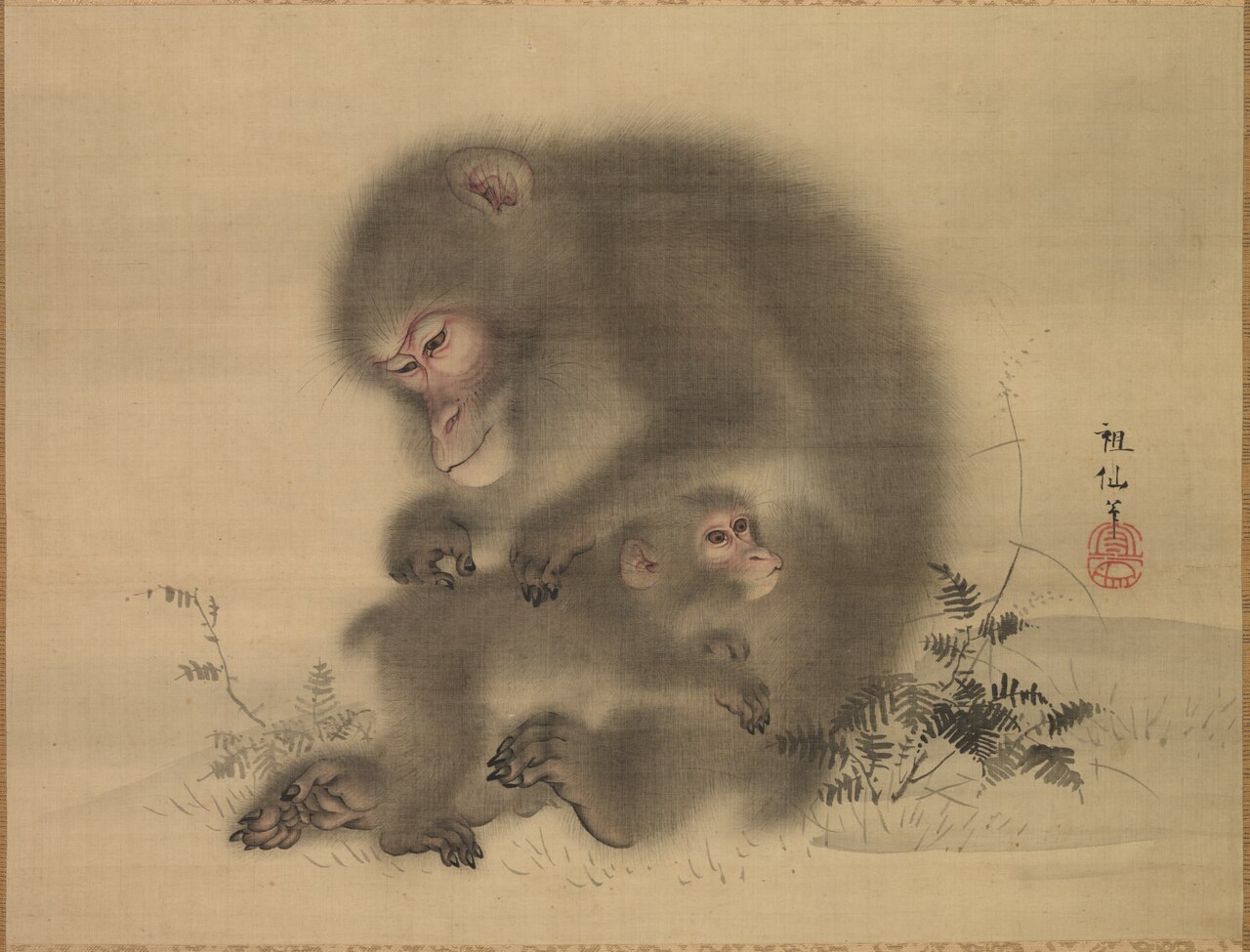
Mori Sosen is primarily associated with the Shijō school of painting, which emerged in Kyoto and emphasized a blend of Japanese and Chinese styles, often focusing on naturalistic depictions of birds, flowers, and animals. Sosen, however, carved out a distinct niche within this broad movement through his exceptional talent for animal portraiture. His style is characterized by a keen observation of his subjects, capturing their anatomical accuracy, characteristic movements, and individual personalities. Unlike some painters who might stylize animals for symbolic purposes, Sosen's approach leaned towards naturalism, imbuing his painted creatures with a sense of life and presence. His work often conveyed a dynamic energy, whether depicting the playful antics of monkeys or the formidable presence of a wild boar.
The Edo period was a time of significant cultural development in Japan, with a burgeoning merchant class that supported the arts. Painters like Sosen found patronage and a receptive audience for works that celebrated nature and its inhabitants. His focus on animals, a subject that held both aesthetic and symbolic importance in Japanese art, resonated with viewers.
Signature techniques
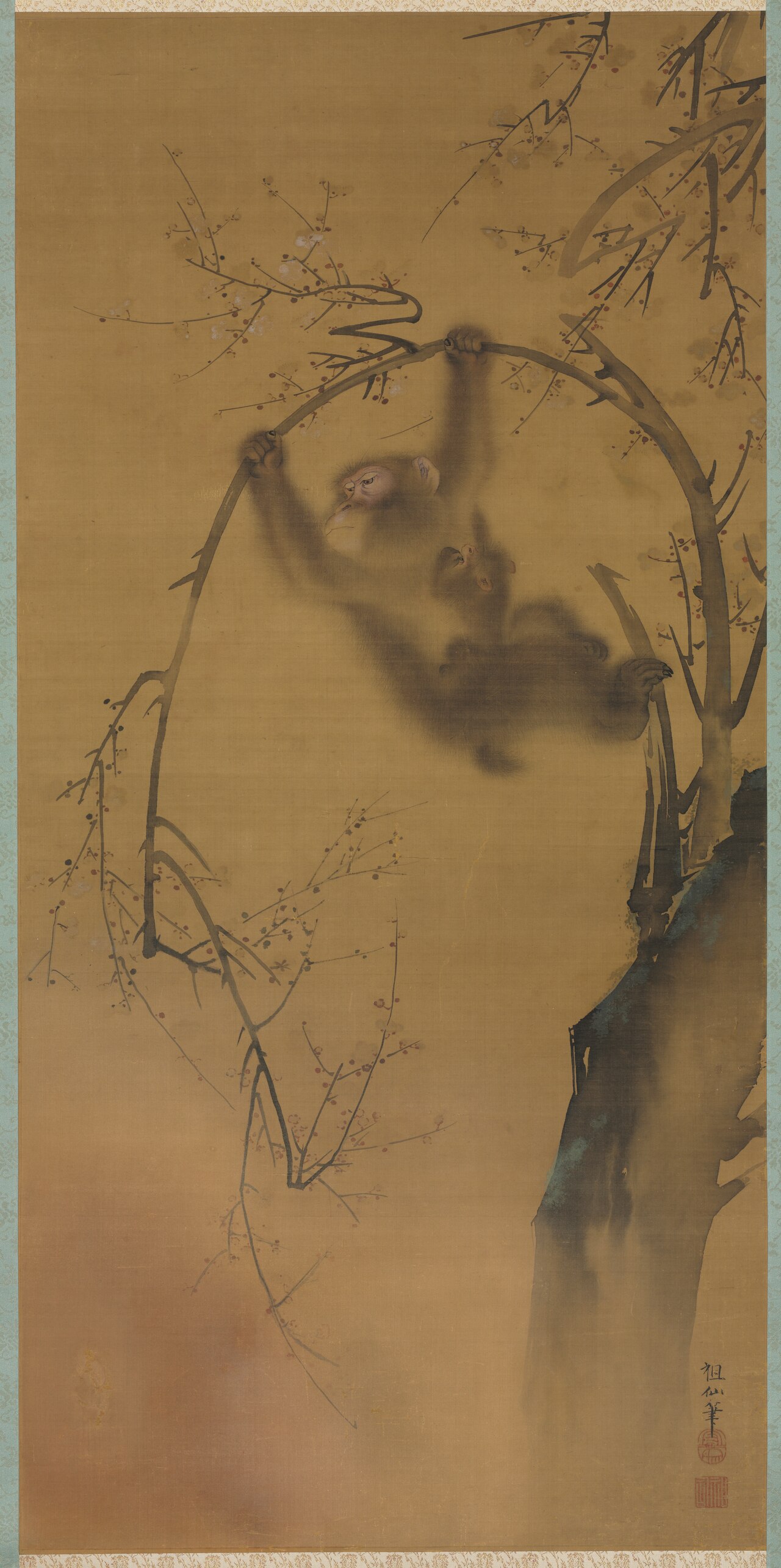
Sosen's artistic prowess lay in his meticulous attention to detail and his ability to render textures and forms convincingly. He employed a range of brushwork techniques, from fine, precise lines to more expressive, gestural strokes, depending on the subject and the desired effect. For fur and feathers, he often used delicate, layered brushstrokes to suggest softness and volume. In the depiction of muscle and bone, his lines became more assertive, conveying strength and structure. His understanding of anatomy, likely gained through careful study and observation, allowed him to portray animals in naturalistic poses and movements. The use of ink and colour was typically restrained, allowing the subject matter and Sosen's skillful execution to take center stage. This approach contributed to the lifelike quality of his animal subjects, making them appear almost tangible.
Major works
Mori Sosen's oeuvre is rich with depictions of the animal kingdom, with monkeys and wild boars being recurring and celebrated subjects. Among his notable works is "Wild Boar amidst Autumn Flowers and Grasses" from 1800, a piece that exemplifies his ability to capture the raw power and untamed nature of the animal set against a meticulously rendered natural backdrop. The texture of the boar's bristly coat and its muscular form are rendered with palpable realism.
His fascination with primates is evident in numerous works. "Two Monkeys" and "Monkeys" (1798) showcase his skill in portraying the complex social dynamics and playful interactions of these creatures. The paintings capture the agility and expressiveness of monkeys, with their dynamic poses and detailed rendering of fur. "Monkey" (1750) is an earlier example of his dedication to this subject.
Further demonstrating his consistent focus on simian subjects, "Monkeys in a Cherry Tree" and "Monkeys on a Rock Ledge" (1741) are significant. The former likely depicts the arboreal habits of monkeys, their bodies contorting through branches, while the latter might highlight their grounded, perhaps more stoic, presence on a rocky outcrop. These works, even those from earlier in his career like "Monkeys on a Rock Ledge" (1741), reveal an enduring commitment to observing and depicting animal behaviour and form with exceptional fidelity.
Influence and legacy
Mori Sosen's legacy rests on his significant contributions to the genre of animal painting in Japan. He elevated the depiction of animals from mere illustrative elements to subjects of profound artistic merit, showcasing their inherent beauty, power, and character. His naturalistic approach and meticulous technique influenced subsequent generations of painters who specialized in animal subjects. While perhaps not as widely known internationally as some other Edo-period artists, within Japan and among connoisseurs of Japanese art, Sosen is recognized as a master of his craft. His works continue to be admired for their aesthetic quality, their scientific accuracy, and the vibrant life they convey, offering a window into the natural world as perceived by a keenly observant artist.
Frequently asked questions
Who was Mori Sosen?
Mori Sosen was a Japanese painter active during the Edo period, from 1747 to 1821. He is best known for his highly realistic and dynamic depictions of animals, particularly monkeys and wild boars.
What art movement or style is Mori Sosen associated with?
Mori Sosen is associated with the Shijō school of painting, which originated in Kyoto. His style within this movement is characterized by a strong emphasis on naturalism and meticulous observation of animal subjects.
What are Mori Sosen's most famous works?
Mori Sosen is renowned for his animal paintings, especially "Wild Boar amidst Autumn Flowers and Grasses" (1800), and numerous works featuring monkeys, such as "Two Monkeys," "Monkeys" (1798), and earlier pieces like "Monkey" (1750) and "Monkeys on a Rock Ledge" (1741).
Why is Mori Sosen considered an important artist?
Mori Sosen is important for his mastery of animal portraiture, bringing a high degree of naturalism and vitality to his subjects. He elevated animal painting as a genre, influencing later artists with his precise observation and skillful execution.
How can I recognize a painting by Mori Sosen?
Look for highly realistic and anatomically accurate depictions of animals, especially monkeys and wild boars, often shown in dynamic poses or naturalistic settings. His brushwork is typically detailed, capturing the texture of fur and the musculature of the animals with great fidelity.