Miyagawa Chōshun
1683 – 1753
In short
Miyagawa Chōshun (1683–1753) was a Japanese ukiyo‑e painter and founder of the Miyagawa school, known for his elegant paintings of courtly and theatrical subjects. Unlike most ukiyo‑e artists, he never produced woodblock prints, focusing instead on hand‑drawn works that blend delicate line work with subtle colour washes.
Notable works

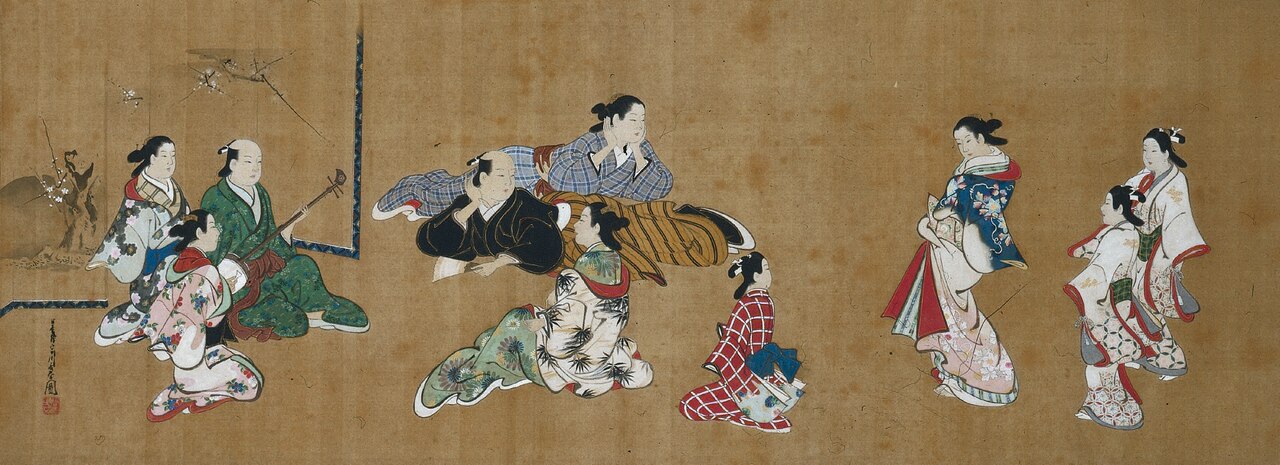
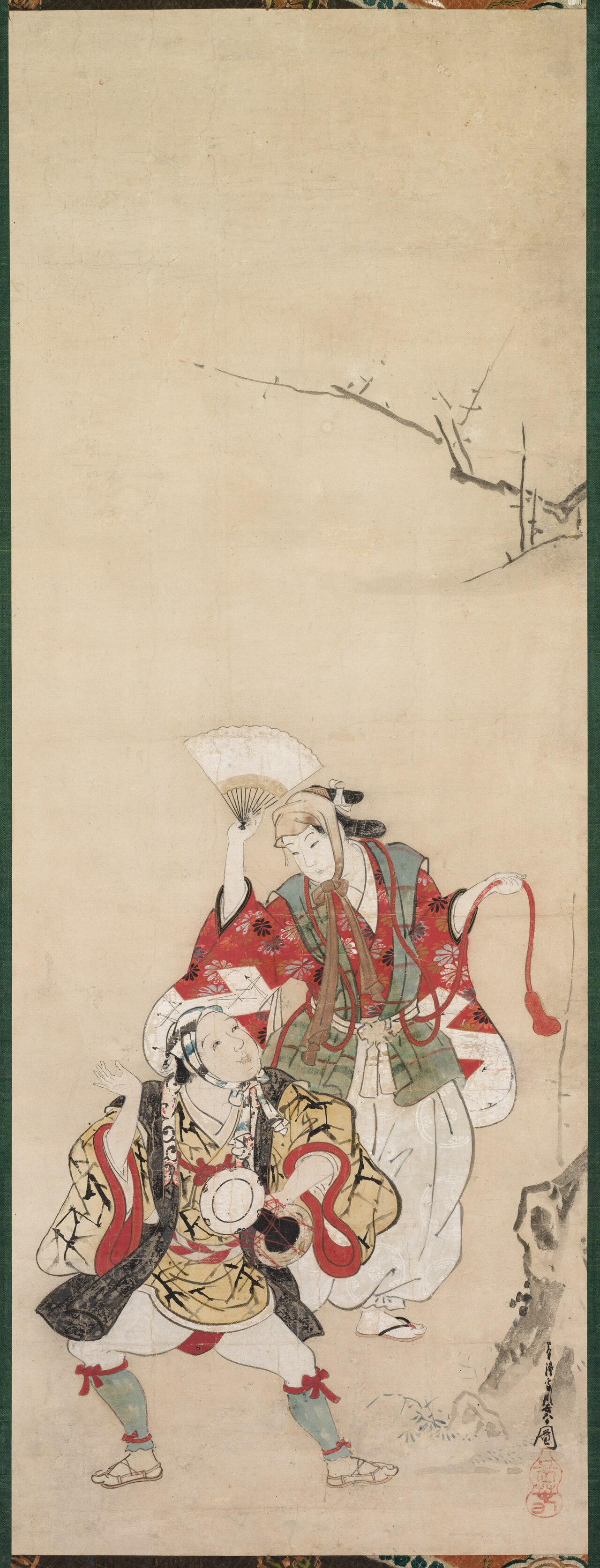


Early life Miyagawa Chōshun was born in 1683 in the small settlement of Miyagawa, located in Owari Province (present‑day Aichi Prefecture). Little is recorded about his family background, but the region was known for its artisanal traditions, which likely exposed him early to the visual culture of the Edo period. By the turn of the 18th century, Chōshun had moved to Edo (now Tokyo), the political and cultural capital of Japan, where he would spend the majority of his professional life.
Career and style In Edo, Chōshun entered the vibrant world of ukiyo‑e, a genre that depicted the pleasures and everyday scenes of the floating world – theatre, tea houses, courtesans, and seasonal festivals. He quickly distinguished himself by favouring painted works over the more common woodblock prints. This choice allowed him greater control over line, colour, and composition, and positioned him as a bridge between the earlier painting traditions of the Kanō and Tosa schools and the emerging commercial ukiyo‑e style.
Chōshun’s paintings are characterised by a refined, lyrical quality. He employed soft, flowing lines to render figures, often using delicate brushstrokes to suggest the texture of silk garments and the translucency of skin. His colour palette favoured muted earth tones punctuated by occasional bright reds or blues, creating a harmonious balance that enhances the narrative content without overwhelming the viewer. The overall effect is one of understated elegance, reflecting both the aristocratic subject matter and the aesthetic preferences of the educated elite of his time.
Signature techniques Chōshun’s technique rested on three interlocking elements:
1. Line work (kakee) – He used a fine, tapered brush to produce graceful, sinuous lines that define the contours of clothing, hair, and architectural elements. The lines often vary in thickness within a single figure, giving a sense of movement and depth.
2. Colour washes (sumi‑iro) – Rather than applying flat pigments, Chōshun layered translucent washes of ink and colour, allowing underlying brush marks to show through. This method created a subtle gradation of tone that suggests light and shadow without relying on strong contrasts.
3. Composition with screen‑like panels – Many of his works are arranged on folding screens (byōbu) or scrolls, employing a multi‑panel structure that guides the eye across a narrative sequence. The division of space into distinct yet interrelated sections is a hallmark of his compositional approach.
These techniques combine to produce paintings that feel both intimate and expansive, inviting viewers to contemplate the elegance of the depicted scenes.
Major works Chōshun’s surviving oeuvre includes several celebrated pieces that illustrate his thematic range and technical skill.
- Courtesan by a Screen (1750) – This painting shows a high‑ranking courtesan seated before an ornately painted screen, her kimono rendered in soft pinks and golds. The screen’s pattern, a stylised wave motif, frames the figure and emphasises the private nature of the encounter. The work exemplifies Chōshun’s ability to convey both the status of his subject and the delicate ambience of an interior space.
- Entertainment Scene (1731) – In this multi‑panel composition, Chōshun captures a bustling theatre district, with actors, musicians, and onlookers rendered in dynamic poses. The use of muted blues and greys for the background allows the colourful costumes of the performers to stand out, highlighting the theatrical spectacle.
- Spring Dancers (Manzai) (1731) – This piece depicts a troupe of dancers performing a traditional spring dance known as *manzai*. The figures are arranged in a semi‑circular formation, each pose suggesting motion and rhythmic synchrony. Chōshun’s fine line work conveys the flow of the dancers’ sleeves and the lightness of their steps.
- Gyoran Kannon (1741) – A devotional image of the Buddhist bodhisattva Gyoran Kannon, shown holding a lotus and surrounded by clouds. Unlike his secular subjects, this work adopts a more solemn tone, with richer earth tones and a restrained colour scheme, demonstrating Chōshun’s versatility in handling religious iconography.
- Woman Binding Her Hair and Attendant under Flowering Cherry Tree (1726) – This intimate scene portrays a woman arranging her hair while a servant assists her, set against a backdrop of blossoming cherry branches. The delicate pink blossoms contrast with the subdued colours of the figures, creating a poetic atmosphere that reflects the fleeting beauty of the season.
These works collectively reveal Chōshun’s preoccupation with elegant figures, refined interiors, and the nuanced interplay of colour and line.
Influence and legacy Miyagawa Chōshun founded the Miyagawa school, which attracted a modest but dedicated group of pupils. While the school never achieved the commercial scale of the later ukiyo‑e print workshops, it maintained a reputation for high‑quality painting and an emphasis on painterly technique. His reluctance to produce woodblock prints meant that his name remained less visible to the broader public during his lifetime, but scholars have since recognised his contribution to the development of a more painterly strand within ukiyo‑e.
Chōshun’s approach influenced later artists who sought to blend the immediacy of ukiyo‑e subjects with the subtlety of classical painting. Notably, his emphasis on line and colour washes can be seen echoed in the works of later masters such as Kitagawa Utamaro and later Edo‑period painters who worked in the *nikuhitsu* (hand‑painted) tradition. Modern exhibitions of Japanese art often include Chōshun’s paintings as exemplars of the sophisticated, courtly side of ukiyo‑e, contrasting them with the more popular, mass‑produced prints of his contemporaries.
In contemporary scholarship, Chōshun is regarded as a key figure in understanding the diversity of ukiyo‑e practice. His paintings provide insight into the tastes of elite patrons, the aesthetic values of early 18th‑century Japan, and the ways in which artists could navigate between the worlds of high art and popular culture. Though his works are relatively rare compared with the prolific prints of later ukiyo‑e masters, they continue to be studied for their technical mastery and their elegant portrayal of Edo‑period life.
Frequently asked questions
Who was Miyagawa Chōshun?
Miyagawa Chōshun (1683–1753) was a Japanese ukiyo‑e painter and founder of the Miyagawa school, known for his refined hand‑painted works rather than woodblock prints.
What style or movement is he associated with?
He worked within the ukiyo‑e tradition, focusing on elegant paintings of courtly, theatrical, and seasonal subjects, while maintaining a painterly approach distinct from the print‑making branch of the movement.
What are his most famous works?
Key works include *Courtesan by a Screen* (1750), *Entertainment Scene* (1731), *Spring Dancers (Manzai)* (1731), *Gyoran Kannon* (1741) and *Woman Binding Her Hair and Attendant under Flowering Cherry Tree* (1726).
Why is Miyagawa Chōshun important in art history?
He exemplifies a refined, painterly strand of ukiyo‑e, shows how elite patrons influenced the genre, and his teaching helped preserve a high‑quality hand‑painted tradition that informed later artists.
How can I recognise a Miyagawa Chōshun painting?
Look for graceful, flowing line work, subtle colour washes, elegant figures in silk garments, and compositions often set on screens or scrolls that convey a quiet, courtly atmosphere.